
3rd Grade Train Lesson Plans: Free Lessons From a Picture Book to Real Museums
After reading Rally Takes the Train, children can explore about 650 train and railway museums through our free guides, discovering the history, engineering and stories behind real trains. This 3rd grade unit reads the book once, on Day 1, for point of view and a conductor's story. From there, students close-read a real museum guide, solve elapsed time and area problems with real train numbers, test forces on a toy train car and trace how the railroad changed two towns.
 Need the book? Get the paperback on Amazon (opens in a new tab) or earn a free classroom copy.
Why teachers use these lessons
One unit, not six repeats
The book is read aloud once, on Day 1. After that, single pages return only when they help, and two lessons do not use the book at all.
A structure that fits each subject
A writing workshop for narrative, close reading for main idea, problem-based math, a 5E science sequence and a history inquiry, each with realistic session lengths.
Real sources where they matter
Four lessons use a verified museum guide as a core source: a passage to read closely, real ride times, a layout to measure or a town's history.
3rd Grade lessons
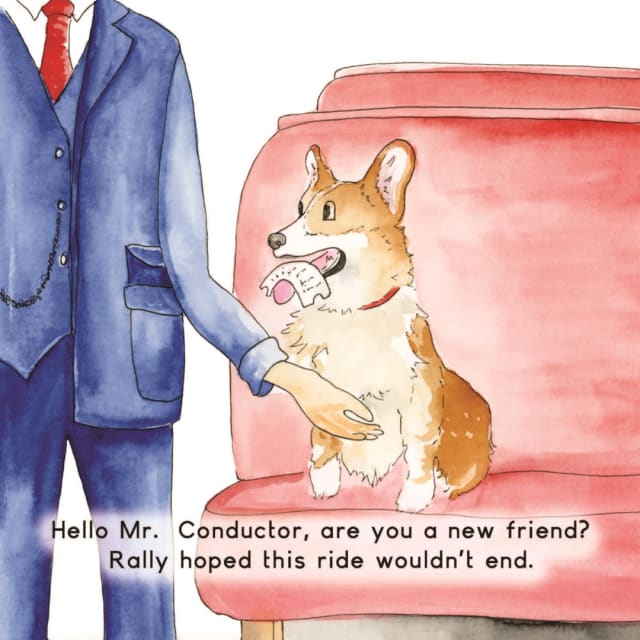
Whose Story Is It? Point of View and a Conductor's Narrative
A three-day 3rd grade point of view lesson.
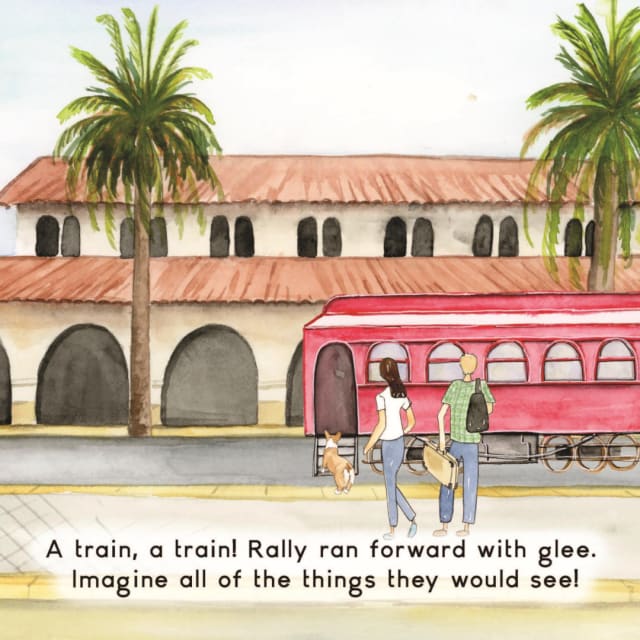
Main Idea and Key Details: Taking Notes From a Real Museum Guide
A two-day 3rd grade close reading lesson.

Train Time: Elapsed Time on a Real Train Schedule
A 60-minute problem-based 3rd grade elapsed time lesson.
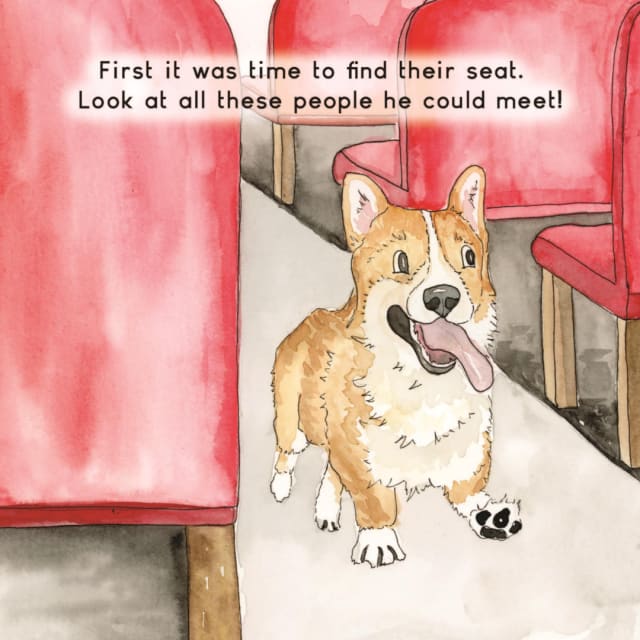
Seats in Rows: Arrays, Multiplication and Area of a Train Car
A 60-minute problem-based 3rd grade lesson on arrays and area.
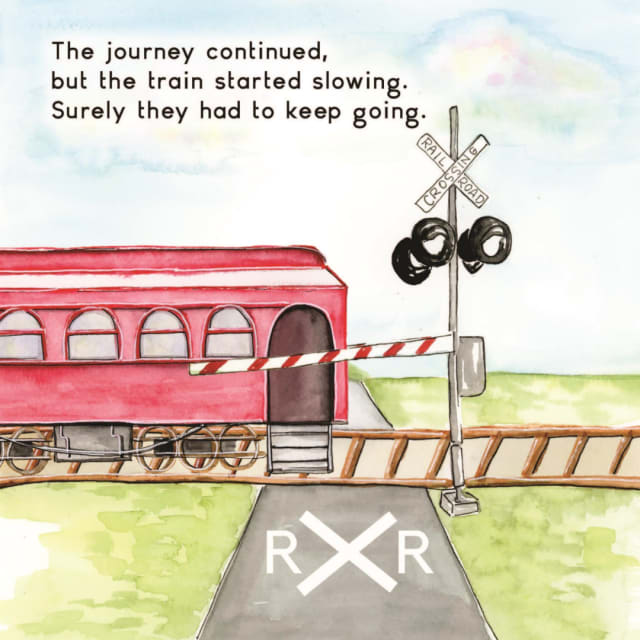
Pull, Push, Stop: Balanced and Unbalanced Forces on a Train Car
A three-session 5E science sequence on balanced and unbalanced forces.
How the Railroad Changed a Town: Cause, Effect and a Timeline
A three-session 3rd grade history inquiry.
The unit, day by day
- Day 1 (45 min): Whose Story Is It? (3A), the one full read-aloud of the book, with stops about who tells the story and a point of view chart.
- Days 2-3 (45 min each): 3A writing workshop, students plan, draft and revise the train trip as the conductor.
- Days 4-5 (40 and 45 min): Main Idea and Key Details (3B), a three-read close reading of an Ogden museum guide excerpt, then note taking.
- Day 6 (60 min): Train Time (3C), students find when a real excursion train gets back before the class names the open number line.
- Day 7 (60 min): Seats in Rows (3D), seat arrays with tiles, then the area of a real toy train layout too big to tile.
- Days 8-10 (45, 45 and 30 min): Pull, Push, Stop (3E), a penny pull investigation, then balanced and unbalanced forces and a written claim.
- Days 11-13 (45, 45 and 40 min): How the Railroad Changed a Town (3F), timelines from two museum guides and a claim that answers the compelling question. If science and social studies have their own afternoon block, run 3E and 3F there alongside.
- Days 4 to 9 and the unit fits in about two weeks.
Each lesson uses the structure that fits its subject: problem-based math, 5E science, writing workshop, close reading or inquiry, with timing for a real 3rd Grade schedule. Museum guides appear where a real source is what the lesson needs.
How the lessons are built
One book, one unit
The unit opens with a full read-aloud of Rally Takes the Train. Later lessons go back to a page or two only when the lesson needs it, and some do not use the book at all.
The right structure for each subject
Math starts with a warm-up and a problem to work on before any method is shown. Science explores before it explains. Writing runs as a workshop over several days. Every plan lists minutes, groupings, what to prepare and what to listen for.
Teach it with the real book
4.9 stars on Amazon
Rally Takes the Train is a rhyming, hand-painted picture book about a corgi's first train ride, from the big station stairs to a dark tunnel to the people waiting at the end of the line. Children ask for it again and again, and every unit here opens with it.
Questions teachers ask
What are good train lesson plans for 3rd grade?
Strong 3rd grade train lessons connect to a real standard: point of view and narrative writing, main idea and note taking, elapsed time on a train schedule, arrays and area with train seats, balanced and unbalanced forces, and cause and effect in railroad history. Each lesson on this page does one of those, with printables, standards and a family note in English and Spanish.
Can a picture book work in 3rd grade?
Yes, when it is used with purpose. In this unit the class hears Rally Takes the Train in full once, on Day 1, as the anchor text for a point of view lesson and a conductor narrative. After that, single pages return only when they help, such as the rows of seats for arrays, and two lessons do not use the book at all.
How do the 3rd grade train lessons connect to real train museums?
Four lessons use a verified museum guide as a core source: a close reading of the Ogden guide, ride times from the North Shore Scenic Railroad, a toy train layout from the Twin City Model Railroad Museum, and town histories from the Sedalia and Ogden guides. After the unit, students can explore about 650 free train museum guides at rallytakesthetrain.com/train-museums.
What is the lesson format for these 3rd grade lessons?
Each lesson uses the structure that fits its subject. Point of view is an interactive read-aloud followed by a writing workshop. Main idea is a close reading. Elapsed time and arrays are problem-based math lessons where students try the problem before seeing a method. Forces is a 5E science sequence, and railroad history is an inquiry with a compelling question and a final claim.
How long are the 3rd grade train lessons?
Sessions run 30 to 60 minutes, and several lessons take more than one day. Point of view takes three 45-minute sessions, main idea two (40 and 45), each math lesson one 60-minute block, forces three (45, 45 and 30), and railroad history three (45, 45 and 40). The whole unit is 13 school days, or about two weeks if science and social studies run in an afternoon block.
Which standards do the 3rd grade train lessons cover?
Reading and writing lessons cover Common Core RL.3.6, W.3.3, RI.3.2, W.3.8 and RI.3.3. Math lessons cover 3.MD.A.1, 3.OA.A.3 and 3.MD.C.7. Science covers NGSS 3-PS2-1, and history covers C3 indicators D2.His.1.3-5 and D2.His.14.3-5. 3A also names the CASEL competency social awareness. Each lesson lists its standards with the full official text.
Are these 3rd grade lesson plans really free?
Yes. Every lesson, printable and family note is free for classroom and homeschool use, with no account needed. The printables come in color, ink-saver and A4 versions. The only thing you need from outside is the picture book, and credentialed teachers can earn a free classroom copy by reviewing a lesson.
What order should I teach the 3rd grade train lessons in?
Start with point of view (3A, Days 1 to 3), because it holds the only full reading of the book. Then main idea with the Ogden guide (3B), elapsed time (3C), arrays and area (3D), forces (3E) and railroad history (3F). 3F returns to the Ogden museum from 3B and uses the timeline skills from 3C, so it works best last.
What printables come with the 3rd grade train lessons?
Each lesson has up to three printable pages plus a family note, built as real classroom tools: a point of view chart and story planner, a note catcher, a departure board with number line problems, a train car floor plan grid, a penny pull lab sheet, and timelines for two railroad towns. All come in color, ink-saver and A4.
Do the 3rd grade lessons include a family note in Spanish?
Yes. Every lesson includes a family note in English and in natural Spanish. Each one explains what students learned and suggests a 5-minute activity at home, such as a family timeline or an array hunt around the kitchen. It also points families to the free train museum guides so they can keep exploring together.
How do the 3rd grade lessons support multilingual learners?
Each lesson names a WIDA key language use, Narrate, Inform or Explain, and gives sentence frames tied to the skill. Key words are taught directly with the book's pictures and the guides' photos, and students may plan or take notes in their home language. Partner talk before writing gives everyone time to rehearse.
How do you differentiate the 3rd grade train lessons?
Every lesson has three planned paths. Support options include sentence starters, pre-drawn number lines or arrays and fewer required notes. The multilingual path gives frames and visuals. Extensions push further, such as planning a full day of trains, finding the area of a larger layout, or adding a third town to a timeline.
How do I assess students in these 3rd grade lessons?
Each lesson has a clear success criterion students hear before they start and a three-level check: Meets, Approaching and Beginning. The levels describe exactly what you will see in student work, such as labeled number line jumps or evidence from two trials, so you can sort work quickly and plan small groups.
Are the museum facts in the lessons accurate?
Lessons name only verified museums, which have reviewed and approved their own guides on rallytakesthetrain.com. The lessons use only facts found in those guides and quote numbers exactly. Where a price or schedule appears, the lesson says it is the one listed in the guide and reminds teachers to check the museum's current information.
Can I use the 3rd grade lessons for a train unit or a field trip?
Yes. The six lessons make a 13-day unit across reading, writing, math, science and history. To plan a visit, find a verified museum near your school in the field trip planner at rallytakesthetrain.com/lessons/train-museum-field-trips. The note taking from 3B and the timelines from 3F work well before or after a museum visit.
Can I use these lessons in 2nd or 4th grade?
They are written for 3rd grade standards, but many teachers adapt them. For a younger group, use the support options and do more of the work together. For older students, use the extensions. There are also full sets of 2nd grade and 4th grade train lessons with their own standards, printables and museum guides.
Do these lessons work for homeschool?
Yes. Every lesson works with one child or a small group. Do the partner steps together, and use the family note as a summary. The materials are simple: the book, the printables, a projector or tablet for the museum guide, and everyday items like pennies, string, square tiles or a clock.
How can 3rd grade teachers get a free copy of Rally Takes the Train?
Credentialed teachers of Pre-K to 5th grade in the United States can earn a free paperback copy by reviewing one lesson. You need a current teaching credential and at least two years of classroom teaching. Apply at rallytakesthetrain.com/free-book-for-teachers. One copy is enough for the whole unit, since the book is read aloud once and only a few pages return later.
Do I need the picture book for every 3rd grade lesson?
No. Only 3A reads Rally Takes the Train in full, on Day 1. After that, 3D shows one page of seat rows, 3E shows three pages for force arrows, and 3F shows one station page to launch its question, each for about a minute. 3B and 3C do not use the book at all; they work from museum guides. One copy and a document camera cover the whole unit.
Is there a ready-made 3rd grade train unit plan?
Yes. This page lays out a 13-day plan: point of view and a conductor narrative (3A, Days 1 to 3), close reading of a museum guide (3B, Days 4 and 5), elapsed time (3C, Day 6), arrays and area (3D, Day 7), forces (3E, Days 8 to 10) and railroad history (3F, Days 11 to 13). Each lesson page shows where it falls in the unit.
More for your classroom
Ready to keep exploring? Browse about 650 free train museum guides, or plan a visit with the field trip planner. Free coloring pages are at Rally coloring pages.