
Balanced and Unbalanced Forces Lesson for 3rd Grade: Investigate a Train Car Tug of War
A three-session 5E science sequence on balanced and unbalanced forces. Students puzzle over a tug of war that does not move a toy train car, plan and run a fair test by hanging pennies from both ends, then name balanced and unbalanced forces from their own data and write a claim with evidence.
- Grade
- 3rd Grade
- Subjects
- Science, Physical science: forces and motion
- Time
- Three sessions: 45, 45 and 30 minutes
- Structure
- 5E science sequence over three sessions
- Prep
- 25 minutes before Session 1: for each group of 3, tie two 50 cm strings to opposite ends of a toy train car, tie each string to a paper cup handle, bag 30 pennies or same-size washers, and mark a tape line on each desk; make a class data chart; copy the three pages
- Grouping
- Whole class around one table for the phenomenon, groups of 3 for the investigation, carpet discussion, partners and independent writing
- Book
- Pages 1, 8, 14
- NGSS 3-PS2-1
 Need the book? Get the paperback on Amazon (opens in a new tab) or earn a free classroom copy.
Days 8-10 of the 3rd Grade train unit
Builds on: 3D, where students counted and measured train cars. Now they ask what makes one move.
Leads to: 3F, which closes the unit with how the railroad changed real towns.
Learning objective
Students plan and conduct a fair test that changes one variable (the number of pennies pulling on each side of a toy train car), record whether the car stays still or moves and in which direction, and use their data as evidence that balanced forces do not change motion while unbalanced forces do.
I can test pulls on a train car and use my results to explain what balanced and unbalanced forces do to motion.
Vocabulary to teach
Materials
- Rally Takes the Train by Kelsey Lizee Cecil: get the paperback on Amazon (opens in a new tab) or earn a free classroom copy
- Per group of 3: a toy train car or small wheeled toy, two 50 cm strings, two small paper cups with string handles, 30 pennies or washers of the same size, masking tape
- A desk or table with two clear edges for each group
- A class data chart with a row for each group and columns for trials 1 to 6
- Penny pull lab sheet, one per student (printable, Sessions 1 and 2): the question, fair test rules, a prediction and a data table
- Force scenes page, one per student (printable, Session 2): six boxes for force arrows, including three book moments
- Claim and evidence page, one per student (printable, Session 3): a claim, evidence and reasoning organizer and a self-check list
Before you teach
- Test one setup before class. If the car will not roll with 0 pennies against 8, switch to a lighter car with free-spinning wheels or move the test to a smooth floor between two chairs.
- Assign roles in each group (adder, catcher, recorder) and rotate them between sessions.
- Keep the Session 1 chart of student ideas. Session 3 ends by returning to it.
- Mark pages 1, 8 and 14 for Session 2. The book is not read aloud in this lesson.
Lesson plan
5E science sequence over three sessions. 3-PS2-1 asks students to plan and conduct an investigation, so they pull on the car and collect data before hearing the words balanced and unbalanced. The words land on Session 2, when students have results to attach them to.
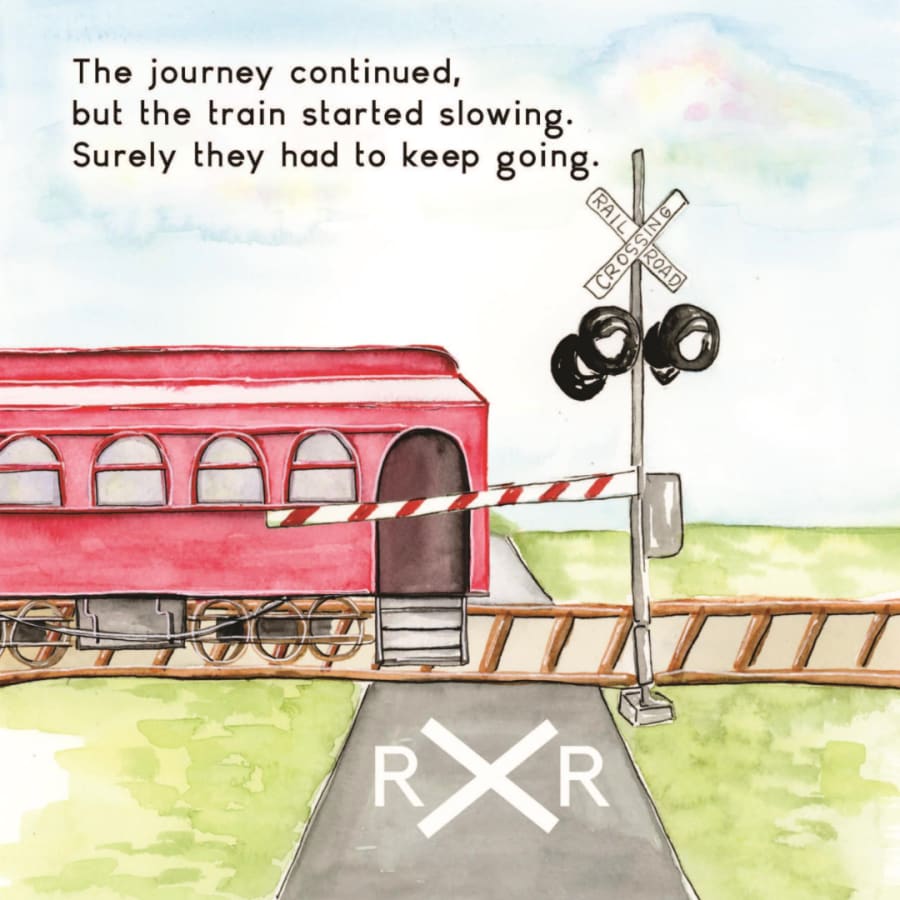
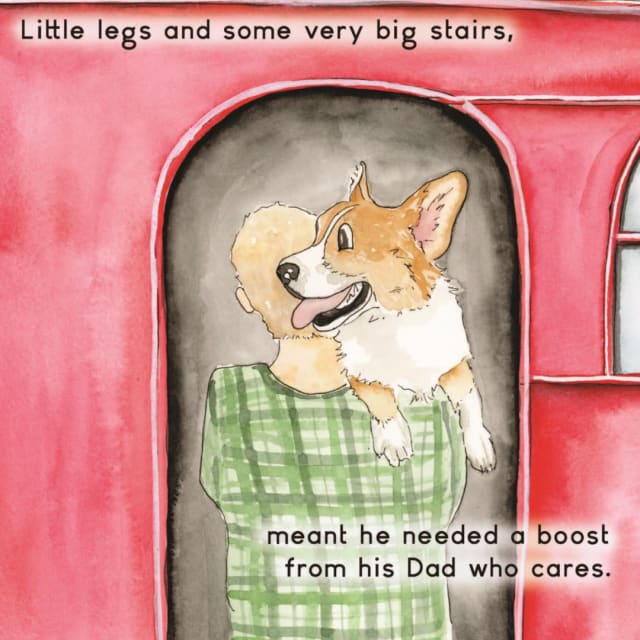
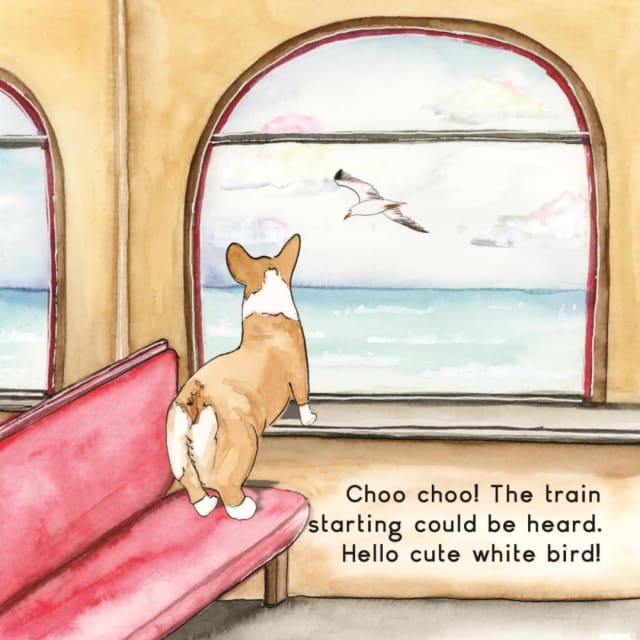
Using the book: Pages 1, 8 and 14 only, shown for about a minute each in the Session 2 Elaborate phase, so students can draw force arrows for moments they already know: Rally lying still by his bed, the train starting and the train slowing.
Session 1 45 minutes
- Two volunteers each hold a string tied to opposite ends of a toy train car and pull gently and equally. The car does not move.
- Ask the class: both students are pulling, so why does the car stay put? Record every idea on chart paper titled Our ideas, without correcting any.
- Have one volunteer pull a little harder. The car moves. Add new ideas.
- Write the investigation question: How does changing the pulls on each side change the motion of the train car?
- Show the setup at one desk: car on the tape line, a string and cup over each edge.
- Groups agree on fair test rules (same car, same start line, same cups, change only the number of pennies) and write them in their own words on the lab sheet.
- Each student writes a prediction. Assign roles: adder, catcher, recorder.
- Groups set up their materials (about 3 minutes).
- They run trials 1 to 4 from the lab sheet, adding pennies gently one at a time. The catcher stops the car before it reaches an edge, and the car goes back to the tape line after every trial.
- The recorder writes still, left or right for each trial. Ask each group what they changed and what stayed the same.
- Count pennies back into the bags and leave the setups on a side table (about 3 minutes).
Look for: Groups that change two things at once, such as nudging the car or moving the start line. Ask which one change the trial is testing.
- Each group adds its trial 1 to 4 results to the class data chart.
- Ask one question and leave it open: what do you notice about the trials where the car stayed still?
Session 2 45 minutes
- Groups set up (about 3 minutes), then run trial 5 (12 pennies on each side) and trial 6, which they design themselves. They write what they tested and why.
- They add both results to the class chart, count pennies back into the bags and put materials away.
- Students look across all groups for a pattern: equal pennies, the car stays still; unequal pennies, the car moves toward the side with more.
- Now teach force, motion, balanced forces and unbalanced forces directly, attaching each word to rows on the chart.
- Draw force arrows for trial 1 and trial 2 with the class: equal arrows for balanced, one longer arrow for unbalanced.
- If a group saw 5 against 6 and no motion, use it to teach friction: a force between the wheels and the table that pushes against motion.
- Show pages 1, 8 and 14 on the document camera for about a minute each: Rally lying still by his bed, the train starting, the train slowing at the crossing.
- Partners draw force arrows in each box of the force scenes page and circle balanced or unbalanced.
- On page 14, point out that the crossing gate stops cars and people, not the train; the train's brakes slow it. Review the rail safety rule: stay off tracks, cross only at marked crossings, and stop, look and listen.
- Thumbs up or down: were the forces in the Session 1 tug of war balanced? Two students explain using the new words.
Session 3 30 minutes
- Return lab sheets. Read the investigation question aloud and remind students of the class data chart.
- Students complete the claim and evidence page alone: a claim about what balanced and unbalanced forces do, evidence with numbers from at least two trials, and reasoning.
- They finish by connecting the penny pull to a train starting or stopping, and check their work with the list at the bottom.
- Return to the Our ideas chart from Session 1. Students mark ideas the data supported with a check and ideas they would now change with a star.
- Collect the three pages for the check.
Short on time? If you lose a day, drop Session 3 and finish in Session 2: run trials 5 and 6 as a 5-minute class demonstration at one desk, show only page 8 for force arrows (7 minutes), and give the last 17 minutes to the claim and evidence page. Check the Our ideas chart in 3 minutes the next morning.
Finished early? Find the smallest difference in pennies that moves your car, and explain how friction changes the answer.
Optional museum extension: For a group that wants a real train to analyze in Session 3, the guide describes the whistle blowing and the air brakes releasing before the train heads out, and the crew running the engine around the train at Curriers Depot. Open the Arcade & Attica Railroad guide.
What to listen for
| If children say or do this | Try this |
|---|---|
| If the car is not moving, there are no forces on it. | Point back to the Session 1 tug of war: both students were clearly pulling. Ask what was different when the car finally moved. |
| Five pennies against six should move the car, so our test went wrong. | Use it. Something else is pushing back: friction between the wheels and the table. Let the group find the smallest difference that moves the car. |
| The crossing gate on page 14 stops the train. | The gate stops cars and people on the road. The train slows because its brakes push against the motion. |
Safety: Rail safety: stay off train tracks, cross only at marked crossings, and always stop, look and listen. In class, keep feet and chairs clear of the hanging cups, add pennies gently, have a catcher stop the car before it rolls off the desk, and collect all pennies and washers at the end.
Differentiation
Extra support
Give a partly filled data table with the first two trials done as a class. Provide the claim starter "When the pulls are equal, the car ___. When one pull is stronger, the car ___." Let students act as the recorder while a partner adds pennies.
Multilingual learners
Teach push, pull, equal, stronger, still and moves with gestures and the toy car. Give frames: "The left side has ___ pennies and the right side has ___. The car ___ because the forces are ___." Key language use: Explain.
Extension
Change a different variable: keep the pennies equal, then pull the car with one cup over the side and a gentle push from the other direction. Or find the smallest difference in pennies that makes the car move, and explain how friction affects the answer.
Check for understanding
Success criterion: Conducts a fair test that changes only the number of pennies, records accurate data, and uses data from at least two trials as evidence that balanced forces do not change motion and unbalanced forces do.
| Level | What you see |
|---|---|
| 3Meets (level 3) | Runs and records all six trials as a fair test, and writes a claim that balanced forces leave the car still while unbalanced forces move it toward the stronger pull, citing numbers from at least two trials and connecting to a train starting or stopping. |
| 2Approaching (level 2) | Records data accurately and states a correct claim, but evidence is general ("it moved") rather than citing trial numbers, or the test changed more than one variable. |
| 1Beginning (level 1) | Records incomplete data, or claims that a car with forces on it must be moving, without using data from the trials. |
Family connection
Send home the half-page note in the printables. The text is below so you can paste it into a newsletter or app.
English
Pennies, string and a toy train car were our science tools this week. Over three sessions your child hung cups of pennies from both ends of the car, recorded whether it moved, and used the results to explain balanced forces (equal pulls in opposite directions, so the car stays still) and unbalanced forces (one pull is stronger, so the car moves). For a 5-minute tug of war at home, put a stuffed animal in the middle of a towel, pull equally, then pull harder on one side and talk about what happens. Free train museum guides are at rallytakesthetrain.com/train-museums.
Español
Esta semana usamos monedas, hilo y un vagón de juguete en ciencias. En tres sesiones, su hijo o hija colgó vasitos con monedas de los dos lados del vagón, anotó si se movía y usó los resultados para explicar las fuerzas equilibradas (jalones iguales en direcciones opuestas, y el vagón no se mueve) y las fuerzas no equilibradas (un jalón es más fuerte, y el vagón se mueve). En casa, pongan un peluche en medio de una toalla, jalen igual de los dos lados y luego más fuerte de uno, y hablen de lo que pasa (5 minutos). Hay guías gratuitas de museos de trenes en rallytakesthetrain.com/train-museums.
Teacher tips
- Have groups say the trial number aloud before adding pennies. It keeps data tables matched to trials and makes the evidence step much easier.
- Smooth desks work best. Tables with a rough surface or a lip at the edge make small differences hard to see.
- Choose a free-rolling toy car before class: test it with 5 pennies on one side and none on the other. If the car sticks, use a lighter car or a smoother surface.
Standards alignment
| Standard | Text |
|---|---|
| NGSS 3-PS2-1 (opens in a new tab) | Plan and conduct an investigation to provide evidence of the effects of balanced and unbalanced forces on the motion of an object. |
Check codes against your state's version of these standards. How we build and review lessons.
Teach it with the real book
4.9 stars on Amazon
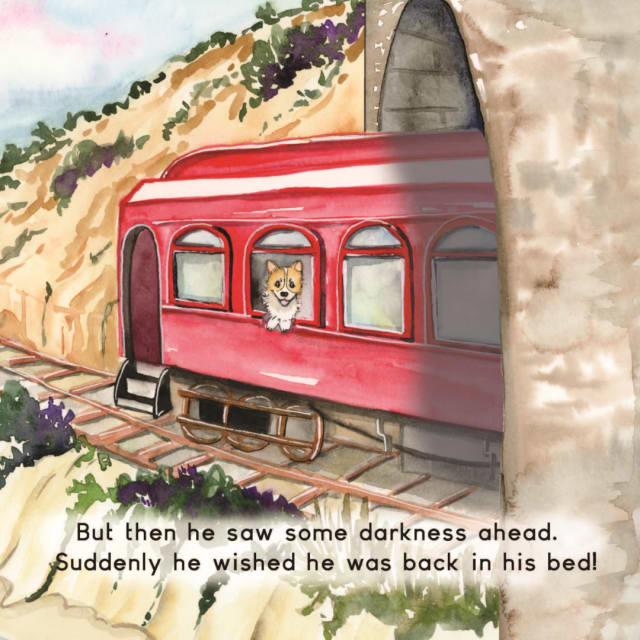
Rally Takes the Train is a rhyming, hand-painted picture book about a corgi's first train ride, from the big station stairs to a dark tunnel to the people waiting at the end of the line. Children ask for it again and again, and every unit here opens with it.
Questions teachers ask
Why three sessions, and why is the last one only 30 minutes?
Standard 3-PS2-1 asks students to plan and conduct an investigation, and that takes time. Session 1 (45 minutes) is the tug of war puzzle, planning and trials 1 to 4. Session 2 (45 minutes) finishes the trials, names balanced and unbalanced forces from the class data and applies them to train scenes. Session 3 is shorter because it holds only the written claim and a return to the first ideas.
Why wait until Session 2 to teach balanced and unbalanced?
This is a 5E sequence, so students explore before they hear the vocabulary. By Session 2 the class data chart shows a pattern from every group: equal pennies, the car stays still; unequal pennies, it moves toward the side with more. When you then teach force, motion, balanced and unbalanced, each word attaches to rows students filled in themselves, and it sticks.
What do the six trials on the lab sheet test?
Trial 1 hangs 5 pennies on each side, trial 2 has 5 against 10, trial 3 flips that to 10 against 5, and trial 4 is 0 against 8. Trial 5 is 12 on each side, and trial 6 is the group's own design, with a sentence about what they tested and why. Only the number of pennies changes; the car, the cups and the start line stay the same.
Five pennies against six did not move the car. Did the test fail?
No, and it is worth using. Friction between the wheels and the desk pushes against the motion, so a small difference may not be enough to start the car. If a group sees this, bring it into the Session 2 discussion as the way to teach friction. A group that finishes early can hunt for the smallest difference that does move their car.
What does each person in a group of three do?
The adder places pennies gently, one at a time. The catcher stops the car before it reaches an edge and puts it back on the tape line after every trial. The recorder writes still, left or right for each trial. Rotate the roles between sessions. Having the group say the trial number aloud before adding pennies keeps the data table matched to the right trial.
How are pages 1, 8 and 14 used?
Rally Takes the Train is not read aloud in this lesson. In the Session 2 Elaborate phase you show three pages on the document camera for about a minute each: Rally lying still by his bed, the train starting, and the train slowing at the crossing. Partners draw force arrows for each on the force scenes page. On page 14, point out that the gate stops cars and people, and the train's brakes slow the train.
A student says a car sitting still has no forces on it. How do I respond?
Go back to the Session 1 tug of war. Both volunteers were clearly pulling, yet the car stayed put. Ask what changed when one of them pulled harder and the car finally moved. The answer, that the pulls stopped being equal, is the whole idea of balanced forces. Force arrows of equal length on a still car make the point visible.
What counts as evidence on the claim page?
Students need numbers from at least two trials, such as trial 1 (5 and 5, still) and trial 2 (5 and 10, moved right). A claim backed by "it moved" is a correct start, but it sits at Approaching on the check. Strong pages also connect the penny pull to a real train starting or stopping, and students check their own work against the list at the bottom.
Why return to the Our ideas chart in Session 3?
The chart holds every explanation students offered during the tug of war, recorded without correction. In the last 8 minutes, students put a check beside ideas their data supported and a star beside ideas they would now change. Seeing their own thinking shift is the payoff of exploring before naming, and it shows you who still holds the no motion, no force idea.
What keeps the penny pull safe and tidy?
Keep feet and chairs clear of the hanging cups, add pennies gently, and have the catcher stop the car before it rolls off the desk. Smooth desks work best; a rough surface or a lip at the edge hides small differences. At the end of each session, count pennies back into the bags so none go home in pockets or end up on the floor.
Related lessons
Push the Train: Pushes, Pulls and a Ramp Design
A free kindergarten push and pull science lesson taught in two sessions (33 and 37 minutes).
Energy in Motion: Speed, Energy and Collisions
A two-session 4th grade 5E science sequence.
Gravity on the Grade: Which Way Does Gravity Pull a Train?
A two-session 5th grade science sequence for NGSS 5-PS2-1.
Teaching with Rally Takes the Train
Every lesson is free for classroom and homeschool use. Add the paperback to your classroom library, or review a lesson to earn a free copy if you are a credentialed teacher. Keep the journey going in about 650 free train museum guides, plan a visit with the field trip planner, or browse all lessons for educators.