
Energy and Collisions for 4th Grade: Speed, Energy and a Train Ramp Investigation
A two-session 4th grade 5E science sequence. A toy car knocks a paper cup farther from a higher ramp, and students investigate why: they test three ramp heights, pool class data, and only then name energy, speed and transfer. They predict and test new collisions and write a claim with their own measurements.
- Grade
- 4th Grade
- Subjects
- Science (physical science: energy), Engineering practices
- Time
- Two sessions: 45 and 45 minutes
- Structure
- 5E science sequence over two sessions
- Prep
- 25 minutes: for each group of three or four, gather a toy car, a ramp (stiff folder, cardboard strip or grooved ruler), three books of similar thickness, a paper cup with a doorway about 4 cm wide cut in its rim, masking tape and a ruler or meter stick; set up one demo ramp; copy the three printables; draw a class data chart; put a bin of blocks and scrap paper aside for Day 2
- Grouping
- Whole class for the demo and the explanation, groups of three or four for investigating, independent writing
- Book
- Not used in this lesson
- NGSS 4-PS3-1
- NGSS 4-PS3-3
 Need the book? Get the paperback on Amazon (opens in a new tab) or earn a free classroom copy.
Days 7-8 of the 4th Grade train unit
Builds on: Day 6 (4C) worked with Big Boy's weight of about 1,200,000 pounds. Here they find out what speed has to do with energy, which is part of why a moving train is so hard to stop.
Leads to: Days 9 to 11 (4E) use that idea: because trains cannot stop fast, a crossing has to warn people early.
Learning objective
Students carry out a ramp investigation, use their measurements as evidence to explain that a faster object has more energy, describe how energy moves from one object to another in a collision (motion and sound), and ask questions and predict outcomes for a new collision.
I can use evidence from a ramp test to explain how speed and energy are related, and I can predict what will happen to energy when objects collide.
Vocabulary to teach
Materials
- Per group: one toy car, a ramp (stiff folder, cardboard strip or grooved ruler), three books of similar thickness, a paper cup with a doorway about 4 cm wide cut in its rim, masking tape, and a ruler or meter stick
- One demo ramp set up where everyone can see it
- For the Day 2 collision cards: about 10 wooden or plastic blocks and a handful of scrap paper to stuff a cup
- Class data chart on chart paper: ramp height down the side, one column per group
- Ramp Investigation printable (one per student, Day 1): setup, a data table and a bar graph grid
- Predict the Collision printable (one per student, Day 2): four collision cards and boxes for predictions and questions
- Claim and Evidence printable (one per student, Day 2): a claim, evidence and reasoning organizer
- Optional: the Virginia Museum of Transportation guide (rallytakesthetrain.com/museums/virginia-museum-of-transportation-roanoke) for the extension
Before you teach
- Try the demo before class. A higher start should move the cup clearly farther; if it does not, use a smoother ramp or a lighter cup.
- Mark a tape line where the cup starts on every group's table. Measuring from the ramp instead of the tape mark is the most common data error.
- Assign group roles before Day 1: releaser, measurer, cup resetter and recorder, rotating after each height.
- Hold the words energy and transfer until Day 2. On Day 1, let students describe what they see in their own words.
Lesson plan
5E science sequence over two sessions. 4-PS3-1 asks students to build an explanation from evidence, so they need to collect the evidence before anyone explains it. Day 1 is the puzzle and the investigation; Day 2 makes sense of the class data and applies it to new collisions.
The book: The book is not used. The phenomenon is the ramp demonstration.
Day 1 45 minutes
- Release the car from one book into the cup. Measure and say how far the cup slid. Then release it from three books.
- Students turn and talk: What did you notice? What do you wonder? Record wonderings on chart paper.
- Circle a wondering about speed, or add one: How does how fast the car moves change what happens to the cup? Do not explain yet.
Look for: Ideas about the car going faster, the crash sounding louder, or the cup going farther.
- Groups collect materials and set up the ramp, start line and cup tape mark (4 minutes).
- Run three trials each from 1, 2 and 3 books. The releaser lifts a finger off the car, no pushing. The measurer measures from the tape mark in centimeters. Everyone notes the sound: quiet, medium or loud.
- Students circle the middle number for each height and shade the bar graph.
- Clean up: cars, cups and books back in the bin (3 minutes).
Look for: Groups that change something besides the height, such as where the cup starts.
- One recorder from each group writes the three middle numbers on the class data chart.
- Students look across all the groups and write one pattern they see at the bottom of the Ramp Investigation page.
Day 2 45 minutes
- Return to the class chart. Ask students to state the pattern and point to the numbers that show it.
- Introduce the words building on what they said: the car from 3 books was moving at a higher speed and had more energy. When it hit the cup, some energy transferred to the cup (it moved) and some became sound.
- Add energy, speed, collision and transfer to the word wall with a student example for each.
Look for: Students who explain using their own group's numbers, not just "it went farther".
- Groups choose two collision cards and write a prediction with a reason and one question about energy for each (5 minutes).
- Materials bins come back out. Each group tests one of its predictions, records what happened and cleans up (10 minutes). Groups testing two cars borrow a second car from a neighbor.
- Bring it to trains: a real train is huge and fast-moving, so it has a lot of energy to lose before it stops. Teach the rail safety rule: stay off tracks, cross only at marked crossings, and stop, look and listen.
- Students write a claim about speed and energy, two pieces of evidence from their group's or the class's numbers, and reasoning that explains where the energy went in the collision.
- Finish with the last question on the page: use your evidence to explain why a fast train cannot stop quickly.
Short on time? To teach it in one 60-minute session, test only 1 and 3 books (three trials each), post the class data and introduce energy, speed and transfer right away. Replace the group collision tests with one teacher demo of the 4-book card after students write a prediction, and keep the claim and evidence write as the last 12 minutes.
Finished early? Write a fair test plan for a second variable (a heavier car with modeling clay on top), including what you would keep the same.
Optional museum extension: For a later science block, project the "How engines work" section of this guide and trace where a steam or diesel engine's energy starts and where it ends up. Open the Virginia Museum of Transportation guide.
What to listen for
| If children say or do this | Try this |
|---|---|
| Our 2-book trial went farther than our 3-book trial, so the pattern is wrong. | One trial can be off (a bumpy release, a cup that caught on tape). That is why there are three trials and a middle number. Look at the middle numbers and then at the whole class chart before deciding. |
| The car does not have energy. It has no battery and no motor. | Point to the car rolling: anything that moves has energy of motion. Then ask how it got moving (someone lifted it to the top and let go). |
| The energy disappears when the car stops. | Ask what else happened in the crash: the cup moved and there was a sound. Energy went into those. |
Safety: Rail safety: stay off tracks, cross only at marked crossings, and always stop, look and listen. In class, roll cars only down the ramp, never toward people, and keep the floor clear of cars and books so no one slips.
Differentiation
Extra support
Preprint the data table with heights and units, test only two heights, and give a claim frame: "When the car started higher, it moved ___ and the cup slid ___, so the car had ___ energy."
Multilingual learners
Teach faster, slower, farther and louder with gestures and the ramp itself. Provide frames: "My claim is ___. My evidence is ___. This shows ___." Pair students so one measures while the other describes. Key language use: Explain.
Extension
Test a second variable on another day: same height, but a heavier car. Write a fair test plan first, predict, test, and explain whether the new evidence fits the speed and energy claim.
Check for understanding
Success criterion: Uses measured evidence from a fair ramp test to explain that faster objects have more energy, describes energy transfer in a collision, and asks a testable question with a prediction about a new collision.
| Level | What you see |
|---|---|
| 3Meets (level 3) | Claim links higher speed to more energy, cites measurements from at least two heights, explains that energy moved into the cup (motion) and into sound, and writes a reasoned prediction and a testable question. |
| 2Approaching (level 2) | Claim is correct and uses some data, but the reasoning does not mention energy transfer, or the prediction has no reason. |
| 1Beginning (level 1) | Describes what happened without a claim, uses no measurements, or says the cup moved because of the cup rather than the car's energy. |
Family connection
Send home the half-page note in the printables. The text is below so you can paste it into a newsletter or app.
English
For two science periods, your child rolled toy cars down ramps of different heights into a paper cup and measuring how far the cup slid. The class data showed that a faster car has more energy, and that in a crash some of that energy moves into the other object and some becomes sound. We connected it to real trains, which are so big and fast that they cannot stop quickly. For 5 minutes at home, roll a ball gently and then faster into a stack of plastic cups. What changes? Please review our rule: stay off tracks and stop, look and listen.
Español
Su hijo o hija hizo rodar carritos por rampas de distintas alturas contra un vaso de papel y midió cuánto se movía el vaso. Los datos de la clase mostraron que un carrito más rápido tiene más energía, y que en un choque parte de esa energía pasa al otro objeto y parte se convierte en sonido. Lo conectamos con los trenes, que son tan grandes y rápidos que no pueden frenar pronto. En casa, por 5 minutos, hagan rodar una pelota despacio y luego rápido contra una torre de vasos de plástico. ¿Qué cambia? Repasen la regla: no pisar las vías; parar, mirar y escuchar.
Teacher tips
- Let go, do not push. Have the releaser hold the car with one finger on the start line and lift the finger.
- Keep the explanation on speed, which is what 4-PS3-1 and 4-PS3-3 emphasize. If students bring up heavier cars, save it for the extension rather than adding a second variable now.
Standards alignment
| Standard | Text |
|---|---|
| NGSS 4-PS3-1 (opens in a new tab) | Use evidence to construct an explanation relating the speed of an object to the energy of that object. |
| NGSS 4-PS3-3 (opens in a new tab) | Ask questions and predict outcomes about the changes in energy that occur when objects collide. |
Check codes against your state's version of these standards. How we build and review lessons.
Teach it with the real book
4.9 stars on Amazon
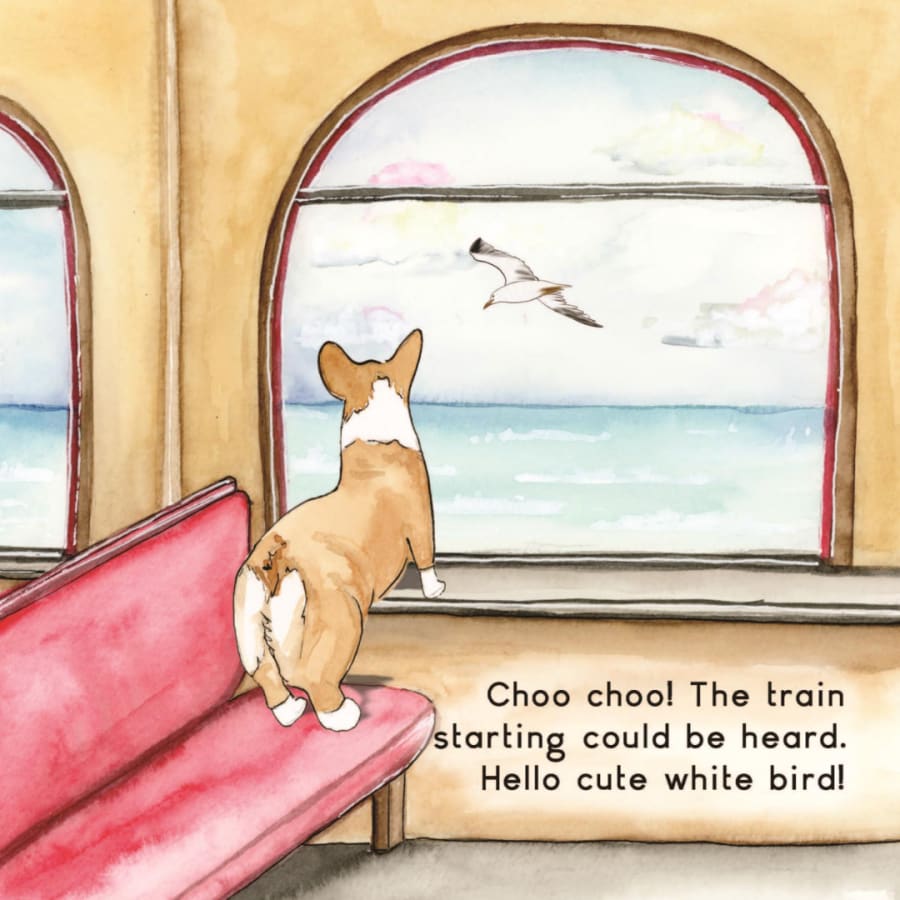
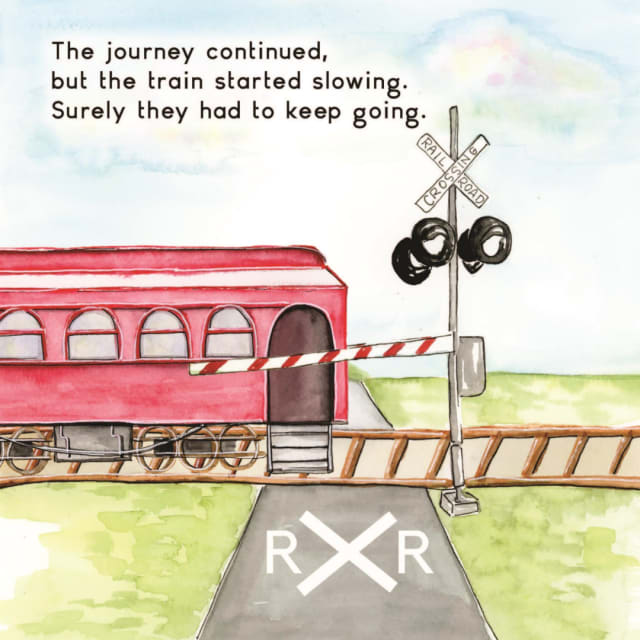
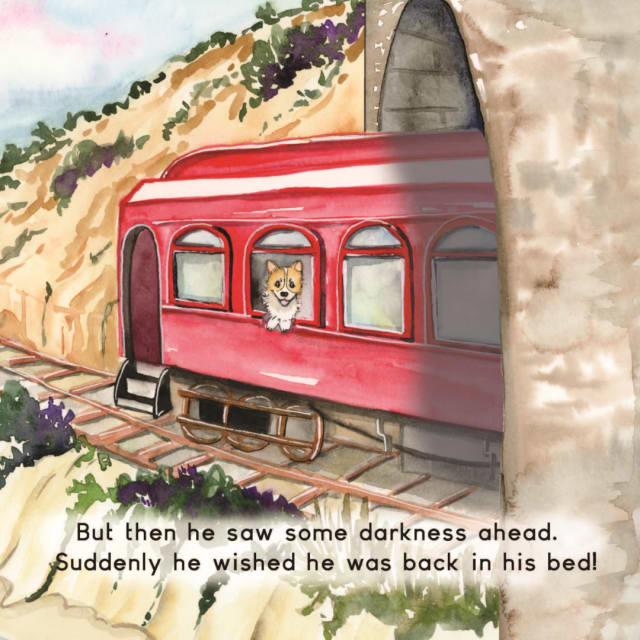
Rally Takes the Train is a rhyming, hand-painted picture book about a corgi's first train ride, from the big station stairs to a dark tunnel to the people waiting at the end of the line. Children ask for it again and again, and every unit here opens with it.
Questions teachers ask
Why hold back the words energy and transfer until Day 2?
4-PS3-1 asks students to build an explanation from evidence, so they collect the evidence first. On Day 1, students describe the ramp results in their own words: faster, farther, louder. On Day 2 you introduce energy, speed, collision and transfer by building on what they already said, pointing at the class data chart. The words then name something students have seen rather than something to memorize.
What should the class data chart show by the end of Day 1?
Across most groups, the cup slides farther as the ramp gets higher, and the crash sounds louder. Each group posts the middle number for 1, 2 and 3 books, so one bumpy trial does not hide the pattern. Before class, check that a higher start clearly moves your demo cup farther; if it does not, switch to a smoother ramp or a lighter cup.
What if one group's 2-book trial beats its 3-book trial?
One trial can be off: a release with a small push, a cup that caught on the tape. That is why groups run three trials and circle the middle number. Ask the group to look at its middle numbers first and then at the whole class chart before deciding the pattern is wrong. This is a useful conversation about why scientists repeat trials.
What is the most common measuring mistake in the ramp test?
Measuring from the bottom of the ramp instead of the tape mark at the front of the cup. Tape the cup's starting mark on every table before class, and have the measurer work in centimeters from that mark every time. Also watch for groups that move the cup between trials; the setup has the cup 5 cm from the bottom of the ramp, doorway facing the car.
Should students test a heavier car too?
Not in this lesson. The only thing that changes is ramp height, because 4-PS3-1 and 4-PS3-3 focus on speed. If students suggest adding modeling clay to the car, write it down and save it: the early-finisher task asks for a fair test plan for a heavier car, and the extension tests it on another day with its own prediction.
Who does what in a ramp group?
Assign four roles before Day 1: releaser, measurer, cup resetter and recorder, rotating after each height so everyone does each job. The releaser holds the car with one finger on the start line and lifts it off without pushing. In a group of three, the recorder also resets the cup. Everyone listens and notes the sound as quiet, medium or loud.
What happens with the four collision cards on Day 2?
Groups choose two cards (a car from 4 books, two cars meeting, a cup stuffed with paper, a wall of blocks), write a prediction with a reason and an energy question for each, then test one of them in 10 minutes. Groups testing two cars borrow one from a neighbor. Have about 10 blocks and some scrap paper ready in a bin.
What do I say when a student insists a toy car has no energy?
The idea usually comes from thinking energy needs a battery or a motor. Point to the car rolling: anything that moves has energy of motion. Then ask how it got moving, and someone will say it was lifted to the top of the ramp and let go. A related mix-up is that energy disappears at the stop; ask what else happened in the crash.
Where do real trains come into a lesson about toy cars?
Near the end of Day 2. After the collision tests, connect the pattern to a real train: it is huge and fast-moving, so it has a lot of energy to lose before it stops. Teach the rail safety rule then: stay off tracks, cross only at marked crossings, and stop, look and listen. The last question on the Claim and Evidence page asks students to explain why a fast train cannot stop quickly.
What does a Meets claim and evidence page include?
A claim that links higher speed to more energy, measurements from at least two ramp heights, and reasoning that says where the energy went: into the cup's motion and into sound. On the Predict the Collision page, a Meets student also wrote a prediction with a reason and a question someone could test. A correct claim with no mention of transfer is Approaching.
How do these two days set up the crossing challenge?
Days 9 to 11 ask students to design a model railroad crossing, and the whole reason a crossing warns people early is that a fast, heavy train cannot stop fast. Students arrive at that challenge with their own measurements behind the idea. The optional Virginia Museum of Transportation guide, with its section on how engines work, fits a later science block.
Related lessons
Pull, Push, Stop: Balanced and Unbalanced Forces on a Train Car
A three-session 5E science sequence on balanced and unbalanced forces.
Gravity on the Grade: Which Way Does Gravity Pull a Train?
A two-session 5th grade science sequence for NGSS 5-PS2-1.
Design a Safer Railroad Crossing: Criteria, Constraints and Fair Tests
A three-session 4th grade engineering design challenge.
Teaching with Rally Takes the Train
Every lesson is free for classroom and homeschool use. Add the paperback to your classroom library, or review a lesson to earn a free copy if you are a credentialed teacher. Keep the journey going in about 650 free train museum guides, plan a visit with the field trip planner, or browse all lessons for educators.