
Multi-Step Word Problems for 4th Grade: Big Numbers From a Real Train Museum
A 60-minute problem-based 4th grade math lesson. After a number talk on 14 x 36, students work real numbers from a national park steam train museum guide into multi-step problems: ride money, a giant locomotive's weight and boxes with a remainder. They share strategies, write letter equations, check with estimates and finish with a cool-down.
- Grade
- 4th Grade
- Subjects
- Mathematics, Operations and algebraic thinking, Number and operations in base ten
- Time
- 60 minutes (one math block)
- Structure
- Problem-based math lesson
- Prep
- 10 minutes: copy the Fact Card and Problem Set (one each per student) and the Cool-down page (one per student, cut in half if you skip the write-your-own section); have the Steamtown guide open on the screen
- Grouping
- Whole class number talk, partners for both activities, independent cool-down
- Book
- Not used in this lesson
- CCSS 4.OA.A.3
- CCSS 4.NBT.B.5
 Need the book? Get the paperback on Amazon (opens in a new tab) or earn a free classroom copy.
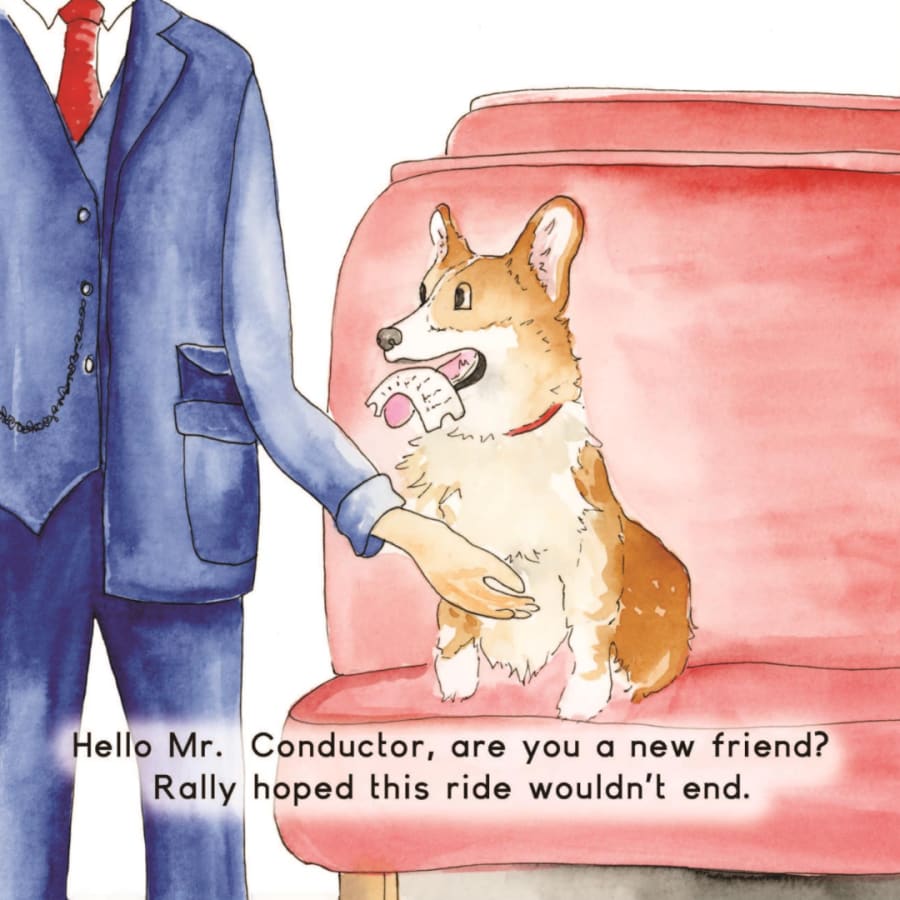
Day 6 of the 4th Grade train unit
Builds on: In 4B (Days 4 and 5) students read museum guides for facts. Here the same kind of source supplies real numbers.
Leads to: Days 7 and 8 (4D) move to science: what happens to energy when a fast-moving car hits something.
Learning objective
Students solve multi-step word problems that use real numbers from a train museum guide, represent each problem with an equation using a letter for the unknown, multiply multi-digit numbers with area models, interpret remainders, and check answers for reasonableness with rounding.
I can solve a word problem with more than one step, write an equation with a letter for the unknown, and use rounding to check if my answer makes sense.
Vocabulary to teach
Materials
- The Steamtown National Historic Site guide at rallytakesthetrain.com/museums/steamtown-national-historic-site-scranton-pennsylvania, open on a screen
- Fact Card printable (one per student): numbers from the guide with columns for what each counts and whether it is exact or about, plus a step planner for two problems
- Problem Set printable (one per student): six multi-step problems; Activity 1 uses problems 1 and 5, Activity 2 uses problems 2 and 3, the synthesis uses problem 6, and problem 4 is extra practice
- Cool-down and Write Your Own printable (one per student): one cool-down problem and a frame for writing a two-step problem
- Whiteboards or scratch paper
Before you teach
- Work all six problems yourself so you can spot the likely strategies. Answers: (1) $2 change; (2) about 660,000 pounds; (3) 336 boxes; (4) 84 and 49 years, so 35 more; (5) $3,024; (6) Leo, about 75 hours.
- During both activities, write down which pairs used which strategy. You will choose two or three to share, from least to most efficient.
- Prices change. The problems use the yard ride price listed in the guide; check the museum's current price if you plan a real visit.
- Have the place value chart handy for writing 1.2 million as 1,200,000.
Lesson plan
Problem-based math lesson. 4.OA.A.3 is about deciding what steps a problem needs, so students have to meet the problem before anyone shows them a method. You watch their work, choose two or three strategies to share in order, and connect them to a letter equation in the synthesis.
The book: The book is not used in this lesson.
The numbers in every problem come from the Big Boy section and the "Steamtown by the numbers" section of this guide, and they are printed on the Fact Card page. Or find a verified museum near your school in the field trip planner.
- Show one problem at a time, mentally: 10 x 36, then 4 x 36, then 14 x 36.
- Students hold a thumb at their chest when they have an answer and add a finger for each extra strategy. No hand raising.
- Record two or three strategies for 14 x 36 with students' names, including one that splits 14 into 10 and 4. Draw it as an area model and leave it on the board.
Look for: Students who use the first two answers (360 and 144) to get 504.
- Launch (4 minutes): project the guide and read the yard ride price and the Big Boy numbers aloud. Students fill the What it counts column of the Fact Card as you read.
- Work time (9 minutes): partners solve problems 1 and 5 any way they can. Do not show a method. Watch for step-by-step work, a single equation, and estimates first.
- Synthesis (5 minutes): share two strategies for problem 1 in order. Write the letter equation 200 - (33 x 6) = c together and connect problem 5 to the warm-up area model.
Look for: Pairs who stop after one step (33 x 6 = 198) without answering the question about change.
- Launch (3 minutes): read the collection numbers from the guide. Write 1.2 million as 1,200,000 on the place value chart together. Students mark each Fact Card number exact or about.
- Work time (10 minutes): partners solve problems 2 and 3. Problem 3 has a remainder: let them decide what to do with it.
- Synthesis (6 minutes): share a pair that answered 335 R4 and a pair that answered 336 boxes. Ask where the last 4 objects go until the class agrees on 336. For problem 2, agree the answer must say about, because the weight in the guide is about.
Look for: Answers that keep the word about or more than when the guide does.
- Read problem 6 together. Students round 204 to 200 and 15,505 to 15,000 and decide whether Jada (about 7 hours) or Leo (about 75 hours) is more reasonable.
- Ask: How did you know these problems needed more than one step? How did an estimate help you catch a mistake? Record answers on an anchor chart titled Multi-step problems.
- Students solve the cool-down problem on their own: 3 buses each bring 48 riders, each ride costs the $6 price listed in the guide, and the school has $900. Is that enough? Write an equation with a letter.
- Collect it. Answer: 3 x 48 = 144 riders, 144 x 6 = $864, so yes, with $36 left. Sort them into three piles to plan tomorrow's math warm-up.
Short on time? Run the number talk on 14 x 36 alone (5 minutes) and drop problem 5 from Activity 1, which saves about 10 minutes. If you need 5 more, skip the anchor chart talk in the synthesis but keep problem 6 and the cool-down, which is your evidence for the day.
Finished early? Solve problem 4, then use the Write Your Own section to write a two-step problem with two Fact Card numbers and trade it with a partner.
What to listen for
| If children say or do this | Try this |
|---|---|
| Problem 3 is 335, because 2,684 divided by 8 is 335 remainder 4. | Ask where the last 4 objects go. The question asks for boxes, so the remainder means one more box: 336. |
| 1.2 million pounds is written 1,200 or 12,000,000. | Build it on the place value chart: 1 million, 2 hundred thousands. Read 1,200,000 aloud together. |
| A problem is solved once one calculation is done (33 x 6 = 198). | Have the student reread the question and underline what it asks for. Then ask what is still missing. |
Differentiation
Extra support
Point the student to the step planner at the bottom of the Fact Card ("Step 1: I find ___. Step 2: I find ___.") and a partly drawn area model for 36 x 14. Allow a multiplication chart for basic facts so the focus stays on the steps. Problems 1, 3 and 5 are enough for the day.
Multilingual learners
Preteach tender, remainder, survive and volunteer with the guide photos. Act out problem 1 with play money. Provide frames: "First I ___. Then I ___. My answer makes sense because ___." Key language use: Explain.
Extension
The guide says Big Boy's tender held 28 tons of coal and 24,000 gallons of water. Write and solve a three-step problem that converts tons to pounds (1 ton = 2,000 pounds) and compares the result with another number on the Fact Card.
Check for understanding
Success criterion: Solves multi-step word problems with a letter equation, multiplies accurately with a place value strategy, interprets the remainder correctly, and checks with an estimate.
| Level | What you see |
|---|---|
| 3Meets (level 3) | Solves the cool-down correctly with a letter equation and a clear answer to the question, and during the activities interprets problem 3 as 336 boxes and checks at least one answer with rounding. |
| 2Approaching (level 2) | Calculates correctly but misses one step, writes an equation only some of the time, or answers 335 boxes without explaining the remainder. |
| 1Beginning (level 1) | Solves only one-step parts, makes place value errors in multiplication, or cannot yet check an answer with rounding. |
Family connection
Send home the half-page note in the printables. The text is below so you can paste it into a newsletter or app.
English
How much does a giant steam locomotive weigh? About 1,200,000 pounds, according to the guide your child used in math. We solved multi-step word problems with real numbers from a national park steam train site, wrote equations with a letter for the unknown, and used rounding to check answers. For 5 minutes at home, pick a price from a store flyer or menu and ask: How much for our whole family? How much change from $50? Free train museum guides full of real numbers are at rallytakesthetrain.com/train-museums.
Español
¿Cuánto pesa una locomotora de vapor gigante? Unas 1,200,000 libras, según la guía que su hijo o hija usó en matemáticas. Resolvimos problemas de varios pasos con números reales de un sitio de trenes de vapor de un parque nacional, escribimos ecuaciones con una letra para el número desconocido y usamos el redondeo para revisar las respuestas. En casa, por 5 minutos, escojan un precio de un folleto o un menú y pregunten: ¿Cuánto cuesta para toda la familia? ¿Cuánto cambio nos dan de $50? Hay guías gratis de museos de trenes en rallytakesthetrain.com/train-museums.
Teacher tips
- Ask for an estimate before the exact answer on at least one problem. Students who estimate first catch place value slips, such as 66,000 instead of 660,000, on their own.
- Use the cool-down sort, not the activity work, to decide who needs a small group the next day.
Standards alignment
| Standard | Text |
|---|---|
| CCSS 4.OA.A.3 (opens in a new tab) | Solve multistep word problems posed with whole numbers and having whole-number answers using the four operations, including problems in which remainders must be interpreted. Represent these problems using equations with a letter standing for the unknown quantity. Assess the reasonableness of answers using mental computation and estimation strategies including rounding. |
| CCSS 4.NBT.B.5 (opens in a new tab) | Multiply a whole number of up to four digits by a one-digit whole number, and multiply two two-digit numbers, using strategies based on place value and the properties of operations. Illustrate and explain the calculation by using equations, rectangular arrays, and/or area models. |
Check codes against your state's version of these standards. How we build and review lessons.
Keep exploring
Pick any museum guide and find two numbers in it. Write a two-step word problem that uses both numbers, solve it, and trade it with a partner.
Teach it with the real book
4.9 stars on Amazon
Rally Takes the Train is a rhyming, hand-painted picture book about a corgi's first train ride, from the big station stairs to a dark tunnel to the people waiting at the end of the line. Children ask for it again and again, and every unit here opens with it.
Questions teachers ask
Why not demonstrate a method before students try the problems?
4.OA.A.3 is about deciding which steps a problem needs, and that decision is the work. If you model first, students copy your steps and skip the thinking. Instead, partners meet each problem with whatever strategy they have while you note who did what. In the synthesis you share two or three strategies in order, from least to most efficient, and connect them to a letter equation.
What are the answers to the six Steamtown problems?
(1) $2 change, since 33 riders x $6 = $198 and four $50 bills make $200. (2) About 660,000 pounds. (3) 336 boxes, because 2,684 divided by 8 is 335 remainder 4. (4) 84 years and 49 years, so 35 more. (5) $3,024, from 36 x 14 = 504 riders. (6) Leo is more reasonable, at about 75 hours each.
Why does the number talk use 14 x 36?
Problem 5 needs 36 x 14, so the warm-up builds the strategy students will want 20 minutes later. You show 10 x 36, then 4 x 36, then 14 x 36, and listen for students who add 360 and 144 to get 504. Draw that split as an area model and leave it on the board, because the Activity 1 synthesis connects problem 5 back to it.
Students answered 335 R4 for problem 3. Is that wrong?
The division is right, but the answer to the question is not. Ask where the last 4 objects go. The problem asks how many boxes are needed, so those 4 objects need one more box: 336. In the synthesis, share a pair that wrote 335 R4 and a pair that wrote 336 boxes side by side and let the class settle it.
Why should the answer to problem 2 say about?
The guide gives Big Boy's weight as about 1,200,000 pounds, so any answer built on it is also an estimate: about 660,000 pounds. The Fact Card asks students to mark each number exact or about, and the same idea returns in problem 6, where more than 15,505 hours means the answer should also say more than. Look for answers that keep these words.
Which student strategies should I pick to share?
While pairs work, jot down which ones solved step by step, which wrote a single equation, and which estimated first. Choose two or three and share them from least to most efficient, naming the students. For problem 1, end with the letter equation 200 - (33 x 6) = c. Sharing in that order lets everyone see a path from the strategy they used to a more efficient one.
What if a student writes 1.2 million as 12,000,000 or 1,200?
Build it on the place value chart together: 1 million and 2 hundred thousands, then read 1,200,000 aloud. The Activity 2 launch does this with the whole class before partners start problem 2. Students who estimate before calculating tend to catch the related slip, 66,000 instead of 660,000, on their own.
What do I do with the cool-down after class?
Sort the cool-downs into three piles: correct with a letter equation, correct calculation with a missed step, and not yet. Use those piles to plan the next math warm-up and any small group. The answer is 3 x 48 = 144 riders and 144 x 6 = $864, so the $900 is enough with $36 left. Use the cool-down, not the activity work, to decide who needs help.
Problem 4 is not in either activity. When does it get used?
It is extra practice for partners who finish early, along with the Write Your Own section of the cool-down page. It asks how many years passed from 1902 and from 1937 until Steamtown joined the National Park Service in 1986 (84 and 49), then for the difference, 35. You can also use it as a warm-up later in the week.
Is the $6 ride price still accurate?
It is the yard ride price listed in the Steamtown guide, and the problems use it on purpose so every number traces back to the source. Prices change, and the Fact Card says so. If you are planning a real visit, check the museum's current price, and if it differs, ask students to rework problem 1 with the new number.
How does this math day connect to the days around it?
On Days 4 and 5 students read museum guides for facts; here a guide supplies numbers instead. Big Boy's weight from problem 2 comes back on Days 7 and 8, when the science lesson asks what speed has to do with energy and why something that heavy and fast is so hard to stop.
Related lessons
Seats in Rows: Arrays, Multiplication and Area of a Train Car
A 60-minute problem-based 3rd grade lesson on arrays and area.
Pack the Boxcar: Volume with Unit Cubes and V = l × w × h
A 56-minute problem-based 5th grade volume lesson.
Freight Trains and the Economy: Why Places Trade
A two-session 4th grade C3 inquiry.
Teaching with Rally Takes the Train
Every lesson is free for classroom and homeschool use. Add the paperback to your classroom library, or review a lesson to earn a free copy if you are a credentialed teacher. Keep the journey going in about 650 free train museum guides, plan a visit with the field trip planner, or browse all lessons for educators.