
Railroad History Lesson for 3rd Grade: Cause and Effect and Timelines From Real Museum Guides
A three-session 3rd grade history inquiry. Students ask how the railroad changed a town, build timelines from Sedalia Katy Depot and Ogden Union Station guide excerpts, explain causes and effects with signal words, compare what happened in both towns at about the same time, and write a claim with evidence.
- Grade
- 3rd Grade
- Subjects
- Social studies (history), Reading informational text
- Time
- Three sessions: 45, 45 and 40 minutes
- Structure
- History inquiry over three sessions
- Prep
- 20 minutes: read the history sections of both guides, draw a long class timeline from 1860 to today with room for two colors, copy the Sedalia page for Session 1 and the Ogden and compare pages for Sessions 2 and 3, and set out sticky notes in two colors
- Grouping
- Whole class launch and discussions on the carpet, partners at tables for source work, independent writing for the claim
- Book
- Page 3
- C3 D2.His.1.3-5
- CCSS RI.3.3
- C3 D2.His.14.3-5
 Need the book? Get the paperback on Amazon (opens in a new tab) or earn a free classroom copy.
Days 11-13 of the 3rd Grade train unit
Builds on: 3B (notes from the Ogden guide) and 3C (putting times in order), plus the station on page 3 of the book.
Leads to: The end of the unit. Claims can go on display beside the conductor stories from 3A for a family share.
Learning objective
Students build timelines of related events in two railroad towns from museum guide passages, describe how the events are connected using time and cause and effect language, and compare developments that happened in both towns at about the same time.
I can put railroad events in time order, explain what caused what, and compare what happened in two towns at the same time.
Vocabulary to teach
Materials
- Rally Takes the Train by Kelsey Lizee Cecil: get the paperback on Amazon (opens in a new tab) or earn a free classroom copy
- The Sedalia Katy Depot guide at https://www.rallytakesthetrain.com/museums/sedalia-katy-depot-missouri and the Utah State Railroad Museum at Ogden Union Station guide at https://www.rallytakesthetrain.com/museums/utah-state-railroad-museum-at-ogden-union-station, open in two tabs
- Sedalia timeline page, one per student (printable, Session 1): a guide excerpt, a six-point timeline and a cause and effect organizer
- Ogden timeline page, one per student (printable, Session 2): a guide excerpt, a six-point timeline and a cause and effect organizer
- Compare and claim page, one per student (printable, Sessions 2 and 3): a table lining up both towns, a claim and evidence organizer and a whose story is missing question
- A long class timeline on chart paper and sticky notes in two colors
Before you teach
- Read both guides' history sections yourself. Read the Ogden fire only from the printable excerpt, not the full guide paragraph, which includes details not suited to this lesson.
- Post the compelling question and the three supporting questions where they will stay up for all three sessions.
- Pair a strong reader with a student who needs the excerpt read aloud; both still write their own timelines.
- Save the Session 1 prediction list. Students check it against the sources in Session 3.
Lesson plan
History inquiry over three sessions. D2.His.1.3-5 and D2.His.14.3-5 ask students to sequence events and reason about causes, which works best around a compelling question, real sources and a claim with evidence. Two towns over three sessions give enough material to compare without rushing.
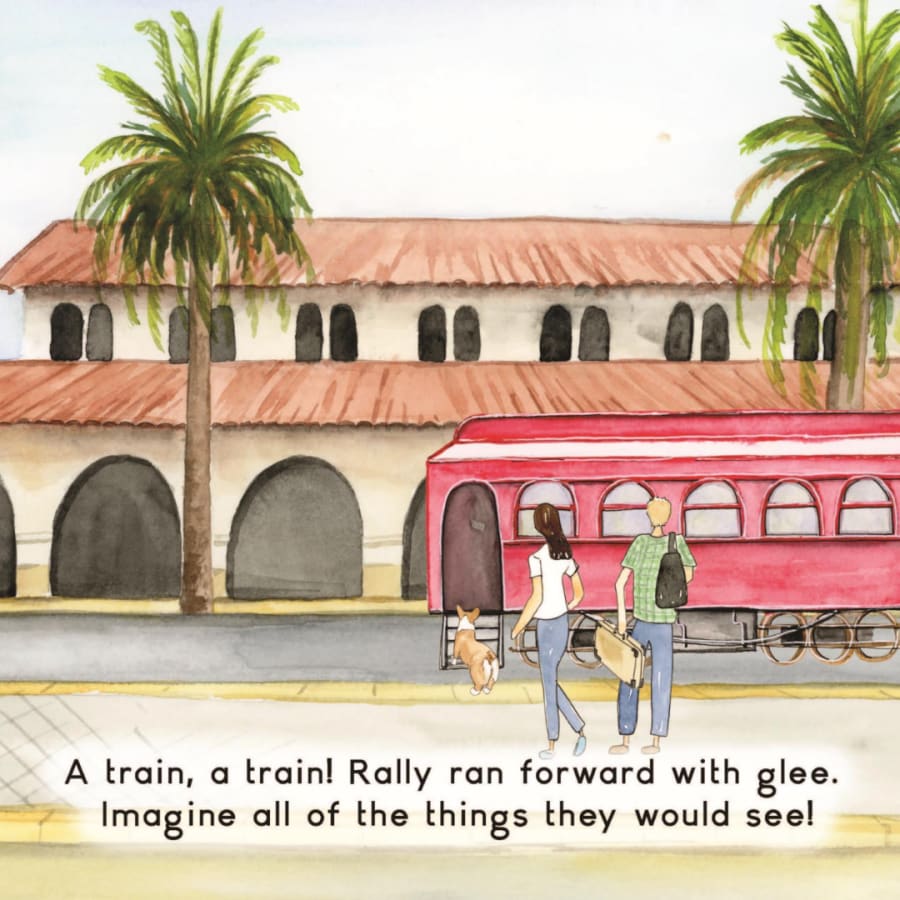
Using the book: Page 3 only, for about a minute when the compelling question is launched: Rally's family arrives at a station, and students ask why a town would have one.
Two guides are the featured sources: the Sedalia Katy Depot guide and the Utah State Railroad Museum at Ogden Union Station guide, which students met in 3B. Students work from the excerpts on the timeline pages; project the guides to show where they come from. Or find a verified museum near your school in the field trip planner.
Session 1 45 minutes
- Show page 3 of Rally Takes the Train for about a minute: the family arriving at the station.
- Ask why a town would have a train station, and what might change if trains started stopping in our town. Partners talk, then record predictions on a chart.
- Post the compelling question, How did the railroad change a town?, and the three supporting questions: What happened in Sedalia? What happened in Ogden? What happened in both towns at about the same time, and why?
- Teach cause, effect and timeline directly. Post two lists of signal words. Cause and effect: because, so, as a result, led to. Time: by (a year), in (a year), soon, later, ten years later, today.
- Model with one sentence from the Sedalia guide about traffic growing so fast that larger depot facilities soon followed. Name the cause, the effect and the time words.
- Pass out the Sedalia page. Read the excerpt aloud twice while students follow along. Teach platted directly: planned and mapped out as a town.
- Partners circle every year and box every signal word.
- They fill in the timeline, then check it against the class timeline as you add Sedalia's events in one color.
- Formative task: partners write two cause and effect pairs in the organizer, each with a signal word from the excerpt.
Look for: Pairs that list two events in order and call it cause and effect. Ask whether the first event made the second happen or only came first.
- Two pairs read one cause and effect pair. The class decides whether the excerpt proves the link and which word shows it.
Session 2 45 minutes
- Read two pairs of Sedalia events aloud. One pair has a signal word linking them; the other is only in time order.
- Students stand if the first event caused the second and stay seated if it only came first. One student explains each pair.
- Remind students they took notes on the Ogden museum in 3B; today they read its history. Pass out the Ogden page.
- Partners read the excerpt together, circle years and fill in the timeline (1870, 1889, 1923, 1924, 1978, 1988).
- They write two cause and effect pairs. For the fire and the new station a year later, the excerpt has no signal word, so students call it a probable cause and explain why.
- Add Ogden's events to the class timeline in the second color.
- Pass out the compare page. Partners fill in the table, lining up both towns by time.
- Gather at the class timeline. Ask what happened in both towns at about the same time: the railroad arrived around 1870, both built bigger stations, and in the late 1970s both stations began new roles as protected or museum buildings.
- Students write one answer on the compare page.
- On a sticky note, each student finishes the sentence: In both towns, the railroad...
Session 3 40 minutes
- Read from the Ogden guide that its Riding in Style exhibit focuses on the Black railroad service workers, the cooks, porters, waiters and redcaps, who made passenger travel run. Read from the Sedalia guide that its exhibit gallery has storyboards on people who shaped the town, including the Smith men, a family of railroaders.
- Ask whose stories our short excerpts left out, and where we could look to learn more (museum exhibits, local historians, old photographs).
- Students complete the claim and evidence organizer on the compare page: a claim that answers How did the railroad change a town?, one piece of evidence with a year from each town, and reasoning that uses a cause and effect word.
- Students who finish write the claim as a short paragraph on lined paper.
- Confer with students who are writing a fact list instead of a claim. Have them start with the words of the compelling question.
- Partners read their claims to each other and check for a year from each town.
- Compare claims with the Session 1 predictions.
- Optional action: the class drafts one question to send to a local library or historical society about how a railroad, highway or main street changed our own town.
Short on time? If you lose a day, combine Sessions 2 and 3 into one 58-minute block: the Ogden timeline (20 minutes), the same-time comparison as a whole-class talk at the class timeline (8 minutes), a 5-minute reading of the two exhibit descriptions for whose story is missing, and 25 minutes for the claim. Skip the Session 2 warm-up and exit ticket.
Finished early? Write three questions you would ask a historian about the people who worked at the Sedalia depot or Ogden's Union Station.
What to listen for
| If children say or do this | Try this |
|---|---|
| Every event on the timeline caused the next one. | Ask whether the first event made the second happen or only came first. Look for a signal word; if there is none, it is at most a probable cause and needs a reason. |
| The fire is why Ogden's station became a museum. | Line up the years: fire 1923, new station 1924, museum 1978. The fire most likely led to the new station; the museum came more than 50 years later. |
| A claim that says trains are cool, or lists facts without answering the question. | Reread the compelling question together and have the student start with its words: The railroad changed a town by... |
Differentiation
Extra support
Give pre-cut event cards for each timeline so students sort them before writing. Highlight the years in both excerpts, and provide the frames "___ happened, so ___." and "The railroad changed a town by ___."
Multilingual learners
Teach town, station, grew, bigger and museum with the guides' photos. Give frames: "In ___, ___ happened." "Because ___, ___." "In both towns, ___." Allow students to label timeline events with a picture and one English word. Key language use: Explain.
Extension
Add a third timeline for your own town using one fact you can find out, and test whether your claim still holds.
Check for understanding
Success criterion: Places related events from two guides in correct time order, explains at least two causes and effects with signal words, compares developments that happened in both towns at about the same time, and writes a claim supported by evidence from both towns.
| Level | What you see |
|---|---|
| 3Meets (level 3) | Completes both timelines in order, writes accurate cause and effect pairs with signal words, names a development that happened in both towns at about the same time, and writes a claim with dated evidence from each town and reasoning. |
| 2Approaching (level 2) | Completes the timelines with one or two events out of order, names causes and effects without signal words, or writes a claim with evidence from only one town. |
| 1Beginning (level 1) | Lists events without time order or confuses cause with effect, and writes facts without a claim that answers the question. |
Family connection
Send home the half-page note in the printables. The text is below so you can paste it into a newsletter or app.
English
How did the railroad change a town? That was the big question your child worked on over three days. We built timelines for two real railroad towns, Sedalia, Missouri and Ogden, Utah, using museum guides, and found that the railroad reached both around 1870 and both towns grew fast enough to need bigger stations. Then your child wrote a claim and backed it up with evidence. For a 5-minute family timeline at home, name three or four events from your family or your town in order, and talk about what caused one of them. Free train museum guides are at rallytakesthetrain.com/train-museums.
Español
¿Cómo cambió el ferrocarril a un pueblo? Esa fue la gran pregunta en la que su hijo o hija trabajó durante tres días. Con guías de museos, hicimos líneas de tiempo de dos pueblos ferroviarios reales, Sedalia (Missouri) y Ogden (Utah): el tren llegó a los dos alrededor de 1870 y ambos crecieron tanto que necesitaron estaciones más grandes. Después su hijo o hija escribió una afirmación y la apoyó con evidencia. En casa, nombren en orden tres o cuatro sucesos de su familia y hablen de qué causó uno de ellos (5 minutos). Hay guías gratuitas de museos de trenes en rallytakesthetrain.com/train-museums.
Teacher tips
- Keep the class timeline on the wall with the two towns in different colors. Seeing 1870 line up in both places is the moment the comparison makes sense to students.
Standards alignment
| Standard | Text |
|---|---|
| C3 D2.His.1.3-5 (opens in a new tab) | Create and use a chronological sequence of related events to compare developments that happened at the same time. |
| CCSS RI.3.3 (opens in a new tab) | Describe the relationship between a series of historical events, scientific ideas or concepts, or steps in technical procedures in a text, using language that pertains to time, sequence, and cause/effect. |
| C3 D2.His.14.3-5 (opens in a new tab) | Explain probable causes and effects of events and developments. |
Check codes against your state's version of these standards. How we build and review lessons.
Keep exploring
Pick a museum guide and find two years in it. Put the two events on a timeline and ask: did the first event help cause the second, or did it only happen first?
Teach it with the real book
4.9 stars on Amazon
Rally Takes the Train is a rhyming, hand-painted picture book about a corgi's first train ride, from the big station stairs to a dark tunnel to the people waiting at the end of the line. Children ask for it again and again, and every unit here opens with it.
Questions teachers ask
What are the compelling and supporting questions?
The compelling question is How did the railroad change a town? Three supporting questions break it down: What happened in Sedalia? What happened in Ogden? What happened in both towns at about the same time, and why? Post all four on the first day and leave them up. Session 1 answers the first, Session 2 the next two, and Session 3 asks students to answer the big question with a claim.
Why launch with a picture of a station?
Page 3 of Rally Takes the Train shows the family arriving at a station, and it is shown for about a minute only. Students ask why a town would have a station and what might change if trains started stopping in their own town. Partners talk, and you record predictions on a chart. Save that chart, because Session 3 ends by comparing students' claims with those first guesses.
How do students tell sequence from cause and effect?
Sequence is the order events happened; cause and effect means one event made another happen. Teach the signal words first (because, so, as a result, led to) beside time words like soon and ten years later. The Session 2 warm-up practices the difference: students stand if the first event caused the second and stay seated if it only came first, then one student explains each pair.
The Ogden fire and the new station have no signal word. What do students write?
The excerpt gives a fire in 1923 and a new station in 1924 but no word like so or because. Students can call it a probable cause and explain why, using the dates. It is also where a common mistake shows up: some students say the fire is why the station became a museum. Line up the years and they see the museum came in 1978, more than 50 years later.
What do the two towns have in common?
Lined up on the class timeline in two colors, the towns match in three places. The railroad arrived in both around 1870. Both built bigger stations as traffic grew. In the late 1970s both stations began new roles as protected or museum buildings. Students find these during the third supporting question, and seeing 1870 sit side by side in two colors is usually when the comparison clicks.
Why use only the printed excerpt about the Ogden fire?
The full paragraph in the Ogden guide includes details that are not suited to this lesson. The excerpt on the Ogden timeline page gives the years and events students need, so read the fire only from that page and project the guide just to show where the text comes from. Read both guides' history sections yourself before teaching so you know what each excerpt leaves out.
Whose stories does Session 3 add?
Session 3 opens by asking whose story is missing. You read from the Ogden guide that its Riding in Style exhibit focuses on the Black railroad service workers, the cooks, porters, waiters and redcaps who made passenger travel run. From the Sedalia guide you read about storyboards on people who shaped the town, including the Smith men, a family of railroaders. Students then name places to learn more.
What does a strong final claim look like?
It answers the compelling question directly, gives one piece of evidence with a year from each town, and uses a cause and effect word in the reasoning. For example, a student might claim the railroad made towns grow, cite the larger Sedalia depot that followed fast traffic growth and Ogden's bigger station, and explain with so or led to. Students writing a fact list restart with the words The railroad changed a town by.
Some students cannot read the excerpts on their own. What are the options?
Pair each of them with a stronger reader, and read the Sedalia excerpt aloud twice in Session 1 while everyone follows. Pre-cut event cards let students sort the timeline before writing, and highlighted years make dates easy to find. Multilingual learners may label timeline events with a picture and one English word. Every student still fills in a personal timeline.
What is the optional action step at the end?
After partners share claims, the class can draft one question to send to a local library or historical society about how a railroad, highway or main street changed their own town. It takes a few minutes, it is optional, and it moves the compelling question from two faraway towns to the place students live. Any reply makes a good follow-up later in the year.
How does this lesson close out the unit?
It pulls from earlier lessons on purpose. Students return to the Ogden museum they took notes on in 3B, now reading its history, and they use the time order skills from 3C on a timeline. Finished claims can go on display beside the conductor stories from 3A, which makes an easy family share to end the unit.
Related lessons
Trains Then and Now: Comparing a Station Long Ago and Today
A two-session inquiry lesson built on one question: how has taking a train trip changed since long ago? Children study two museum guides about old stations, compare them on a Venn diagram, add page 3 of Rally Takes the Train as a picture of today, then fill a then and now chart and draw a claim with evidence..
Main Idea and Key Details: Taking Notes From a Real Museum Guide
A two-day 3rd grade close reading lesson.
The Transcontinental Railroad: Different Perspectives and Sources
A two-session 5th grade C3 inquiry on the transcontinental railroad.
Teaching with Rally Takes the Train
Every lesson is free for classroom and homeschool use. Add the paperback to your classroom library, or review a lesson to earn a free copy if you are a credentialed teacher. Keep the journey going in about 650 free train museum guides, plan a visit with the field trip planner, or browse all lessons for educators.