
Poetry Lesson for 4th Grade: Rhyme, Rhythm and Meter in Train Couplets
A three-day 4th grade poetry sequence. On Day 1 the class hears the whole rhyming picture book, then close reads four of its couplets to mark rhyme, beats and meter and contrasts verse with prose. On Days 2 and 3 students draft, revise and read aloud couplets about a trip moment of their own.
- Grade
- 4th Grade
- Subjects
- Reading literature (poetry), Writing
- Time
- Three sessions: 45, 45 and 40 minutes
- Structure
- Close reading of a mentor text, then a writing workshop, three days
- Prep
- 20 minutes: copy the three printables (one each per student), copy the page 4 couplet onto chart paper with space to mark beats, flag pages 4, 8, 12 and 13, and draft your own two-line demonstration couplet about a small trip moment before Day 2
- Grouping
- Whole class on the carpet, partners at tables, independent writing with conferences
- Book
- Whole book, read aloud
- CCSS RL.4.5
- CCSS W.4.4
 Need the book? Get the paperback on Amazon (opens in a new tab) or earn a free classroom copy.
Days 1-3 of the 4th Grade train unit
Builds on: This opens the unit. It is the only lesson that reads the whole book aloud, so it gives the class a shared story for the next two weeks.
Leads to: Days 4 and 5 (4B) switch from verse to informational prose: students research old trolleys in two museum guides.
Learning objective
Students explain how a poem differs from prose by referring to verse, rhythm, meter and rhyme in a picture book's couplets, then draft, revise and read aloud three couplets of their own with a steady beat for a class poetry reading.
I can find the rhyme, rhythm and meter in a poem, explain how a poem is different from prose, and write and revise my own couplets so the beat sounds steady.
Vocabulary to teach
Materials
- Rally Takes the Train by Kelsey Lizee Cecil: get the paperback on Amazon (opens in a new tab) or earn a free classroom copy
- Chart paper with the page 4 couplet written in two lines, large enough to mark stressed syllables
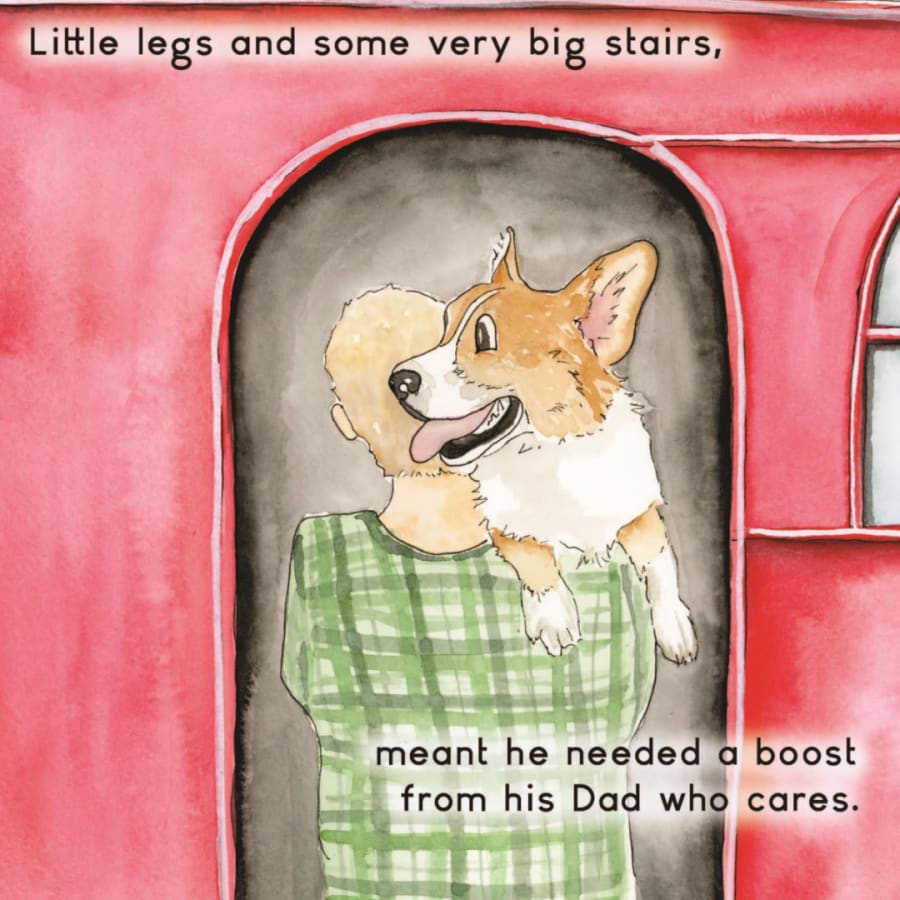
- Couplet Close Read printable (one per student, Day 1): the couplets from pages 4, 8, 12 and 13 in large type, a crop of page 4, and a table for rhyming words and beats
- Poem vs Prose printable (one per student, Day 1): space to rewrite one couplet as prose, a T-chart and lines for a short comparison
- Couplet Workshop printable (one per student, Days 2 and 3): a planning box, a rhyme bank, lines for three couplets and a revision checklist
- Your own demonstration couplet on chart paper (Day 2) and one deliberately bumpy line to fix (Day 3)
- Pencils and two colors of highlighter
Before you teach
- Practice reading pages 4, 8, 12 and 13 aloud and mark where you hear the strong beats. Your marks are a guide, not an answer key: some students will stress words differently.
- Write your Day 2 demonstration couplet ahead of time about a small, ordinary moment (waiting for a bus, a car ride in the rain). Keep it slightly imperfect so you can revise it in front of the class on Day 3.
- Decide your audience for Day 3: your own class in an author's chair, a younger buddy class or families. Writers shape the poem better when they know who will hear it.
- Plan conferences: list four or five writers to see on Day 2 and a small group of students who usually struggle to get started.
Lesson plan
Close reading of a mentor text, then a writing workshop, three days. RL.4.5 asks students to talk about verse, rhythm and meter, which they can only do after slow, repeated reading of a few lines. Writing good couplets then takes drafting and revising time, so the writing gets two workshop days instead of 20 rushed minutes.
Using the book: Read the whole book once at the start of Day 1, straight through, for the story. The close reading that follows uses only the couplets on pages 4, 8, 12 and 13, which are printed on the Couplet Close Read page. On Day 2 project page 4 as the mentor couplet.
Day 1 45 minutes
- Read the book straight through with expression, without stopping to teach (about 4 minutes).
- Ask partners to tell each other their favorite moment and one line they remember the sound of. Take two answers.
Look for: Which students remember a line by its sound or rhyme rather than its meaning.
- Move to seats and hand out Couplet Close Read. Read the page 4 couplet from the chart twice while students follow.
- Teach verse, couplet, rhythm and meter directly, each with a short definition students copy into the word bank on the page.
- Tap the page 4 couplet together and mark the strong beats on the chart (most classes hear four in each line: LIT-tle LEGS and some VER-y big STAIRS).
- Partners read pages 8 and 12 aloud to each other, mark the strong beats and fill in the rhyming words and beat counts in the table.
Look for: Students who count every syllable instead of only the strong beats; have them say the line the way they talk, then tap.
- Point to the second line on page 8. Partners count its beats and compare with line 1. Ask what the short, quick line does to the moment (it sounds like a sudden surprise).
- Partners read page 13. Ask: Do the last two lines rhyme the way the others do? What do you hear in tunnel and trouble?
- Collect answers on the chart under the heading Author's choices. Students write one sentence in the last row of the table.
Look for: Answers that point to the words on the page, not just "it sounds good".
- Students rewrite the page 4 couplet as one ordinary prose sentence on the Poem vs Prose page.
- They fill the T-chart (what the couplet has, what the prose sentence has) and write three sentences explaining two differences, using at least two of the words verse, rhythm, meter and rhyme.
- Collect the pages: they show you who is ready to write in meter tomorrow.
Day 2 45 minutes
- Connection: remind students they found four strong beats in many of the book's lines yesterday. Project page 4.
- Teaching point: poets pick one small moment and tell it two lines at a time, reading each line aloud to hear the beat.
- Demonstrate with your prepared moment: say the moment in plain words, write line 1, list three rhyme words for its last word, write line 2, then tap both lines.
- Active engagement: partners suggest a different second line for your line 1 and tap it. Link: today each writer drafts three couplets about one moment from a trip they took or want to take.
Look for: Whether students choose a single moment, not a whole trip.
- Pass out Couplet Workshop (2 minutes). Students fill the planning box: the moment, where it happens, one sound and one feeling.
- Students draft three couplets in pencil, whispering each line to check the beat.
- Confer with four or five writers for 3 to 4 minutes each. Ask them to read a couplet aloud and listen together for a line that stumbles.
- Pull a small group of students who are stuck for 5 minutes: build a rhyme list together from the rhyme bank before they write.
Look for: Writers who change the meaning just to make a rhyme; ask what they really wanted to say and look for a different rhyme word.
- Two or three writers read one couplet aloud. The class taps the beat back.
- Listeners name one thing that worked, using the words rhythm, rhyme or meter.
Day 3 40 minutes
- Show your demonstration couplet with one line that has too many beats. Read it aloud and let the class hear the stumble.
- Think aloud through two fixes: cut a word, or swap a long word for a short one, and tap after each try.
- Remind students of page 8: a line can break the pattern on purpose, if the writer can say why.
Look for: Students who can point to the exact word that makes a line stumble.
- Partners swap drafts and read each other's poem aloud. Where the reader stumbles, the writer marks the line.
- Writers revise the marked lines, checking the revision checklist, then copy the final poem neatly onto the last lines of the page.
- Circulate and confer briefly with students you did not see on Day 2.
- Each writer reads the one couplet they are proudest of. Keep it moving: the next reader stands as the last one sits. Two volunteers read the whole poem at the end.
- After every fourth or fifth reader, ask one listener to name a structural element they heard, such as a steady meter or a line that changed the pattern on purpose.
Short on time? If you lose a day, combine Days 2 and 3 into one 55-minute workshop: a 7-minute minilesson, 30 minutes to draft two couplets, 10 minutes of partner read-aloud and revision, and an 8-minute share in small circles. Keep Day 1 whole, because the close read and the Poem vs Prose page carry the RL.4.5 evidence.
Finished early? Write a fourth couplet that breaks the pattern on purpose, like page 8, and write one sentence explaining the effect.
What to listen for
| If children say or do this | Try this |
|---|---|
| Every syllable is a beat, so a line has 10 or 11 beats. | Have the student say the line in a normal talking voice and tap only the syllables they lean on. Count the taps together. |
| A poem is any writing that rhymes, so the prose sentence becomes a poem if two words rhyme. | Point to the line breaks and the beat: verse is arranged in lines on purpose, and prose runs in sentences to the edge of the page. |
| To make a rhyme work, the writer swaps in a word that does not make sense (my dog flew to the store / because he wanted more). | Ask what really happened in the moment, then brainstorm three other rhyme words or flip the line so a different word comes last. |
Differentiation
Extra support
On Day 2, give a first line written for the student's chosen moment so they write only the rhyming second line, and count beats on fingers instead of tapping. Two finished couplets and a two-sentence poem and prose comparison is a fair goal.
Multilingual learners
Preteach verse, rhyme, beat and prose with the page 4 couplet and gestures (a tap for each beat, a sweep of the hand for each line). Provide frames: "A poem has ___. Prose has ___." Students may plan the moment in the home language and talk about how rhyme works in that language. Key language use: Explain.
Extension
Rewrite one couplet so both lines follow exactly the same pattern of stressed and unstressed syllables, then read both versions aloud and explain which sounds better and why.
Check for understanding
Success criterion: Writes three couplets about one moment with rhyme and a mostly steady beat, revises at least one line for meter, and explains two differences between a poem and prose using at least two of the terms verse, rhythm, meter and rhyme.
| Level | What you see |
|---|---|
| 3Meets (level 3) | The Day 1 comparison names two structural differences with correct terms. The final poem has three rhyming couplets about one moment, most lines keep about four strong beats, and the draft shows at least one line revised for meter. |
| 2Approaching (level 2) | The couplets rhyme and stay on one moment, but the beat is uneven in several lines or no revision is visible; or the comparison names only one difference. |
| 1Beginning (level 1) | Lines rhyme but are not organized as couplets, the poem wanders across many moments, or the student cannot yet explain how a poem differs from prose. |
Family connection
Send home the half-page note in the printables. The text is below so you can paste it into a newsletter or app.
English
This week our class read Rally Takes the Train the way poets read: we tapped the beats in its rhyming couplets and talked about why the author sometimes breaks the pattern. Then your child wrote three couplets of their own about one small moment on a trip, revised them so the beat sounds steady, and read them aloud. Ask to hear the poem! For 5 minutes at home, choose a favorite song or rhyme and tap the strong beats together on the table. How many are in each line? Free train museum guides are at rallytakesthetrain.com/train-museums.
Español
Esta semana la clase leyó Rally Takes the Train como lo hacen los poetas: marcamos los tiempos fuertes de sus pareados y hablamos de por qué la autora a veces rompe el patrón. Luego su hijo o hija escribió tres pareados sobre un momento pequeño de un viaje, los revisó para que el ritmo sonara parejo y los leyó en voz alta. ¡Pídale que se lo lea! En casa, por 5 minutos, escojan una canción o rima favorita y den golpecitos en la mesa en cada tiempo fuerte. ¿Cuántos hay en cada verso? Hay guías gratis de museos de trenes en rallytakesthetrain.com/train-museums.
Teacher tips
- Students will disagree about which syllables are stressed, and that is useful. Accept any marking a student can justify by reading the line aloud.
- The book's meter is not perfectly regular, which makes it a better teaching text than a strict nursery rhyme: there is something real to notice and explain.
- If you want the poems to connect to the rest of the unit, students can save a fourth couplet for after the 4B research and write it about a trolley fact they found.
Standards alignment
| Standard | Text |
|---|---|
| CCSS RL.4.5 (opens in a new tab) | Explain major differences between poems, drama, and prose, and refer to the structural elements of poems (e.g., verse, rhythm, meter) and drama (e.g., casts of characters, settings, descriptions, dialogue, stage directions) when writing or speaking about a text. |
| CCSS W.4.4 (opens in a new tab) | Produce clear and coherent writing in which the development and organization are appropriate to task, purpose, and audience. (Grade-specific expectations for writing types are defined in standards 1-3 above.) |
Check codes against your state's version of these standards. How we build and review lessons.
Teach it with the real book
4.9 stars on Amazon
Rally Takes the Train is a rhyming, hand-painted picture book about a corgi's first train ride, from the big station stairs to a dark tunnel to the people waiting at the end of the line. Children ask for it again and again, and every unit here opens with it.
Questions teachers ask
Why does this poetry lesson take three days?
Day 1 is a close reading: students reread four couplets to mark rhyme and beats, then write a short poem versus prose comparison. Days 2 and 3 are workshop days with a 10-minute minilesson, independent writing while you confer, and a share. Writing in meter needs drafting time and then revising time, and both disappear if the writing is squeezed into the end of a reading period.
Where do students hear rhythm and meter in the book's couplets?
The close reading uses only pages 4, 8, 12 and 13, printed on the Couplet Close Read page. Most classes hear four strong beats in each line of page 4. The second line on page 8 is short and quick, which makes the moment sound like a surprise. Page 13 ends on tunnel and trouble, a near rhyme, so students have a real author's choice to explain.
What if students count every syllable as a beat?
That is the most common mix-up on Day 1, and it produces lines with 10 or 11 beats. Have the student say the line in a normal talking voice and tap only the syllables they lean on, then count the taps together. Marking the page 4 couplet on chart paper as a class first gives everyone a model of what a strong beat sounds like.
Is it a problem if two students mark the stressed syllables differently?
No. Your own marks from practicing pages 4, 8, 12 and 13 are a guide, not an answer key. Accept any marking a student can justify by reading the line aloud. The disagreement is useful, because it forces students to listen closely and explain what they hear, which is exactly the talk about rhythm and meter that RL.4.5 asks for.
Why rewrite a couplet as prose on Day 1?
Turning the page 4 couplet into one ordinary sentence makes the difference between verse and prose visible: the line breaks, the beat and the rhyme vanish. Students then fill a T-chart and write three sentences naming two differences with at least two of the terms verse, rhythm, meter and rhyme. Collect these pages. They show you who is ready to write in meter on Day 2.
What should a 4th grader write the couplets about?
One small moment from a trip they took or want to take: waiting on a platform, a car ride in the rain, the doors of a bus opening. Any kind of trip counts, so nobody needs to have ridden a train. The planning box on Couplet Workshop asks for the moment, where it happens, one sound and one feeling, which keeps a poem from wandering across a whole vacation.
How do I keep Day 2 conferences moving?
List four or five writers before class and give each 3 to 4 minutes. Ask the writer to read one couplet aloud, then listen together for the line that stumbles. Spend 5 minutes with a small group of students who are stuck, building a rhyme list from the rhyme bank before they write. Anyone you miss gets a short conference during Day 3 revision.
What should I do when a writer changes the meaning just to force a rhyme?
Ask what really happened in the moment, then brainstorm three other rhyme words together, or flip the line so a different word lands at the end. The rhyme bank on the Couplet Workshop page helps here. A couplet that rhymes but says something silly is a draft, not a failure, and fixing it is good Day 3 revision work.
Can a line break the meter on purpose?
Yes, and the Day 3 minilesson says so. The short second line on page 8 is the model: it breaks the pattern to sound like a sudden surprise. Students may keep an irregular line if they can explain the effect. The revision checklist allows either a line revised for the beat or a pattern broken on purpose with a reason, and early finishers write a fourth couplet that does this.
What does the Day 3 poetry reading tell me about each writer?
Each writer reads the couplet they are proudest of, and you hear the beat directly. After every fourth or fifth reader, a listener names a structural element, such as a steady meter or a line that changed the pattern on purpose. Pair what you hear with the draft and final copy: a Meets poem has three couplets on one moment, mostly four strong beats a line and at least one visible revision.
What helps a writer who cannot get started?
Write a first line for the student's chosen moment so they only write the rhyming second line, and let them count beats on their fingers instead of tapping. Two finished couplets plus a two-sentence poem and prose comparison is a fair goal. Seat these writers together so the 5-minute rhyme list on Day 2 reaches all of them at once.
How do the couplets connect to the trolley research that follows?
Days 4 and 5 switch from verse to informational prose, the kind of writing students contrasted with poetry on Day 1, so the Poem vs Prose page is a natural bridge. If you want the poems to carry through the unit, students can save a fourth couplet and write it after the 4B research about a trolley fact they found.
Related lessons

Teaching with Rally Takes the Train
Every lesson is free for classroom and homeschool use. Add the paperback to your classroom library, or review a lesson to earn a free copy if you are a credentialed teacher. Keep the journey going in about 650 free train museum guides, plan a visit with the field trip planner, or browse all lessons for educators.