
Narrative Writing for 5th Grade: Write the Next Scene with a Picture Book Mentor Text
A three-day 5th grade writing workshop. On Day 1 the class hears Rally Takes the Train once and maps how its five scenes build to a turning point. On Days 2 and 3, short minilessons go back to single pages as mentor text while students plan, draft and revise the next scene with dialogue, description and pacing chosen on purpose.
- Grade
- 5th Grade
- Subjects
- Writing, Reading literature
- Time
- Three workshop days: 50, 50 and 50 minutes
- Structure
- Writing workshop, three days
- Prep
- 15 minutes before Day 1: copy the scene map, scene planner and draft page (one of each per student, about 75 copies for 25 students), flag pages 6, 11 and 15 of the book with sticky notes, draw the five-scene chart frame on chart paper, and write the fast sentence and slow paragraph for Day 2 on a second chart
- Grouping
- Whole class on the carpet for each minilesson, independent writing at desks with conferences and one small group, partners for revision
- Book
- Whole book, read aloud
- CCSS W.5.3
- CCSS W.5.3b
- CCSS RL.5.5
 Need the book? Get the paperback on Amazon (opens in a new tab) or earn a free classroom copy.

Days 1-3 of the 5th Grade train unit
Builds on: This is the opening of the unit, and the only lesson where the whole book is read aloud. Students meet Rally, the trip and the tunnel here.
Leads to: Plot the Route (5C) turns the trip into a coordinate map, and Should We Save the Old Train? (5B) closes the unit with the same workshop routine for an opinion piece.
Learning objective
Students explain how the scenes of a picture book fit together to build to a turning point and an open ending, identify where the author slows down and speeds up time, and write a next scene that uses dialogue, sensory description and deliberate pacing.
I can explain how a story's scenes fit together, and I can write a new scene that uses dialogue, description and pacing on purpose.
Vocabulary to teach
Materials
- Rally Takes the Train by Kelsey Lizee Cecil: get the paperback on Amazon (opens in a new tab) or earn a free classroom copy
- Scene map printable (Day 1), one per student: five boxes, one for each scene of the book with its pages, lines to explain why the tunnel scene matters, and lines for three next-scene ideas
- Scene planner printable (Day 2), one per student: four planning boxes (goal or problem, setting, the moment to slow down, dialogue) and a transition word bank
- Draft page printable (Day 3), one per student: the page 17 art, writing lines and a self-check list
- Two charts: the five-scene frame for Day 1, and a fast sentence beside a slow paragraph for Day 2
- A conferring clipboard or sheet with every student's name
- Optional: the North Shore Scenic Railroad guide (rallytakesthetrain.com/museums/north-shore-scenic-railroad-duluth-minnesota), printed or on a tablet, for one small group on Day 2
Before you teach
- Write the Day 2 chart ahead of time. Fast: We rode the train along the lake. It was fun. Slow: The whistle blew twice. Rally pushed his nose out the open window, and the wind flipped his big ears inside out. 'Hold on to him!' Mom laughed, grabbing his harness.
- Plan your conferences: four or five a day for three days reaches every writer once. Start Day 2 with the students whose Day 1 idea had no problem in it.
- Leave the book on the ledge with pages 6, 11 and 15 flagged. Students may walk up to check a page during writing time.
- Decide now whether you will pull the optional North Shore Scenic Railroad small group on Day 2. If so, print six copies of the route section and read it yourself first.
- Students who finish early on any day revise, they do not start a new story. Tell them so on Day 1.
Lesson plan
Writing workshop, three days. A scene with dialogue and real pacing takes more than one sitting to plan, draft and revise. Each day opens with a ten-minute minilesson built on one or two pages of the book, then most of the period goes to writing while you confer.
Using the book: Read the whole book aloud once, on Day 1, just for the story (about 4 minutes). On Days 2 and 3 you go back only to the page or two that carry that day's teaching point: pages 11 and 15 for pacing, page 6 for dialogue.
Day 1 50 minutes
- Gather students on the carpet (about 2 minutes). Read Rally Takes the Train straight through with no stops, about 4 minutes, so students hear it as a story first.
- Ask one open question and take three answers: which page would you fight to keep if the author had to cut one, and why?
- Tell students that for the next three days this book is their mentor text, and that each of them will write the scene that comes after the last page.
Look for: Listen for students who name the tunnel pages; you will come back to them on Day 2.
- Teach scene and turning point with the vocab definitions.
- On the chart, name the five scenes with their pages: Getting ready (1 to 2), Boarding and meeting people (3 to 10), The tunnel (11 to 13), Slowing down and arriving (14 to 16), The greeting (17). Under each, write one word for what changes for Rally, taking suggestions.
- Think aloud about the tunnel: "If I took out the tunnel, this would still be a trip, but nothing would turn. The tunnel is where his excitement becomes fear and then courage, so every scene after it is about getting to the people he loves."
- Active engagement: partners decide which scene does the most work in the story and say why in one sentence. Take two pairs.
- Link: as students plan their own scene, they ask what changes for the character.
- Hand out the scene map (1 minute). Students fill in the five boxes and the lines about the tunnel, about 10 minutes.
- For the last 12 minutes, students list three possible next scenes on the bottom lines and circle the one that has a problem or a change in it.
- Confer with four or five students. Ask what changes for Rally in the idea they circled. If nothing changes, help them add a problem (a lost leash, a missed train, a storm on the platform).
Look for: Watch for scene maps that retell events without saying what changes; that is the RL.5.5 gap to address in a conference.
- Three students read their circled idea aloud. The class names the problem or change they hear.
- Collect the scene maps; read the tunnel explanations tonight to see who can explain how the scenes fit together.
Day 2 50 minutes
- Revisit pages 11 to 13 (about 1 minute): a few seconds in a tunnel get three pages. Then read the line on page 15 where the rest of the ride passes in one sentence. Name the moves: slow pacing and fast pacing.
- Show the chart with the fast sentence and the slow paragraph. Point to each move in the slow version: a sound, a feeling on the skin, something seen, and a line of dialogue that shows Mom's response.
- Active engagement: partners turn this fast sentence into three slow sentences with one sensory detail: We got off the train and Rally saw his people waiting. Two pairs read theirs aloud.
- Link: today each writer picks the one moment in their scene that deserves the slow treatment and writes it first.
- Hand out the scene planner (1 minute). Students plan for about 8 minutes: the goal or problem, the setting, the moment to slow down with two sensory details, and two or three lines of dialogue.
- Students draft the slowed-down moment first on notebook paper and put a star in the margin beside it. Then they draft the opening.
- Pull a small group of four or five students who are summarizing at the back table for about 6 minutes. Write one of their fast sentences together, then slow it down as a group before they try their own.
- If you offer the museum option, pull a second short group with the North Shore Scenic Railroad route section and have them highlight details they could see, hear and feel. The route is real; Rally riding it is invented, so the real details must stay accurate.
Look for: Look for a starred moment that is clearly longer and more detailed than the sentences around it.
- Partners read their starred moment aloud. The listener names one thing they could see or hear.
- One pair shares with the class, and the class names the move that slowed it down.
Day 3 50 minutes
- Revisit page 6 (under a minute): the kids' exact words about Rally. Ask what those words show that a sentence like the kids liked Rally would not.
- Put two versions of one moment on the board. A: Rally was excited about the park. "Let's go to the park," Dad said. B: Rally yanked the leash toward the gate. "Slow down, buddy, the park isn't going anywhere!" Dad said, jogging to keep up. Students vote on which line of dialogue does more work and point to what it shows that A only tells.
- Active engagement: students find one sentence in their own draft that could become a line of dialogue and rewrite it on a sticky note.
- Link: today's job is to finish the scene, add dialogue that shows responses, and write an ending that follows from what happened.
- Hand out the draft page. Students finish the scene there, 150 to 250 words, keeping the star beside the slowed-down moment. A notebook draft stapled behind the page is fine; nobody recopies a whole draft.
- Each scene needs at least two lines of dialogue, one transition from the word bank that moves time quickly, and an ending that follows from the events.
- In the last 5 minutes, students read their scene against the self-check list and fix one thing.
- Confer with the writers you have not reached yet. Ask them to point to the moment they slowed down and the line that shows a character's response.
- Writers read their scene aloud while the partner listens without looking at the page.
- The partner names the starred moment, one line of dialogue and why the ending fits. The writer makes one change based on what the partner could not find.
Look for: If a partner cannot find the slowed-down moment, the pacing is not working yet; that writer revises the starred part before turning in.
- Two or three writers read their scene to the class.
- Classmates name one move each writer borrowed from the mentor text: slow pacing, fast pacing or dialogue.
Short on time? With one fewer day, run Day 1 as written, then combine Days 2 and 3: teach the slow-down minilesson only, have students plan on the scene planner and draft just the starred moment plus an ending on the draft page, and replace the dialogue minilesson with one dialogue question in each conference. Keep a 5-minute partner check where the listener names the starred moment.
Finished early? Write a second, shorter scene that speeds through a whole hour in one or two sentences, then add a margin note on how the two scenes fit together.
Optional museum extension: Writers who want their scene on a real train ride can read the route section of the North Shore Scenic Railroad guide with you in a small group on Day 2 and borrow details they could see, hear and feel. Open the North Shore Scenic Railroad guide.
What to listen for
| If children say or do this | Try this |
|---|---|
| My scene is the whole next day: we ate breakfast, then went to the park, then went home. | Ask which one of those moments matters most. Have the writer star it, give it at least five sentences, and let the others shrink to one line each. |
| Dialogue repeats what the narration already said, for example "I am happy," said Rally happily. | Ask what the character would actually say out loud in that moment, then cut the narration the dialogue already shows. |
| The tunnel is just the scary part of the book. | Ask how Rally feels before the tunnel and after it. Push for the idea that the story turns there, which is why the author slows it down. |
Differentiation
Extra support
Give a sentence starter for the opening (The next morning, Rally...) and let students write the slowed-down moment only, using the four planner boxes as a paragraph frame. Offer the transition word bank as cut-apart strips they can lay on the page.
Multilingual learners
Pre-teach whistle, breeze, platform and leash with the book's illustrations. Give dialogue frames with punctuation shown ("___!" said ___.) and let students plan the scene orally in their home language with a partner before writing in English. Key language use: Narrate.
Extension
Students retell their slowed-down moment from the conductor's point of view, then compare the two versions in a margin note: what does each narrator notice that the other does not?
Check for understanding
Success criterion: Explains how the book's scenes build to a turning point, and writes a scene that orients the reader, uses dialogue and sensory description, controls pacing on purpose, and ends in a way that follows from the events.
| Level | What you see |
|---|---|
| 3Meets (level 3) | Explains how the tunnel scene works as the turning point; the draft has a clear opening, a deliberately slowed moment with two or more sensory details, dialogue that shows a character's response, a transition that moves time, and a fitting ending. |
| 2Approaching (level 2) | Maps the scenes with some support; the draft uses dialogue or description but not both, or pacing is even throughout so no moment stands out. |
| 1Beginning (level 1) | Lists events without explaining how they connect; the draft summarizes events in a list with little dialogue, description or change in pacing. |
Family connection
Send home the half-page note in the printables. The text is below so you can paste it into a newsletter or app.
English
Ask your child to read you the scene they wrote this week. The class used the picture book Rally Takes the Train as a model, noticed how the author slows down the scary tunnel moment and races through the rest of the ride, then wrote what happens after the last page. At home, try a 5-minute game: tell a short story about your day twice, once fast and once slowed down at the best moment with sounds and words people said. Free train museum guides at rallytakesthetrain.com/train-museums are full of real places for more stories.
Español
Pídale a su hijo o hija que le lea la escena que escribió esta semana. La clase usó el libro ilustrado Rally Takes the Train como modelo, notó cómo la autora hace más lenta la escena del túnel, que da miedo, y pasa rápido por el resto del viaje, y luego escribió lo que pasa después de la última página. En casa, prueben un juego de 5 minutos: cuenten algo breve de su día dos veces, una rápido y otra despacio en el mejor momento, con sonidos y palabras que dijo la gente. Las guías gratuitas de museos de trenes en rallytakesthetrain.com/train-museums tienen lugares reales para más cuentos.
Teacher tips
- Keep the fast sentence and slow paragraph chart on the wall for all three days. Students borrow the moves much more readily when the model stays in view.
- Conference notes from Day 1 tell you who needs the Day 2 small group. A writer whose idea has no problem in it will usually summarize, so pull those students first.
Standards alignment
| Standard | Text |
|---|---|
| CCSS W.5.3 (opens in a new tab) | Write narratives to develop real or imagined experiences or events using effective technique, descriptive details, and clear event sequences. |
| CCSS W.5.3b (opens in a new tab) | Use narrative techniques, such as dialogue, description, and pacing, to develop experiences and events or show the responses of characters to situations. |
| CCSS RL.5.5 (opens in a new tab) | Explain how a series of chapters, scenes, or stanzas fits together to provide the overall structure of a particular story, drama, or poem. |
Check codes against your state's version of these standards. How we build and review lessons.
Teach it with the real book
4.9 stars on Amazon
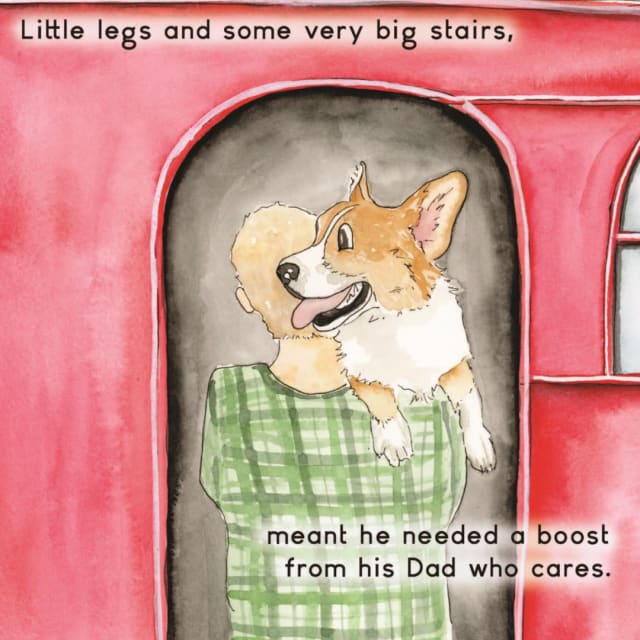
Rally Takes the Train is a rhyming, hand-painted picture book about a corgi's first train ride, from the big station stairs to a dark tunnel to the people waiting at the end of the line. Children ask for it again and again, and every unit here opens with it.
Questions teachers ask
Why does Write the Next Scene take three days instead of one?
Each day has a different job. Day 1 is hearing the story and mapping how its five scenes build to the tunnel. Day 2 is planning and drafting the one moment that deserves slow pacing. Day 3 is adding dialogue, finishing with an ending that follows from the events, and partner revision. Each day has a minilesson of 10 to 12 minutes, and most of the 50 minutes goes to writing while you confer.
Which pages come back after the Day 1 read-aloud, and why only those?
The whole book is read once on Day 1, straight through in about four minutes, so students hear it as a story. After that you return only to the pages that carry a teaching point: pages 11 to 13 and the line on page 15 for slow and fast pacing on Day 2, and page 6, with the kids' exact words, for dialogue on Day 3. Flag those pages and let students walk up to check them during writing time.
What should a finished scene map show?
Five boxes, one for each scene, from getting ready to the greeting, with a word for what changes for Rally in each. Below that, a few lines on why the tunnel scene matters, and three ideas for a next scene with one circled. The circled idea should contain a problem or a change. A map that only retells events without saying what changes is the RL.5.5 gap to pick up in a conference.
What makes the tunnel the turning point of the story?
It is where the story turns: Rally's excitement becomes fear and then courage, and every scene after it is about reaching the people he loves. Take the tunnel out and it is still a trip, but nothing changes. Students who call it just the scary part need one question: how does Rally feel before the tunnel, and how does he feel after? That gap explains why the author slows those few seconds down.
What goes on the fast and slow chart for Day 2?
Write it before Day 1. Fast: We rode the train along the lake. It was fun. Slow: The whistle blew twice. Rally pushed his nose out the open window, and the wind flipped his big ears inside out. 'Hold on to him!' Mom laughed, grabbing his harness. In the minilesson, point to the sound, the feeling on the skin, the thing seen and the line that shows Mom's response. Keep the chart up all three days.
Who belongs in the Day 2 small group?
The four or five students who are summarizing instead of slowing down. Your Day 1 conference notes will point to them: a writer whose idea has no problem in it usually writes a list of events. Pull them to the back table for about six minutes, write one of their fast sentences together, slow it down as a group, then send them back to try their own starred moment.
Can a student set the scene on the North Shore Scenic Railroad?
Yes, as an option. On Day 2 you can pull a short second group with the route section of the North Shore Scenic Railroad guide (print six copies and read it yourself first). Students highlight details they could see, hear and feel along the route. Remind them that the route is real and Rally riding it is invented, so any real detail they borrow has to stay accurate.
What if a student's next scene covers a whole day?
That is the most common draft: we ate breakfast, went to the park, then went home. Ask which one moment matters most. The writer stars it and gives it at least five sentences, and the other moments shrink to a line each, using a transition from the word bank to move time quickly. The result is the same pacing contrast students noticed between the tunnel and the rest of the ride.
What must the Day 3 draft include?
About 150 to 250 words on the draft page, with a star beside the slowed-down moment, at least two lines of dialogue, one transition that moves time quickly and an ending that follows from the events. A notebook draft stapled behind the page is fine, since nobody recopies a whole draft. In the last five minutes of writing time, students read against the self-check list and fix one thing.
How does partner revision work on Day 3?
The writer reads the scene aloud while the partner listens without looking at the page. The partner then names three things: the starred moment, one line of dialogue and why the ending fits. If the partner cannot find the slowed-down moment, the pacing is not working yet, and the writer revises that part before turning it in. The whole routine takes about seven minutes.
Can the workshop run in a 40-minute writing block?
Yes, if you protect independent writing time. Trim the minilessons to the teaching point and one quick partner try, cut each share to a single student, and keep writing at 25 minutes or more. On Day 3, partner revision can move to the start of the next morning. What should not shrink is conferring, because that is where you catch scenes with no problem or no slowed moment.
How does this workshop set up the rest of the unit?
It opens the unit, so students meet Rally, the trip and the tunnel here. Plot the Route (5C) borrows those places for a made-up rail map on the coordinate plane, without rereading anything. Should We Save the Old Train? (5B) closes the unit with the same workshop routine of minilesson, long writing time, conferring and share, this time for an opinion piece built on museum evidence.
Related lessons
Rhyme, Rhythm and Meter: Write Train Couplets
A three-day 4th grade poetry sequence.
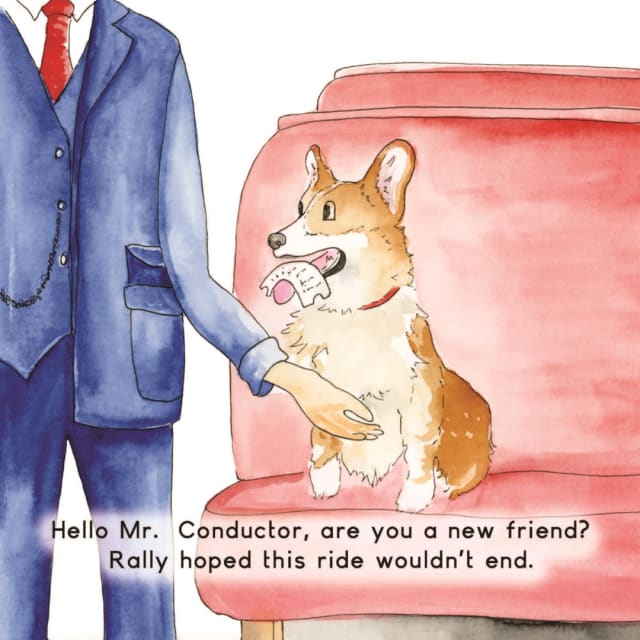
Whose Story Is It? Point of View and a Conductor's Narrative
A three-day 3rd grade point of view lesson.
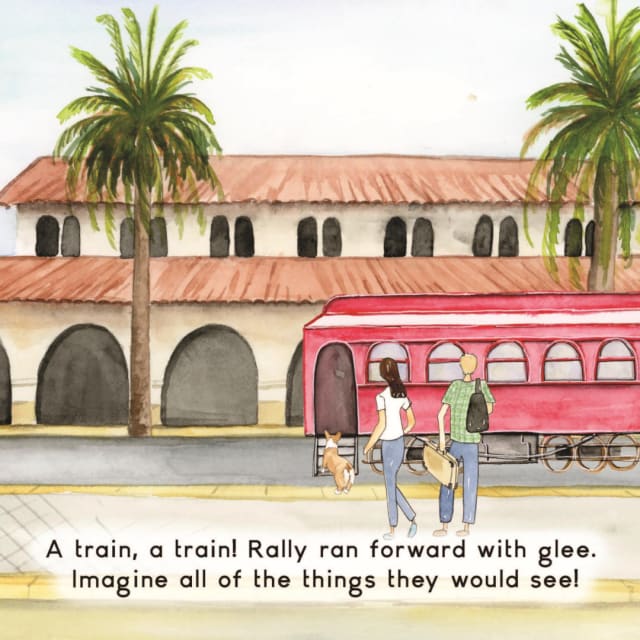
Should We Save the Old Train? Argument Writing with Museum Evidence
A three-day 5th grade writing workshop that closes the train unit.
Teaching with Rally Takes the Train
Every lesson is free for classroom and homeschool use. Add the paperback to your classroom library, or review a lesson to earn a free copy if you are a credentialed teacher. Keep the journey going in about 650 free train museum guides, plan a visit with the field trip planner, or browse all lessons for educators.