
Argument Writing for 5th Grade: Should We Save the Old Train?
A three-day 5th grade writing workshop that closes the train unit. Partners race through three real train museum guides to find evidence, then each student takes a side on whether communities should spend years, money and volunteer time saving old trains, plans an opinion piece, drafts it and answers the other side.
- Grade
- 5th Grade
- Subjects
- Writing, Reading informational text, Social studies (history)
- Time
- Three workshop days: 50, 50 and 45 minutes
- Structure
- Writing workshop with sources, three days
- Prep
- 20 minutes: check that the three guides open on student devices (or print the sections the source hunt names), copy the source hunt (one per pair) and the planner and draft page (one each per student), write the mentor paragraph on chart paper, and set up a visible timer
- Grouping
- Whole class for minilessons, partners with one device for the source hunt, independent writing with conferences, partners for revision
- Book
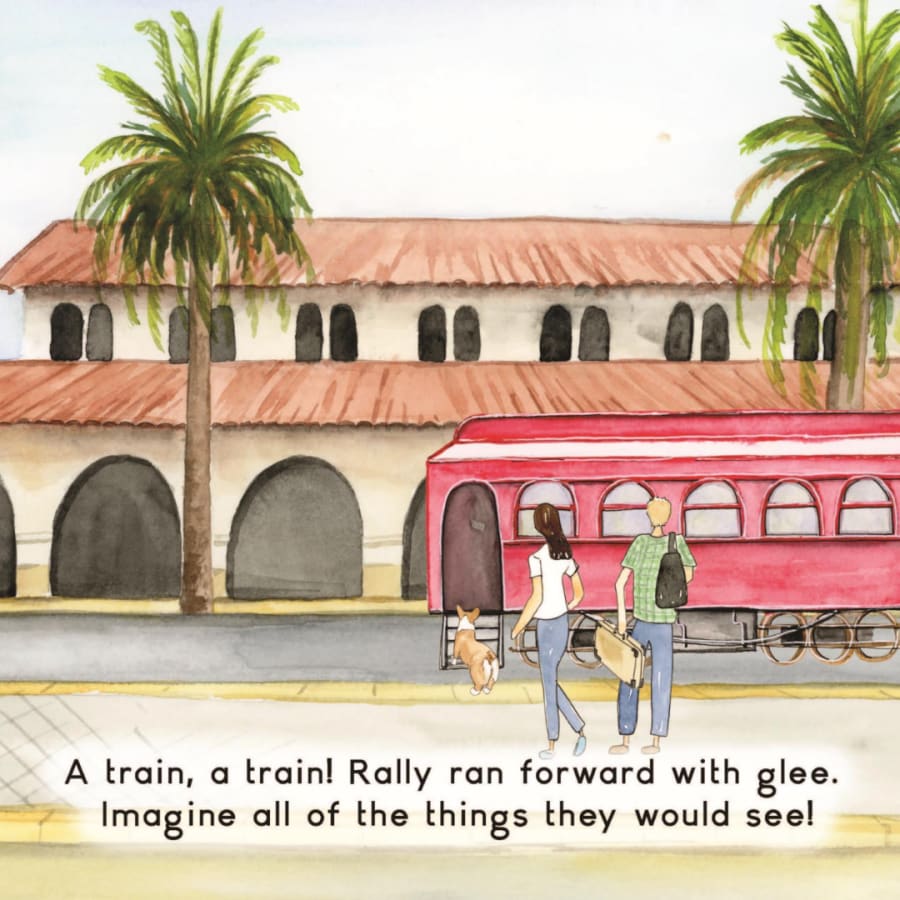
- Page 3
- CCSS W.5.1
- CCSS W.5.1b
- CCSS RI.5.7
 Need the book? Get the paperback on Amazon (opens in a new tab) or earn a free classroom copy.
Days 10-12 of the 5th Grade train unit
Builds on: The workshop routine from Write the Next Scene (5A) and the habit of separating what a source says from what you infer, from the transcontinental railroad inquiry (5F).
Leads to: This is the last lesson of the unit. Finished opinion pieces make a good read-aloud for a class museum day or a letter to a local museum.
Learning objective
Students locate answers quickly across three digital museum guides using headings, summary lists and search tools, then write an opinion piece on whether old trains should be saved, supporting their point of view with logically ordered reasons, cited facts from the guides and linking words.
I can find evidence fast in more than one source, and I can use it to support my opinion with clear reasons.
Vocabulary to teach
Materials
- Rally Takes the Train by Kelsey Lizee Cecil: get the paperback on Amazon (opens in a new tab) or earn a free classroom copy
- Three verified museum guides on student devices (one per pair) or printed: Southern California Railway Museum (rallytakesthetrain.com/museums/southern-california-railway-museum-perris), Steamtown National Historic Site (rallytakesthetrain.com/museums/steamtown-national-historic-site-scranton-pennsylvania) and Tehachapi Depot Railroad Museum (rallytakesthetrain.com/museums/tehachapi-depot-railroad-museum-california)
- Source hunt printable (Day 1), one per pair: six questions, each naming the guide to search, with space for the answer and where it was found
- Opinion planner printable (Day 2), one per student: a claim and evidence organizer, counterclaim and response boxes, and linking words
- Draft page printable (Days 2 and 3), one per student: writing lines and a self-check list
- Chart paper with the mentor paragraph (see Before you teach), a two-column chart (reasons to save, costs of saving), sticky notes and a visible timer
Before you teach
- Write the mentor paragraph on chart paper for Day 2: Museums should save rare locomotives. Specifically, the Steamtown National Historic Site guide says only eight Big Boys survive out of 25 that were built. Consequently, saving the few that are left is the only way people can still see how huge these engines were.
- Try the source hunt yourself on a student device. If Find on page is blocked or devices are short, print only the sections each question names.
- Pair a confident reader with a less confident one for the hunt, and give the device to the less confident reader so they do the searching.
- Answer key for the hunt: to save the Red Cars and Yellow Cars from the scrapyard; 8 survive out of 25 built; 30 years; rebuilt it from the original floor plans; three of the fourteen founders were old enough to sign the legal papers; to move and restore SP caboose 1089.
- Decide whether you will accept both positions (save old trains, or save only a few). The lesson works best when you say out loud that both are allowed.
Lesson plan
Writing workshop with sources, three days. Students cannot write a supported opinion until they have evidence in hand, so Day 1 is research in the guides, Day 2 is planning and drafting, and Day 3 is answering the other side and revising. Each day opens with a short minilesson and gives most of the time to reading or writing.
Using the book: Show page 3 for about a minute at the start of Day 1: Rally's red train car carries people today, but someday it will be old. That is the only use of the book; the evidence comes from the museum guides.
Students search this guide plus the Steamtown National Historic Site and Tehachapi Depot Railroad Museum guides for the source hunt, and cite all three in their writing. Or find a verified museum near your school in the field trip planner.
Day 1 50 minutes
- Open the book to page 3 and give students about a minute with Rally's red train car at the station. Ask what might happen to a car like this in fifty years when railroads have newer trains.
- Pose the unit's last question and write it on the board: should communities spend years, money and volunteer time to save old trains?
- Each student writes a first answer on a sticky note and puts it on a line from yes to no on the board. Tell them they will decide for real only after the evidence.
- Teach the search moves for RI.5.7: scan headings, read summary lists like Don't miss, check the questions at the bottom, and use Find on page with a key word.
- Demonstrate with the Steamtown National Historic Site guide: type Big Boy into Find on page and land on how many were built and how many survive in under a minute. Narrate what you skip and why.
- Active engagement: the class tries the word volunteer together and finds how many hours volunteers gave in 2025. Ask whether that fact supports saving trains, shows a cost, or both.
- Pass out devices and the source hunt page (2 minutes). Start a 16-minute timer.
- Partners answer the six questions across the three guides and write where they found each answer (a heading, a list or a search word).
- Circulate. At the 5-minute mark, if pairs are reading every word from the top, stop the class and have a fast pair show their move, then restart.
- When the timer ends, partners use the last 5 minutes to mark each fact S (supports saving) or C (shows a cost). Some facts get both.
Look for: Watch for partners who copy whole sentences; push them to write the fact in a few words and the place they found it.
- Ask two or three pairs which search move found answers fastest and why.
- Fill the two-column chart (reasons to save, costs of saving) from the hunt. Leave it up for Days 2 and 3.
- Students may move their sticky note on the yes to no line if the evidence changed their mind. Collect the hunt pages to check accuracy.
Day 2 50 minutes
- Teach claim, evidence and counterclaim with the vocab definitions. Explain that 5th grade opinion writing is the first step toward argument writing.
- Read the mentor paragraph aloud. Students name the claim, the evidence and the sentence that explains why the evidence matters; underline the linking words.
- Name the two positions students may take: communities should save old trains, or communities should save only a few and let the rest go.
- Active engagement: partners say their claim out loud to each other in one sentence and name the fact from the chart they will use first.
- Students plan for about 10 minutes on the opinion planner: a claim, two pieces of evidence from two different guides, and the reasoning that links them. Strongest reason goes last.
- Students draft for the rest of the time: an opening that states the claim, then reason paragraphs that name the guide inside the sentence (According to the Steamtown National Historic Site guide...).
- Pull a small group of students without a clear claim for about 5 minutes. Give the frame I believe ___ because ___ and have each say it aloud before writing.
- Confer with others. Ask which guide each fact came from and how it supports the reason.
Look for: Look for evidence that is pasted in without an explaining sentence after it; that is the most common gap on Day 2.
- Partners read their first two sentences aloud. The listener restates the claim in their own words.
- If the listener cannot restate it, the writer revises the claim before tomorrow.
Day 3 45 minutes
- Teach counterclaim and response. Use a cost from the chart, such as AT&SF 560 sitting in storage for 30 years, as the other side's point.
- Model a response on the board in two sentences: name the other side's point fairly, then explain why your reason still matters more or how it supports saving only a few.
- Active engagement: students write the strongest point against their own claim on a sticky note, then trade with a partner who suggests a response.
- Students finish the second reason paragraph, add a counterclaim and response, and write a conclusion that connects back to the claim.
- Students add at least two linking words from the planner bank where reasons connect.
- In the last 4 minutes, students check their draft against the self-check list and fix one thing.
- Partners swap drafts and underline every guide name. For one fact, they open that guide and check that the fact really came from there.
- Writers fix any fact that is not where they said it was.
Look for: Listen for partners who find a fact attributed to the wrong guide; that is RI.5.7 and honest citing at work.
- Students move their Day 1 sticky note to where they stand now. Ask two students who moved to explain which fact changed their mind.
Short on time? With one fewer day, keep the Day 1 source hunt as written, then use a single writing day: teach claim and evidence in 8 minutes, have students draft one cited reason paragraph plus a two-sentence counterclaim and response, and replace the partner source check with students underlining their own guide names. The full second reason and conclusion can be homework.
Finished early? Find a fourth source in another verified museum guide that strengthens your weakest reason, and add it with the guide's name.
What to listen for
| If children say or do this | Try this |
|---|---|
| Students start at the top of a guide and read every word, then run out of time. | Stop the hunt at the 5-minute mark and have a pair who used Find on page show the move, then restart the timer. |
| Old trains are cool, so we should save them. (A claim with no evidence.) | Ask which fact from which guide shows that. If the writer cannot name one, send them back to the source hunt page and the chart. |
| "It sat in storage for 30 years, so that proves they shouldn't save it." | Show that strong writers name the cost and then explain why their reason still matters more, or why it supports saving only a few. |
Safety: If students visit any of these museums, teach the rail safety rule first: stay off tracks, cross only at marked crossings, and stop, look and listen. The Southern California Railway Museum guide reminds families that it is a working railroad, and Steamtown teaches "Stop, Spot, Step" in its railyard.
Differentiation
Extra support
Give a pre-highlighted copy of one section from each guide so the hunt is about matching questions to the right section rather than scanning the whole page. Provide paragraph frames: "One reason is ___. According to the ___ guide, ___. This shows that ___."
Multilingual learners
Pre-teach preserve, restore, scrap and volunteer with photos from the guides. Let partners talk through their claim in the home language first, then use the frames "I believe ___ because ___" and "For example, the ___ guide says ___." Key language use: Argue.
Extension
Students add a full counterclaim paragraph and answer it with evidence, or find a fourth source in another verified museum guide that strengthens their weakest reason.
Check for understanding
Success criterion: Locates answers quickly across multiple guides and writes an opinion piece with a clear claim, logically ordered reasons supported by cited facts from at least two guides, linking words and a conclusion.
| Level | What you see |
|---|---|
| 3Meets (level 3) | Completes the source hunt accurately with locations noted; the piece states a clear claim, gives two ordered reasons each supported by a cited fact from different guides, explains how the evidence supports the reason, uses linking words and ends with a related conclusion. |
| 2Approaching (level 2) | Finds most answers but slowly or without noting where; the piece has a claim and reasons, but evidence comes from one guide only, is not cited, or is not explained. |
| 1Beginning (level 1) | Finds few answers; the piece states a feeling or opinion without facts from the sources, or lists facts without a clear claim. |
Family connection
Send home the half-page note in the printables. The text is below so you can paste it into a newsletter or app.
English
Our class has been debating a real question: should communities spend years, money and volunteer time to save old trains? Your child searched three train museum guides for facts, picked a side and wrote an opinion piece that names its sources. Either side is allowed, as long as the evidence backs it up. At home, try a 5-minute talk: choose an old object in your home or neighborhood and take turns giving one reason to keep it and one reason to let it go. You can read more about saved trains at rallytakesthetrain.com/train-museums.
Español
Nuestra clase ha debatido una pregunta real: ¿deben las comunidades dedicar años, dinero y trabajo voluntario a salvar trenes antiguos? Su hijo o hija buscó datos en tres guías de museos de trenes, eligió una postura y escribió un texto de opinión que nombra sus fuentes. Cualquier postura vale si las pruebas la apoyan. En casa, conversen 5 minutos: elijan un objeto antiguo de su casa o su barrio y túrnense para dar una razón para conservarlo y otra para dejarlo ir. Pueden leer más sobre trenes salvados en rallytakesthetrain.com/train-museums.
Teacher tips
- The timer matters. Students who know they have 16 minutes stop reading every word and start using headings and search, which is exactly the skill in RI.5.7.
- Ask for the source name inside the sentence, not in a list at the end. It makes students check that the fact really came from where they say it did.
Standards alignment
| Standard | Text |
|---|---|
| CCSS W.5.1 (opens in a new tab) | Write opinion pieces on topics or texts, supporting a point of view with reasons and information. |
| CCSS W.5.1b (opens in a new tab) | Provide logically ordered reasons that are supported by facts and details. |
| CCSS RI.5.7 (opens in a new tab) | Draw on information from multiple print or digital sources, demonstrating the ability to locate an answer to a question quickly or to solve a problem efficiently. |
Check codes against your state's version of these standards. How we build and review lessons.
Keep exploring
Pick any museum guide and find one train or building that someone worked to save or restore. Would that fact support your claim or the other side?
Teach it with the real book
4.9 stars on Amazon
Rally Takes the Train is a rhyming, hand-painted picture book about a corgi's first train ride, from the big station stairs to a dark tunnel to the people waiting at the end of the line. Children ask for it again and again, and every unit here opens with it.
Questions teachers ask
Why does the opinion workshop begin with a research day?
Students cannot write a supported opinion until they have evidence in hand. Day 1 (50 minutes) is a timed source hunt across three museum guides. Day 2 (50 minutes) is a minilesson on claim, evidence and explanation, then planning and drafting. Day 3 (45 minutes) teaches answering the other side, then finishing, revising and a partner check of every citation.
Should I call this opinion writing or argument writing?
Common Core calls it opinion writing in 5th grade (W.5.1) and argument writing from 6th grade on. Tell students that what they write here is the first step toward argument: a clear claim, reasons in a logical order, facts from named sources, linking words and a conclusion. The Day 3 counterclaim and response is a stretch toward 6th grade expectations, and the two-sentence model keeps it manageable.
What happens in the six-minute launch on Day 1?
Show page 3 for about a minute: Rally's red train car carries people today, but someday it will be old. Ask what might happen to a car like that in fifty years, then write the question on the board. Each student puts a sticky note with a first answer on a line from yes to no. They move it again after the hunt and at the end of Day 3.
Which search moves does the minilesson teach?
Four moves for finding information quickly (RI.5.7): scan headings, read summary lists like Don't miss, check the questions at the bottom of a guide, and use Find on page with a key word. Demonstrate with Big Boy in the Steamtown guide and land on how many were built and how many survive in under a minute. Then the class tries volunteer together and decides whether that fact supports saving, shows a cost, or both.
What are the answers to the source hunt?
The six answers are: to save the Red Cars and Yellow Cars from the scrapyard; 8 Big Boys survive out of 25 built; 30 years; they rebuilt it from the original floor plans; three of the fourteen founders were old enough to sign the legal papers; and to move and restore SP caboose 1089. Partners should also write where each answer was found, such as a heading, a list or a search word.
Why put a 16-minute timer on the hunt?
A visible timer changes how students read. With time running, they stop reading every word from the top and start using headings and search, which is the skill. At the 5-minute mark, stop the class if pairs are still reading top to bottom, have a fast pair show their move, and restart. The last 5 minutes go to marking each fact S for supports saving or C for cost.
Can students argue against saving old trains?
They can take one of two positions: communities should save old trains, or they should save only a few and let the rest go. Say out loud that both are allowed. The trap is treating a cost as proof, for example that a locomotive sat in storage for 30 years so it should not be saved. Strong writers name the cost and explain why their reason still matters more.
What if devices are short or Find on page is blocked?
Print only the sections each source hunt question names and run the hunt on paper; the search moves still apply to headings and lists. One device per pair is enough when devices work, and the less confident reader should hold it so they do the searching. Pair a confident reader with a less confident one, and try the hunt yourself on a student device before Day 1.
What does a strong reason paragraph look like?
Use the mentor paragraph on chart paper: Museums should save rare locomotives. Specifically, the Steamtown National Historic Site guide says only eight Big Boys survive out of 25 that were built. Consequently, saving the few that are left is the only way people can still see how huge these engines were. Students name the claim, the evidence and the explaining sentence, then underline the linking words.
What is the Day 3 counterclaim minilesson?
Take a cost from the class chart, such as AT&SF 560 sitting in storage for 30 years, and treat it as the other side's point. Model a two-sentence response: name the point fairly, then explain why your reason still matters more or how it supports saving only a few. Students write the strongest point against their own claim on a sticky note and trade it with a partner for a suggested response.
Why do partners check every guide name on Day 3?
Naming the guide inside the sentence (According to the Steamtown National Historic Site guide...) makes the citation checkable. Partners swap drafts, underline every guide name, then open one guide and confirm that a fact really came from there. Students who find a fact credited to the wrong guide fix it before turning in. It takes eight minutes and turns RI.5.7 into honest citing.
What do students bring to this workshop from earlier in the unit?
The workshop routine comes from Write the Next Scene (5A): a short minilesson, long writing time with conferences and a share. From the transcontinental railroad inquiry (5F) they bring the habit of naming the source and separating what it says from what they infer. This is the last lesson, and finished pieces make a good read-aloud for a class museum day or a letter to a local museum.
Related lessons
Two Sources, One Topic: Research the Trolley Savers
A two-day 4th grade research workshop.
The Transcontinental Railroad: Different Perspectives and Sources
A two-session 5th grade C3 inquiry on the transcontinental railroad.
Steam Train or Streetcar? Opinion Writing with Reasons and a Conclusion
A three-day writing workshop.
Teaching with Rally Takes the Train
Every lesson is free for classroom and homeschool use. Add the paperback to your classroom library, or review a lesson to earn a free copy if you are a credentialed teacher. Keep the journey going in about 650 free train museum guides, plan a visit with the field trip planner, or browse all lessons for educators.