
5th Grade Train Lesson Plans: Free Lessons for Writing, Math, Science and History
In 5th grade, Rally Takes the Train opens the unit as the mentor text for a narrative writing workshop, read aloud once. After reading Rally Takes the Train, children can explore about 650 train and railway museums through our free guides, discovering the history, engineering and stories behind real trains. The six lessons take the shape each subject needs: writing workshops, problem-based math, a 5E science sequence and a C3 history inquiry, with verified museum guides as a core source in four of them.
 Need the book? Get the paperback on Amazon (opens in a new tab) or earn a free classroom copy.
Why teachers use these lessons
One book, read once
The whole book is read aloud on Day 1 as the anchor for a writing workshop. Later lessons revisit a page or two for a reason, and the math and science lessons do not use it at all.
The right structure for each subject
Math starts with a problem students work on before any method is shown. Gravity runs as a two-session 5E sequence, history as a C3 inquiry, and writing as workshops over three days.
Museum guides where they matter
Four lessons use verified train museum guides as a core source: real mileages for the coordinate plane, a mountain railroad for gravity, two accounts for history, and evidence for the opinion piece.
5th Grade lessons

Write the Next Scene: Pacing, Dialogue and Description
A three-day 5th grade writing workshop.
Plot the Route: Train Stations on the Coordinate Plane
A 57-minute problem-based 5th grade math lesson.
Pack the Boxcar: Volume with Unit Cubes and V = l × w × h
A 56-minute problem-based 5th grade volume lesson.
Gravity on the Grade: Which Way Does Gravity Pull a Train?
A two-session 5th grade science sequence for NGSS 5-PS2-1.
The Transcontinental Railroad: Different Perspectives and Sources
A two-session 5th grade C3 inquiry on the transcontinental railroad.
Should We Save the Old Train? Argument Writing with Museum Evidence
A three-day 5th grade writing workshop that closes the train unit.
The unit, day by day
- Days 1-3 (50 min each): Write the Next Scene (5A), the unit's only full read-aloud of the book, then a writing workshop where students map its scenes and draft the scene after the last page.
- Day 4 (57 min): Plot the Route (5C), partners write directions to stations before the class names ordered pairs, then map a real Pennsylvania railroad line.
- Day 5 (56 min): Pack the Boxcar (5D), partners pack model boxcars with unit cubes and find the volume shortcut themselves.
- Days 6-7 (45 min each): Gravity on the Grade (5E), a 5E science sequence with ramps, plumb lines and the Tehachapi Loop that ends in a written argument.
- Days 8-9 (45 min each): The Transcontinental Railroad (5F), a C3 inquiry comparing how two railroad museums tell the story and asking whose story gets told.
- Days 10-12 (50, 50 and 45 min): Should We Save the Old Train? (5B), a writing workshop that hunts for evidence in three museum guides and ends with an opinion piece.
Each lesson uses the structure that fits its subject: problem-based math, 5E science, writing workshop, close reading or inquiry, with timing for a real 5th Grade schedule. Museum guides appear where a real source is what the lesson needs.
How the lessons are built
One book, one unit
The unit opens with a full read-aloud of Rally Takes the Train. Later lessons go back to a page or two only when the lesson needs it, and some do not use the book at all.
The right structure for each subject
Math starts with a warm-up and a problem to work on before any method is shown. Science explores before it explains. Writing runs as a workshop over several days. Every plan lists minutes, groupings, what to prepare and what to listen for.
Teach it with the real book
4.9 stars on Amazon
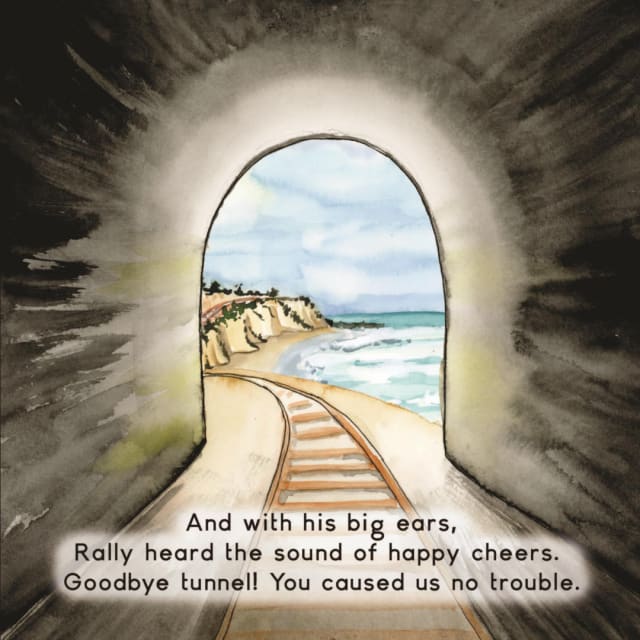
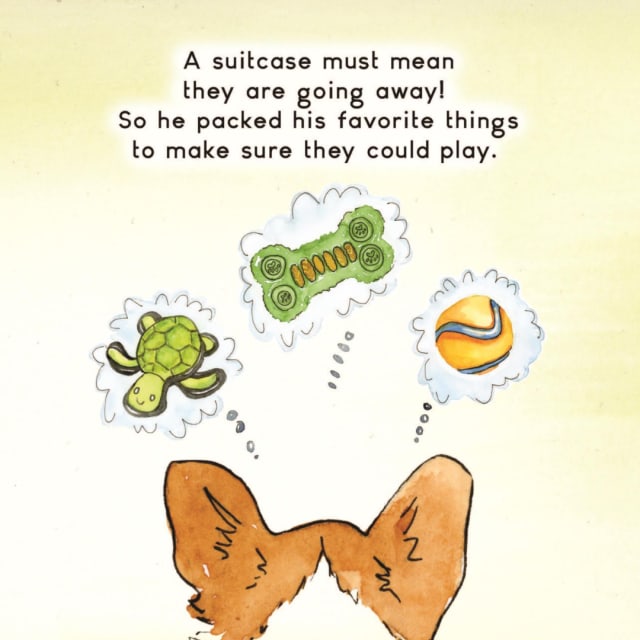
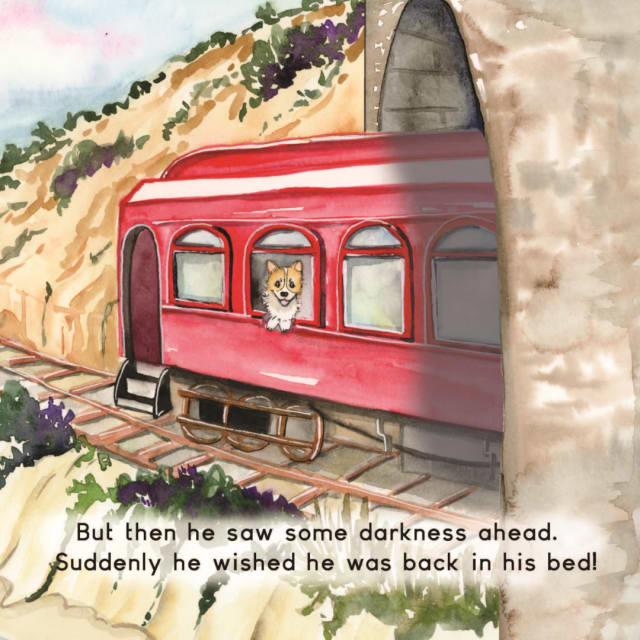
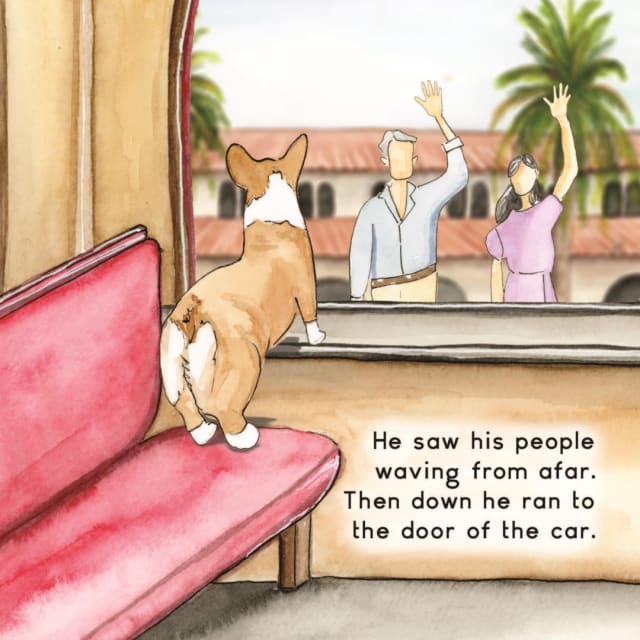
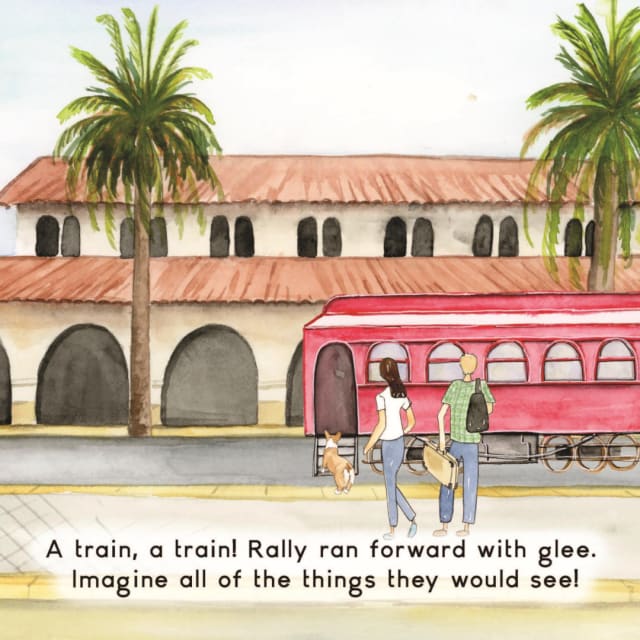
Rally Takes the Train is a rhyming, hand-painted picture book about a corgi's first train ride, from the big station stairs to a dark tunnel to the people waiting at the end of the line. Children ask for it again and again, and every unit here opens with it.
Questions teachers ask
What are good train lesson plans for 5th grade?
Strong 5th grade train lessons use trains to teach grade-level standards, not just a theme. The six lessons on this page cover writing the next scene of a story, opinion writing about saving old trains, plotting a railroad on the coordinate plane, volume with model boxcars, gravity on mountain railroads, and perspectives on the transcontinental railroad. Each is free and includes printables.
Can a picture book work for 5th graders?
Yes, when it has a clear job. In this unit Rally Takes the Train is read aloud once, on Day 1, as the mentor text for a narrative writing workshop. Two later lessons revisit a single page or two, for a hook or a point about perspective, and the math and science lessons do not use the book. The depth comes from grade-level tasks.
What standards do the 5th grade train lessons cover?
They cover Common Core W.5.3, W.5.1, RL.5.5, RI.5.6 and RI.5.7 in English language arts; 5.G.A.1, 5.G.A.2, 5.MD.C.3 and 5.MD.C.5 (including 5a, 5b and 5c) in math; NGSS 5-PS2-1 in science; and C3 D2.His.4.3-5 and D2.His.10.3-5 in social studies. Every lesson lists its standards with the full official text.
How are the 5th grade lessons structured?
Each lesson uses the structure its subject calls for. The two writing lessons are three-day workshops with a short minilesson and long writing time. The math lessons are problem-based: warm-up, activities where students work before a method is shown, synthesis and cool-down. Gravity is a 5E science sequence, and the railroad history lesson is a C3 inquiry.
How long does the 5th grade train unit take?
About twelve school days. The narrative and opinion writing workshops take three days each, about 50 minutes a day. The coordinate plane and volume lessons are single math blocks of 56 to 57 minutes. The gravity sequence and the history inquiry each take two 45-minute sessions. The hub's unit plan lists the day-by-day order.
Do I need my own copy of Rally Takes the Train?
You need one copy for the Day 1 read-aloud, which takes about four minutes, and for two short page revisits later in the unit. You can use your own copy, a library copy, or earn a free classroom copy by reviewing a lesson. The math and science lessons do not use the book.
How can I get a free classroom copy of Rally Takes the Train?
Credentialed teachers of Pre-K to 5th grade in the United States can earn a free paperback copy by reviewing one lesson at rallytakesthetrain.com/free-book-for-teachers. You need a current teaching credential and at least two years of classroom teaching. Choose any lesson on this page to review.
What can students explore after these lessons?
After reading Rally Takes the Train, children can explore about 650 train and railway museums through free guides at rallytakesthetrain.com/train-museums, discovering the history, engineering and stories behind real trains. The lesson steps name only verified museums, whose staff have read and approved their guide pages, and the field trip planner (rallytakesthetrain.com/lessons/train-museum-field-trips) lists verified museums near your school.
What is a verified train museum guide?
A verified guide is one the museum itself has read and approved. Someone at the museum checked the page and confirmed it is accurate or sent corrections, which were made before the badge was added. The 5th grade lessons use only verified guides, so the facts students work with have been checked by the museum.
Which museums appear in the 5th grade lessons?
Four lessons use verified guides as a core source: the Northern Central Railway of York for the coordinate plane, the Tehachapi Depot Railroad Museum for gravity, the California State Railroad Museum and the Utah State Railroad Museum at Ogden Union Station for history, and the Southern California Railway Museum, Steamtown and Tehachapi for the opinion piece. Two lessons suggest an optional guide.
Can I use a train museum near my school instead?
Often, yes. The field trip planner (rallytakesthetrain.com/lessons/train-museum-field-trips) lists verified museums by location. Read the guide yourself first and check that it has what the lesson needs, such as stops with mileages for the coordinate plane, a climb over hills for gravity, or a history section for the perspectives inquiry.
What printables come with the 5th grade lessons?
Each lesson has up to three printable student pages plus a family note in English and Spanish. In the multi-day lessons there is usually one page per day. They include a scene map and planner, a timed source hunt, coordinate grids, a boxcar packing table, a ramp lab data table and a source comparison table. All print in black and white.
In what order should I teach the 5th grade train lessons?
Start with the narrative writing workshop, because it holds the only full read-aloud of the book. Then the unit moves to the coordinate plane and volume, the two-session gravity sequence, the transcontinental railroad inquiry, and ends with the opinion writing workshop, which draws on the source habits students built in the inquiry. Math lessons can also run in your math block alongside.
How do the lessons support multilingual learners?
Every lesson includes a support for multilingual learners tied to a WIDA key language use: Narrate, Explain or Argue. Supports include picture glossaries from the museum guides, sentence frames, oral rehearsal in the home language and partner work. Family notes come in English and natural Spanish.
How do the lessons support struggling students and advanced students?
Each lesson has three differentiation notes: support, multilingual learners and extension, plus an idea for students who finish early. Supports include frames, a small group during writing time and building with cubes before formulas. Extensions ask students to design their own rail line, retell a moment from another point of view, or compare a primary source with a museum guide.
How are students assessed in these lessons?
Each lesson has a single criterion and three levels: Meets, Approaching and Beginning. Math lessons end with a cool-down card you can sort in two minutes, the science sequence ends with a written argument, the inquiry ends with a claim answering its compelling question, and the writing workshops end with a finished piece and a self-check.
Do the lessons include rail safety?
Yes, in the lessons most likely to lead to a visit. The opinion piece, the coordinate plane and the gravity sequence each include the rail safety rule: stay off tracks, cross only at marked crossings, and stop, look and listen. Several verified guides teach their own versions, such as Steamtown's Stop, Spot, Step, and the Tehachapi Depot's Train Park sits beside an active mainline.
Is there a family connection in each lesson?
Yes. Each lesson has a family note in English and Spanish that explains what students learned and suggests a 5-minute activity at home, such as telling a story fast and then slowed down, or rolling a ball down a tilted tray to talk about gravity. Each note also points families to the free museum guides.
What is Rally Takes the Train about?
It is a rhyming picture book by Kelsey Lizee Cecil, illustrated in hand-painted watercolor by Leslie Dunn. Rally the corgi takes his first train trip with Mom and Dad to see the people he loves, meets passengers and a conductor, is brave in a dark tunnel and arrives to a happy greeting. The trip is based on a real ride along the California coast.
Are the 5th grade train lessons free to use?
Yes. Every lesson, printable and family note on this page is free for classroom teachers, homeschool families and tutors. In a homeschool setting, a sibling or parent can take the partner role in the writing workshops and math activities. The library also runs from Pre-K to 5th grade, and 4th grade lessons work well for review or reteaching alongside this unit.
More for your classroom
Ready to keep exploring? Browse about 650 free train museum guides, or plan a visit with the field trip planner. Free coloring pages are at Rally coloring pages.