
Then and Now Lesson for 1st Grade: Compare Train Travel Long Ago and Today
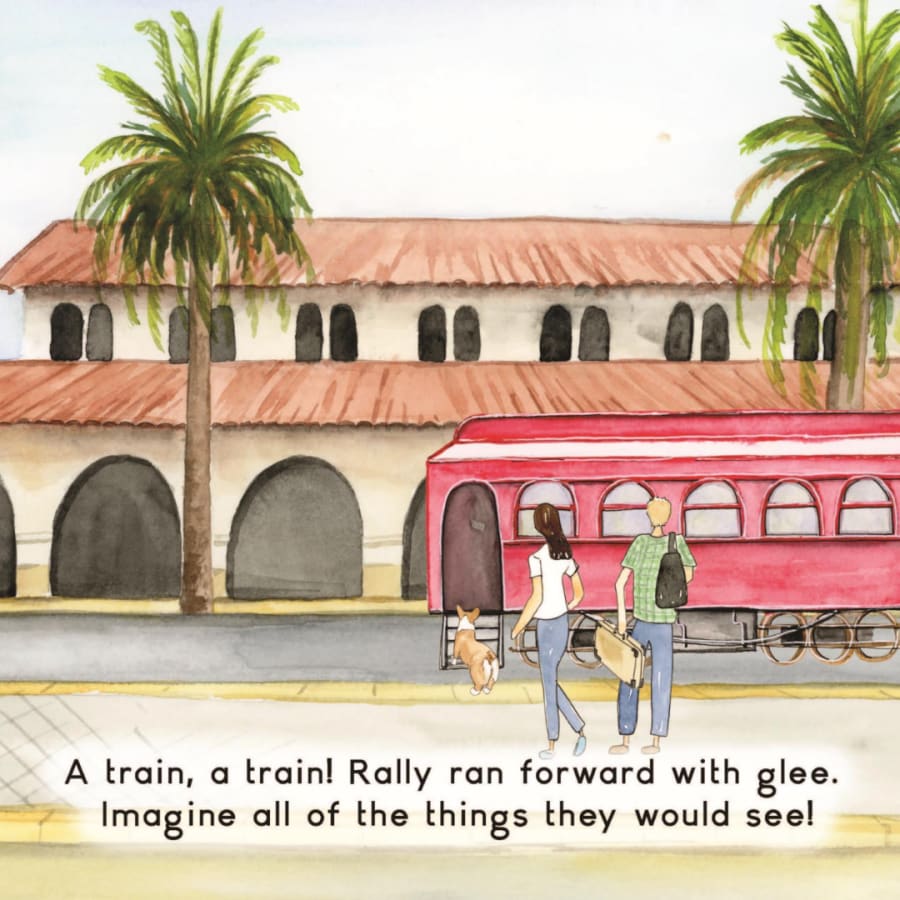
A two-session inquiry lesson built on one question: how has taking a train trip changed since long ago? Children study two museum guides about old stations, compare them on a Venn diagram, add page 3 of Rally Takes the Train as a picture of today, then fill a then and now chart and draw a claim with evidence.
- Grade
- 1st Grade
- Subjects
- Social studies (history), Reading informational text
- Time
- Two sessions: 40 minutes each (Days 9 and 10 of the unit)
- Structure
- Social studies inquiry over two sessions
- Prep
- 15 minutes: open both museum guides and choose one photo from each to project, draw a large T-chart labeled Then (long ago) and Now (today) with the compelling question above it, and print the three pages for each child
- Grouping
- Whole class on the carpet for the sources; partners for the Venn diagram; independent chart and summative task
- Book
- Page 3
- C3 D2.His.2.K-2
- CCSS RI.1.9
 Need the book? Get the paperback on Amazon (opens in a new tab) or earn a free classroom copy.
Days 9-10 of the 1st Grade train unit
Builds on: Children know Rally's trip from the Day 1 read-aloud (1A); here one page of it becomes a source about train travel today.
Leads to: The unit ends here. Classes that want more can use the class question to write to a museum or plan a visit with the field trip planner.
Learning objective
Students compare life in the past to life today by sorting what changed and what stayed the same about train stations and train travel, and identify basic similarities and differences between two museum guides about old train stations, in their descriptions and photos.
I can tell how train travel long ago is the same as and different from today, and I can compare two texts about old train stations.
Vocabulary to teach
Materials
- Rally Takes the Train by Kelsey Lizee Cecil: get the paperback on Amazon (opens in a new tab) or earn a free classroom copy
- Chart paper T-chart labeled Then (long ago) and Now (today), with the compelling question written above it
- A pencil for tapping telegraph clicks
- Two texts printable, one per child: a short passage from each museum guide (Text 1: the Central Pacific Railroad Passenger Station; Text 2: Ogden Union Station) and a Venn diagram
- Then and now chart printable, one per child: the picture of Rally's suitcase (page 1) and a table listing four things at an 1870s station, with columns for today and same or different
- Long ago and today drawing page, one per child: two drawing boxes and write-in lines for the claim
- The Central Pacific Railroad Passenger Station guide at https://www.rallytakesthetrain.com/museums/central-pacific-railroad-passenger-station-sacramento-california and the Utah State Railroad Museum at Ogden Union Station guide at https://www.rallytakesthetrain.com/museums/utah-state-railroad-museum-at-ogden-union-station, projected
Before you teach
- Read both guides yourself and pick photos that show the ticket office, telegraph or baggage. The guides are written for adults; children hear only the short passages on the printable.
- Teach the two sessions on back-to-back days so the Then side of the chart is fresh.
- Be ready for questions about who built and ran the railroads. The Central Pacific guide says Chinese workers, using only hand tools, did about ninety percent of the work on the western part of the line; share that if children ask, keep to what the guides say, and write other questions on the chart rather than guessing.
- Some children have never ridden a train. Make clear that the book page and the texts are enough to answer the question.
Lesson plan
Social studies inquiry over two sessions. Comparing past and present is a question children answer from sources, so the lesson is built on a compelling question, two supporting questions with sources, short formative tasks and a final claim with evidence. Comparing the two guides also covers RI.1.9.
Using the book: On Day 2, show page 3 (about a minute) as a picture of a train trip today, a source for the Now side of the chart.
The two featured sources come from this guide and the Utah State Railroad Museum at Ogden Union Station guide; children hear the short passages on the two texts page and see one photo from each. Or find a verified museum near your school in the field trip planner.
Day 1 40 minutes
- Write the compelling question above a T-chart labeled Then (long ago) and Now (today): How has taking a train trip changed since long ago?
- Quick sort with bodies: name an item and children point behind them for long ago, in front for today, or both arms for both (a horse and wagon, a phone, a bicycle, a train). Trains get both arms.
- Anchor long ago with a number: today we will visit a station set up the way it looked about 150 years ago, long before anyone in our class was born.
- Project a photo from the Central Pacific Railroad Passenger Station guide and read Text 1 from the two texts page. Explain that this is a rebuilt station in Sacramento, California, on its original site, set up to look the way it did around 1876.
- Children name what they see and hear about: gaslights, the ticket office, the telegraph clicking dots and dashes, a baggage room packed with trunks. Tap a pencil in short and long clicks to show how a telegraph sounded.
- Add each item to the Then side of the chart as children name it.
- Read Text 2 and show one photo from the Utah State Railroad Museum at Ogden Union Station guide: the station opened in 1924, passenger trains stopped in the 1970s, and now it is a museum where kids tap telegraph keys and families weigh their group on the station's original baggage scale.
- Add one more Then item from this guide: it describes an exhibit about Black railroad service workers, the cooks, porters, waiters and redcaps, who made train travel run. Ask who helps travelers with bags and food on a trip today, and leave the Now side for Day 2.
- Partners move to tables (2 minutes) and fill the Venn diagram on the two texts page: what only Text 1 tells, what only Text 2 tells, and what both tell.
- Share two Venn diagrams. Ask what both texts tell about and one way they are different.
Look for: Children who list facts from one text only. Point to the matching part of the other passage and ask whether it says that too.
Day 2 40 minutes
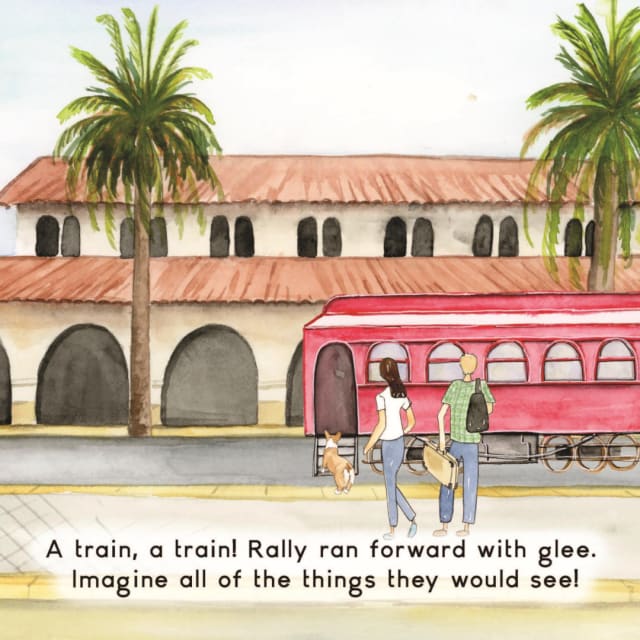
- Show page 3 of Rally Takes the Train (about a minute): a family with a suitcase walking to a station. Children add to the Now side what they see.
- Invite children to add what they know about trips today, such as tickets on a phone, electric lights and suitcases on wheels. Sharing is welcome but never required; children who have not ridden a train can use the picture.
- Model the first row together with the question: same job, different tool? Gaslights then, electric lights now: both light the station, so the job is the same and the tool is different.
- Children finish the chart: for the telegraph, the trunks and buying a ticket at the counter, they write or draw what people use today and circle same or different.
- Children draw a train trip long ago and a train trip today on the drawing page, then finish the two sentences under the boxes: one way life is different now, and one thing that stayed the same.
- Confer with four or five children. Ask, "Which text or picture told you that?" and have them point to it.
Look for: Claims that name a change and point to a source, such as the telegraph in Text 1 compared with a phone today.
- Three children read their claims. Return to the compelling question and write a class answer under it.
- Ask whose stories children still want to learn about, and write one class question to send to a museum, such as: what jobs did people do at your station long ago?
Short on time? If you lose a day, on Day 1 read both texts back to back and fill the Venn diagram as a whole class, which frees about 12 minutes for page 3 and the then and now chart. The next morning, give the claim with evidence drawing page as a 15-minute independent task.
Finished early? Children write a question they would ask a museum docent about how train trips have changed.
What to listen for
| If children say or do this | Try this |
|---|---|
| Long ago means when the dinosaurs lived. | Anchor with a number and a picture: this station shows how it looked around 1876, about 150 years ago. Dinosaurs lived far, far longer ago than that, before there were any people. |
| Everything long ago was different. | Ask: same job, different tool? People bought tickets and carried bags then and now; the tools changed. |
| Fills the Venn diagram with facts from one text only. | Read the matching part of the other text and ask: does Text 2 tell about the telegraph too? |
Differentiation
Extra support
Use picture cards for the then and now chart (gaslight and light bulb, telegraph key and phone, trunk and suitcase) so the child sorts and glues instead of writing. In the Venn diagram, give three picture choices to place.
Multilingual learners
Teach then, now, same and different with gestures and the T-chart, and pair each word with a photo. Give frames: "Long ago, people used ___. Today, people use ___." "Both texts tell about ___." Invite children to share how people they know say long ago in their home language. Key language use: Inform.
Extension
Children read more of either guide with an adult and add a third thing to compare, or write two questions they would ask a museum docent about how train trips have changed.
Check for understanding
Success criterion: Compares life in the past and today with at least two accurate examples of change and one of continuity, and identifies a similarity and a difference between the two texts.
| Level | What you see |
|---|---|
| 3Meets (level 3) | Gives at least two accurate then and now changes and one thing that stayed the same, and names a similarity and a difference between the two texts ("Both have a telegraph. You can still get on a train at the Sacramento station, but Ogden doesn't have passenger trains anymore"). |
| 2Approaching (level 2) | Gives one then and now change or names only similarities or only differences between the texts. |
| 1Beginning (level 1) | Lists things from one time only, or describes one text without comparing it to the other. |
Family connection
Send home the half-page note in the printables. The text is below so you can paste it into a newsletter or app.
English
Our train unit ended with a question: how has taking a train trip changed since long ago? Your child answered it with two real museum guides about old train stations and a page from Rally Takes the Train. Long ago, stations had gaslights, a telegraph that sent messages in dots and dashes, and rooms full of travelers' trunks. Pick any old photo or object at home and ask, "What is the same as today? What is different?" Listen for "same job, different tool." More free guides: rallytakesthetrain.com/train-museums.
Español
Nuestra unidad de trenes terminó con una pregunta: ¿cómo han cambiado los viajes en tren desde hace mucho tiempo? Su hijo o hija la contestó con dos guías reales de museos sobre estaciones antiguas y una página de Rally Takes the Train. Hace mucho tiempo, las estaciones tenían lámparas de gas, un telégrafo que enviaba mensajes con puntos y rayas, y cuartos llenos de baúles. Escojan una foto u objeto antiguo de la casa y pregunte: "¿Qué es igual que hoy? ¿Qué es diferente?" Más guías gratis: rallytakesthetrain.com/train-museums.
Teacher tips
- Ask "same job, different tool?" for every comparison. It helps children see what stayed the same as well as what changed, which is the heart of comparing past and present.
- "Whose story is missing, and where could we look?" is a question first graders can use all year with any history topic.
Standards alignment
| Standard | Text |
|---|---|
| C3 D2.His.2.K-2 (opens in a new tab) | Compare life in the past to life today. |
| CCSS RI.1.9 (opens in a new tab) | Identify basic similarities in and differences between two texts on the same topic (e.g., in illustrations, descriptions, or procedures). |
Check codes against your state's version of these standards. How we build and review lessons.
Keep exploring
Pick a museum guide and find something from long ago, like an old engine, a ticket or a lantern. What do people use for that job today?
Teach it with the real book
4.9 stars on Amazon
Rally Takes the Train is a rhyming, hand-painted picture book about a corgi's first train ride, from the big station stairs to a dark tunnel to the people waiting at the end of the line. Children ask for it again and again, and every unit here opens with it.
Questions teachers ask
Why build this lesson on a compelling question?
Comparing past and present is something children work out from sources, not something they are told. The question, how has taking a train trip changed since long ago?, sits above the T-chart for both days. Two supporting questions organize the sources: what was a station like long ago, and what is a train trip like today? Short formative tasks build to a final claim with evidence.
What are the two texts, and why those two?
Short passages from two museum guides. Text 1 is the Central Pacific Railroad Passenger Station in Sacramento, rebuilt on its original site and set up as it looked around 1876. Text 2 is Ogden Union Station, opened in 1924 and now home to the Utah State Railroad Museum. Both have a telegraph and baggage, and people still board trains in Sacramento while Ogden no longer has passenger trains.
Why do trains get both arms in the opening sort?
The body sort plants the idea that some things belong to both times. Children point behind them for long ago, in front of them for today, and use both arms for both, as you name a horse and wagon, a phone, a bicycle and a train. Trains get both arms, which sets up the main idea of the lesson: the job stays and the tools change.
A child says long ago means when dinosaurs lived. What helps?
Anchor long ago with a number and a picture. The Sacramento station is set up the way it looked around 1876, about 150 years ago, long before anyone in the class was born. Dinosaurs lived far, far longer ago than that, before there were any people. Saying "about 150 years" during the opening on Day 1 heads off most of this confusion.
What does "same job, different tool?" do on the chart?
It keeps children from deciding that everything long ago was different. Model the first row together: gaslights then, electric lights now, and both light the station, so it is the same job with a different tool. Children finish the other rows for the telegraph, the trunks and buying a ticket at the counter, writing or drawing what people use today and circling same or different.
What should I say when children ask who built and ran the railroad?
Keep to what the guides say. The Central Pacific guide says Chinese workers, using only hand tools, did about ninety percent of the work on the western part of the line. The Ogden guide describes an exhibit about Black railroad service workers, the cooks, porters, waiters and redcaps who made train travel run. Write other questions on the chart instead of guessing.
What if some children have never ridden a train?
Say early on that the picture and the texts are enough to answer the question. On Day 2, page 3 of the book shows a family with a suitcase walking to a station, and children fill the Now side from what they see. Others can add tickets on a phone or suitcases on wheels. Sharing a personal trip is welcome but never required.
What does a finished claim with evidence look like?
On the drawing page, a train trip long ago and one today, plus two sentences: one way life is different now and one thing that stayed the same. While children work, confer with four or five and ask which text or picture told them that. A strong claim names a change and points to a source, such as the telegraph in Text 1 compared with a phone today.
Why teach the two sessions on back-to-back days?
Day 1 fills the Then side of the T-chart from the two texts, and Day 2 builds on it for the then and now chart and the final claim. After a gap of several days, you would spend time rebuilding the chart from memory. Each session runs 40 minutes: Day 1 ends with the partner Venn diagram, and Day 2 opens with the Now side.
How does the unit close after this lesson?
Day 2 ends with a five-minute share. Three children read their claims, the class writes an answer under the compelling question, and together you write one question to send to a museum, such as what jobs people did at its station long ago. Classes that want more can send that question or plan a visit with the field trip planner.
Related lessons
What's Inside a Train Museum? Reading a Museum Guide Together
A free kindergarten informational reading lesson in two sessions (25 and 35 minutes).
Reading a Real Museum Guide: Text Features That Find Facts Fast
Over two short sessions, children closely read one page adapted from the Steamtown National Historic Site guide about Big Boy No.
How the Railroad Changed a Town: Cause, Effect and a Timeline
A three-session 3rd grade history inquiry.
Teaching with Rally Takes the Train
Every lesson is free for classroom and homeschool use. Add the paperback to your classroom library, or review a lesson to earn a free copy if you are a credentialed teacher. Keep the journey going in about 650 free train museum guides, plan a visit with the field trip planner, or browse all lessons for educators.