
Text Features Lesson for 2nd Grade: Reading a Real Train Museum Guide
Over two short sessions, children closely read one page adapted from the Steamtown National Historic Site guide about Big Boy No. 4012. Three reads answer what it says, how its heading, caption, fact box and glossary are built, and why it matters, then children use the full guide's features to find facts fast.
- Grade
- 2nd Grade
- Subjects
- Reading informational text, Social studies (history)
- Time
- Two sessions: 40 and 35 minutes
- Structure
- Close reading over two sessions
- Prep
- 15 minutes: copy the Big Boy page (one per child), Text Feature Hunt (one per pair) and Find It Fast (one per child); open the Steamtown guide on your screen (the grown-up page, not the kids' version) and find the at a glance box, the On this page menu and the Big Boy photo caption; draw a two-column anchor chart titled Text Feature / How It Helps
- Grouping
- Whole class with the excerpt in hand, partner talk at each read, partners for the feature hunt, then individual written response
- Book
- Not used in this lesson
- CCSS RI.2.5
- CCSS RI.2.1
 Need the book? Get the paperback on Amazon (opens in a new tab) or earn a free classroom copy.
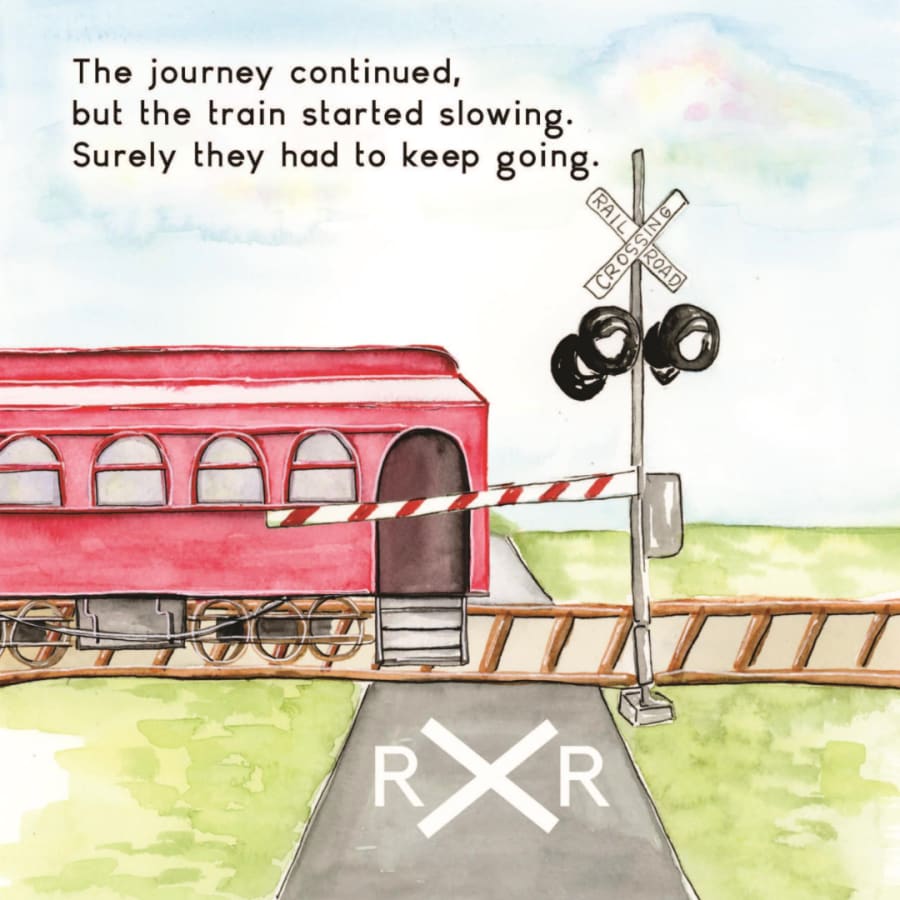
Days 3-4 of the 2nd Grade train unit
Builds on: Days 1-2 (2F), where children used a museum guide's route passage and photo captions as a source for their map claim.
Leads to: Days 5-7 (2B): children use these text features to pull facts from another guide as reasons in an opinion piece.
Learning objective
Students reread a short museum guide excerpt three times for different purposes; answer who, what, when and why questions with words from the text; name and use a heading, caption, fact box, glossary and electronic menu to locate key facts efficiently; and explain in writing which feature led them to each fact.
I can use headings, captions, fact boxes and menus to find facts fast in a nonfiction text.
Vocabulary to teach
Materials
- The Steamtown National Historic Site guide at https://www.rallytakesthetrain.com/museums/steamtown-national-historic-site-scranton-pennsylvania on a screen (or find a verified museum near your school in the field trip planner (rallytakesthetrain.com/lessons/train-museum-field-trips); check that its guide has photo captions)
- Big Boy page printable, one per child: a short excerpt adapted from the guide with a heading, a photo box and caption, a fact box and a glossary box
- Text Feature Hunt printable, one per pair
- Find It Fast printable, one per child
- Anchor chart: Text Feature / How It Helps
- Highlighters or colored pencils (two colors) and sticky notes
Before you teach
- Read the Big Boy section of the guide yourself. The excerpt on the printable is adapted for 2nd grade readers, so compare the two and be ready to show the original heading and caption on screen.
- Pair a stronger reader with a developing reader for the rereads. Every child holds the page, but partners whisper-read together on the second read.
- Plan to keep Session 1 to 40 minutes. If the second read runs long, stop after the caption and fact box and pick up the glossary at the start of Session 2.
- Do not pre-teach the facts. The first read is for children to find out what the page says.
Lesson plan
Close reading over two sessions. RI.2.5 is about how an informational text is built, which children only notice when they slow down. One short, dense page read three times, each with its own question, lets 2nd graders see what each feature does before they use those features on the full guide.
The book: Not used. The museum guide is the only text in this lesson.
The close reading excerpt comes from this guide's Big Boy section, and Session 2 uses the full guide's menu and fact box. Or find a verified museum near your school in the field trip planner.
Session 1 40 minutes
- Scroll slowly through the Steamtown guide on the screen without reading it aloud. Ask partners who would use a page like this and why (grown-ups planning a visit).
- Hand out the Big Boy page and explain that it comes from this guide. Everyone will read it three times, and each read has a different job.
- Read the whole page aloud while children track with a finger. Then children whisper-read it with a partner.
- Ask text-dependent questions and have children point to the words before answering: Who built the Big Boys? How many were built? When did No. 4012 leave the factory? How many are left today?
- Children highlight each answer in the text in one color. Record the answers on the board in full sentences.
Look for: Children answering from memory or guessing (there were a hundred) instead of pointing to the sentence. Ask, show me the words that told you.
- Reread the page and this time look only at the parts that are not the main paragraph. Teach each name as children find it: heading, photo caption, fact box, glossary. Add each to the anchor chart.
- For each feature, partners answer two questions: What does this part tell you? If you wanted to find this fact fast, would you read the paragraph or look here? Record a child's words in the How It Helps column.
- Ask which feature tells the weight of Big Boy (the caption) and which tells the price of a train ride (the fact box). Children mark each feature on the page using the checklist at the bottom.
- Point out that the real guide also has an On this page menu, a list of links that jump to each heading. Click Big Boy No. 4012 on the screen to show it.
- On a sticky note, each child finishes the sentence: The ___ helps a reader because ___.
- Collect the notes and the Big Boy pages. Sort the notes after class to see who can explain a feature and who can only name one.
Session 2 35 minutes
- Return the Big Boy pages. Read the paragraph once more, aloud together.
- Ask the deeper questions, one at a time, with partner talk before sharing: Why did the Big Boys stop working? (Diesel engines made them obsolete; use the glossary box.) Why would the guide put the coal and water numbers in a caption instead of the paragraph? Why is it special that No. 4012 is at Steamtown? (Only eight survive, and it is the only one on exhibit in the eastern time zone.)
- After each answer ask which words in the text helped.
- You drive the screen; pairs drive the search. Scroll the full guide slowly from the top. When a pair spots one of the five features on the Text Feature Hunt, they hold up the page, name it and tell you where to stop.
- Pause on each feature for about a minute while partners write a few words it says and what it helps a reader find.
- When the On this page menu comes up, let a pair choose Stop, Spot, Step and click it. Read that part together: if you hear a whistle, bell or horn, Stop, Spot every moving train, and Step well away from the tracks.
- Each child answers the five Find It Fast questions using the Big Boy page, with the guide left open on the screen at the at a glance box and Stop, Spot, Step. They name the text feature first, then write the fact. Answers: $6, the fact box; Big Boy No. 4012, the heading or menu; Stop, Spot, Step, the heading or menu; 28 tons of coal and 24,000 gallons of water, the photo caption; only eight are left, the paragraph or the Don't miss box.
- Tell children the goal before they start: for every fact, they should be able to say which feature got them there.
Look for: Children who write the right fact but name the paragraph every time. They found it by reading from the top; ask which feature could have saved time.
- Two children share which feature saved them the most time. Leave the anchor chart up; the opinion writing lesson that comes next sends children back into a guide to find facts.
Short on time? In Session 1, stop the second read after the caption and fact box and move the glossary to the start of Session 2. In Session 2, cut the feature hunt to the fact box, caption and menu (about 6 minutes) and have children answer three of the five Find It Fast questions, keeping the naming of the feature for each.
Finished early? Children make a mini guide page about one train fact from today with a heading, a drawing with a caption and a three-fact box.
What to listen for
| If children say or do this | Try this |
|---|---|
| "The caption is just the title of the picture." | Cover the photo box and read the caption alone. It gives the weight and the coal and water, which the photo could never tell you. A caption adds facts, not just a name. |
| "Text features are the pictures." | Sort together: the photo is a picture; the heading, caption, fact box and glossary are words placed outside the paragraph so a reader can find facts fast. |
| Child reads every word from the top to find the ride price. | Time it. Have one volunteer read from the top while another goes to the fact box. The fact box wins, and the point makes itself. |
Safety: When reading the Stop, Spot, Step section, teach the rail safety rule: stay off railroad tracks, cross only at marked crossings, and always stop, look and listen.
Differentiation
Extra support
Pre-highlight the heading in one color and the caption in another on a few copies. Read the first-read questions with a small group and let children point to the answer before anyone writes. Accept answers to three of the five Find It Fast questions.
Multilingual learners
Pre-teach heading, caption, fact box and glossary with a gesture for each (hand flat on top for heading, finger under a photo for caption). Give the frame: I used the ___ to find ___. Partners may discuss in the home language, then share in English. Key language use: Inform.
Extension
Children compare the Steamtown guide with a second verified museum guide and list which features both share and which are different, or add a glossary box that defines two more train words, such as tender and locomotive.
Check for understanding
Success criterion: Answers who, what, when and why questions with words from the excerpt, names and uses at least four text features to locate key facts, and writes which feature led to each fact.
| Level | What you see |
|---|---|
| 3Meets (level 3) | Answers the first-read and third-read questions by pointing to the text, names four or more features correctly, and matches every Find It Fast fact to the feature that found it. |
| 2Approaching (level 2) | Answers the first-read questions from the text but needs help with why questions, or finds the right facts without naming the feature that led to them. |
| 1Beginning (level 1) | Answers from memory or guesses instead of the text, and reads from the top to find facts instead of using features. |
Family connection
Send home the half-page note in the printables. The text is below so you can paste it into a newsletter or app.
English
Only eight giant Big Boy steam engines are left in the world, and your child can tell you where to find one. In class we read one page from a real train museum guide three times, each time with a new question, and learned how headings, photo captions and fact boxes help readers find facts fast. At home, take 5 minutes with a cereal box, a recipe or a website and ask: where would you look to find the price, the time or the main idea? You can find more guides like this one, free, at rallytakesthetrain.com/train-museums.
Español
En el mundo solo quedan ocho enormes locomotoras de vapor Big Boy, y su hijo o hija le puede contar dónde ver una. En clase leímos tres veces una página de una guía real de un museo de trenes, cada vez con una pregunta nueva, y aprendimos cómo los títulos, los pies de foto y los cuadros de datos ayudan a encontrar información rápido. En casa, dediquen 5 minutos a una caja de cereal, una receta o una página web y pregunte: ¿dónde buscarías el precio, la hora o la idea principal? Encontrarán más guías como esta, gratis, en rallytakesthetrain.com/train-museums.
Teacher tips
- Plan which words you will paraphrase on screen. The guide is written for adults; words like articulated and tractive effort can be skipped without losing the facts children need.
- Keep the anchor chart for the rest of the unit and beyond. Children will spot the same features in science books and websites, and adding those examples keeps the skill alive.
Standards alignment
| Standard | Text |
|---|---|
| CCSS RI.2.5 (opens in a new tab) | Know and use various text features (e.g., captions, bold print, subheadings, glossaries, indexes, electronic menus, icons) to locate key facts or information in a text efficiently. |
| CCSS RI.2.1 (opens in a new tab) | Ask and answer such questions as who, what, where, when, why, and how to demonstrate understanding of key details in a text. |
Check codes against your state's version of these standards. How we build and review lessons.
Keep exploring
Open any museum guide and use the at a glance fact box to find the hours in under one minute. Then use the menu to jump to a part you want to read. Which text feature helped you most?
Teach it with the real book
4.9 stars on Amazon
Rally Takes the Train is a rhyming, hand-painted picture book about a corgi's first train ride, from the big station stairs to a dark tunnel to the people waiting at the end of the line. Children ask for it again and again, and every unit here opens with it.
Questions teachers ask
Why does this lesson read the same short page three times?
Each read has its own job. The first is for what the page says, so children can answer who built the Big Boys and how many are left. The second is for how the page is built: heading, caption, fact box and glossary. The third is for what it means, such as why diesels made the Big Boys obsolete. Second graders notice structure only once the facts are no longer new.
Why are the two sessions 40 and 35 minutes instead of one long block?
Close reading is slow work, and 2nd graders lose focus after about half an hour of rereading. Session 1 covers the first two reads and a sticky-note quick write. Session 2 opens with the third read while the page is still familiar, then moves to the full guide. Splitting it also gives you the sticky notes overnight to see who can explain a feature and who can only name one.
What should I listen for during the first read?
Listen for children who answer from memory or guess, such as saying a hundred Big Boys were built. The first read is about pointing to the words. Ask them to put a finger on the sentence that told them, then highlight it. If several children are guessing, slow down and have partners whisper-read the paragraph once more before you ask the next question.
My students call the caption the title of the picture. What helps?
Cover the photo box on the Big Boy page and read the caption alone. It gives the weight, the coal and the water, facts no photo could show. Then ask what the caption added that the paragraph did not. Children who see a caption carry new facts start reading captions on purpose, which is exactly what RI.2.5 asks for.
Can the class use the full guide if we only have one screen?
Yes, and that is how the lesson is planned. You drive the screen and pairs drive the search: you scroll slowly, and when a pair spots a feature from their hunt page they name it and tell you where to stop. You pause about a minute per feature while partners write. If you have tablets, pairs can open the guide themselves and you save a few minutes.
What does the Find It Fast sheet tell me?
It shows whether children use features or read from the top. The answer key is in the Session 2 steps: the ride price comes from the fact box, the coal and water from the caption, the safety rule from a heading or the menu. A child with correct facts but paragraph listed every time found answers by reading everything, so that child needs a quick small group on going to the feature first.
What can I cut if Session 1 runs long?
Stop the second read after the caption and fact box and save the glossary for the start of Session 2, as the before-you-teach notes suggest. Keep the sticky-note quick write even if it shrinks to three minutes, because it is your only check on Session 1 and it tells you whom to pair with a stronger reader on the third read.
How does this lesson connect to the map lesson before it and the opinion lesson after?
On Days 1 and 2 children already used a guide's route passage and photo captions as a source for a map claim, so they have met captions informally. Here they name the features and learn what each one does. On Days 5 to 7 they need those skills to pull facts quickly from a different museum guide to use as reasons in an opinion piece.
Could I swap Steamtown for another museum guide?
You can, but check the guide first. You need a short section you can adapt into one page with a heading, a photo and caption, and a few strong facts, plus an at a glance box and an On this page menu. The Big Boy page and Find It Fast sheet are written for Steamtown, so you would rewrite the questions and answer key to match.
Why is railyard safety part of a reading lesson?
Because the guide's own Stop, Spot, Step section is one of the headings children find with the menu. Reading it together gives the menu a real purpose and teaches the rule at the same time: if you hear a whistle, bell or horn, stop, spot every moving train and step well away. Add the general rule too: stay off tracks and cross only at marked crossings.
Related lessons
What's Inside a Train Museum? Reading a Museum Guide Together
A free kindergarten informational reading lesson in two sessions (25 and 35 minutes).
Main Idea and Key Details: Taking Notes From a Real Museum Guide
A two-day 3rd grade close reading lesson.
Steam Train or Streetcar? Opinion Writing with Reasons and a Conclusion
A three-day writing workshop.
Teaching with Rally Takes the Train
Every lesson is free for classroom and homeschool use. Add the paperback to your classroom library, or review a lesson to earn a free copy if you are a credentialed teacher. Keep the journey going in about 650 free train museum guides, plan a visit with the field trip planner, or browse all lessons for educators.