
Train Museum Reading Lesson for Kindergarten: What's Inside a Train Museum?
A free, 40-minute kindergarten informational text lesson. Children hear a real train museum guide read aloud, ask and answer questions about key details, match photos to words, and compare Rally's red train car to an old streetcar. The class writes three questions for a real museum. Includes an I-spy sheet, compare sheet and family note.
- Grade
- Kindergarten
- Subjects
- Reading informational text, Social studies (history), Writing
- Time
- 40 minutes (or two 20-minute blocks)
- Prep
- 10 minutes: open or print the museum guide and its photos, print one I-spy sheet per child and one compare sheet per pair, and write "Questions for the Museum" at the top of a chart
- Grouping
- Whole group, then partners, then independent
- Book pages
- 3, 11, 14
- CCSS RI.K.1
- CCSS RI.K.7
- C3 D2.His.10.K-2
- CCSS W.K.7
 Need the book? Get the paperback on Amazon (opens in a new tab) or earn a free classroom copy.
Learning objective
With prompting and support, students ask and answer questions about key details in a train museum guide, match photos to the words they show, explain that museums keep old trains so we can learn how people traveled long ago, and help write three class questions for a real museum.
I can ask and answer questions about a train museum, and I can tell why museums keep old trains.
Vocabulary to teach
Materials
- Rally Takes the Train by Kelsey Lizee Cecil: get the paperback on Amazon (opens in a new tab) or earn a free classroom copy
- The San Francisco Railway Museum guide at https://www.rallytakesthetrain.com/museums/san-francisco-railway-museum-california on a screen or printed (or find a verified museum near your school in the field trip planner (rallytakesthetrain.com/lessons/train-museum-field-trips))
- Word cards: write streetcar, museum and docent on index cards for the teacher to read
- Chart paper titled "Questions for the Museum"
- Museum compare sheet, one per pair (printable): left side shows Rally's red train car (crop from page 3), right side has an empty frame to draw a streetcar from the guide; below, three picture rows to circle "same" or "different": wheels, windows, color
- Museum I-spy sheet, one per child (printable, for a later center or a field trip): six picture boxes to color when spotted in the guide photos or at a real museum: a streetcar, a cable car, a red railroad car, a ticket, a conductor's pocket watch, and a museum helper with a name badge
- Crayons
Lesson steps
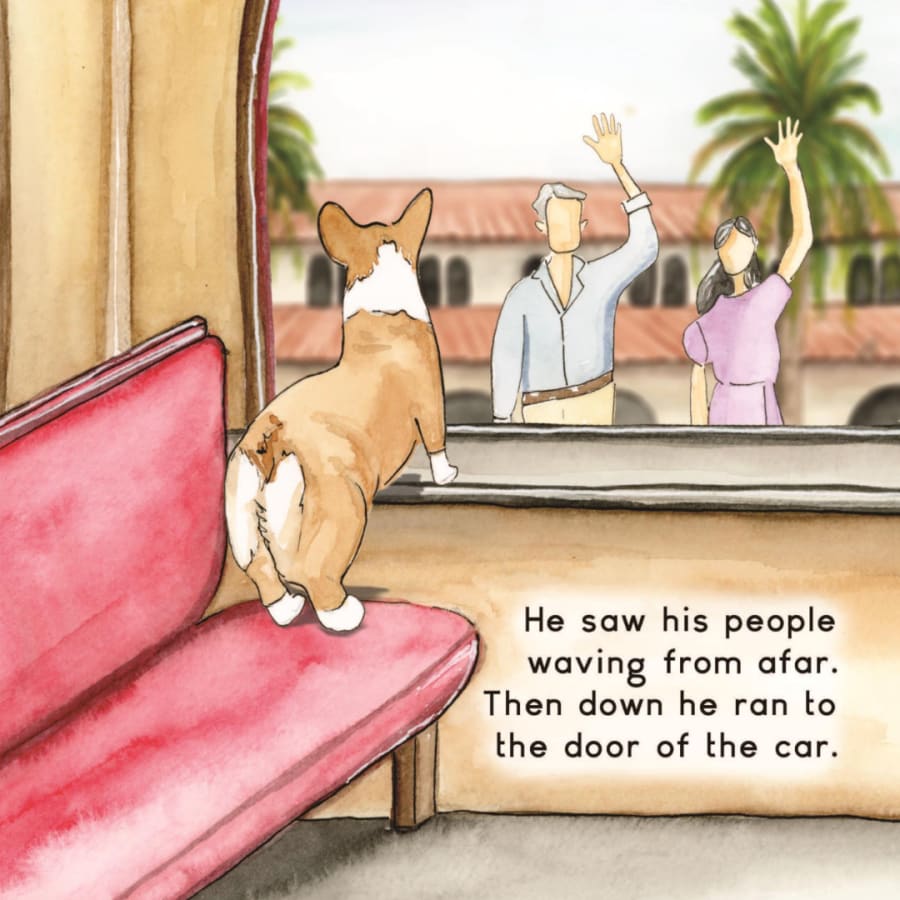
Hold up the cover. "Rally rode on a train. Today we will learn about a place where people can see real trains, some of them very old. First let's look at Rally's train car closely, so we can compare it to the trains in a museum later."
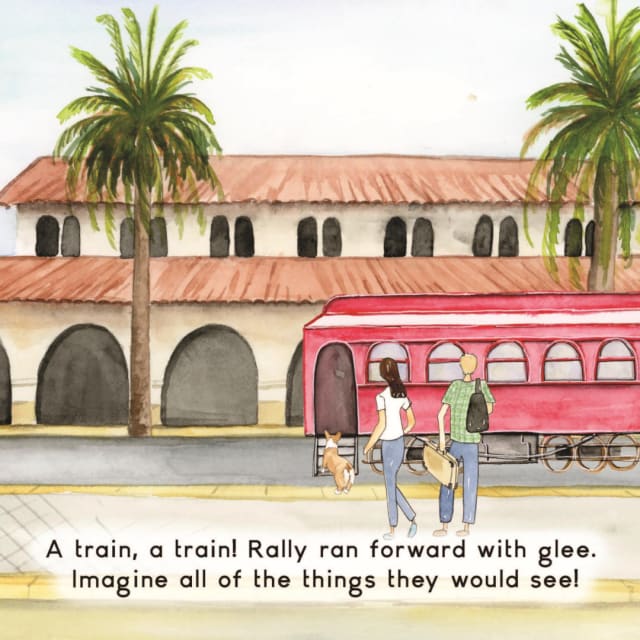
"Look at the train car. What color is it? What parts do you see?" Point to and name each part as children find it: wheels, windows, steps, door. (Red; wheels, windows, steps.)
"Here is the red train car again, going into a tunnel. What part of the train is Rally looking out of?" (A window.) "Trains have had windows for a very long time."
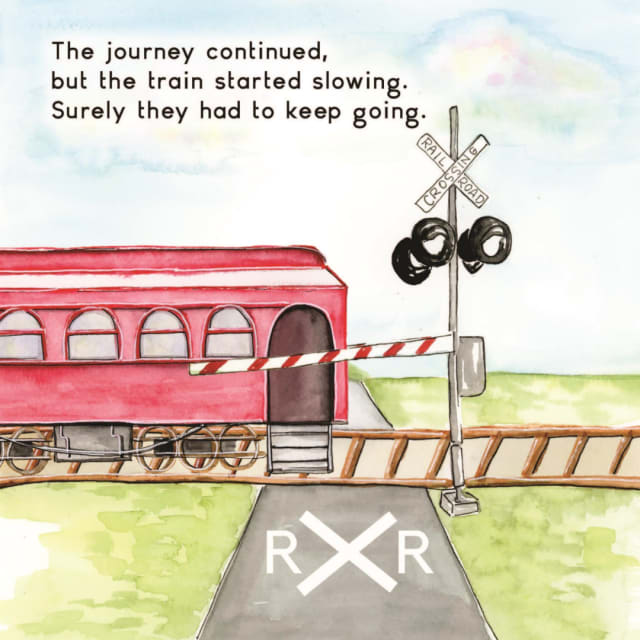
"The red car is slowing at a crossing. Look at the wheels on the track. Do you think trains a long, long time ago had wheels like these? Let's find out from a real museum."
- Teach museum directly: "A museum is a place that keeps and shows special things so people can learn from them. Some museums keep old trains."
- "Why would a museum keep a very old train?" Take ideas, then say: "Old trains help us learn how people lived and traveled long ago, before we were born. The train itself tells us about the past."
- Partners turn and talk: "What do you wonder about a train museum?" Take three or four questions and say you will listen for answers in the guide.
- Stretch tall, then sit. Show the guide. "This is a museum guide. It is writing that tells about a real place. These are real photos, not drawings." Read the facts aloud in short parts: the San Francisco Railway Museum is in San Francisco, California, across from the Ferry Building. It is free, and a streetcar stops right at its door. It tells the story of the city's old streetcars and cable cars, which still carry riders today.
- Teach streetcar, replica and docent directly. "A streetcar is a train car that runs on tracks in city streets." Read on: the museum has a full-size replica of the end of an old streetcar. "A replica is a copy made to look just like the real thing. No real streetcar of this kind is left, so a copy was made." Docents use it to show visitors how the old streetcar was run. "A docent is a museum helper who gives tours and answers questions."
- Ask key detail questions after each part: "Where is this museum? How much does it cost? What is a streetcar? Who shows visitors how the old streetcar worked?" Children answer from what they heard. Then let children ask the class a question about the guide.
- Hold up the word cards one at a time (streetcar, museum, docent), read each aloud, and ask a child to point to a guide photo that matches it. "How do you know this photo matches?" If no photo matches, ask the child to tell what the word means.
- If you prefer a museum closer to home, find a verified museum near your school in the field trip planner (rallytakesthetrain.com/lessons/train-museum-field-trips) and ask the same kinds of questions about its guide.
Or find a verified museum near your school in the field trip planner.
- Shared writing (whole group, about 5 minutes): "If we could ask the people at the museum three questions, what would we ask?" Each child tells a partner one question, then several children share. The class picks three and the teacher writes them on the chart, saying each word aloud. Save the chart for a class "Ask the Museum" letter.
- Compare (partners, about 9 minutes): show a photo of a streetcar from the guide, such as the replica streetcar end. Partners draw it in the empty frame of the compare sheet, then circle same or different for wheels, windows and color next to Rally's red car. Ask: "Which car helps us learn about the past? How do you know?"
- Save the museum I-spy sheet for a later center (with the guide photos on a screen) or for a field trip, where children color each box when they spy the thing.
Differentiation
Extra support
Read the guide in smaller parts and ask one either-or question at a time ("Is the museum free, or does it cost money?"). On the I-spy sheet, start with three items and add more as the child is ready.
Multilingual learners
Use the guide's photos with the word cards to teach museum, streetcar and docent before reading, and give question frames: "Where is ___? What is ___?" Invite children to say a question in their home language and help translate it for the chart. Key language use: Inform.
Extension
Have children dictate or write one more question and a sentence about what they would most like to see at the museum, or compare two verified museum guides and tell one thing that is the same.
Check for understanding
Success criterion: Asks and answers questions about key details in a museum guide, matches a photo to the words it shows, suggests a question for the class chart, and explains why museums keep old trains.
| Level | What you see |
|---|---|
| 3Meets (level 3) | Answers key detail questions about the guide, matches a photo to a word card and says how they know, suggests a question for the class chart, and says museums keep old trains so we can learn about the past. |
| 2Approaching (level 2) | Answers some key detail questions and matches photos with prompts, but needs help to ask a question or to explain why museums keep old trains. |
| 1Beginning (level 1) | Points to photos and names objects but does not yet answer questions about the guide or connect old trains to the past. |
Family connection
Send home the half-page note in the printables. The text is below so you can paste it into a newsletter or app.
English
Today your child learned what a museum is: a place that keeps special things so people can learn from them. We read a real guide to a train museum, answered questions about it, and compared an old streetcar to the red train car in Rally Takes the Train. Museums keep old trains so we can learn how people traveled long ago. Our class also wrote three questions to ask a real museum. At home, look at an old photo or object together and ask, "What does this tell us about long ago?" Free Rally coloring pages are at rallytakesthetrain.com/coloring-pages.
Español
Hoy su hijo o hija aprendió qué es un museo: un lugar que guarda cosas especiales para que las personas aprendan de ellas. Leímos una guía real de un museo de trenes, contestamos preguntas y comparamos un tranvía antiguo con el vagón rojo de Rally Takes the Train. Los museos guardan trenes viejos para que aprendamos cómo viajaba la gente hace mucho tiempo. También escribimos tres preguntas para un museo real. En casa, miren juntos una foto u objeto antiguo y pregunte: "¿Qué nos dice esto sobre el pasado?" Hay páginas para colorear gratis de Rally en rallytakesthetrain.com/coloring-pages.
Teacher tips
- Read the guide yourself before class. The guides are written for adults, so plan which sentences to read word for word and which to say in simpler words.
- Keep the class question chart on the wall. Children remember their own questions, and it gives you a ready start when you write the "Ask the Museum" letter.
- Use the word "real" often. Kindergarteners are fascinated that the photos show a real place they could visit, and that interest carries them through the informational text.
Standards alignment
| Standard | Text |
|---|---|
| CCSS RI.K.1 (opens in a new tab) | With prompting and support, ask and answer questions about key details in a text. |
| CCSS RI.K.7 (opens in a new tab) | With prompting and support, describe the relationship between illustrations and the text in which they appear (e.g., what person, place, thing, or idea in the text an illustration depicts). |
| C3 D2.His.10.K-2 (opens in a new tab) | Explain how historical sources can be used to study the past. |
| CCSS W.K.7 (opens in a new tab) | Participate in shared research and writing projects (e.g., explore a number of books by a favorite author and express opinions about them). |
Check codes against your state's version of these standards. How we build and review lessons.
Keep exploring
Open a new museum guide on your own. Find one key detail: where is the museum, and what is one thing you could see there? Then write one question you would ask a museum helper.
After the lesson, children can explore about 650 train and railway museums through our free guides, discovering the history, engineering and stories behind real trains. Read one together, then come back to the question.
Teach it with the real book
4.9 stars on Amazon
Rally Takes the Train is a rhyming, hand-painted picture book about a corgi's first train ride, from the big station stairs to a dark tunnel to the people waiting at the end of the line. Children ask for it again and again, and every lesson here is built on its pages.
Questions teachers ask
How do you teach informational text in kindergarten?
Read a short, real text aloud in small parts and ask key detail questions after each part: who, what, where. Show the photos and ask children to match each photo to the words it shows. Then let children ask their own questions. A guide to a real place, like a train museum, works well because children care that it is real.
How do I explain what a museum is to kindergarteners?
Say it simply: a museum is a place that keeps and shows special things so people can learn from them. Then give a reason children can picture. For example, a train museum keeps old trains so we can see how people traveled long ago, before we were born. Showing real photos makes the idea concrete.
What standards does a train museum reading lesson meet?
Answering and asking questions about a museum guide meets Common Core RI.K.1, and matching photos to the words they show meets RI.K.7. Explaining why museums keep old trains meets C3 D2.His.10.K-2, and suggesting questions for a shared class chart meets W.K.7. Each one is checked in the lesson's 3-level check, and the full text of all four is listed.
Can I use a train museum near my school instead?
Yes. Find a verified museum near your school in the field trip planner (rallytakesthetrain.com/lessons/train-museum-field-trips), read its guide yourself first, and ask the same key detail questions: where it is, what you can see, and who helps visitors. A nearby museum makes the class questions feel more real, and some classes are able to plan a visit.
How do you teach kindergarteners to ask questions about a text?
Model it, then give them a turn. Read a short part, ask a who, what or where question, and let children answer from what they heard. Then invite children to ask the class a question about the text. In this lesson, partners first share what they wonder about a train museum, then listen for answers as you read the guide, and finally ask questions of their own.
What is a museum docent, explained for kids?
A docent is a museum helper who gives tours and answers questions. Teach the word directly before reading, since children cannot work it out from a picture. In this lesson's San Francisco Railway Museum guide, volunteer docents use a full-size replica of an old streetcar end to show visitors how a vintage streetcar was operated, so kindergarteners learn that real people at museums help visitors learn.
How do you teach kindergarteners about the past with real objects?
Show a real old object and ask what it tells us about long ago. A historic train works well because it shows how people traveled before children were born. In this lesson children learn that museums keep old trains so we can learn how people lived and traveled long ago, then compare an old streetcar from the guide to Rally's red train car. This supports C3 D2.His.10.K-2.
What is a good shared writing activity for kindergarten?
Writing class questions for a real audience works well. In this lesson children suggest questions they would ask the people at a train museum, the class picks three, and the teacher writes them on a chart while saying each word aloud. The chart then becomes the start of a class Ask the Museum letter, which supports Common Core W.K.7.
How do you teach kindergarteners to match photos to text?
Read a word card aloud and ask a child to point to the photo that shows it, then ask how they know. In this lesson the cards say streetcar, museum and docent, and children find a matching photo in the San Francisco Railway Museum guide or tell what the word means. Describing how a photo matches the words is what Common Core RI.K.7 asks for.
How long is the train museum reading lesson?
About 40 minutes, or two 20-minute blocks. The read-aloud takes 8 minutes, Wonder takes 6, reading the museum guide together takes 12, and the shared writing and compare sheet take 14. To split it, read the book and the guide on day one, then write the class questions and do the compare sheet on day two. Save the I-spy sheet for a later center or a field trip.
What do I need to prepare for the museum guide lesson?
Plan about 10 minutes. Open or print the museum guide and its photos, print one I-spy sheet per child and one compare sheet per pair, and write Questions for the Museum at the top of a chart. Make three word cards: streetcar, museum and docent. Read the guide yourself first, since the guides are written for adults.
What printables come with the train museum lesson?
The museum compare sheet shows Rally's red train car beside an empty frame for drawing a streetcar from the guide, with rows to circle same or different for wheels, windows and color. The I-spy sheet has six pictures to find, such as a streetcar and a museum helper, and works best at a later center or on a field trip. Both come in color, ink-saver and A4, free with no account needed.
How do I support kindergarteners with informational text?
Read the text in smaller parts and ask one either-or question at a time, such as whether the museum is free or costs money. Show the photos as you read. On the I-spy sheet, start with three items and add more when the child is ready. Use the word real often, since children are curious that the photos show a place they could visit.
How do I teach informational text to multilingual learners?
Use the guide's photos with word cards to teach museum, streetcar and docent before reading, and give question frames such as Where is ___? and What is ___? Invite children to say a question in their home language and help translate it for the class chart, so their questions are included. The WIDA key language use for this lesson is Inform.
Can I adapt the museum reading lesson for TK or 1st grade?
Yes. For TK or mixed ages, read shorter parts, use either-or questions and start with three I-spy items. For 1st grade or advanced kindergarteners, have children dictate or write one more question and a sentence about what they most want to see, or compare two verified museum guides and name one thing that is the same.
How do you assess a kindergarten informational text lesson?
Listen for answers, questions and reasons. In this lesson, Meets means the child answers key detail questions, matches a photo to a word card, suggests a question for the class chart, and says museums keep old trains so we can learn about the past. Approaching means answering and matching with prompts but needing help with a question or the reason. Beginning means naming objects in photos without answering questions.
Is there a Spanish family note for the museum lesson?
Yes. The family note is in English and Spanish, as a half-page printable and as text to paste into a newsletter or app. It explains what a museum is and why museums keep old trains, and mentions the three questions the class wrote. The 5-minute home idea: look at an old photo or object together and ask what it tells us about long ago.
How do I plan a kindergarten field trip to a train museum?
Use the free field trip planner at /lessons/train-museum-field-trips. It lists only verified train museums, each of which has reviewed and approved its own guide, and it writes your field trip request and sends it to the museum for you. Teach this lesson before the visit so children arrive with three class questions, and bring the museum I-spy sheet so chaperones can help children find each picture.
What if there is no train museum near our school?
Children can still explore. The Keep exploring section at the end of this lesson links to about 650 free train museum guides at rallytakesthetrain.com/train-museums, so the class can ask its key detail questions about museums far from home. To reach a museum directly, the field trip planner at /lessons/train-museum-field-trips writes a video visit request or a class letter to any of more than 70 verified museums, using your Questions for the Museum chart.
Do I need Rally Takes the Train for the museum reading lesson?
The book is used briefly, for three stops that look closely at Rally's red train car before comparing it to an old streetcar in the guide. The book is in paperback on Amazon, and credentialed Pre-K to 2nd grade teachers in the US can get a free paperback classroom copy by reviewing one lesson plan. The book ships to the school address after verification, and you teach the lesson and send a short review within 30 days. Apply at rallytakesthetrain.com/free-book-for-teachers.
Related lessons
Our Class Train Museum
A free, 40-minute preschool and Pre-K/TK lesson where children build a pretend train museum.
Map Rally's Journey: Position Words
A free, 40-minute kindergarten lesson on position words and simple maps.
Rhyme Time with Rally
A free, 35-minute kindergarten phonological awareness lesson built on the rhymes in Rally Takes the Train.
Teaching with Rally Takes the Train
Every lesson is free for classroom and homeschool use. Add the paperback to your classroom library, or review a lesson to earn a free copy if you are a credentialed teacher. Keep the journey going in about 650 free train museum guides, plan a visit with the field trip planner, or browse all lessons for educators.