
Map Rally's Journey: Position Words and Map Skills for Kindergarten
A free, 40-minute kindergarten lesson on position words and simple maps. Children use the book's pictures to learn above, below, beside, in front of, behind and next to, look at the real train route on a map, then place cut-out scenes on a picture map of Rally's trip. Includes a rail safety talk.
- Grade
- Kindergarten
- Subjects
- Geography and social studies, Mathematics (geometry), Speaking and listening
- Time
- 40 minutes (or two 20-minute blocks)
- Prep
- 10 minutes: print one journey map and one set of scene cut-outs per child (or pre-cut for pairs), print position cards, and open a real map of the San Diego to Orange County coast on your screen
- Grouping
- Whole group, then individual with partner sharing
- Book pages
- 3, 8, 11, 13, 14, 16
- CCSS K.G.A.1
- C3 D2.Geo.2.K-2
 Need the book? Get the paperback on Amazon (opens in a new tab) or earn a free classroom copy.
Learning objective
Students use position words (above, below, beside, in front of, behind, next to) to describe where things are in the book's pictures and on a simple picture map of Rally's train trip, and name the shape of one thing they draw on the map.
I can use words like above, below and next to to tell where things are on a map, and I can name a shape I see.
Vocabulary to teach
Materials
- Rally Takes the Train by Kelsey Lizee Cecil: get the paperback on Amazon (opens in a new tab) or earn a free classroom copy
- Journey map printable, one per child: a simple picture map with a curving train track from a start station at the bottom to an end station at the top, the ocean drawn along one side, a cliff with a tunnel opening on the track, and a road crossing the track; five empty boxes along the track to glue scenes
- Scene cut-outs (second page of the journey map printable): start station with palm trees (page 3), ocean with a white bird (page 8), tunnel in the cliff (page 11), railroad crossing with lights and gate (page 14), end station with people waving (page 16)
- Position cards printable: six cards, each with one word (above, below, beside, in front of, behind, next to) and a simple picture of a small red train car in that position next to a box
- A toy train (or toy car) and a small box for the position word game
- Glue sticks, crayons, and child safety scissors if children cut their own
- Screen to show a real online map and the field trip planner (rallytakesthetrain.com/lessons/train-museum-field-trips)
Lesson steps
Teach the position words before reading. Hold a book above your head, below the table, beside a chair. "Above means higher. Below means lower. Beside and next to mean right at the side. In front of and behind tell which is closer to us. Let's use these words to tell where things are in Rally's pictures."
"Where are the palm trees? Are they in front of the station or beside it? Where is Rally: in front of Mom and Dad or behind them?" (Accept answers that match the picture and use a position word.)
"Rally is looking out the window. What is outside?" (The ocean.) "Where is the bird: above the water or below it?" (Above.)
"Where is the tunnel? It goes into the cliff. Is the cliff above the train or below it?" (Above.) "What shape is the opening of the tunnel?" (Accept an arch or half circle.) Turn to page 13: "Now the train is out of the tunnel. Is the ocean beside the tracks?" (Yes, next to the tracks.)
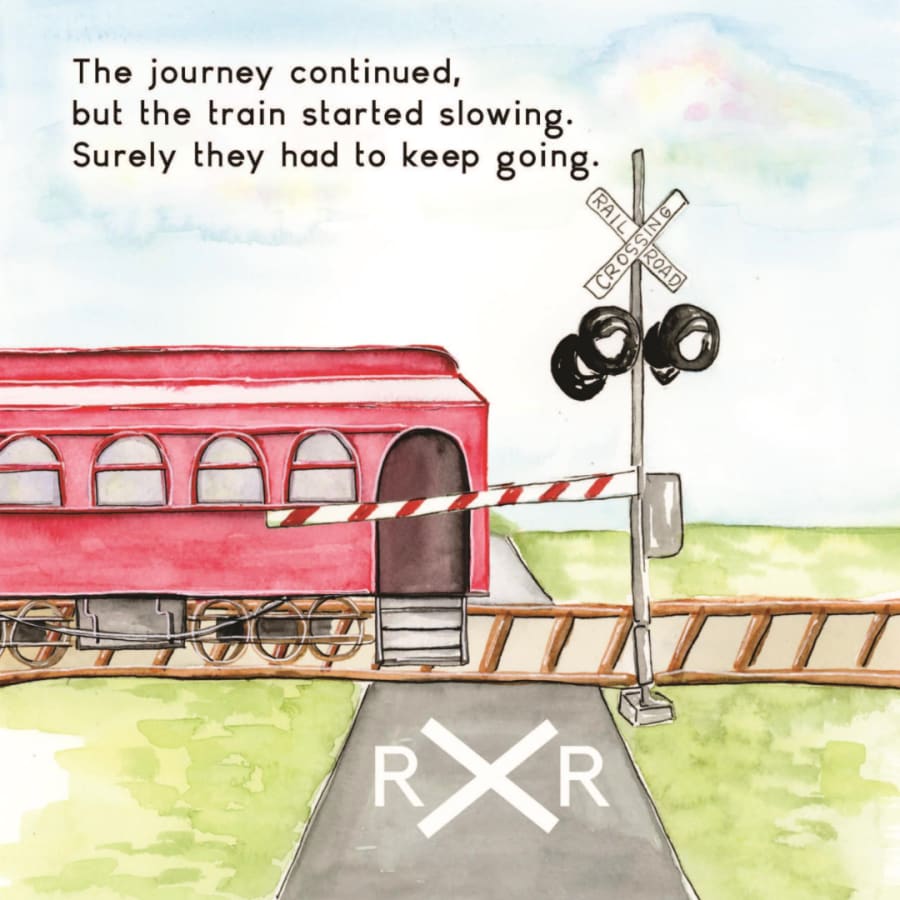
"This is a railroad crossing, where a road goes across the train tracks. Where is the gate? Is the train in front of the gate or behind it?" Then give the short safety talk (see Safety) before turning the page.
- Hand out position cards to six children. Play a quick game with a toy train and a box: "Put the toy train above the box. Now below. Now behind." The child holding that card checks it. Then everyone stands and acts out the words: hands above your head, below your knees, beside a friend.
- Turn to page 16. "Rally's trip ended at a station where his people were waiting. Where are they standing: beside the train or on top of it?" Partners take turns asking each other one "Where is...?" question about a page.
- Ask: "If we drew Rally's whole trip on a map, what would come first? What would be next to the tracks?" List the five places: start station, ocean, tunnel, crossing, end station.
- "Rally's trip is based on a real train ride. It starts at the Santa Fe Depot in San Diego, runs along the ocean past San Clemente, and ends in Orange County." Show a real online map of the California coast on the screen.
- Find San Diego, then trace the coast north with your finger. "Where is the ocean: beside the land or on top of it? Is the train line next to the ocean?" Point out San Clemente where the tracks run beside the water, like on page 13.
- Open the field trip planner (rallytakesthetrain.com/lessons/train-museum-field-trips) and find a verified museum near your school (in California, the Southern California Railway Museum in Perris is one example). Find it on the online map. "Is the museum above our school on the map or below it? Is it next to the ocean?" Read the museum name aloud yourself.
Or find a verified museum near your school in the field trip planner.
- Children cut out (or receive) the five scene pictures and glue them in order on their journey map: start station, ocean, tunnel, crossing, end station.
- Children draw Rally on the map somewhere along the track and add one more thing made from a shape they know, such as a circle sun above the ocean or a rectangle car stopped at the crossing. They tell a partner the name of the shape.
- Partners describe each other's maps using a position card: "Rally is next to the tunnel. The bird is above the ocean." Each child says at least two sentences with two different position words.
Safety: Rail crossing rule: when the lights flash and the gate comes down, cars and people stop and wait. Never go around the gate. Train tracks are only for trains, so we never walk or play on them. Teach this at page 14 with the class repeating: "Lights flash, gate down, we stop."
Differentiation
Extra support
Start with three position words (above, below, next to) and three scenes (start station, tunnel, end station). Act out each word with the child's own body before using the map. A child with motor needs can tell you where each scene goes while you or a partner place it.
Multilingual learners
Teach each position word with a gesture and the matching position card, and give the frame "The ___ is ___ the ___." in English and the home language. Pair with a peer who shares the home language when possible. Key language use: Inform.
Extension
Children draw a simple map of the classroom or the route from the classroom to the playground and label two places with position words ("The sink is beside the door.").
Check for understanding
Success criterion: Uses at least two different position words correctly to describe the journey map, places the scenes in trip order, and names the shape of one object.
| Level | What you see |
|---|---|
| 3Meets (level 3) | Uses two or more different position words correctly, places the scenes in trip order, and names the shape of something on the map. |
| 2Approaching (level 2) | Uses one position word correctly, or places the scenes correctly but needs prompts to describe them or to name a shape. |
| 1Beginning (level 1) | Points to show where things are but does not yet use position words, or mixes up above and below. |
Family connection
Send home the half-page note in the printables. The text is below so you can paste it into a newsletter or app.
English
Today your child made a picture map of Rally's train trip from the picture book Rally Takes the Train. We practiced position words: above, below, beside, in front of, behind and next to. We also learned a safety rule: at a railroad crossing, the lights flash and the gate comes down so cars and people stop, and tracks are only for trains. Tonight, play a 5-minute game: hide a small toy and give clues with position words. Free Rally coloring pages are at rallytakesthetrain.com/coloring-pages.
Español
Hoy su hijo o hija hizo un mapa con dibujos del viaje en tren de Rally, del libro Rally Takes the Train. Practicamos palabras de posición: arriba, abajo, al lado, delante, detrás y junto a. También aprendimos una regla de seguridad: en un cruce de tren, las luces parpadean y la barrera baja para que los carros y las personas se detengan, y las vías son solo para los trenes. Esta noche, jueguen 5 minutos: esconda un juguete pequeño y dé pistas con palabras de posición. Hay páginas para colorear gratis de Rally en rallytakesthetrain.com/coloring-pages.
Teacher tips
- Act out every word with your body first. Children who stand behind a chair and then in front of it remember the words far better than children who only see them on a card.
- Watch for children who confuse in front of and behind on a flat map. Keep those two words for real objects and the book's pictures, and use above, below and next to on the map.
- Pre-cut the scenes for most of the class if scissor skills are still new. The thinking is in placing and describing, not cutting.
Standards alignment
| Standard | Text |
|---|---|
| CCSS K.G.A.1 (opens in a new tab) | Describe objects in the environment using names of shapes, and describe the relative positions of these objects using terms such as above, below, beside, in front of, behind, and next to. |
| C3 D2.Geo.2.K-2 (opens in a new tab) | Use maps, graphs, photographs, and other representations to describe places and the relationships and interactions that shape them. |
Check codes against your state's version of these standards. How we build and review lessons.
Keep exploring
Find the train museum closest to your school in the directory. Draw a map from school to the museum. What is beside it, behind it or above it?
After the lesson, children can explore about 650 train and railway museums through our free guides, discovering the history, engineering and stories behind real trains. Read one together, then come back to the question.
Teach it with the real book
4.9 stars on Amazon
Rally Takes the Train is a rhyming, hand-painted picture book about a corgi's first train ride, from the big station stairs to a dark tunnel to the people waiting at the end of the line. Children ask for it again and again, and every lesson here is built on its pages.
Questions teachers ask
How do you teach position words in kindergarten?
Teach position words with the body first, then pictures, then maps. Have children stand above, below, beside and behind real objects, then find the same positions in a picture book, then use the words to describe a simple map. Position cards with a picture for each word help children check themselves. This lesson follows that order with Rally's train trip.
What is a simple map activity for kindergarten?
A picture map of a story's journey works well. Children glue story scenes in order along a path, from a start place to an end place, then describe where things are using words like next to and above. Showing a real map of the same route afterward helps children see that maps show real places.
How do you teach railroad crossing safety to young children?
Keep it short and concrete. Show a picture of a crossing and explain that when the lights flash and the gate comes down, cars and people stop and wait. Never go around the gate, and tracks are only for trains. A short chant like Lights flash, gate down, we stop helps children remember. This lesson teaches it at the crossing on page 14.
What position words should kindergarteners learn?
The core set is above, below, beside, in front of, behind and next to. These are the terms named in Common Core K.G.A.1 for describing where objects are. Teach them with the body first: hold a book above your head, below the table and beside a chair. This lesson gives each word its own printable card, and children also name the shape of something they draw on their map.
Why do kindergarteners confuse in front of and behind?
In front of and behind depend on where the viewer is, which is hard to see on a flat map or picture. Keep those two words for real objects and the book's pictures, and use above, below and next to on the map. Having children stand behind a chair and then in front of it builds the meaning in a way a card alone cannot.
What is a quick game for practicing position words?
Give six children a position card each and use a toy train and a box. Ask a child to put the train above the box, then below, then behind, and the child holding that word checks it. Then everyone stands and acts out the words, and partners take turns asking each other a where question about a page of the book. The game takes a few minutes and needs only a toy train and a box.
How can kindergarteners make a map of the classroom?
Have them draw a simple map of the classroom, or the route from the classroom to the playground, and label two places with position words, such as the sink is beside the door. This is the extension in this lesson for children who are ready for more. It works best after they have practiced the words with their bodies and on a picture map first.
Why teach map skills in kindergarten?
Maps help young children understand that places have positions and relationships, and they build the vocabulary to describe them. Using a picture map and a real map to describe places aligns with the C3 Framework geography standard D2.Geo.2.K-2. In this lesson children map Rally's story trip, then trace the real coastline the train follows on an online map.
What standards does this map and position words lesson meet?
Describing where things are with above, below, beside, in front of, behind and next to, and naming the shape of something on the map, meets Common Core K.G.A.1. Using a picture map and a real map to describe places meets the C3 Framework geography standard D2.Geo.2.K-2. The full text of both is listed in this lesson so you can copy it into your plans.
How long does the map Rally's journey lesson take?
About 40 minutes, or two 20-minute blocks. The read-aloud with position word stops takes 10 minutes, the position card game takes 7, the real map and museum connection takes 8 and the journey map activity takes 15. To split it, teach the words, read and play the game on day one, then do the real map and the journey map on day two.
What do I need to prepare for the position words map lesson?
Plan about 10 minutes. Print one journey map with scene cut-outs per child, or pre-cut them for pairs, and print the position cards. Open a real online map of the San Diego to Orange County coast on your screen. You also need glue sticks, crayons, scissors if children cut their own, a toy train, a box and the book.
What is on the journey map printable?
The journey map is a simple picture map with a curving track from a start station at the bottom to an end station at the top, the ocean along one side, a cliff with a tunnel and a road crossing the track. Five scene cut-outs from the book glue into boxes along the track. It comes in color, ink-saver and A4, free with no account needed for classroom and homeschool use.
How do I support kindergarteners who are still learning position words?
Shrink the task. Start with three words, above, below and next to, and three scenes: the start station, the tunnel and the end station. Act out each word with the child's own body before using the map. Pre-cutting the scenes also helps, since the thinking in this lesson is in placing and describing the scenes, not in cutting.
How do I teach position words to multilingual learners?
Teach each word with a gesture and its matching picture card, and give the frame The ___ is ___ the ___ in English and the home language. Pair the child with a peer who shares the home language when possible. Position words are easy to show and hard to explain, so acting them out first helps every learner. The WIDA key language use here is Inform.
Can I adapt the map lesson for TK or 1st grade?
Yes. For TK or mixed ages, use the three-word, three-scene version and let children describe their map out loud while you point. For 1st grade, have children place all five scenes, write two sentences with different position words, and then draw a map of the classroom or the route to the playground with labeled places.
How do you assess position words in kindergarten?
Listen as partners describe each other's maps. In this lesson, Meets means the child uses two or more position words correctly, places the scenes in trip order and names the shape of something on the map. Approaching means one position word used correctly, or correct placement that needs prompts. Beginning means the child points to show where things are but does not yet use the words, or mixes up above and below.
Is the family note for the map lesson available in Spanish?
Yes. The family note is in English and Spanish, as a half-page printable and as text you can paste into a newsletter or app. It shares the position words, the railroad crossing safety rule, and a 5-minute game: hide a small toy at home and give clues with words like above, below, beside and behind.
Is the train trip in Rally Takes the Train a real route?
Yes. The trip in the book is based on a real Amtrak Pacific Surfliner ride from the Santa Fe Depot in San Diego, along the ocean to Orange County. The train passes the ocean at San Clemente, like the view on page 13. In this lesson children trace that coastline on a real online map after placing the story scenes on their picture map.
What can children explore after the map lesson?
Maps lead to real places. In Discover, children find a verified museum near your school in the field trip planner, such as the Southern California Railway Museum in Perris, and describe where it is on an online map. The Keep exploring section at the end of the lesson links to about 650 free train museum guides at rallytakesthetrain.com/train-museums. Children can choose a museum, find its town on the map and use words like above, below and next to to tell where it is.
Can I teach the position words lesson without the book?
Mostly, yes. The position cards, the body game and the journey map work on their own, and the map's scene cut-outs show the book's pictures. The read-aloud stops on pages 3, 8, 11 and 14 need the book, which is in paperback on Amazon. Credentialed Pre-K to 2nd grade teachers in the US can get a free paperback classroom copy by reviewing one lesson plan. They apply at rallytakesthetrain.com/free-book-for-teachers.
Related lessons
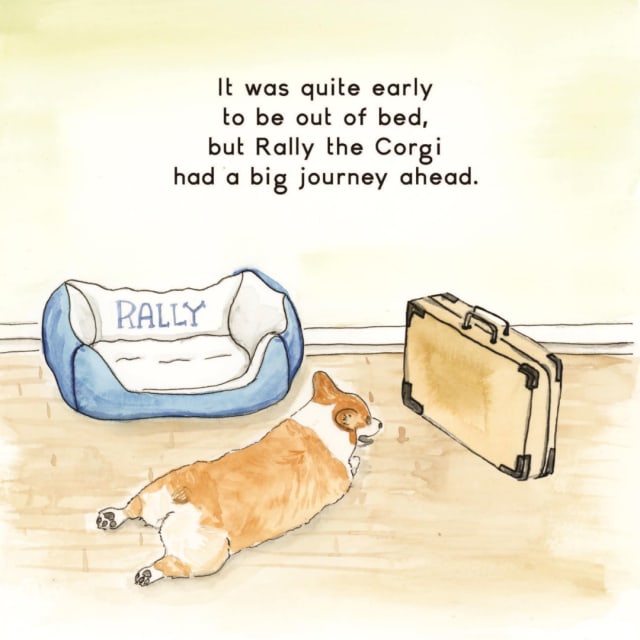
Train Story Sequencing: Beginning, Middle and End
A free, 35-minute kindergarten lesson where children retell Rally Takes the Train in order.
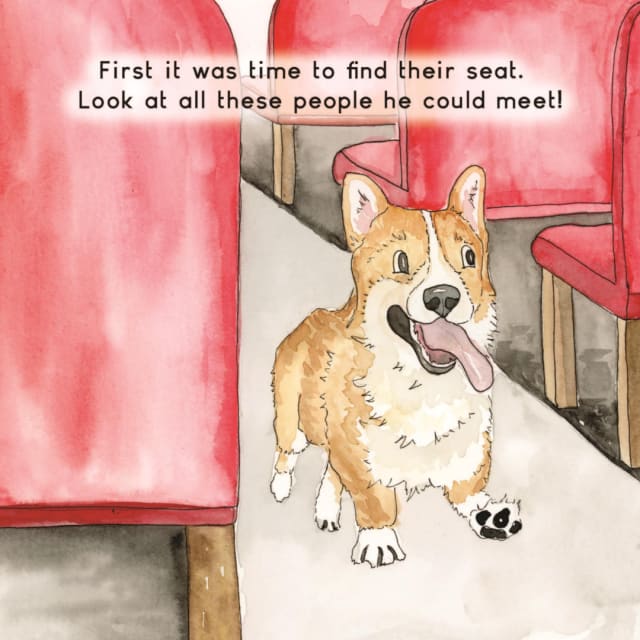
Counting Train Cars: Count and Compare to 20
A free, 40-minute kindergarten math lesson built on a train picture book.
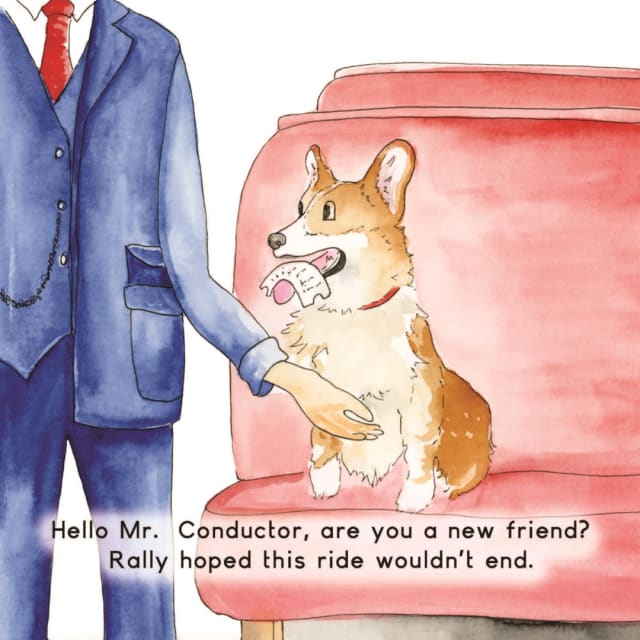
All Aboard! Train Station Dramatic Play
A free, 35-minute preschool and Pre-K/TK lesson that turns your dramatic play area into a train station.
Teaching with Rally Takes the Train
Every lesson is free for classroom and homeschool use. Add the paperback to your classroom library, or review a lesson to earn a free copy if you are a credentialed teacher. Keep the journey going in about 650 free train museum guides, plan a visit with the field trip planner, or browse all lessons for educators.