
Train Story Sequencing for Kindergarten: Beginning, Middle and End
A free, 35-minute kindergarten lesson where children retell Rally Takes the Train in order. They hear the story, sort beginning, middle and end on a class chart, connect it to a real train trip, then order three picture cards with a partner. Includes printable cards, a checklist and a family note.
- Grade
- Kindergarten
- Subjects
- Reading literature, Speaking and listening
- Time
- 35 minutes (or two 20-minute blocks)
- Prep
- 10 minutes: print and cut one set of 3-scene sequencing cards and one retell strip per child (the strip printable has two strips per page)
- Grouping
- Whole group, then partners
- Book pages
- 2, 4, 6, 10, 12, 17
- CCSS RL.K.2
- CCSS RL.K.3
- CCSS SL.K.1
 Need the book? Get the paperback on Amazon (opens in a new tab) or earn a free classroom copy.
Learning objective
With prompting and support, students retell Rally Takes the Train in order, naming the main character, the setting, and one key event from the beginning, middle and end, and take turns retelling and listening with a partner.
I can tell who is in Rally's story, where it happens, and what happened first, next and last.
Vocabulary to teach
Materials
- Rally Takes the Train by Kelsey Lizee Cecil: get the paperback on Amazon (opens in a new tab) or earn a free classroom copy
- Chart paper divided into three boxes: Beginning, Middle, End, with space at the top for Who and Where
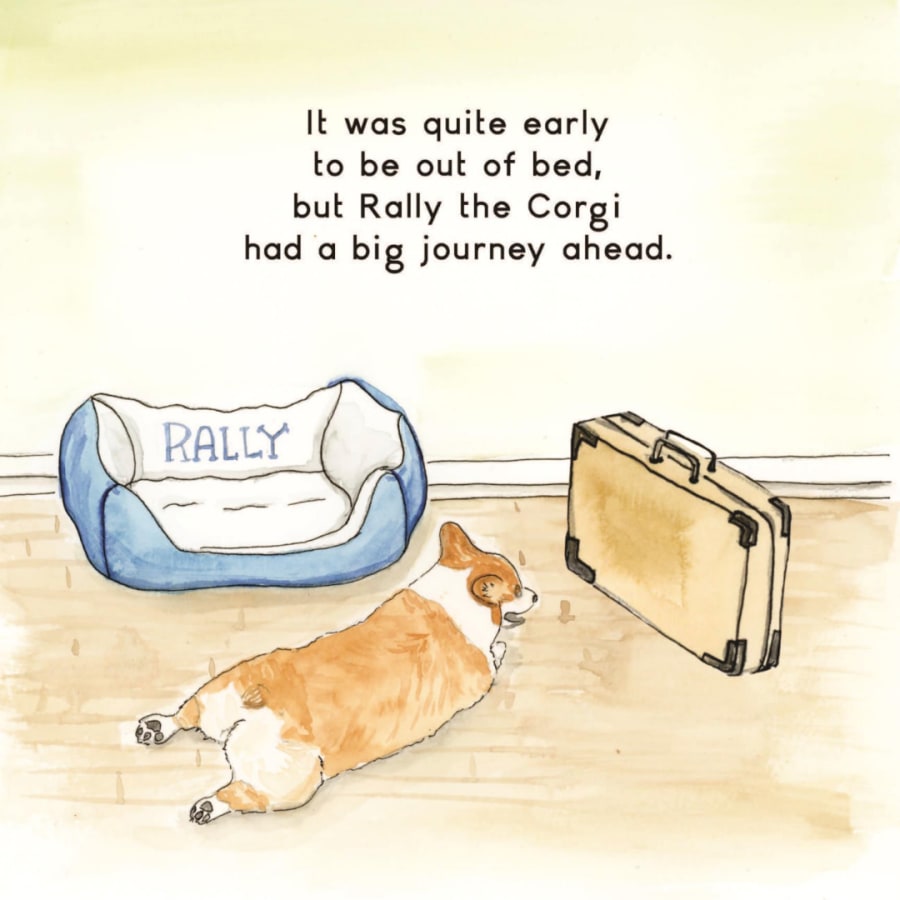
- 3-scene sequencing cards, one set per child (printable): Rally packing his toys (page 2), the dark tunnel (page 12), Grandmommy and Papa greeting Rally (page 17)
- 6-scene cards for extension (printable): pages 2, 4, 6, 10, 12 and 17, each with a write-in line
- Retell strips, one per child (printable, two strips per page), scissors for trimming, and glue sticks
- Screen or printout of the Utah State Railroad Museum at Ogden Union Station guide (see Discover)
Lesson steps
Hold up the cover. "Rally is going on a journey. A journey is a trip from one place to another. Let's find out where he goes and what happens first, next and last."
"What did Rally do at the very beginning of the story?" (He saw the suitcase and packed his favorite toys.)
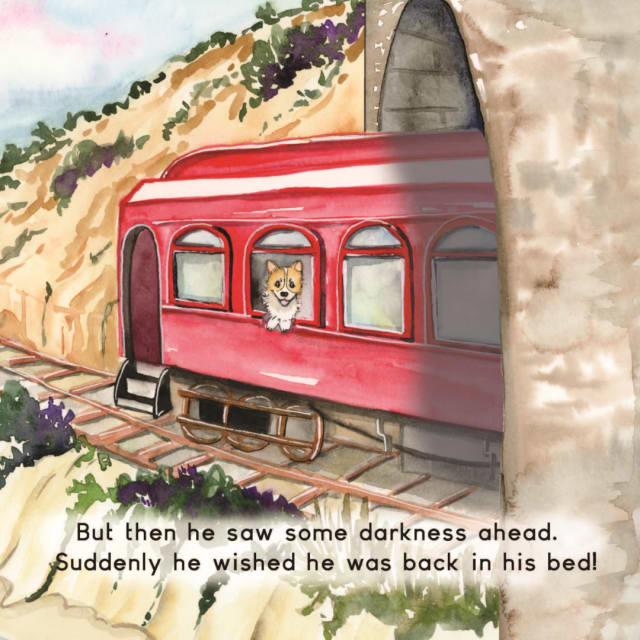
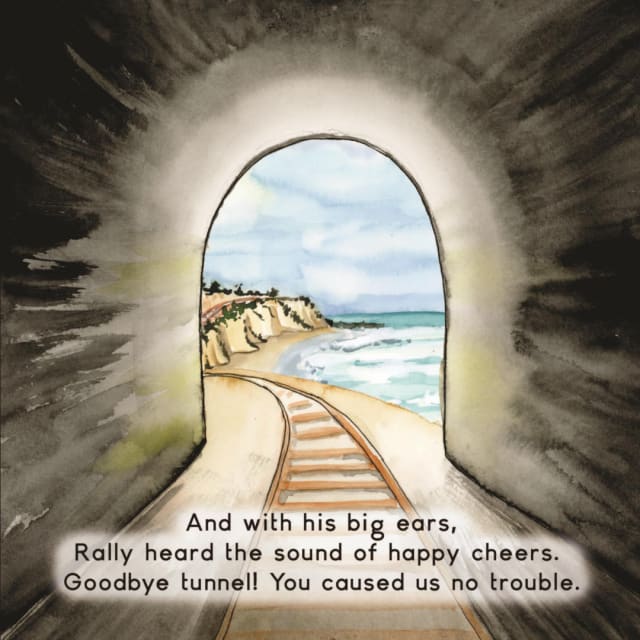
"Where is Rally now? The words say he is scared. What in the picture shows it?" (He is in the dark tunnel. It is dark all around him.)
"Who was waiting for Rally at the end of his journey?" (Grandmommy and Papa.)
- Point to the chart. "Every story has characters, a setting, and a beginning, a middle and an end. Who is this story about? Where does it happen?" (Rally and his family, on a train.) Write Rally and train at the top of the chart.
- Model the beginning: "At the beginning, Rally packed his toys." Sketch a suitcase in the Beginning box.
- Partners turn and talk with the frame "In the middle, Rally ___." Take three answers and sketch one in the Middle box.
- Repeat for the End box. Ask: "How did Rally feel at the beginning? How did he feel at the end?"
- Stand up for a one-minute stretch: "Let's be a train. Chug slowly, then faster, then slow down and sit." Then open the Utah State Railroad Museum at Ogden Union Station guide, or find a verified museum near your school in the field trip planner (rallytakesthetrain.com/lessons/train-museum-field-trips). Read two or three sentences aloud yourself and show the photos.
- "Real trips have a beginning, a middle and an end too. Let's plan a visit to this museum in order." Beginning: we walk into the old train station, built in 1924. Middle: we watch four model trains run and climb into the play locomotive cab. End: we go outside and stand beside the big, full-size engines. Sketch each part on a second, smaller chart and ask, "What do we do first? Next? Last?"
- Children tell a partner the beginning, middle and end of a trip they took or want to take, using the same three words.
Or find a verified museum near your school in the field trip planner.
- Give each child a mixed-up set of three cards: Rally packing his toys (page 2), the dark tunnel (page 12) and Grandmommy and Papa greeting Rally (page 17).
- Partners put their cards in order together, then each child glues their own set on a retell strip under the words First, Next, Last. Trim the cards to fit the boxes if needed.
- Partner A retells, touching each card: "First... Next... Last..." Partner B listens, then says one thing they heard: "You said ___." Partners switch.
- Send the retell strip home with the family note so children can retell the story to someone at home.
Differentiation
Extra support
Start with two cards (beginning and end), then add the middle. Keep the book open to each scene while the child orders the cards. A child who uses picture symbols or a speech device can retell by pointing to each card and choosing one word or symbol for it.
Multilingual learners
Use picture word cards for journey, station and tunnel, and give the frame "First... Next... Last..." in English and the home language. Pair with a peer who shares the home language when possible. Key language use: Narrate.
Extension
Use the 6-scene set (packing toys, the big stairs, kids petting Rally, Mr. Conductor, the tunnel, Grandmommy and Papa) and dictate or write a sentence under each card with inventive spelling.
Check for understanding
Success criterion: Orders three story events, retells them in order with the character, setting and key details, and takes turns retelling and listening with a partner.
| Level | What you see |
|---|---|
| 3Meets (level 3) | Orders all three cards, names Rally and the train, retells each event in their own words, and says one thing they heard in a partner's retell. |
| 2Approaching (level 2) | Orders the cards after one prompt, retells two of the three events, or needs a prompt to name who or where. |
| 1Beginning (level 1) | Needs the book open to order the cards and names pictures ("suitcase, tunnel") rather than telling events; takes a turn only with adult support. |
Family connection
Send home the half-page note in the printables. The text is below so you can paste it into a newsletter or app.
English
Today your child retold the picture book Rally Takes the Train in order: first, next and last. Stories have a beginning, a middle and an end, and so do our days. Tonight, ask your child to tell you the beginning, middle and end of Rally's trip using the cards they brought home. Then take turns telling the beginning, middle and end of your own day. Free Rally coloring pages are at rallytakesthetrain.com/coloring-pages.
Español
Hoy su hijo o hija volvió a contar el libro Rally Takes the Train en orden: primero, después y al final. Los cuentos tienen un principio, un medio y un final, y nuestros días también. Esta noche, pida a su hijo o hija que le cuente el principio, el medio y el final del viaje de Rally con las tarjetas que trajo a casa. Luego, túrnense para contar el principio, el medio y el final de su propio día. Hay páginas para colorear gratis de Rally en rallytakesthetrain.com/coloring-pages.
Teacher tips
- Read the book once for fun the day before. Children sequence far more accurately on a second reading.
- Mixing the cards in front of the children ("Oh no, the story got mixed up!") turns the task into a problem to fix, and most kindergarteners jump in.
- Listen for transition words. A child who says "and then, and then" is ready to practice "first, next, last."
Standards alignment
| Standard | Text |
|---|---|
| CCSS RL.K.2 (opens in a new tab) | With prompting and support, retell familiar stories, including key details. |
| CCSS RL.K.3 (opens in a new tab) | With prompting and support, identify characters, settings, and major events in a story. |
| CCSS SL.K.1 (opens in a new tab) | Participate in collaborative conversations with diverse partners about kindergarten topics and texts with peers and adults in small and larger groups. |
Check codes against your state's version of these standards. How we build and review lessons.
Keep exploring
Pick a museum guide and plan a visit in order. What would you see first, next and last?
After the lesson, children can explore about 650 train and railway museums through our free guides, discovering the history, engineering and stories behind real trains. Read one together, then come back to the question.
Teach it with the real book
4.9 stars on Amazon
Rally Takes the Train is a rhyming, hand-painted picture book about a corgi's first train ride, from the big station stairs to a dark tunnel to the people waiting at the end of the line. Children ask for it again and again, and every lesson here is built on its pages.
Questions teachers ask
How do you teach beginning, middle and end in kindergarten?
Use a familiar picture book, a three-box chart and picture cards. Read the story, name who it is about and where it happens, model one event for the beginning box, and let partners talk through the middle and end. Then children order three picture cards and retell them using first, next and last. In this lesson the cards show Rally packing his toys, the dark tunnel and Grandmommy and Papa greeting Rally.
What is a good sequencing activity for kindergarten?
A strong sequencing activity has children put a small set of picture cards from a familiar story in order and then retell it aloud. Ordering alone is not enough, because the retell shows they understand the events. In this lesson, partners order three cards from Rally Takes the Train together, each child glues a set under First, Next and Last on a retell strip, and partners take turns retelling and listening.
Why is story sequencing important in kindergarten?
Sequencing helps children understand how a story is built and gives them a structure for retelling it with key details, which is what Common Core RL.K.2 asks for. It also supports their own storytelling and later writing. This lesson connects story order to real life too, asking children to name the beginning, middle and end of a museum visit and of a trip they took or want to take.
What words help kindergarteners retell a story in order?
First, next and last are the best starting words because there are only three and they match a three-card retell. Once children use those easily, add then and finally. In this lesson children say first, next and last while touching each card. A useful clue: a child who strings events together with and then, and then is ready to practice first, next and last.
How many sequencing cards should kindergarteners use?
Start with three cards, one each for the beginning, middle and end. Three is enough to show story order without overloading young children. Children who need more support can begin with just two cards, the beginning and the end, then add the middle. Children who are ready for more can use a 6-scene set. This lesson includes printable 3-scene and 6-scene card sets from Rally Takes the Train.
How do you help a kindergartener who retells a story out of order?
Go back to the book. Keep it open to each scene while the child orders the cards, and ask what happened right before or right after a picture. Reduce the set to two cards, the beginning and the end, then add the middle once that is solid. Reading the story once for fun the day before also helps, since children sequence far more accurately on a second reading.
What is a good picture book for teaching sequencing in kindergarten?
Look for a book with a clear journey: a start, a change in the middle and an obvious ending. Rally Takes the Train works well because a corgi packs his toys, rides a train, feels scared in a dark tunnel, then arrives where his people are waiting. Each part has a distinct watercolor picture, so children can sort the beginning, middle and end without confusion.
How do you assess story retelling in kindergarten?
Watch and listen as children retell with picture cards, and mark a simple three-level check while you circulate. In this lesson, Meets means the child orders all three cards, names Rally and the train, retells each event in their own words, and says one thing they heard in a partner's retell. Approaching means one prompt is needed, or two of three events are retold. Beginning means the child names pictures rather than events.
What standard does a story sequencing lesson meet?
Retelling a story in order with key details meets Common Core RL.K.2. Naming the main character, the setting and the major events meets RL.K.3, and taking turns retelling and listening to a partner meets SL.K.1. All three are taught and checked in this lesson, and the full text is listed so you can copy it into your plans and compare it with your state's version.
How long does the Rally train sequencing lesson take?
The lesson takes about 35 minutes, or two 20-minute blocks. The read-aloud with three planned stops takes 10 minutes, the characters, setting and beginning, middle and end chart takes 6, the museum connection takes 7 and the partner card retell takes 12. If you split it, read and build the class chart on day one, then do the museum connection and card retell on day two.
What do I need to prepare for the train sequencing lesson?
Prep takes about 10 minutes: print and cut one set of three sequencing cards and one retell strip per child, since the strip printable has two strips per page. You also need the book, chart paper divided into Beginning, Middle and End boxes, glue sticks, the 6-scene cards for extension, and a screen or printout of one train museum guide. Trim the cards to fit the strip boxes if needed.
How do I support multilingual learners in a sequencing lesson?
Teach the key words directly with pictures, and give a sentence frame in English and the home language. In this lesson, use picture word cards for journey, station and tunnel and the frame First, Next, Last. Pair the child with a peer who shares the home language when possible. The WIDA key language use for this lesson is Narrate, since children are retelling events in order.
What is a sequencing extension for advanced kindergarteners?
Give them more events to order and ask them to write. In this lesson, ready children use the 6-scene set: Rally packing his toys, the big stairs, kids petting Rally, Mr. Conductor, the tunnel, and Grandmommy and Papa. They put all six in order and dictate or write a sentence under each card with inventive spelling, which turns an oral retell into a short written summary.
Are there free printable sequencing cards for this lesson?
Yes. The printables include 3-scene sequencing cards, a 6-scene extension set, retell strips and a half-page family note. They come in color, an ink-saver version and A4 paper size. Every printable is free with no account needed for classroom and homeschool use. The cards use the book's own watercolor pictures, so children sequence real scenes from the story.
Is there a Spanish family note for the sequencing lesson?
Yes. The family note comes in English and Spanish, as a half-page printable and as text on the lesson page you can paste into a newsletter or app. It explains that your child retold the story first, next and last, and suggests a 5-minute activity: retell Rally's trip with the cards, then take turns telling the beginning, middle and end of your own day.
Can I use this sequencing lesson in TK or 1st grade?
Yes, with small changes. For TK or mixed ages, use the two-card start with the beginning and end, keep the book open, and let children retell orally before gluing. For 1st grade, start with the 6-scene set and have children write a sentence for each card using first, next, then and last. The read-aloud and class chart work the same at every level.
Can I teach this sequencing lesson without the book?
Yes, for the activity part. The printable cards show the book's own pictures, so children can sequence and retell from the cards. For the read-aloud, the book is in paperback on Amazon, and credentialed Pre-K to 5th grade teachers in the US can get a free paperback classroom copy by reviewing one lesson plan. They apply at rallytakesthetrain.com/free-book-for-teachers.
Who can get a free classroom copy of Rally Takes the Train?
Credentialed Pre-K to 5th grade teachers in the US can get a free paperback classroom copy by reviewing one lesson plan. You need a current state teaching credential or license (or for early childhood a CDA credential, a state early childhood teaching permit, or an ECE degree), at least 2 years of classroom teaching, and a current Preschool to 5th grade class at a US school, Head Start or licensed program. Apply at rallytakesthetrain.com/free-book-for-teachers.
What can children explore after the sequencing lesson?
Every real trip has a beginning, middle and end. In Discover, children put a visit to the Utah State Railroad Museum at Ogden Union Station in order, using a guide the museum itself has verified. The Keep exploring section at the end of the lesson links to about 650 free train museum guides at rallytakesthetrain.com/train-museums. Children can pick a museum, look at its photos and tell what they would see first, next and last on a visit there.
What happens in the story Rally Takes the Train?
Rally the Corgi sees a suitcase, packs his favorite toys and rides a train with Mom and Dad. He meets kids who pet him, a friendly conductor and a white bird by the ocean, then feels scared in a dark tunnel until he sees a bright light. At the end, his people wave from the platform. The rhyming book by Kelsey Lizee Cecil has hand-painted watercolor art by Leslie Dunn.
Related lessons
Rally's Feelings: Fear and Courage
A free, 35-minute kindergarten SEL lesson about fear and courage.
Map Rally's Journey: Position Words
A free, 40-minute kindergarten lesson on position words and simple maps.
Choo-Choo Chant: Rhyme and Syllable Clapping
A free, 30-minute preschool and Pre-K phonological awareness lesson.
Teaching with Rally Takes the Train
Every lesson is free for classroom and homeschool use. Add the paperback to your classroom library, or review a lesson to earn a free copy if you are a credentialed teacher. Keep the journey going in about 650 free train museum guides, plan a visit with the field trip planner, or browse all lessons for educators.