
Choo-Choo Chant: Train Rhyming and Syllable Clapping Activities for Preschool and Pre‑K
A free, 30-minute preschool and Pre-K phonological awareness lesson. Children hear the rhymes in Rally Takes the Train, say whether two words rhyme, finish rhyming lines out loud, then clap the syllables of train words like sta-tion and lo-co-mo-tive while chugging as a class train. Includes rhyme picture cards and a family note.
- Grade
- Preschool & Pre-K
- Subjects
- Phonological awareness, Oral language, Movement
- Time
- 30 minutes (a short read-aloud, a standing chant, a short museum talk, then a movement game)
- Prep
- 5 minutes: print and cut one set of rhyme picture cards and clear a path around the room for the class train
- Grouping
- Whole group, then the train game in small groups of 4 to 6 (or the whole class with a second adult at the back of the train)
- Book pages
- 3, 4, 5, 7, 8, 12
- Head Start ELOF: Literacy: Phonological Awareness
 Need the book? Get the paperback on Amazon (opens in a new tab) or earn a free classroom copy.
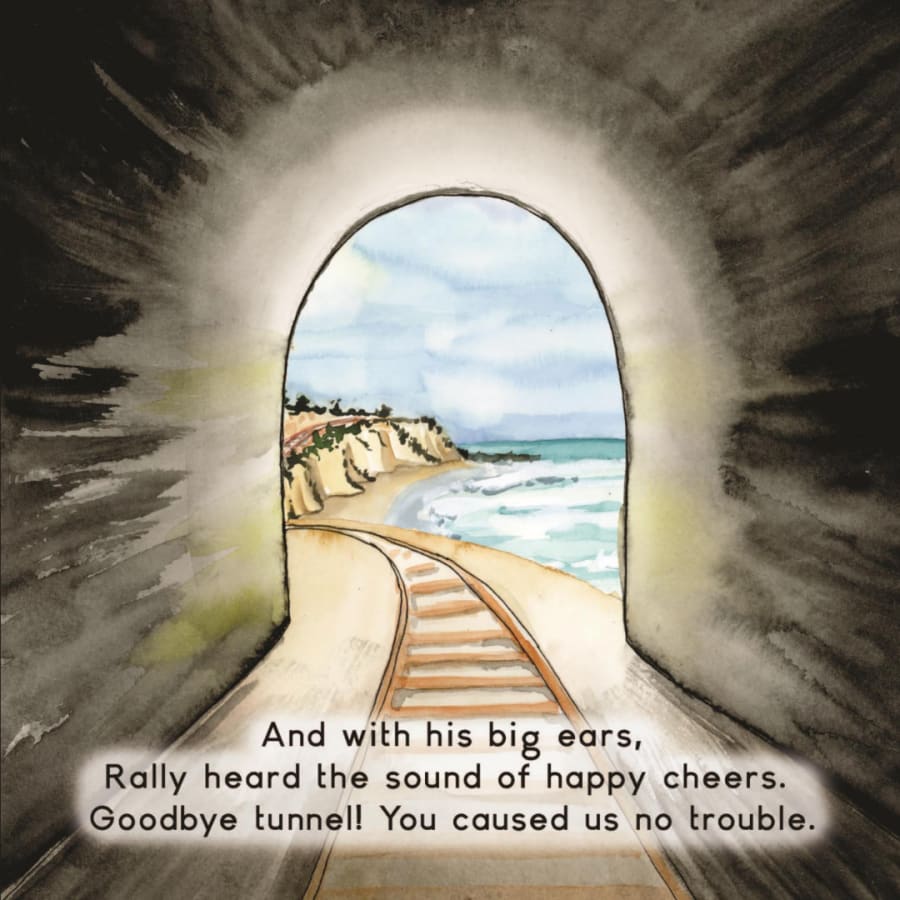
Learning objective
Children say whether two words rhyme, finish a rhyming line from the book with the missing rhyming word, and clap the syllables (word parts) in one- to four-syllable train words.
I can tell if two words rhyme and clap the parts of train words.
Vocabulary to teach
Materials
- Rally Takes the Train by Kelsey Lizee Cecil: get the paperback on Amazon (opens in a new tab) or earn a free classroom copy
- Rhyme picture cards, one set for the group (printable): six rhyme pairs from the book, one card per word, each with a picture and the word printed under it for the teacher to read: seat (the train seats) and meet (two hands shaking); bird (the white gull, page 8) and heard (an ear); light (the bright view out of the tunnel, page 13) and sight (an eye); stairs (Dad and Rally on the train steps, page 4) and cares (a heart); litter (fur on the floor, page 7) and glitter (sparkles); ears (Rally's face) and cheers (happy Rally, page 15)
- Syllable train cards (on the same printable): a red engine card (the locomotive) and eight blank train cars, so the teacher can lay down one car for each clap
- A drum or tambourine to keep the beat (optional)
- Screen or printout of the Utah State Railroad Museum at Ogden Union Station guide (see Discover)
Lesson steps
"This book is full of rhymes. Rhymes are words that sound the same at the end, like seat and meet. Put your hand by your ear. When you hear two words that rhyme, wiggle your fingers." On pages 3 and 5, read every word and stress the rhyme. On pages 8 and 12, pause before the last word.
Reread the line slowly, stressing the end words: "A train, a train! Rally ran forward with GLEE. Imagine all of the things they would SEE!" "Glee, see. Say them with me. They rhyme!"
Read the whole page, stressing "seat" and "meet." "Seat, meet. Do they sound the same at the end? Wiggle your fingers if they rhyme." Then say the pair together.
Read "Choo choo! The train starting could be heard. Hello cute white..." and pause for "bird!" Point to the gull. "Heard, bird. Same sound at the end." If no one calls it out, say it and have children echo the pair.
Read "...with nothing in sight, he quickly saw a big and bright..." and pause for "light!" "Sight, light. You finished the rhyme!"
- Children stand. Teach a short chant and say it three times together, chugging your arms like train wheels: "Choo-choo, choo-choo, down the track. Rhyming words go clickety-clack!"
- Hear it first: hold up two cards and ask, "Do seat and meet rhyme? Thumbs up or thumbs down." Mix yes and no pairs: bird and heard (yes), bird and train (no). Ask, "How do you know?" and model: "Bird and train do not sound the same at the end."
- Then finish it: hold up the litter card and say a line with a pause: "Rally did not mean to litter, but he left a trail of corgi..." Children finish with "glitter!" Children sit for Discover.
- Open the Utah State Railroad Museum at Ogden Union Station guide, or find a verified museum near your school in the field trip planner (rallytakesthetrain.com/lessons/train-museum-field-trips). Read two or three sentences aloud yourself, since the guides are written for adults, and show the photos.
- Teach two words directly. "A trestle is a bridge made of wood or metal posts that holds up the train tracks. This museum's model railroad crosses the Lucin Trestle. A caboose is a train car that rides at the very end of a train. Outside the museum, you can stand beside real cabooses." Show a photo, or build a trestle with your arms over a toy train.
- Clap the parts together: "tres-tle" (2 claps), "ca-boose" (2 claps), "lo-co-mo-tive" (4 claps). Lay down one syllable train car for each clap. "Which word has the most parts?"
Or find a verified museum near your school in the field trip planner.
- Line up as a train with a small group (or the whole class with a second adult at the back). You are the locomotive at the front. Children chug their arms at their sides instead of holding the friend in front.
- Say a train word, then say it in parts while the train takes one step and claps for each part: "train" (1), "sta-tion" (2), "con-duc-tor" (3), "lo-co-mo-tive" (4). Lay one blank car behind the engine card for each clap, then count the cars together.
- Stop at a "rhyme station." 3-year-olds answer thumbs up or down for a pair and finish the lines the class practiced. 4-year-olds and TK finish new lines (stairs/cares, ears/cheers) and take turns being the locomotive who calls the next train word.
Safety: Before the train moves, clear the path of chairs, bins and loose rugs, and set a walking speed. Children chug their own arms instead of holding the friend in front, so no one is pulled or pushed. A child who wants more space can walk at the back or clap from the side.
Differentiation
Extra support
Offer to clap with your hands over the child's hands, or tap their shoulder for each syllable. Start with one- and two-syllable words (train, sta-tion, tun-nel) before adding con-duc-tor and lo-co-mo-tive. For rhymes, give two choices: "Seat and meet, or seat and ball?" A child who uses a communication device or signs can tap the drum once per syllable.
Multilingual learners
Show the picture card every time you say a word so meaning is clear before children play with its sounds. Accept thumbs up or down and echoing as full answers, and give the frame "___ and ___ rhyme." Clapping syllables works in any language, so invite children to clap a word in their home language. Key language use: Explain.
Extension
Children clap their own names and friends' names, then sort themselves into a 1-car, 2-car or 3-car train. Or invite 4-year-olds and TK to make up rhymes for a train word, silly ones included: "train, rain, plane."
Check for understanding
Success criterion: Says whether two words rhyme, finishes a rhyming line with a rhyming word, and claps the syllables of train words.
| Level | What you see |
|---|---|
| 3Meets (level 3) | Says whether two words rhyme, finishes a rhyming line without a picture cue, and claps the correct number of syllables in train words of up to 4 syllables. |
| 2Approaching (level 2) | Says whether two words rhyme with a picture card or a choice of two, finishes a practiced line, and claps 1- and 2-syllable words correctly. |
| 1Beginning (level 1) | Joins the chant and claps along with the group, but does not yet judge or finish a rhyme or match claps to word parts alone. |
Family connection
Send home the half-page note in the printables. The text is below so you can paste it into a newsletter or app.
English
Today your child listened for rhymes in the picture book Rally Takes the Train, like seat and meet, and clapped the parts of train words: sta-tion, con-duc-tor, lo-co-mo-tive. Hearing rhymes and word parts helps children get ready to read. Try this at home in 5 minutes: clap the parts of names in your family, then say a word and let your child say a word that rhymes, even a silly one. Free Rally coloring pages are at rallytakesthetrain.com/coloring-pages.
Español
Hoy su hijo o hija escuchó rimas en el libro Rally Takes the Train, como seat y meet, y aplaudió las partes de palabras de trenes: es-ta-ción, con-duc-tor, lo-co-mo-to-ra. Oír rimas y partes de palabras ayuda a los niños a prepararse para leer. Pruébelo en casa en 5 minutos: aplaudan las partes de los nombres de su familia y luego diga una palabra para que su hijo o hija diga otra que rime, aunque sea inventada. Hay páginas para colorear gratis de Rally en rallytakesthetrain.com/coloring-pages.
Teacher tips
- Pause and let the class fill in the rhyme on a second or third reading. On the first reading many children are still following the story.
- Chugging one step per syllable is easier for 3-year-olds than clapping, because their whole body keeps the beat. Add claps once the steps feel steady.
- Say syllables naturally with a small pause between parts, not stretched or robotic. "Con-duc-tor" should still sound like the real word.
Standards alignment
| Standard | Text |
|---|---|
| Head Start ELOF: Literacy: Phonological Awareness (opens in a new tab) | Preschool (36 to 60 months) sub-domain of the Head Start Early Learning Outcomes Framework. |
Check codes against your state's version of these standards. How we build and review lessons.
Keep exploring
Find a long train word in a museum guide, like locomotive or caboose. Say it slowly. How many claps does it have?
After the lesson, children can explore about 650 train and railway museums through our free guides, discovering the history, engineering and stories behind real trains. Read one together, then come back to the question.
Teach it with the real book
4.9 stars on Amazon
Rally Takes the Train is a rhyming, hand-painted picture book about a corgi's first train ride, from the big station stairs to a dark tunnel to the people waiting at the end of the line. Children ask for it again and again, and every lesson here is built on its pages.
Questions teachers ask
How do you teach rhyming to preschoolers?
Start with hearing rhymes, then judging them, then making them. Read a rhyming book and stress the rhyming words. Next ask yes-or-no questions ("Do bird and heard rhyme?"). Then pause before the second rhyme on a familiar page so children can finish the line. Last, invite them to make their own rhymes, including silly ones.
How do you teach syllables in Pre-K?
Clap, stomp or chug one beat for each word part. Begin with names and short words, then build up to longer words like con-duc-tor and lo-co-mo-tive. Laying down one paper train car per clap shows children how many parts a word has, which makes the idea visible.
What ELOF standard covers rhyming and syllables?
Rhyming and clapping syllables fall under Head Start ELOF Literacy: Phonological Awareness. This lesson teaches and checks three parts of it: telling whether two words rhyme, finishing a rhyming line, and clapping the syllables in a word. It lists that one sub-domain, written out in full, so you can copy it into your plans.
What are good train words for clapping syllables?
Use words from one to four parts: train (1), sta-tion and tun-nel (2), con-duc-tor (3) and lo-co-mo-tive (4). Track, whistle (whis-tle), trestle (tres-tle) and passenger (pas-sen-ger) also work. Teach what each word means first, so children are clapping words they understand.
Why is rhyming important for preschoolers?
Hearing rhymes helps children notice the sounds inside words, apart from their meaning, which helps them get ready to read. Rhyming and clapping syllables are both part of phonological awareness. In Choo-Choo Chant, children listen for rhymes like seat and meet in Rally Takes the Train, say whether two words rhyme, finish rhyming lines aloud and clap train words, through a story and through movement.
What is phonological awareness in preschool?
Phonological awareness is the ability to hear and play with the sounds in spoken words, without looking at print. In preschool it includes hearing rhymes, telling whether two words rhyme, finishing a rhyming line, and clapping the syllables, or beats, in a word. It matches the Head Start ELOF sub-domain Literacy: Phonological Awareness. This lesson practices it by listening, chanting and moving, with no reading or writing.
What makes a good picture book for teaching rhyme?
Look for a book with a steady rhyme at the end of each line, so children can predict the second word. Rally Takes the Train rhymes on every page, with pairs like seat and meet, heard and bird, sight and light, and litter and glitter. On a second or third reading, pause before the second rhyme and let the class call it out.
What can children explore after the Choo-Choo Chant lesson?
In Discover, children hear about the Utah State Railroad Museum at Ogden Union Station, a verified museum whose model railroad crosses the Lucin Trestle, then clap tres-tle, ca-boose and lo-co-mo-tive. The Keep exploring section at the end of the lesson links to about 650 free train museum guides at rallytakesthetrain.com/train-museums. Read a few train words from any guide aloud and let children clap the syllables or say a word that rhymes.
What is a good movement activity for phonological awareness?
A class train works well. Children line up and chug their arms at their sides, and the teacher, as the locomotive, calls a train word. The train takes one step and claps once for each syllable: train (1), sta-tion (2), con-duc-tor (3), lo-co-mo-tive (4). For 3-year-olds, stepping the beat is often easier than clapping it, because the whole body keeps time.
What if a preschooler cannot hear rhymes yet?
Give choices instead of open questions. Ask "Seat and meet, or seat and ball?" so the child compares two options. Keep the rhyme cards in view so meaning is clear before you play with sounds, and clap with your hands over the child's hands for syllables. Children at the Beginning level join the chant and clap with the group, which is a real first step.
How long is the Choo-Choo Chant rhyming lesson?
Choo-Choo Chant takes about 30 minutes: a 6-minute read-aloud, 5 minutes of standing chant and rhyme practice, a 4-minute museum connection and a 15-minute class train game. Children sit for only about 10 minutes in all. You can also split it across two days, reading and chanting first, then playing the train game, since children finish rhymes more easily on a second reading.
Which pages of Rally Takes the Train are best for rhyming stops?
The lesson stops on page 3 (glee and see), page 5 (seat and meet), page 8 (heard and bird) and page 12 (sight and light). On pages 3 and 5, read every word and stress the rhyme. On pages 8 and 12, pause before the last word so children can call it out. The rhyme cards also use pairs from pages 4 and 7: stairs and cares, and litter and glitter.
What is on the preschool rhyme cards printable?
The rhyme cards show six rhyme pairs from the book, one card per word: seat and meet, bird and heard, light and sight, stairs and cares, litter and glitter, and ears and cheers. Each card has a picture and the word printed under it for the teacher to read. The same printable has a red engine card and blank train cars for counting claps, in color, ink-saver and A4.
How much prep does the train rhyming lesson need?
About 5 minutes. Print and cut one set of rhyme picture cards for the group, and clear a path for the class train. A drum or tambourine is optional for keeping the beat. Before the train moves, set a walking speed, and have children chug their own arms instead of holding the friend in front, so no one is pulled or pushed.
How do I help multilingual learners with rhyming and syllables?
Show the picture card every time you say a word, so children know what it means before they play with its sounds. Accept thumbs up or down and echoing as full answers, and give the frame "___ and ___ rhyme." Clapping syllables works in any language, so invite children to clap a word in their home language. The WIDA key language use for this lesson is Explain.
How do I extend the rhyming lesson for 4-year-olds and TK?
Have 4-year-olds and TK finish new rhyme lines such as stairs and cares or ears and cheers, and take turns as the locomotive who calls the next train word. They can clap their own names and friends' names, then group themselves into a 1-car, 2-car or 3-car train. They can also make up rhymes for a train word, silly ones included, such as train, rain and plane.
How do I assess rhyming and syllable clapping in Pre-K?
Watch during the train game and use the 3-level check. Meets: says whether two words rhyme, finishes rhyming lines without a picture cue and claps the right number of syllables in words up to 4 syllables. Approaching: judges rhymes with a picture card or a choice of two, finishes a practiced line and claps 1- and 2-syllable words. Beginning: joins the chant and claps with the group.
What rhyming game can families play at home?
The lesson's family note, in English and Spanish, suggests a 5-minute game: clap the parts of the names in your family, then say a word and let your child say a word that rhymes, even a silly one. It explains that hearing rhymes and word parts helps children get ready to read, and points families to the free Rally coloring pages at rallytakesthetrain.com/coloring-pages.
Who wrote and illustrated Rally Takes the Train?
Rally Takes the Train was written by Kelsey Lizee Cecil and illustrated by Leslie Dunn in hand-painted watercolor. Rally was the author's family's real corgi, and the story is based on a real Amtrak Pacific Surfliner ride from the Santa Fe Depot in San Diego along the ocean to Orange County. The text rhymes on every page, which makes it a natural fit for rhyming lessons.
Who qualifies for a free classroom copy of Rally Takes the Train?
Credentialed Pre-K to 5th grade teachers in the US can get a free paperback classroom copy by reviewing one lesson plan. They apply at rallytakesthetrain.com/free-book-for-teachers. You need a current state teaching credential or license, or a CDA credential, state early childhood teaching permit or ECE degree, at least 2 years of classroom teaching, and a current Preschool to 5th grade role at a US school, Head Start or licensed program.
Related lessons
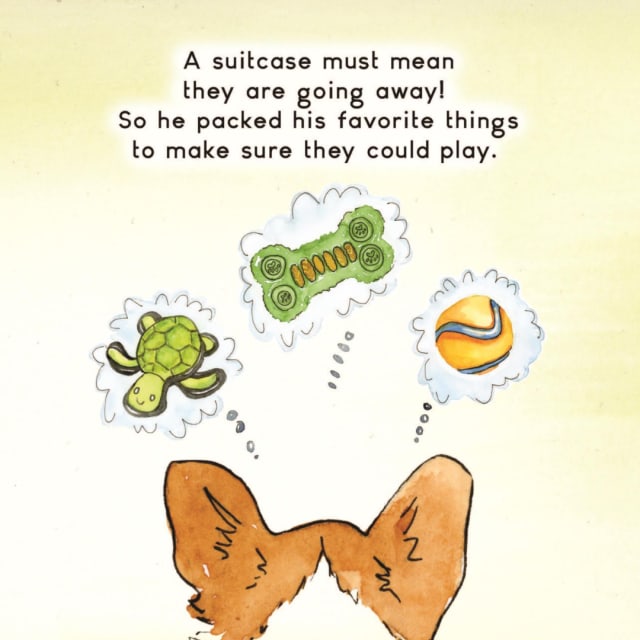
Pack Rally's Suitcase: Sorting and Counting to 5
A free, 30-minute preschool and Pre-K math lesson where children help Rally the Corgi pack.
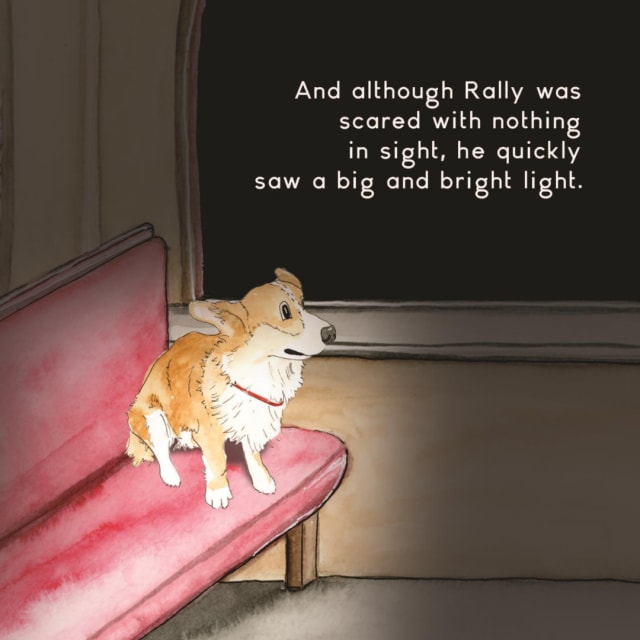
Brave Like Rally: Naming Feelings
A free, 30-minute preschool and Pre-K social emotional lesson.
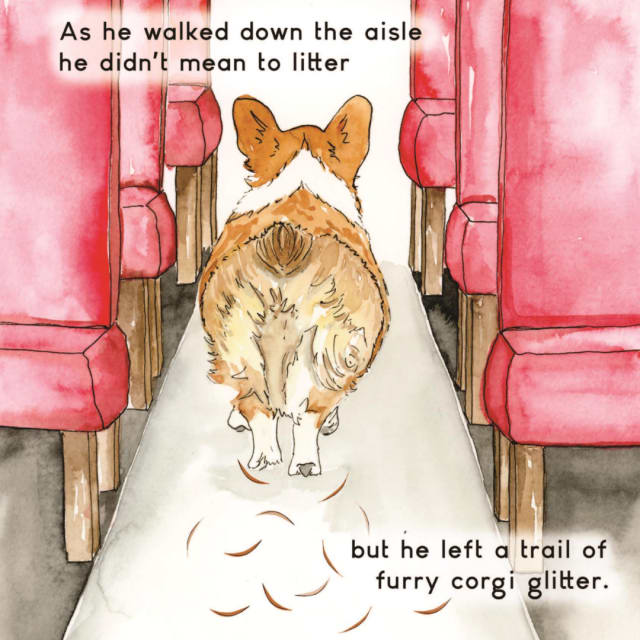
Rhyme Time with Rally
A free, 35-minute kindergarten phonological awareness lesson built on the rhymes in Rally Takes the Train.
Teaching with Rally Takes the Train
Every lesson is free for classroom and homeschool use. Add the paperback to your classroom library, or review a lesson to earn a free copy if you are a credentialed teacher. Keep the journey going in about 650 free train museum guides, plan a visit with the field trip planner, or browse all lessons for educators.