
Pack Rally's Suitcase: A Sorting and Counting to 5 Lesson for Preschool and Pre‑K
A free, 30-minute preschool and Pre-K math lesson where children help Rally the Corgi pack. They hear pages 1 and 2 of Rally Takes the Train, sort picture cards of toys, clothes and snacks on a suitcase mat, then count up to 5 items into a suitcase and say how many. Includes printables and a family note.
- Grade
- Preschool & Pre-K
- Subjects
- Math, Oral language
- Time
- 30 minutes (about 15 minutes of whole group in two short parts with a stretch between, then small-group centers)
- Prep
- 10 minutes: print and cut the picture cards, set out one sorting mat and one Count to 5 card per child, and fill a basket with 5 to 10 real items to pack, each too big to fit through a toilet paper tube opening
- Grouping
- Whole group, then small groups of 4 to 6
- Book pages
- 1, 2
- Head Start ELOF: Mathematics Development: Counting and Cardinality
- Head Start ELOF: Mathematics Development: Measurement
 Need the book? Get the paperback on Amazon (opens in a new tab) or earn a free classroom copy.
Learning objective
Children sort picture cards of things to pack into groups (toys, clothes, snacks), then count up to 5 real objects into a suitcase, touching each one once, and answer "How many?" with the last number counted.
I can sort things that go together and count them into Rally's suitcase to tell how many.
Vocabulary to teach
Materials
- Rally Takes the Train by Kelsey Lizee Cecil: get the paperback on Amazon (opens in a new tab) or earn a free classroom copy
- Suitcase sorting mat, one per child (printable): an open suitcase split into three sections, each topped with a picture label (a ball for toys, a shirt for clothes, an apple for snacks)
- Picture cards to sort, one set per child (printable): Rally's green turtle toy, green bone and yellow ball (page 2 art), a teddy bear, a shirt, socks, a hat, pajamas, an apple, crackers, a pretzel and a banana
- Count to 5 suitcase card, one per child (printable): a paper suitcase with a row of 5 boxes (a five frame) and number cards 1 to 5, each showing the numeral and that many dots
- Crayons, for coloring one box of the five frame for each item packed
- A real suitcase, backpack or shoebox suitcase, plus 5 to 10 real items to pack, each too big to fit through a toilet paper tube opening (rolled-up socks, a large toy car, a plastic cup, a hat, a board book)
- Screen or printout of the Central Pacific Railroad Passenger Station guide (see Discover)
Lesson steps
Hold up a real suitcase. "This is a suitcase. A suitcase is a bag with a handle that holds your things for a trip. Rally the Corgi sees a suitcase in our story. Let's find out what he puts in it."
Point to the suitcase in the picture. "Here is Rally's suitcase. When we pack, we put things in a suitcase to take with us. Show me how you would pack." (Children pretend to fold and pack.)
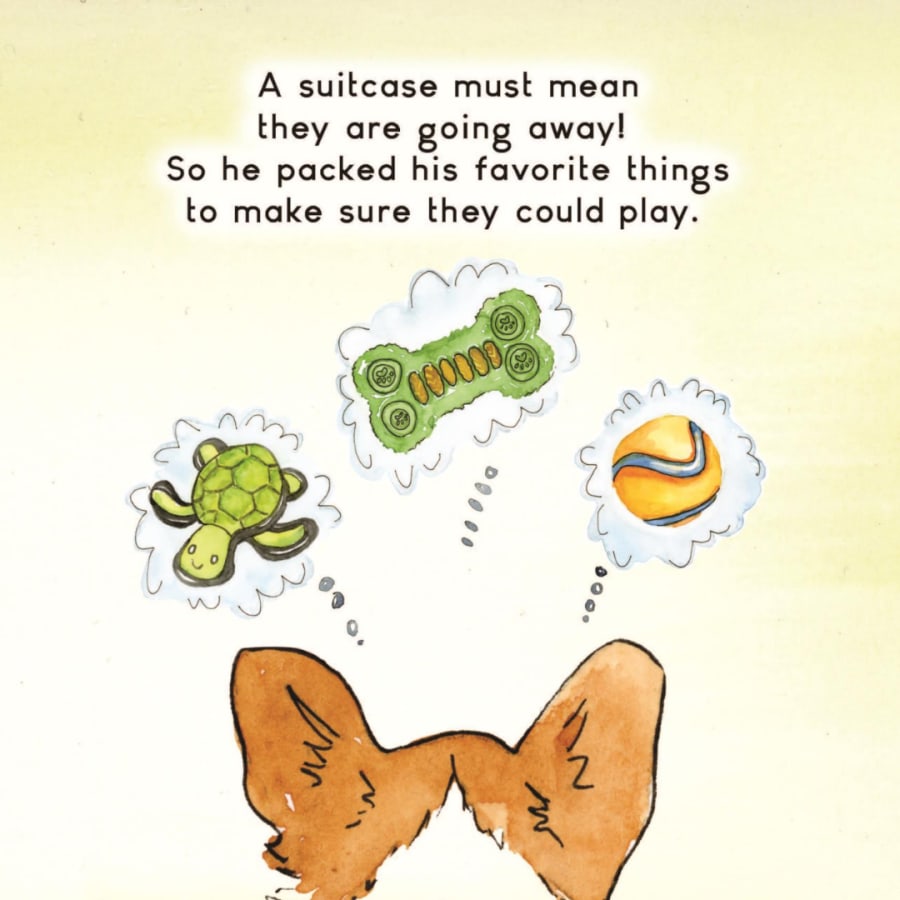
Point to each thing in the thought bubbles as you name it. "Rally packed a green turtle toy, a green bone and a yellow ball. These are all toys."
"Let's count Rally's toys. I will touch each one, and you count with me: 1, 2, 3. How many toys? 3!" Say the last number again: "The last number we say tells how many."
- "Rally packed toys. What else do people pack for a trip?" Take two or three answers and hold up a matching real item or picture card (a sock, a hat, the crackers card).
- Show the sorting mat. "We are going to sort. Sort means put things that are alike together." Model one: "A ball is a toy. It goes with the toys." Place it under the ball label.
- Hold up two or three more cards, one at a time. Children call out "toy," "clothes" or "snack" and point to where it goes. Ask, "How do you know?" and accept answers like "You eat it" or "You wear it."
- Stretch first: everyone stands, "zips" a pretend suitcase and carries it in place, then sits. Open the Central Pacific Railroad Passenger Station guide, or find a verified museum near your school in the field trip planner (rallytakesthetrain.com/lessons/train-museum-field-trips). Read two or three sentences aloud yourself, since the guides are written for adults, and show the photos.
- Teach two words directly. "This train station in Sacramento, California, was built to look just like one from long ago. Kids can imagine packing a trunk for the baggage room. A trunk is a big box-shaped suitcase. Baggage means the bags and suitcases people take on a trip."
- "If you packed a trunk for a train trip, what would you put in it?" Hold up the pajamas card. "Pajamas! Are pajamas a toy, clothes or a snack?" Children point to the clothes section, then name one thing they would pack for a trip they took or want to take.
Or find a verified museum near your school in the field trip planner.
- Sort: In small groups, each child sorts their picture cards onto the suitcase sorting mat. 3-year-olds sort two groups (toys and clothes; set the snack cards aside). 4-year-olds and TK sort all three groups and tell a friend why one card belongs.
- Count: Place a number card next to the real suitcase. "Rally needs 4 things. Count them in." The child drops in one item at a time and says one number for each item. 3-year-olds count 1 to 3; 4-year-olds and TK count out any number from 1 to 5.
- Show and tell how many: The child colors one box on the Count to 5 card for each item packed. Ask, "How many things did you pack?" The child answers with the last number ("4!"). For 4-year-olds and TK, take one out and ask, "How many now?"
Safety: Choking: every real item to pack must be too big to fit through a toilet paper tube opening, with no parts that can break off. This matters most for children under 3 and any child who still mouths toys. Food and allergies: snacks stay on picture cards; do not use real food. Keep suitcase lids and zippers open during play so fingers do not get pinched, and keep children out of the suitcase.
Differentiation
Extra support
Start with only two picture cards per group, or real objects instead of cards. Count side by side, gently guiding the child's hand to touch each item once, and repeat the last number together: "1, 2, 3. 3 things!" For a child with fine motor needs, let them point to each item while you move it.
Multilingual learners
Use the picture labels on the mat and real objects so the meaning is clear. Teach "toy," "clothes," "snack" and the numbers 1 to 5 in English and the home language, and accept answers in either. Give the frames "A ___ is a toy." and "I packed ___ things." Key language use: Inform.
Extension
Give two suitcases. The child packs a different number in each, counts both and tells which suitcase has more. Or invite the child to make up their own sorting rule (things that are green, things you eat) and explain it.
Check for understanding
Success criterion: Sorts picture cards into groups that go together, counts out up to 5 objects touching each one once, and answers "How many?" with the last number counted.
| Level | What you see |
|---|---|
| 3Meets (level 3) | Sorts all cards into the right groups, counts out the asked number (up to 5) touching each item once, and says the total without recounting. |
| 2Approaching (level 2) | Sorts most cards correctly; counts each item once to 3 but loses track past 3, or counts again before saying how many. |
| 1Beginning (level 1) | Sorts with adult help; says number words while skipping or double-touching items, or does not yet answer "How many?" |
Family connection
Send home the half-page note in the printables. The text is below so you can paste it into a newsletter or app.
English
Today your child helped Rally the Corgi pack a suitcase from the picture book Rally Takes the Train. We sorted things into toys, clothes and snacks, then counted up to 5 items into a suitcase, touching each one and saying how many. Try this at home in 5 minutes: when you put away laundry or groceries, ask your child to sort them, then count up to 5 into a basket and tell you how many. Free Rally coloring pages are at rallytakesthetrain.com/coloring-pages.
Español
Hoy su hijo o hija ayudó a Rally, el perrito corgi del libro Rally Takes the Train, a hacer su maleta. Clasificamos cosas en juguetes, ropa y comida, y luego contamos hasta 5 cosas al meterlas en una maleta, tocando cada una y diciendo cuántas hay. Pruébelo en casa en 5 minutos: al guardar la ropa o la comida, pida a su hijo o hija que las clasifique, que cuente hasta 5 al ponerlas en una canasta y que le diga cuántas hay. Hay páginas para colorear gratis de Rally en rallytakesthetrain.com/coloring-pages.
Teacher tips
- Real objects first, cards second. Three-year-olds count a sock and a toy car in a backpack much more reliably than pictures on a mat.
- Have children drop each item into the suitcase as they say its number. The physical drop helps them match one number to one object.
- When a child counts and then you ask "How many?" and they count again, that is normal. Model it: "1, 2, 3. 3! The last number tells how many."
Standards alignment
| Standard | Text |
|---|---|
| Head Start ELOF: Mathematics Development: Counting and Cardinality (opens in a new tab) | Preschool (36 to 60 months) sub-domain of the Head Start Early Learning Outcomes Framework. |
| Head Start ELOF: Mathematics Development: Measurement (opens in a new tab) | Preschool (36 to 60 months) sub-domain of the Head Start Early Learning Outcomes Framework. |
Check codes against your state's version of these standards. How we build and review lessons.
Keep exploring
Long ago, travelers packed big trunks for the train's baggage room. Pick a museum guide and look at the trains. What would you pack for a ride on one of them? Count your things to 5.
After the lesson, children can explore about 650 train and railway museums through our free guides, discovering the history, engineering and stories behind real trains. Read one together, then come back to the question.
Teach it with the real book
4.9 stars on Amazon
Rally Takes the Train is a rhyming, hand-painted picture book about a corgi's first train ride, from the big station stairs to a dark tunnel to the people waiting at the end of the line. Children ask for it again and again, and every lesson here is built on its pages.
Questions teachers ask
How do you teach one-to-one correspondence in preschool?
Have children move each object as they count it. Dropping one item into a suitcase for each number word, or filling one box of a five frame per item, makes the match concrete. Start with real objects and small numbers (1 to 3 for 3-year-olds), count side by side, and repeat the last number together to show it tells how many.
What is a good sorting activity for preschoolers?
A packing sort works well because children already know what toys, clothes and snacks are. Give each child a mat with three picture labels and cards to sort, and start with two groups for younger children. Ask "How do you know?" so they explain their thinking, which builds language along with early math.
What ELOF standards does a sorting and counting lesson meet?
Counting objects and telling how many meets Head Start ELOF Mathematics Development: Counting and Cardinality. Sorting objects into groups and comparing them fits Mathematics Development: Measurement, which covers sorting, classifying and comparing. This lesson lists both so you can copy them into your plans.
How do I adapt a counting activity for 3-year-olds?
Keep numbers to 1 to 3, use real objects, and count with the child's hand in yours. Sort into two groups instead of three, and keep whole-group time short. Most 3-year-olds learn best in a small group at a table or on the rug, packing and unpacking the same suitcase several times.
How do you teach preschoolers to count to 5?
Count real objects that children can touch and move, saying one number for each object, and stop at the number you asked for. A five frame helps, because children can see when all five boxes are full. In this lesson children count up to 5 things into a suitcase, color one box on a Count to 5 card for each item, and answer "How many?" with the last number they said.
What is cardinality in preschool math?
Cardinality is knowing that the last number you say when counting tells how many are in the group. A child who counts "1, 2, 3" and then answers "3" when asked how many is showing it. In Pack Rally's Suitcase you model this on page 2 by counting Rally's three toys and repeating the last number. Children who count again when asked are still learning, and that is normal.
What can children explore after Pack Rally's Suitcase?
In Discover, children hear from the Central Pacific Railroad Passenger Station guide, a verified museum in Old Sacramento where kids can imagine packing a trunk for the baggage room, then sort the pajamas card into the clothes group. The Keep exploring section at the end of the lesson links to about 650 free train museum guides at rallytakesthetrain.com/train-museums. Children can look at a guide's photos with you and count up to 5 things they see, such as wheels or windows.
Can I teach Pack Rally's Suitcase without the book?
You can, but the read-aloud works best with the book open, since children study the suitcase on page 1 and count the toys in the thought bubbles on page 2. Without it, hold up a real suitcase and tell the scene: Rally packed a green turtle toy, a green bone and a yellow ball. The book is in paperback on Amazon, and credentialed teachers can earn a free classroom copy by reviewing a lesson.
Why use real objects for preschool counting?
Real objects are easier to count than pictures because children can pick each one up and move it, which keeps one number matched to one object. The lesson's teacher tips put it simply: real objects first, cards second. Children drop each item into a real suitcase, backpack or shoebox as they say its number. Every item must be too big to fit through a toilet paper tube opening, so nothing is a choking risk.
How long should a preschool math lesson be?
Keep whole-group math short and move the real practice into small groups. Pack Rally's Suitcase takes about 30 minutes in all: a 6-minute read-aloud, a 4-minute sorting talk, a quick stretch, a 5-minute museum connection and 15 minutes of small-group centers. Whole-group time stays at about 15 minutes, so children spend most of their time handling the cards and objects themselves.
What materials do I need for the suitcase sorting lesson?
You need the book, a suitcase sorting mat, a set of picture cards and a Count to 5 card for each child, and crayons. Add a real suitcase, backpack or shoebox with 5 to 10 real items, each too big to fit through a toilet paper tube opening, such as rolled-up socks, a large toy car, a plastic cup, a hat and a board book. A train museum guide is used in Discover.
How much prep does Pack Rally's Suitcase take?
Plan on about 10 minutes. Print and cut the picture cards, set out one sorting mat and one Count to 5 card per child, and fill a basket with 5 to 10 real items to pack, each too big to fit through a toilet paper tube opening. The lesson runs as a whole group first, then small groups of 4 to 6, so set up one table with the real suitcase and number cards ahead of time.
What is on the printables for the suitcase sorting lesson?
There are three free printables. The sorting mat shows an open suitcase with three labeled sections: a ball for toys, a shirt for clothes and an apple for snacks. The picture cards include Rally's turtle toy, bone and ball from page 2, plus clothes and snacks. The Count to 5 card has a five frame and number cards with dots. Each comes in color, ink-saver and A4 versions with no account needed.
How do I support multilingual learners in a counting lesson?
Make meaning visible before asking for words. Use real objects and the picture labels on the mat, and teach "toy," "clothes," "snack" and the numbers 1 to 5 in English and in the child's home language. Accept answers in either language and offer the sentence frame "I packed ___ things." The WIDA key language use for this lesson is Inform.
How can I challenge advanced 4-year-olds and TK in a counting lesson?
Give two suitcases. The child packs a different number of items in each, counts both and tells which suitcase has more. Another option is to let the child invent a sorting rule, such as things that are green or things you eat, and explain it to a friend. You can also take one item out and ask "How many now?" so they count again.
How do I adapt the sorting lesson for a child with an IEP or who needs extra support?
Shrink the task and keep it concrete. Start with only two picture cards per group, or use real objects instead of cards. Count side by side, gently guiding the child's hand to touch each item once, and say the last number together: "1, 2, 3. 3 things!" A child with fine motor needs can point while you move each item. Follow the child's IEP goals and note progress with the check levels.
How do I assess sorting and counting to 5 in preschool?
Use the 3-level check while you circulate. Meets: sorts all cards into the right groups, counts out the asked number up to 5 touching each item once, and says the total without recounting. Approaching: sorts most cards, counts each item once to 3 but loses track past 3, or counts again before saying how many. Beginning: sorts with help, skips or double-touches items, or does not yet answer "How many?"
Is there a family note in Spanish for the suitcase counting lesson?
Yes. The lesson includes a half-page family note in English and Spanish that explains how children sorted toys, clothes and snacks and counted up to 5 into a suitcase. It suggests a 5-minute home activity: sort laundry or groceries, then count up to 5 into a basket and tell how many. The text is on the page so you can paste it into a newsletter or app.
What is Rally Takes the Train about?
Rally Takes the Train is a rhyming picture book about Rally the Corgi, who packs his favorite toys and rides a red train with Mom and Dad. Along the way he meets passengers and a conductor, feels scared in a dark tunnel, sees a bright light, and arrives to see his people waving from the platform. It is written by Kelsey Lizee Cecil and illustrated in watercolor by Leslie Dunn.
How can teachers get a free copy of Rally Takes the Train?
Credentialed Pre-K to 2nd grade teachers in the US can get a free paperback classroom copy by reviewing one lesson plan. They apply at rallytakesthetrain.com/free-book-for-teachers. You need a current state teaching credential or license (or for early childhood a CDA credential, a state early childhood teaching permit, or an ECE degree), at least 2 years of classroom teaching, and a current Preschool to 2nd grade role at a US school, Head Start or licensed program.
Related lessons
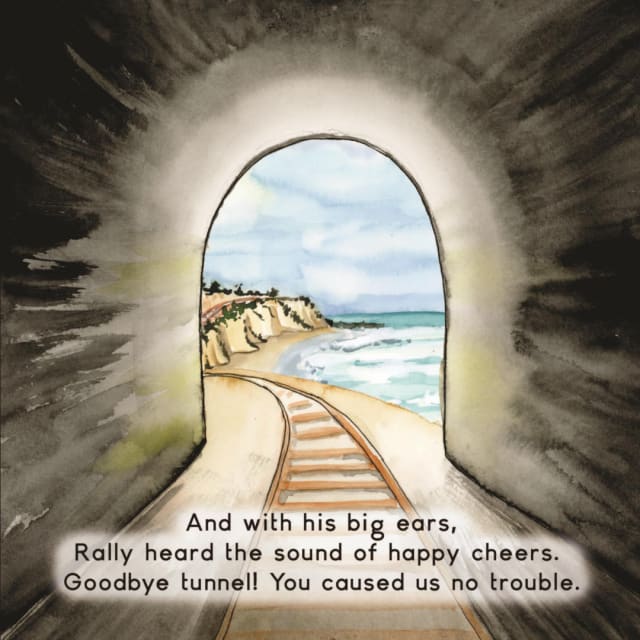
Choo-Choo Chant: Rhyme and Syllable Clapping
A free, 30-minute preschool and Pre-K phonological awareness lesson.
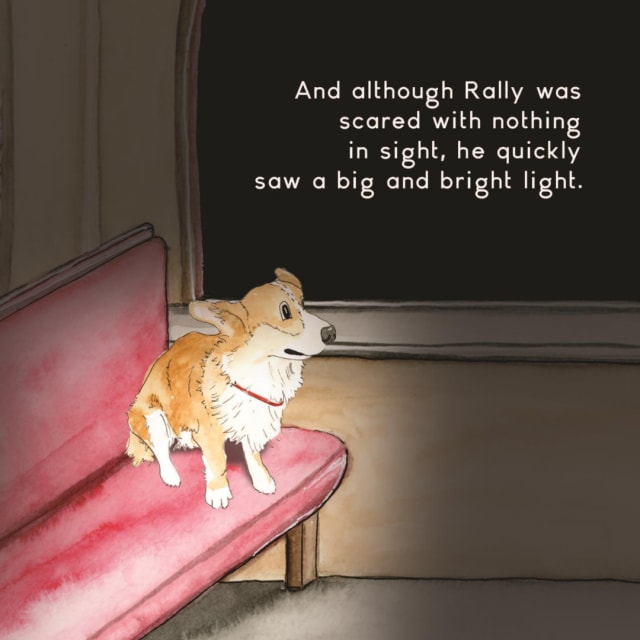
Brave Like Rally: Naming Feelings
A free, 30-minute preschool and Pre-K social emotional lesson.
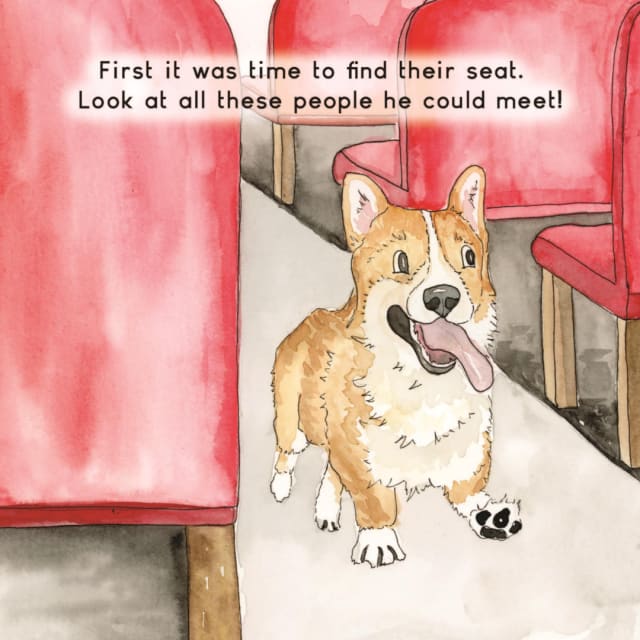
Counting Train Cars: Count and Compare to 20
A free, 40-minute kindergarten math lesson built on a train picture book.
Teaching with Rally Takes the Train
Every lesson is free for classroom and homeschool use. Add the paperback to your classroom library, or review a lesson to earn a free copy if you are a credentialed teacher. Keep the journey going in about 650 free train museum guides, plan a visit with the field trip planner, or browse all lessons for educators.