
Counting Train Cars for Kindergarten: Count and Compare Numbers to 20
A free, 40-minute kindergarten math lesson built on a train picture book. Children count train cars and windows, build cube trains to match number cards from 1 to 20, then line up two trains to compare them as greater than, less than or equal. Includes counting mats, a compare sheet, a checklist and a family note.
- Grade
- Kindergarten
- Subjects
- Mathematics, Counting and cardinality
- Time
- 40 minutes (or two 20-minute blocks)
- Prep
- 10 minutes: bag 20 linking cubes per pair, print and cut number cards 1 to 20, print one counting mat and one compare sheet per child
- Grouping
- Whole group, then partners
- Book pages
- 3, 5
- CCSS K.CC.B.5
- CCSS K.CC.C.6
 Need the book? Get the paperback on Amazon (opens in a new tab) or earn a free classroom copy.
Learning objective
Students count out a train of up to 20 cubes to match a number card, then compare two trains by matching and counting and tell whether one is greater than, less than or equal to the other.
I can build a train with the right number of cars and tell which train has more, fewer or the same.
Vocabulary to teach
Materials
- Rally Takes the Train by Kelsey Lizee Cecil: get the paperback on Amazon (opens in a new tab) or earn a free classroom copy
- Linking cubes, 20 per pair (two colors if possible)
- Number cards 1 to 20, one shuffled set per pair
- Count the cars 10 printable: two rows of 5 cube-sized car outlines, each with a red engine like the car on page 3 at the front, and a write-in box "How many cars?"
- Count the cars 20 printable: 20 cube-sized car outlines in four rows of 5, numbered 1 to 20, with the same engine and write-in box
- Compare trains printable: two rows of small car outlines to color, one for each cube (Train A and Train B), write-in lines for how many cars in each train, and the sentence "Train A has greater than / less than / equal to Train B" with the three choices to circle
- Screen or printout of the Steamtown National Historic Site guide (see Discover)
Lesson steps
"Today we are reading like mathematicians. A train car is one part of a train. As we read, we will look for things to count." Read the whole book for enjoyment, pausing only at the planned stops.
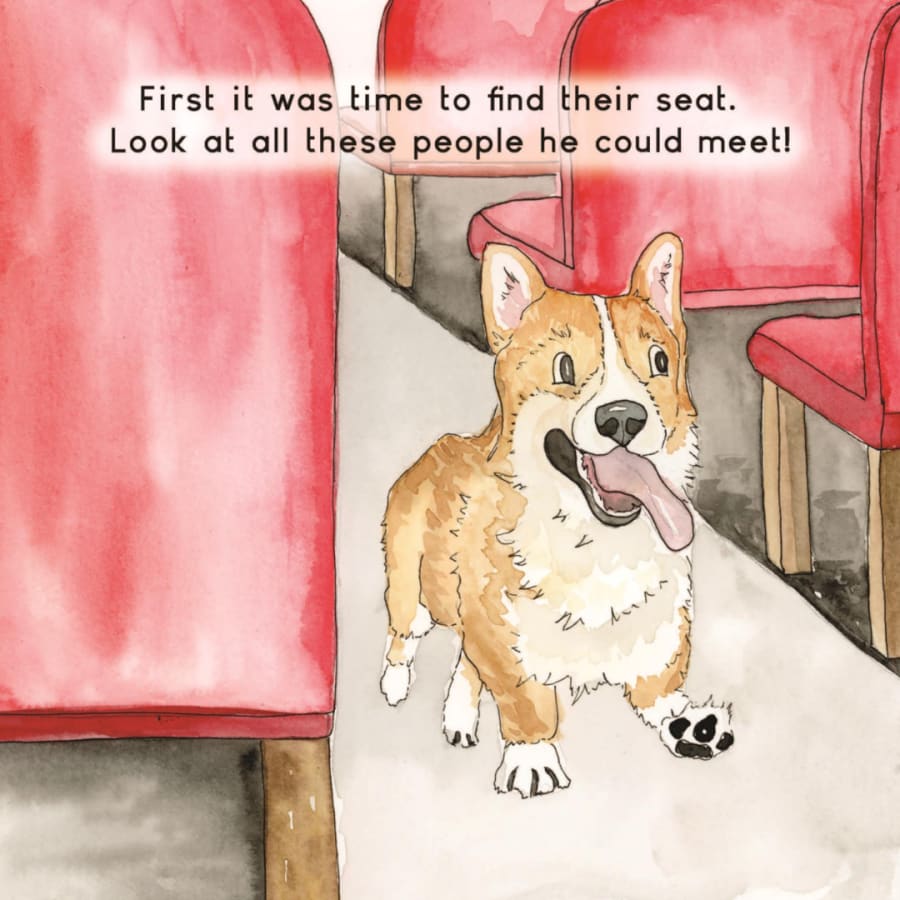
"How many train cars can you see?" (One red car.) "Let's count the windows on the red car. Touch each one as we count, one number for each window." Then: "How many in Rally's family are walking to the train?" (Three: Mom, Dad and Rally.)
"Look at the rows of red seats. Let's count the seats in one row." Count together, touching each seat. "Now count the windows you can see. Are there more seats or more windows? How do you know?" (Children count each group and say which number is greater.)
- Snap 7 cubes together. "This is a train with 7 cars. Let's count to check." Touch each cube as the class counts. "The last number we say tells how many."
- Build a second train of 5 cubes and lay it right under the first, lining up the ends. "When we match, one car with one car, which train has cars left over?" (The 7 train.) "7 is greater than 5. 5 is less than 7."
- Snap 2 more cubes onto the 5 train. "Now line them up. No cars left over. These trains are equal." Partners turn and talk: "How do you know which train has more?"
- Stand and count to 20 together with one small train chug in place for each number, then sit. Open the Steamtown National Historic Site guide and read two or three sentences aloud yourself. "This museum has a giant engine called Big Boy No. 4012. A locomotive is the engine that pulls the train. Long ago there were 25 Big Boy engines. Today only 8 are left."
- Show a 20-cube train. "Is 25 more or less than 20?" (More. When we count, 25 comes after 20.) "Is 8 more or less than 20?" (Less.) Build a train of 8 and line it up under the 20 train to match and check.
- If the guide has a photo of Big Boy, count its wheels together, touching the screen for each one. Then tell children there may be a train museum near them too: you can find a verified museum near your school in the field trip planner (rallytakesthetrain.com/lessons/train-museum-field-trips).
Or find a verified museum near your school in the field trip planner.
- Each partner draws a number card and builds a cube train with that many cars, counting aloud and touching each cube. They place one cube in each car on the count-the-cars mat (10 or 20), filling each row of 5 in order and write how many in the box.
- Partners lay their two trains side by side on the table, lining up the ends so the cars match one to one. They count both trains, write each number on the compare sheet, color one car on the compare sheet for each cube, and circle greater than, less than or equal to.
- Each child says the comparison in a full sentence: "My train has 12. Your train has 9. 12 is greater than 9." Partners draw new cards and repeat for three rounds.
Safety: Linking cubes are small. Supervise closely. For any child who still puts objects in their mouth, use only counters too big to fit through a toilet paper tube opening, such as large blocks. Do not use food as counters in class, because of allergies.
Differentiation
Extra support
Use number cards 1 to 10 and the 10-car mat. Have the child touch one car outline on the mat for each cube they snap on, so counting and matching happen at the same time. For a child with fine motor needs, use larger cubes or blocks, or let a partner snap while the child counts.
Multilingual learners
Teach more, fewer and same with a gesture (arms wide, hands close, palms flat and level) and give the frame "___ is greater than / less than / equal to ___." in English and the home language. Pair with a peer who shares the home language when possible. Key language use: Explain.
Extension
Children draw two cards, build both trains, and tell how many cars to add or take away to make the trains equal. Record it on the back of the compare sheet.
Check for understanding
Success criterion: Counts out a train to match a number card up to 20 and correctly compares two trains using matching or counting.
| Level | What you see |
|---|---|
| 3Meets (level 3) | Builds trains to 20 accurately and explains the comparison: "I lined them up and this one has cars left over, so it is greater." |
| 2Approaching (level 2) | Builds trains accurately to 10, or compares correctly but cannot yet explain how they know. |
| 1Beginning (level 1) | Miscounts (skips or double counts cubes) or names the comparison by the look of the train rather than matching or counting. |
Family connection
Send home the half-page note in the printables. The text is below so you can paste it into a newsletter or app.
English
Today your child counted train cars with the picture book Rally Takes the Train. They built cube trains to match numbers up to 20, then lined up two trains to see which had more, which had fewer, or if they were equal. Tonight, try a 5-minute train game: line up spoons, socks or crackers in two rows and ask, "Which train has more? How do you know?" Let your child count each row out loud. Free Rally coloring pages are at rallytakesthetrain.com/coloring-pages.
Español
Hoy su hijo o hija contó vagones de tren con el libro Rally Takes the Train. Construyó trenes de cubos para mostrar números hasta el 20 y luego alineó dos trenes para ver cuál tenía más, cuál tenía menos o si eran iguales. Esta noche, prueben un juego de trenes de 5 minutos: pongan cucharas, calcetines o galletas en dos filas y pregunte: "¿Cuál tren tiene más? ¿Cómo lo sabes?" Deje que su hijo o hija cuente cada fila en voz alta. Hay páginas para colorear gratis de Rally en rallytakesthetrain.com/coloring-pages.
Teacher tips
- Watch for children who think a longer-looking train always has more. Unsnap one train, spread its cubes apart and ask again. Matching one to one is the fix.
- Two cube colors help. One color per partner makes it easy to see whose train is whose when they line them up.
- Collect the cubes in bags of 20 before the lesson. Children who start with exactly 20 can check their own work: a 12 train should leave 8 in the bag.
Standards alignment
| Standard | Text |
|---|---|
| CCSS K.CC.B.5 (opens in a new tab) | Count to answer "how many?" questions about as many as 20 things arranged in a line, a rectangular array, or a circle, or as many as 10 things in a scattered configuration; given a number from 1-20, count out that many objects. |
| CCSS K.CC.C.6 (opens in a new tab) | Identify whether the number of objects in one group is greater than, less than, or equal to the number of objects in another group, e.g., by using matching and counting strategies. |
Check codes against your state's version of these standards. How we build and review lessons.
Keep exploring
How many cars does the longest train at a museum near you have? Is that more than 20, less than 20 or equal to 20?
After the lesson, children can explore about 650 train and railway museums through our free guides, discovering the history, engineering and stories behind real trains. Read one together, then come back to the question.
Teach it with the real book
4.9 stars on Amazon
Rally Takes the Train is a rhyming, hand-painted picture book about a corgi's first train ride, from the big station stairs to a dark tunnel to the people waiting at the end of the line. Children ask for it again and again, and every lesson here is built on its pages.
Questions teachers ask
How do you teach comparing numbers in kindergarten?
Start with real objects and matching. Build two cube trains, line them up car by car, and see which one has cars left over. That train is greater. Then count both to confirm. Once children can explain what they see with greater than, less than and equal, move to comparing written numerals. This lesson follows that order with linking cube trains up to 20.
What is a fun counting to 20 activity for kindergarten?
Building cube trains works well. Children draw a number card from 1 to 20, snap together that many cubes as train cars, and lay the train along the track on a counting mat to check. The train theme gives a reason to count carefully, and the 20-car mat shows two rows of 10 so children see how teen numbers are built.
How do you explain greater than and less than to kindergarteners?
Use objects first and words second. Line up two groups one to one and ask which has some left over. The group with extras is greater than the other, and the group with fewer is less than. If nothing is left over, they are equal. In this lesson children build two cube trains, match them car by car, and say a full sentence like 12 is greater than 9.
Why do kindergarteners think a longer row always has more?
Young children often judge amount by how long a row looks instead of by counting or matching. If cubes are spread apart, a smaller group can look bigger. To fix it, spread one train's cubes apart and ask again, then line the two trains up one to one so children can see which has cars left over. Counting both trains confirms the answer.
How do you teach one-to-one correspondence in kindergarten?
Have children touch and move each object as they say one number for it. In this lesson children touch one car outline on the counting mat for each cube they snap on, so counting and matching happen at the same time. During the read-aloud, they also touch each window and seat in the book's pictures while the class counts aloud together.
How do you teach that the last number counted tells how many?
Model it out loud every time. Snap together a cube train, count each cube as you touch it, then say that the last number we say tells how many. In this lesson the teacher builds a 7-car train and the class counts to check. Children then write how many in the box on their counting mat after each build, which reinforces the idea.
What is a good train-themed math manipulative for kindergarten?
Linking cubes are ideal because each cube becomes one train car and the cars snap into a line. Use two colors so partners can see whose train is whose when they compare. Bagging 20 cubes per pair helps children self-check: a 12-car train should leave 8 cubes in the bag. Cubes are small, so supervise closely, and give any child who still mouths objects counters too big to fit through a toilet paper tube opening.
What can kindergarteners count in Rally Takes the Train?
On page 3 children can count the one red train car, its windows, and the three family members walking to the train: Mom, Dad and Rally. On page 5 they count the red seats in one row and the windows they can see, then tell which number is greater. Reading the whole book first for enjoyment, then pausing only at planned stops, keeps the story intact.
What standards does this train counting lesson meet?
Counting out a train to match a number from 1 to 20 meets Common Core K.CC.B.5. Lining up two trains to tell which is greater than, less than or equal meets K.CC.C.6. Both standards are listed in this lesson with their full text so you can copy them into your plans.
How long is the counting train cars lesson?
The lesson takes about 40 minutes, or two 20-minute blocks. The read-aloud takes 8 minutes, modeling with cube trains takes 8, the museum connection takes 6 and the partner build and compare activity takes 18. If you split it, do the read-aloud, modeling and museum on day one, and give partners the full second block to build and compare three rounds.
What prep does the kindergarten train counting lesson need?
Plan about 10 minutes. Bag 20 linking cubes per pair, in two colors if possible, print and cut one shuffled set of number cards 1 to 20 per pair, and print one counting mat and one compare sheet per child. You also need the book and a screen or printout of the Steamtown National Historic Site guide.
What printables come with the counting train cars lesson?
There are three: a count the cars mat with 10 car outlines in a line, a 20-car mat in two rows of 10, and a compare trains sheet where children write how many cars are in each train and circle greater than, less than or equal to. Each comes in color, ink-saver and A4 versions with a family note, and all are free with no account needed for classroom and homeschool use.
How do I support kindergarteners who are not counting to 20 yet?
Start smaller. Use number cards 1 to 10 and the 10-car mat, and have the child touch one car outline for each cube they snap on. That way counting and matching happen at the same time. Children who build accurately to 10 but cannot yet explain a comparison are approaching the goal and can move to the 20-car mat when ready.
How do I teach comparing numbers to multilingual learners?
Pair each word with a gesture: arms wide for more, hands close for fewer, and palms flat and level for same. Give the frame ___ is greater than, less than or equal to ___ in English and the home language, and pair the child with a peer who shares the home language when possible. The WIDA key language use for this lesson is Explain.
How can I challenge advanced kindergarteners or 1st graders with this lesson?
Have children draw two number cards, build both trains, then figure out how many cars to add or take away to make the trains equal. They record it on the back of the compare sheet. For 1st grade, this moves the lesson from comparing toward adding and subtracting within 20, while keeping the same cubes, cards and train mats.
Can I use the train counting lesson with TK or mixed ages?
Yes. Give younger children number cards 1 to 10 and the 10-car mat, and focus on building one train accurately before comparing. Older children in a mixed group can use the 20-car mat and the compare sheet. For activities written for younger learners, see the preschool lessons at /lessons/preschool-train-activities, which include a suitcase sorting and counting lesson.
How do you assess counting and comparing in kindergarten?
Watch children build and compare, and listen to how they explain it. In this lesson, Meets means a child builds trains to 20 accurately and explains the comparison, such as lining them up and noticing one has cars left over. Approaching means accurate to 10, or a correct comparison without an explanation. Beginning means skipping or double counting, or judging by how the train looks.
Does the counting lesson include a Spanish family note?
Yes. The family note is in English and Spanish, as a half-page printable and as text to paste into a newsletter or app. It suggests a 5-minute train game at home: line up spoons, socks or crackers in two rows and ask which train has more and how your child knows, letting them count each row out loud.
What can children explore after the counting lesson?
Real trains are full of things to count. In Discover, children compare numbers from the Steamtown National Historic Site guide, a verified museum: Big Boy No. 4012 is one of only 8 left from 25 built. The Keep exploring section at the end of the lesson links to about 650 free train museum guides at rallytakesthetrain.com/train-museums. When a guide shows a real train, children can count its cars or windows and compare that number with their own cube trains.
Can I teach the counting lesson without the book?
Yes. The math happens with cubes, number cards and the printable mats, so the lesson works even if you skip the read-aloud. The book adds the counting stops on pages 3 and 5. It is in paperback on Amazon, and credentialed Pre-K to 5th grade teachers in the US can get a free paperback classroom copy by reviewing one lesson plan. They apply at rallytakesthetrain.com/free-book-for-teachers.
Related lessons
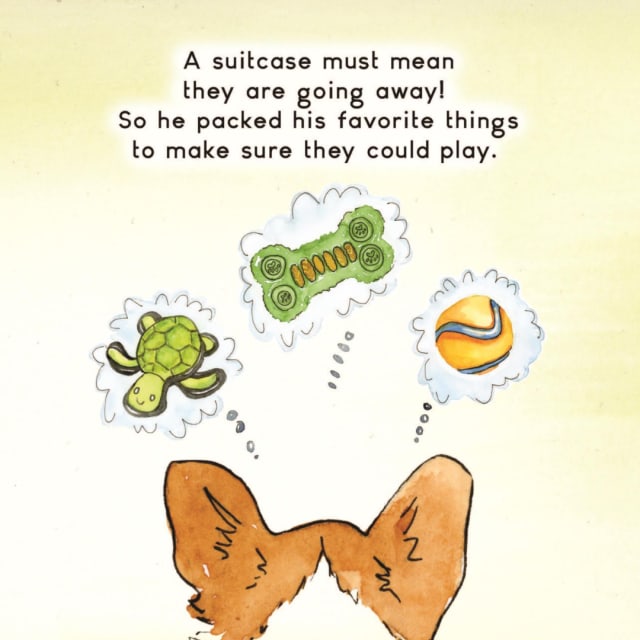
Pack Rally's Suitcase: Sorting and Counting to 5
A free, 30-minute preschool and Pre-K math lesson where children help Rally the Corgi pack.
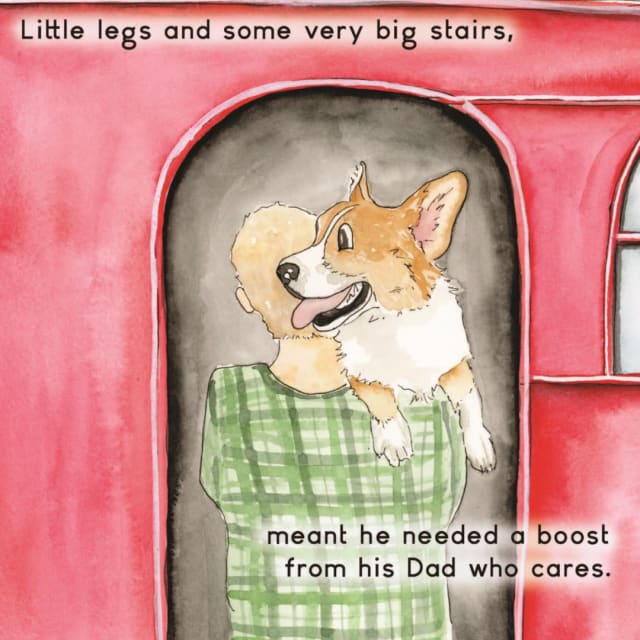
Push the Train: Pushes, Pulls and a Ramp Design
A free, 40-minute kindergarten science lesson where children push and pull a toy train to see how strength and direction change its motion.
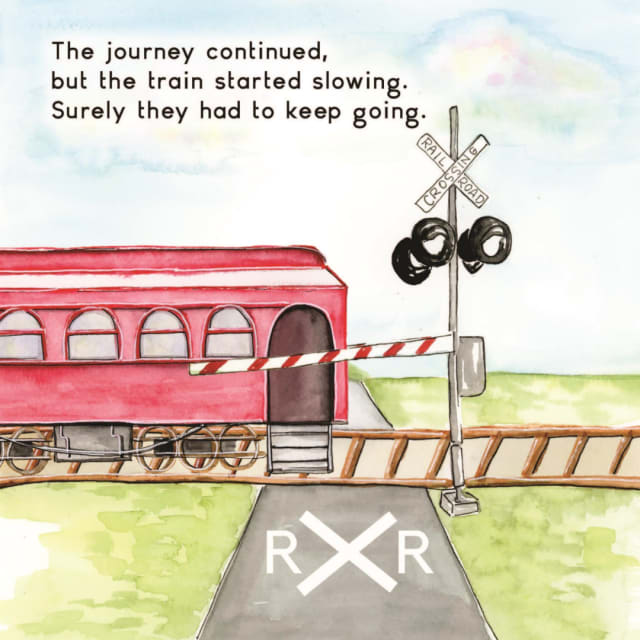
Map Rally's Journey: Position Words
A free, 40-minute kindergarten lesson on position words and simple maps.
Teaching with Rally Takes the Train
Every lesson is free for classroom and homeschool use. Add the paperback to your classroom library, or review a lesson to earn a free copy if you are a credentialed teacher. Keep the journey going in about 650 free train museum guides, plan a visit with the field trip planner, or browse all lessons for educators.