
All Aboard! A Train Station Dramatic Play Lesson for Preschool and Pre‑K
A free, 35-minute preschool and Pre-K/TK lesson that turns your dramatic play area into a train station. Children hear Rally board the train and meet Mr. Conductor, learn about real train and museum jobs, then take turns as conductor, passenger, ticket seller and helper while using polite words.
- Grade
- Preschool & Pre-K
- Subjects
- Speaking and listening, Social and emotional learning, Dramatic play
- Time
- 35 minutes (about 15 minutes of whole group, then station center time); keep the station open all week
- Prep
- 15 minutes: set chairs in rows of two with an aisle, make a ticket booth from a table and a box, print the station play set and cut the tickets
- Grouping
- Whole group, then groups of 4 to 6 at the station center
- Book pages
- 3, 4, 5, 10
- Head Start ELOF: Language and Communication: Expressive Language
- Head Start ELOF: Social and Emotional Development: Relationships with Other Children
 Need the book? Get the paperback on Amazon (opens in a new tab) or earn a free classroom copy.
Learning objective
Children take on a train job in pretend play, use polite words to speak to a play partner, and take turns with roles and props.
I can play a train job, use kind words and take turns.
Vocabulary to teach
Materials
- Rally Takes the Train by Kelsey Lizee Cecil: get the paperback on Amazon (opens in a new tab) or earn a free classroom copy
- Chairs set in rows of two with an aisle down the middle (the train)
- A table or large box for the ticket booth
- Conductor hat (any cap) and a small suitcase or bag
- Crayons for conductors to "punch" tickets with a mark (any hole punch stays with an adult)
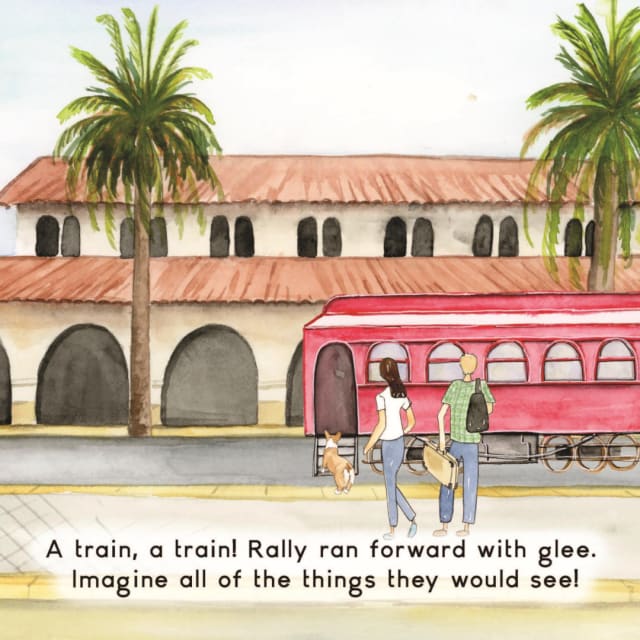
- Station play set (printable): a "Station" sign and a "Tickets" sign with Rally's station from page 3; four role badges (Conductor with the conductor from page 10, Ticket Seller with the station, Helper with Dad lifting Rally from page 4, Passenger with the train seats); a page of 12 tickets showing Rally's red train car with a circle to punch; and 4 role picture cards with the polite words for each job printed under the picture for the adult to read. Print two badge pages so more than one child can be a passenger.
- Masking tape for a "step" line on the floor and for sticking on badges
- Sand timer or a simple song for turn changes
- Screen or printout of the Central Pacific Railroad Passenger Station guide (see Discover)
Lesson steps
Hold up a ticket. "This is a ticket. A ticket is a small card that shows you can ride the train. Today Rally goes to a station. A station is the place where people get on and off a train. Let's look for the people who help Rally on his trip."
"Rally and his family are at the station. Who is carrying the suitcase?" (Dad.) "What is waiting at the station?" (A red train car.)
"Rally has little legs and the stairs are big. Dad gives him a boost. A boost is a little lift to help someone. Who helps you when something is hard?" Accept any answer: someone you love, a teacher, a friend.
"Now Rally needs to find a seat. The walking path between the seats is called the aisle. Let's all point to the aisle."
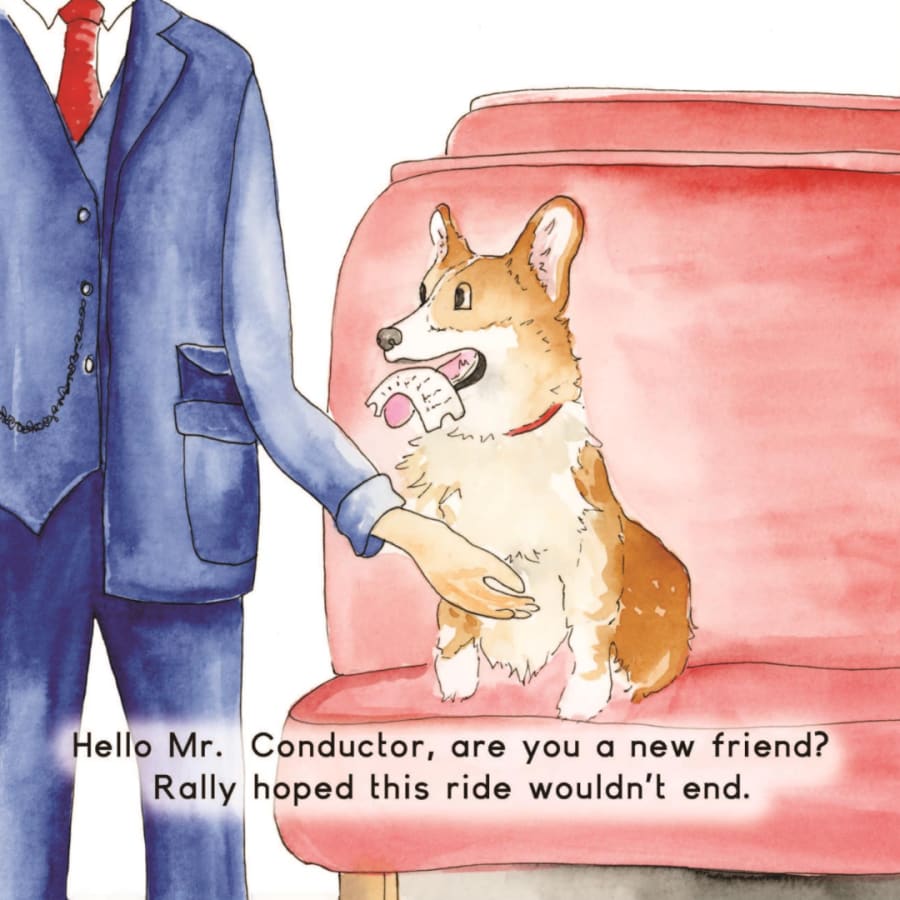
"Rally calls him Mr. Conductor. A conductor is the person in charge of the train who checks tickets. Women and men can both be conductors. What does Rally have in his mouth?" (A ticket.) "When the conductor says 'Ticket, please,' the passenger says, 'Here is my ticket.' Then the conductor says, 'Thank you!'" Practice the lines together.
- Show the four role cards one at a time. Name each job and act it out: the ticket seller hands out tickets, the conductor says "Ticket, please" and punches it, the passenger finds a seat, and the helper offers a hand at the step or carries the suitcase.
- Teach the polite words on the role cards and practice them as a class with a puppet or a partner: "Ticket, please." "Here is my ticket." "Thank you." "You are welcome." Add the turn words: "Can I have a turn?" "Yes, here you go."
- Ask: "What job would you like to try first?" Take three or four answers.
- Open the Central Pacific Railroad Passenger Station guide, or find a verified museum near your school in the field trip planner (rallytakesthetrain.com/lessons/train-museum-field-trips). The guides are written for adults, so read one or two short sentences aloud and show the photos.
- "This train station was built to look just like one from long ago. Kids can peek into the ticket counter, listen to the telegraph and imagine packing a trunk for the baggage room. Then they go outside and get on a real train!" Teach telegraph directly: "A telegraph is an old machine that sends messages with clicking sounds." Tap a click-click rhythm on your knees together.
- "A station has lots of jobs: a ticket seller sells tickets, a conductor checks tickets on the train, and helpers carry bags and help people up the steps. Museums have helpers too. Which job did you see in our book? Which job would you like to have?"
Or find a verified museum near your school in the field trip planner.
- Open the station center with 4 to 6 children. Each child picks a role card and tapes on its badge (several children can be passengers). Say: "All aboard! The ticket booth is open."
- Children play their jobs: the ticket seller hands out tickets, the helper carries the suitcase and offers a hand at the "step" (a tape line on the floor), passengers find seats, and the conductor walks the aisle saying "Ticket, please" and marks each ticket with a crayon.
- When the timer runs out or the song ends, the conductor calls "Next stop!" and everyone passes their badge to the right. Coach with the frame "Can I have a turn? Yes, here you go."
- 3-year-olds: offer two roles (conductor and passenger) and an adult plays alongside, modeling the words. 4-year-olds and TK: add an engineer (the train driver) who calls out stops, and a story line, such as a tunnel or a crossing where the train slows down.
Safety: Materials safety: conductors mark tickets with a crayon, and any hole punch stays with an adult. Leave a wide aisle so children can walk without tripping, and set chairs so they cannot tip. The "step" is a tape line on the floor, so no one climbs on chairs or lifts a friend. If you add a snack cart, use play food only. Rail safety reminder: "Real train tracks are only for trains. We never play on or near real tracks."
Differentiation
Extra support
Give the child one short phrase to use ("Ticket, please") and let them repeat a familiar role before switching. An adult can play a partner role and model the words slowly. Accept gestures or handing over a ticket as a response.
Multilingual learners
Print the polite words in English and the home language on the back of each role card, and invite children to teach the class how to say "thank you" in their languages. Pair with a peer who shares the home language when possible. Key language use: Narrate.
Extension
Children make up a train trip story while they play (where the train is going, what they see, who is waiting at the end) and act it out. An adult writes their trip on a chart to read back at circle time.
Check for understanding
Success criterion: Plays a train role with a partner, uses polite words and takes turns with props.
| Level | What you see |
|---|---|
| 3Meets (level 3) | Plays a role, uses polite words without a reminder ("Ticket, please." "Thank you.") and passes the badge when it is time. |
| 2Approaching (level 2) | Plays a role and uses polite words or takes turns after one prompt from an adult. |
| 1Beginning (level 1) | Plays near others with the props; uses gestures or single words and needs adult help to share a role. |
Family connection
Send home the half-page note in the printables. The text is below so you can paste it into a newsletter or app.
English
Today your child pretended to work at a train station. We played conductor, passenger, ticket seller and helper, and practiced kind words like "Ticket, please" and "Thank you." We also took turns with each job. At home, line up two or three chairs as a train. Make a ticket from a scrap of paper and let your child be the conductor, then switch jobs. Listen for the polite words! Free Rally coloring pages are at rallytakesthetrain.com/coloring-pages.
Español
Hoy su hijo o hija jugó a trabajar en una estación de tren. Jugamos a ser conductor, pasajero, vendedor de boletos y ayudante, y practicamos palabras amables como "Boleto, por favor" y "Gracias". También nos turnamos con cada trabajo. En casa, pongan dos o tres sillas en fila como un tren. Hagan un boleto con un pedazo de papel y deje que su hijo o hija sea el conductor, luego cambien de trabajo. ¡Escuche las palabras amables! Hay páginas para colorear gratis de Rally en rallytakesthetrain.com/coloring-pages.
Teacher tips
- Play inside the center for the first few minutes. Children copy an adult's words and pace, and then you can step back and just narrate what you see.
- Badges solve most arguments. When only the child wearing the conductor badge can punch tickets, children know whose turn it is without asking you.
- Keep the station up for a week and add one new prop each day (a map, a paper train schedule, a pretend snack cart with play food). The play gets richer each time.
Standards alignment
| Standard | Text |
|---|---|
| Head Start ELOF: Language and Communication: Expressive Language (opens in a new tab) | Preschool (36 to 60 months) sub-domain of the Head Start Early Learning Outcomes Framework. |
| Head Start ELOF: Social and Emotional Development: Relationships with Other Children (opens in a new tab) | Preschool (36 to 60 months) sub-domain of the Head Start Early Learning Outcomes Framework. |
Check codes against your state's version of these standards. How we build and review lessons.
Keep exploring
Every train station has jobs to do. Read a museum guide together. What jobs can you find, like selling tickets, helping riders or driving the train?
After the lesson, children can explore about 650 train and railway museums through our free guides, discovering the history, engineering and stories behind real trains. Read one together, then come back to the question.
Teach it with the real book
4.9 stars on Amazon
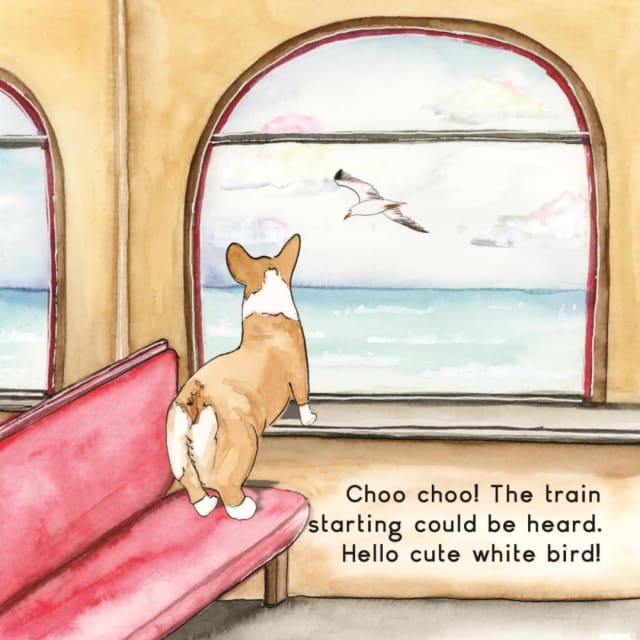
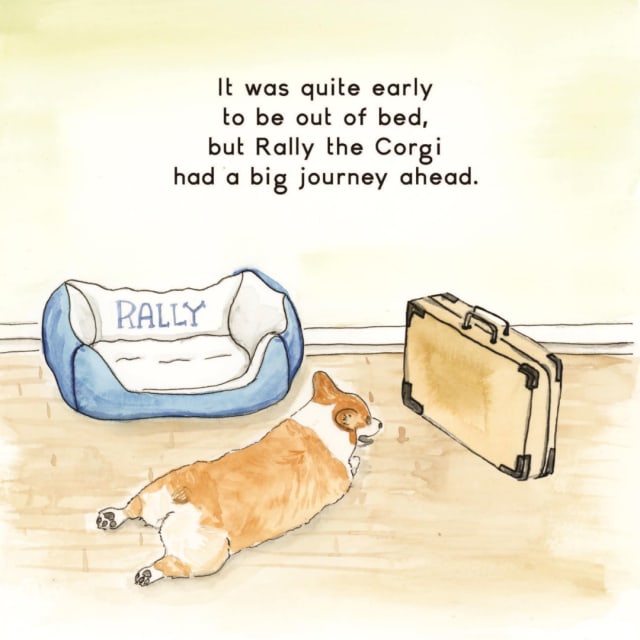
Rally Takes the Train is a rhyming, hand-painted picture book about a corgi's first train ride, from the big station stairs to a dark tunnel to the people waiting at the end of the line. Children ask for it again and again, and every lesson here is built on its pages.
Questions teachers ask
How do you set up a train station dramatic play area?
Put chairs in rows of two with an aisle down the middle for the train, and use a table or box as the ticket booth. Add a conductor hat, a suitcase, paper tickets and role badges. Post simple signs for the station and the tickets. Then model each job before children play so they know what to do and say.
What do preschoolers learn from dramatic play?
Dramatic play builds language and social skills at the same time. Children practice new words, talk with partners, take turns and solve small problems while playing a role. This lesson supports the Head Start ELOF areas Language and Communication: Expressive Language and Social and Emotional Development: Relationships with Other Children.
How do I help preschoolers take turns in dramatic play?
Make turns visible and predictable. Use role badges so everyone can see who has each job, and switch roles when a sand timer runs out or a short song ends. Teach the words for asking ("Can I have a turn?") and answering ("Yes, here you go") before play starts, and practice them as a class.
What train jobs can preschoolers pretend to do?
Good roles for young children are conductor, passenger, ticket seller and helper. Four-year-olds and TK can add an engineer, the train driver, who calls out stops. These roles connect to real stations, like the Central Pacific Railroad Passenger Station in Old Sacramento, where kids can peek into the ticket counter and imagine packing a trunk for the baggage room.
What makes a good dramatic play theme for preschool?
A good theme is a familiar kind of place with clear jobs that children can act out using simple props. A train station works well because each job has a short, polite line to say: "Ticket, please," "Here is my ticket," "Thank you." This lesson turns your dramatic play area into a station with a ticket booth, rows of seats and role badges.
How do you teach polite words to preschoolers?
Teach the exact words, then give children a reason to use them many times. Practice "Ticket, please," "Here is my ticket," "Thank you" and "Can I have a turn?" as a class with a puppet or a partner. Then open the station center, where every ticket exchange is a chance to use them. An adult playing alongside at first models the words and pace.
What is the teacher's role in preschool dramatic play?
Start inside the play. For the first few minutes, take a role and model the words and actions, because children copy an adult's language and pace. Then step back and narrate what you see. In this lesson an adult plays alongside 3-year-olds, and you coach turn-taking with the frame "Can I have a turn? Yes, here you go."
How long should a dramatic play center stay up?
Leaving a theme up for about a week lets the play grow richer. This lesson suggests keeping the train station open all week and adding one new prop each day, such as a map, a paper train schedule or a pretend snack cart with play food. Children repeat roles, try new ones and build longer stories as the week goes on.
How do you include shy children in dramatic play?
Give a shy child one short phrase, such as "Ticket, please," and let them repeat a familiar role before switching. An adult can play a partner role and model the words slowly. Accept gestures, like handing over a ticket, as a full response. Badges and clear jobs help too, because the child always knows what to do and say next. This also suits many children with IEP goals in communication.
Who helps Rally in Rally Takes the Train?
Several people help Rally. Dad carries the suitcase and gives Rally a boost up the big train steps on page 4, and Mr. Conductor, in a blue three-piece suit with a pocket watch chain, pats Rally while he holds his ticket on page 10. These helpers become roles children play at the station center, along with passenger, which is Rally's own job on the train.
How long does the train station dramatic play lesson take?
The lesson takes about 35 minutes: a 6-minute read-aloud, 4 minutes learning the jobs and polite words, a 5-minute museum connection, and about 20 minutes at the station center in groups of 4 to 6. Prep takes about 15 minutes to set the chairs, build the ticket booth and cut the tickets, and the station can stay open all week.
What is in the train station play printable set?
The station play set includes a Station sign and a Tickets sign with Rally's station from page 3, four role badges (Conductor, Ticket Seller, Helper and Passenger), a page of 12 tickets with Rally's red train car and a circle to punch, and 4 role picture cards with the polite words for each job. Print two badge pages so several children can be passengers.
How do I support multilingual learners in dramatic play?
Print the polite words in English and the home language on the back of each role card, and invite children to teach the class how to say "thank you" in their languages. Pair a child with a peer who shares the home language when possible. Accept gestures and single words. The WIDA key language use for this lesson is Narrate.
How do I run train station play with 3-year-olds and 4-year-olds together?
Offer 3-year-olds two roles, conductor and passenger, and have an adult play alongside to model the words. Give 4-year-olds and TK more to do: add an engineer, the train driver, who calls out stops, and a story line, such as a tunnel or a crossing where the train slows down. Both ages can play in the same station at the same time, each at their own level.
How can I extend train dramatic play for advanced Pre-K children?
Invite children to make up a train trip story while they play: where the train is going, what they see, and who is waiting at the end. They act out the story, and an adult writes their trip on a chart to read back at circle time. Children can also take the engineer role and call out each stop on the trip.
How do I assess dramatic play in Pre-K?
Watch during center time and use the 3-level check. Meets: plays a role, uses polite words without a reminder and passes the badge when it is time. Approaching: plays a role and uses polite words or takes turns after one adult prompt. Beginning: plays near others with the props, uses gestures or single words, and needs adult help to share a role.
What safety steps does a train station play center need?
Give conductors a crayon to mark tickets, and keep any hole punch with an adult. Leave a wide aisle so children can walk without tripping, set chairs so they cannot tip, and make the "step" a tape line on the floor so no one climbs on chairs or lifts a friend. Use play food only. Add a rail safety reminder: "Real train tracks are only for trains. We never play on or near real tracks."
What can families do at home after train station play?
The family note, in English and Spanish, suggests lining up two or three chairs as a train at home. Make a ticket from a scrap of paper, let the child be the conductor, then switch jobs and listen for polite words like "Ticket, please" and "Thank you." The note also points families to the free Rally coloring pages at rallytakesthetrain.com/coloring-pages.
What can children explore after train station play?
In Discover, children hear about the Central Pacific Railroad Passenger Station in Old Sacramento, a verified museum where kids can peek into the ticket counter, listen to the telegraph and then board a real train. The Keep exploring section at the end of the lesson links to about 650 free train museum guides at rallytakesthetrain.com/train-museums. Children can look at a guide's photos with you, wonder which station jobs people do there, and bring new ideas back to the play station.
What do I have to do to get the free classroom copy of Rally Takes the Train?
Credentialed Pre-K to 2nd grade teachers in the US can get a free paperback classroom copy by reviewing one lesson plan. They apply at rallytakesthetrain.com/free-book-for-teachers. After verification, the book ships to the school address. You then teach the lesson and send a short review within 30 days. If you do not qualify, the book is also in paperback on Amazon.
Related lessons
Our Class Train Museum
A free, 40-minute preschool and Pre-K/TK lesson where children build a pretend train museum.
Ramp Races: What Makes a Train Go?
A free, 30-minute preschool and Pre-K/TK science lesson where children find out what makes a toy train go.
Train Story Sequencing: Beginning, Middle and End
A free, 35-minute kindergarten lesson where children retell Rally Takes the Train in order.
Teaching with Rally Takes the Train
Every lesson is free for classroom and homeschool use. Add the paperback to your classroom library, or review a lesson to earn a free copy if you are a credentialed teacher. Keep the journey going in about 650 free train museum guides, plan a visit with the field trip planner, or browse all lessons for educators.