
Ramp Races for Preschool: A Train STEM Activity About What Makes a Train Go
A free, 30-minute preschool and Pre-K/TK science lesson where children find out what makes a toy train go. They hear the train start and slow in Rally Takes the Train, learn how real engines are turned and stopped, then race trains down low and high ramps and circle which one went farther.
- Grade
- Preschool & Pre-K
- Subjects
- Science, Math, Speaking and listening
- Time
- 30 minutes (about 15 minutes of whole group with movement, then small-group ramp center time)
- Prep
- 10 minutes: build one low ramp and one high ramp from blocks and boards, put a tape start line at the top and a tape finish area on the floor, print one ramp sheet per child
- Grouping
- Whole group, then small groups of 3 to 4 at the ramp center
- Book pages
- 8, 14
- Head Start ELOF: Scientific Reasoning: Scientific Inquiry
- Head Start ELOF: Mathematics Development: Measurement
 Need the book? Get the paperback on Amazon (opens in a new tab) or earn a free classroom copy.
Learning objective
Children test how ramp height and push strength change how far a toy train rolls, then compare two rolls using the words farther and closer.
I can make my train go farther and tell which one went farther.
Vocabulary to teach
Materials
- Rally Takes the Train by Kelsey Lizee Cecil: get the paperback on Amazon (opens in a new tab) or earn a free classroom copy
- 2 or 3 toy trains or toy cars that roll well, all about the same size, each too big to fit through a toilet paper tube opening, with no small loose parts or loose magnets
- 2 flat boards, sturdy cardboard or long unit blocks for ramps
- Wooden blocks to raise the ramps: a low stack (1 block) and a high stack (3 blocks)
- Masking or painter's tape in two colors for the start line and roll marks
- Ramp sheet, one per child (printable): a top box with a low ramp picture and a high ramp picture, each with a small train at the bottom and a tape line; children circle the one that went farther. A bottom box shows a gentle push (small arrow) and a hard push (big arrow); children circle the push that went farther. Includes Rally's red train car from page 3 in the corner and a name line for an adult to write on.
- Crayons
- Screen or printout of the Steamtown National Historic Site museum guide (see Discover)
Lesson steps
Hold up a toy train. "This train is not moving. What could we do to make it go?" Take two or three ideas. "Let's read about Rally's train. Listen for when the train starts to go and when it slows down."
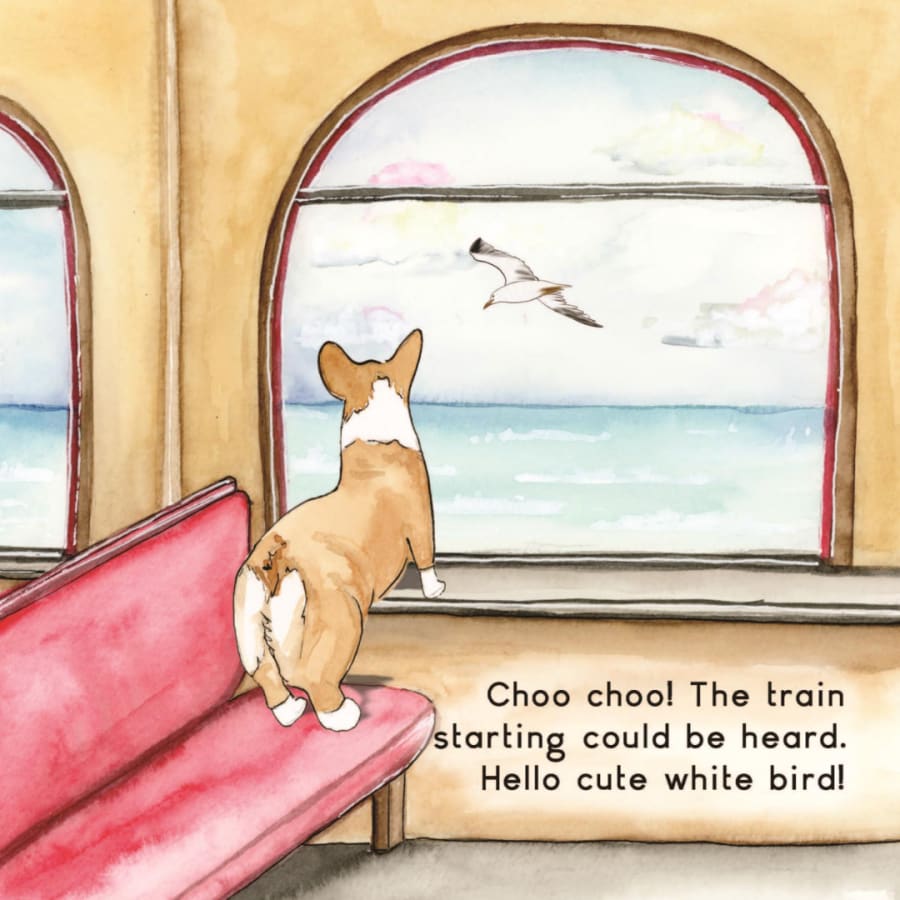
"Choo choo! The train is starting. Real trains have an engine. An engine is the part of the train with the power to make it go. Let's all say choo choo and start our engines!" Children pump arms slowly, then faster.
Point to the lowered gate. "The train is slowing down. It is coming to a crossing. Show me with your arms how a train slows down." Arms go slower and slower, then stop. "Trains need a lot of time to stop."
- Show the low ramp. Teach the word directly: "This is a ramp. A ramp is a flat board with one end up high and one end down low, like a slide." Run your hand up and down it.
- Let one child set a train at the top and let go. "It went! Nobody pushed it. The ramp helped it go."
- Ask: "What do you wonder about our ramp? What if we make it higher? What if we push the train?" Write two or three questions on a chart with a quick sketch next to each.
- Open the Steamtown National Historic Site guide, or find a verified museum near your school in the field trip planner (rallytakesthetrain.com/lessons/train-museum-field-trips). The guides are written for adults, so read one or two short sentences aloud and show the photos.
- "Steamtown has a turntable. A turntable is a giant circle of track that spins to turn a whole engine around. Steamtown also has a huge engine called Big Boy." Children stand, spread out and turn around once, slowly, like a turntable.
- "Real engines are huge. They need lots of power to start and lots of room to stop. That is why real train tracks are only for trains, and we never play on or near real tracks. Our toy trains are small, so a little push or a ramp can make them go." Ask: "Is a real train big or small? Is our toy train big or small?"
Or find a verified museum near your school in the field trip planner.
- At the ramp center, children take turns setting a train on the start line of the low ramp and letting go (no push). An adult puts a tape mark where it stops. Repeat on the high ramp with a second color of tape. "Which tape is farther from the ramp? Which is closer?"
- Next, in an open floor lane with no ramp and everyone behind the start line, children push the train gently with one finger, then hard with the whole hand. Mark each stop with tape and compare: "The hard push went farther."
- On the ramp sheet, each child circles the ramp that went farther and the push that went farther. An adult writes the child's words on the back: "My train went farther when ___."
- 3-year-olds: focus on the ramp only, let go (no pushing), and point to the farther tape. 4-year-olds and TK: predict first ("I think the high ramp will go farther"), then test and tell if their prediction matched.
Safety: Rail safety: "Real train tracks are only for trains. We never play on or near real tracks." Say it during Discover and again at cleanup. Ramp safety: keep ramps low (no more than three blocks high), set them on the floor away from walkways, roll trains only down the ramp or along the floor lane (no throwing), and keep hands and faces away from the bottom while a train is rolling. Toys: every train or car must be too big to fit through a toilet paper tube opening, with no small loose parts; remove any toy with a loose or broken magnet, since swallowed magnets are dangerous. During the turntable spin, children stand apart and turn once, slowly.
Differentiation
Extra support
Use only two tape marks at a time and keep them far apart so farther and closer are easy to see. Give a choice: "Did it go farther or closer?" Model with your own hand on the train before the child tries. A child with limited hand strength can release the train by lifting a block "gate" at the top of the ramp.
Multilingual learners
Show picture cards for ramp, push, farther and closer, and use gestures (arms wide for farther, hands together for closer). Offer the frame "My train went ___." in English and the home language, and accept pointing. Key language use: Explain.
Extension
Add a third ramp height, or try a ramp covered with a towel. Children line up three tape marks from closest to farthest and explain which ramp made the train go farthest.
Check for understanding
Success criterion: Tests a ramp or push and compares two rolls using farther and closer.
| Level | What you see |
|---|---|
| 3Meets (level 3) | Tests both ramps or both pushes, points to the farther mark and says why ("The high ramp made it go farther"). |
| 2Approaching (level 2) | Points to the farther mark and uses farther or closer with one prompt, but does not yet say why. |
| 1Beginning (level 1) | Rolls the train and points to a mark when asked, but mixes up farther and closer. |
Family connection
Send home the half-page note in the printables. The text is below so you can paste it into a newsletter or app.
English
Today your child was a scientist. We rolled toy trains down low and high ramps, pushed them gently and hard, and used tape to see which went farther and which stayed closer. At home, lean a book or a cutting board on a couch cushion or a stack of books to make a ramp. Roll a toy car or a ball down it two times, once with the ramp low and once with it high, and ask, "Which one went farther?" Free Rally coloring pages are at rallytakesthetrain.com/coloring-pages.
Español
Hoy su hijo o hija hizo experimentos de ciencias. Hicimos rodar trenes de juguete por rampas bajas y altas, los empujamos suave y fuerte, y usamos cinta para ver cuál llegó más lejos y cuál quedó más cerca. En casa, apoyen un libro o una tabla de cortar en un cojín del sofá o en una pila de libros para hacer una rampa. Hagan rodar un carrito o una pelota dos veces, una con la rampa baja y otra con la rampa alta, y pregunte: "¿Cuál llegó más lejos?" Hay páginas para colorear gratis de Rally en rallytakesthetrain.com/coloring-pages.
Teacher tips
- Pick toy trains or cars without magnetic connectors, or test one car at a time unhooked. Linked cars grab each other and the ramp test falls apart.
- Use one tape color for the low ramp and another for the high ramp, and leave the marks down. Children will walk back and forth between them, which is real comparing.
- Keep the waiting line short. Two or three children per ramp with a quick "one roll each, then pass it" rule keeps everyone busy and cuts down on grabbing.
- Smooth the bottom of each ramp with a strip of tape so trains roll off instead of bumping. If a train still crashes on the high ramp, treat it as a discovery: "What happened? How could we fix the ramp?"
Standards alignment
| Standard | Text |
|---|---|
| Head Start ELOF: Scientific Reasoning: Scientific Inquiry (opens in a new tab) | Preschool (36 to 60 months) sub-domain of the Head Start Early Learning Outcomes Framework. |
| Head Start ELOF: Mathematics Development: Measurement (opens in a new tab) | Preschool (36 to 60 months) sub-domain of the Head Start Early Learning Outcomes Framework. |
Check codes against your state's version of these standards. How we build and review lessons.
Keep exploring
Real engines are giant. Find the biggest engine you can in a museum guide. Would it be easier to push a toy train or a real one? Why?
After the lesson, children can explore about 650 train and railway museums through our free guides, discovering the history, engineering and stories behind real trains. Read one together, then come back to the question.
Teach it with the real book
4.9 stars on Amazon
Rally Takes the Train is a rhyming, hand-painted picture book about a corgi's first train ride, from the big station stairs to a dark tunnel to the people waiting at the end of the line. Children ask for it again and again, and every lesson here is built on its pages.
Questions teachers ask
How do you do a ramp activity with preschoolers?
Build a low ramp and a high ramp from blocks and a board, mark a start line with tape, and let children release a toy car or train from the top. Put a tape mark where it stops. Change one thing at a time, like the height or the push, and ask which went farther. Keep groups small so every child gets several turns.
What do preschoolers learn from ramps?
Ramps teach early science and measurement. Children see that a higher ramp or a harder push makes a toy go farther, and they practice comparing distances with words like farther and closer. This supports the Head Start ELOF areas Scientific Reasoning: Scientific Inquiry and Mathematics Development: Measurement.
How do you teach farther and closer to 3 and 4 year olds?
Use tape marks on the floor so the distance stays visible. After each roll, stand by the marks and model the words: "This one is farther. This one is closer." Use big gestures, give a choice of two words, and let children walk from the start line to each mark to feel the difference.
How do I teach train safety to preschoolers?
Keep it short and repeat it often: "Real train tracks are only for trains. We never play on or near real tracks." Connect it to the book, where Rally's train slows at a crossing with a gate and lights on page 14, and remind children to always stay with a grown-up near trains.
What is a good STEM activity for preschoolers?
A ramp race is one of the simplest preschool STEM activities, because it needs only blocks, a board, toy trains and tape. Children change one thing, the ramp height or the push, and see what happens. In Ramp Races, they test a low and a high ramp, push gently and hard, mark each stop with tape, and circle the one that went farther on a ramp sheet.
How do preschoolers make predictions in science?
Ask a simple "What if?" question, let children guess, then test it together. In this lesson you write children's wonderings on a chart, like "What if we make it higher?" 4s and TK predict first ("I think the high ramp will go farther"), then test and say whether their guess matched. 3s skip predicting and focus on letting go and pointing to the farther tape mark.
How do you teach preschoolers about pushes?
Let them feel the difference. On the floor with no ramp, a child pushes a toy train gently with one finger, then hard with the whole hand, and an adult marks each stop with tape. Then compare: "The hard push went farther." Teach push directly as pressing on something to make it move away from you. Kindergarten classes can follow up with the lesson Push the Train: Pushes, Pulls and a Ramp Design.
What are good measurement activities for preschool?
Early measurement in preschool is mostly comparing, such as farther and closer. Tape marks on the floor make distance visible, so children can walk to each mark and compare. This lesson uses two tape colors, one for the low ramp and one for the high ramp, and leaves the marks down so children can go back and forth between them, which is real comparing.
What toys work best for a preschool ramp activity?
Use 2 or 3 toy trains or toy cars that roll well and are about the same size, so the test is fair. Each one must be too big to fit through a toilet paper tube opening, with no small loose parts. Skip magnetic connectors or test one car at a time, and remove any toy with a loose or broken magnet, since swallowed magnets are dangerous. Roll trains only down the ramp, never throwing them.
How do I set up a ramp center in preschool?
Lean 2 flat boards, sturdy cardboard pieces or long unit blocks on stacks of wooden blocks: 1 block for the low ramp and 3 for the high ramp. Put a tape start line at the top and a finish area on the floor, and set ramps away from walkways. Keep groups to 3 or 4 children with a "one roll each, then pass it" rule to cut down on grabbing.
How long does the Ramp Races lesson take?
About 30 minutes, plus about 10 minutes of prep to build the ramps, tape the lines and print the ramp sheets. The read-aloud takes 6 minutes, wondering about the ramp 4 minutes and the museum connection 5 minutes, with a short turntable spin for movement. Then children spend about 15 minutes testing in small groups at the ramp center.
What is on the ramp sheet printable?
The ramp sheet has two boxes. The top box shows a low ramp and a high ramp, each with a small train and a tape line, and children circle the one that went farther. The bottom box shows a gentle push (small arrow) and a hard push (big arrow), and children circle the push that went farther. It includes Rally's red train car and a name line, in color, ink-saver and A4.
How do I help multilingual learners with science vocabulary?
Show picture cards for ramp, push, farther and closer, and pair each word with a gesture: arms wide for farther, hands together for closer. Offer the frame "My train went ___." in English and the home language, and accept pointing as an answer. Teach each word directly before the test begins. The WIDA key language use for this lesson is Explain.
How do I support a child who mixes up farther and closer?
Use only two tape marks at a time and place them far apart, so the difference is easy to see. Give a choice instead of an open question: "Did it go farther or closer?" Model with your own hand on the train before the child tries. This also works for children with IEP goals in vocabulary or attention, alongside their usual supports.
How can I extend the ramp activity for 4-year-olds and TK?
Add a third ramp height, or cover one ramp with a towel. Children line up three tape marks from closer to farther and explain which ramp made the train go farthest. Have them predict before each test and tell whether their guess matched. These steps stretch the same activity with nothing new but a towel and more tape.
How do I assess a preschool ramp activity?
Use the 3-level check. Meets: tests both ramps or both pushes, points to the farther mark and says why ("The high ramp made it go farther"). Approaching: points to the farther mark and uses farther or closer with one prompt, but does not yet say why. Beginning: rolls the train and points to a mark when asked, but mixes up farther and closer.
Is there a family note in Spanish for the ramp lesson?
Yes, the family note comes in English and Spanish. It describes how children rolled toy trains down low and high ramps and used tape to compare farther and closer. The home idea: lean a book or cutting board on a couch cushion or a stack of books, roll a toy car or a ball down it once with the ramp low and once high, and ask "Which one went farther?"
What can children explore after Ramp Races?
In Discover, children hear from the Steamtown National Historic Site guide, a verified museum in Scranton, Pennsylvania, with a working turntable that spins to turn a whole engine around and Big Boy No. 4012, one of only eight surviving Big Boys. The Keep exploring section at the end of the lesson links to about 650 free train museum guides at rallytakesthetrain.com/train-museums. Children can compare a huge real engine with their small toy train and remember that real tracks are only for trains.
Which pages of Rally Takes the Train show the train starting and stopping?
Page 8 shows the train starting: "Choo choo! The train starting could be heard." Page 14 shows it slowing at a railroad crossing with lights, a crossbuck sign and a lowered red and white gate. This lesson stops on both pages so children act out an engine speeding up and then slowing down, which sets up the question of what makes a train go.
Can I teach the ramp lesson without the book?
Yes. The ramp tests do not depend on the book, though reading pages 8 and 14 gives children a reason to wonder what makes a train go. Without it, start with a toy train and ask "What could we do to make it go?" To get the book, credentialed Pre-K to 2nd grade teachers in the US can get a free paperback classroom copy by reviewing one lesson plan at rallytakesthetrain.com/free-book-for-teachers.
Related lessons
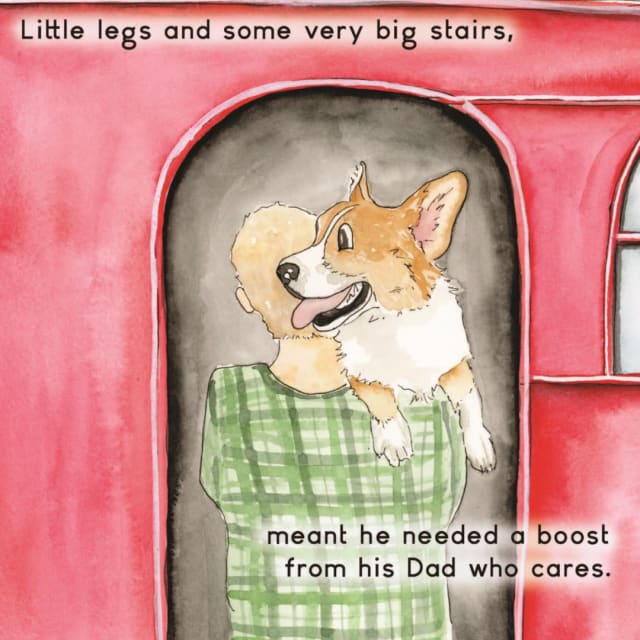
Push the Train: Pushes, Pulls and a Ramp Design
A free, 40-minute kindergarten science lesson where children push and pull a toy train to see how strength and direction change its motion.
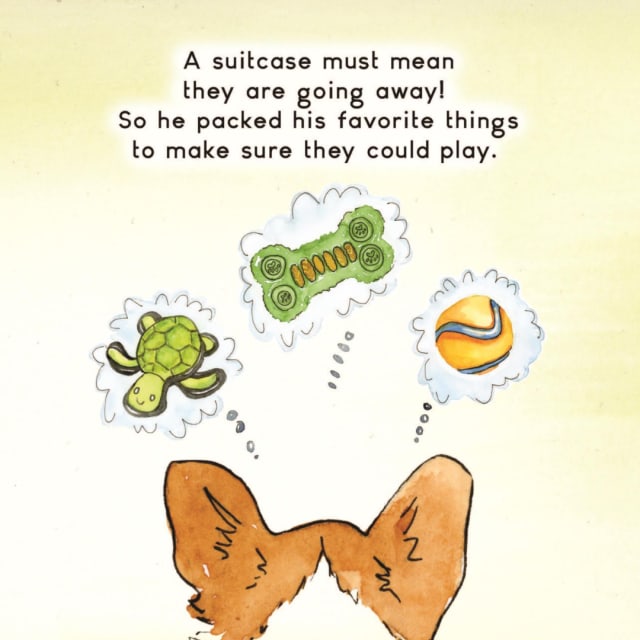
Pack Rally's Suitcase: Sorting and Counting to 5
A free, 30-minute preschool and Pre-K math lesson where children help Rally the Corgi pack.
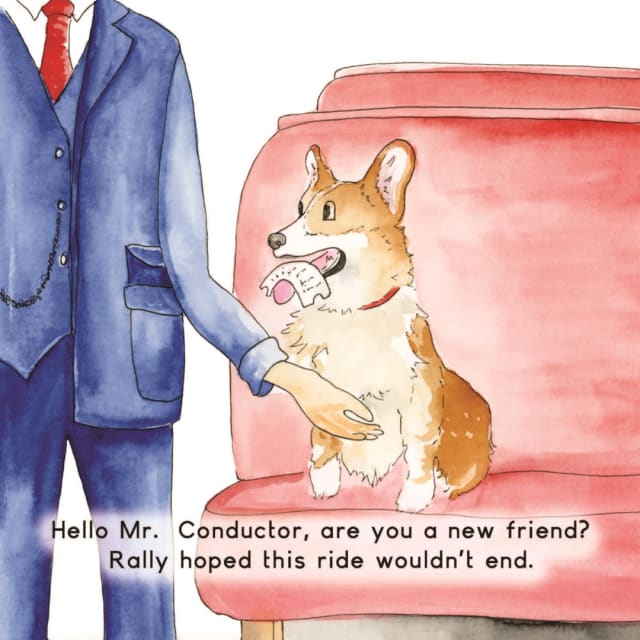
All Aboard! Train Station Dramatic Play
A free, 35-minute preschool and Pre-K/TK lesson that turns your dramatic play area into a train station.
Teaching with Rally Takes the Train
Every lesson is free for classroom and homeschool use. Add the paperback to your classroom library, or review a lesson to earn a free copy if you are a credentialed teacher. Keep the journey going in about 650 free train museum guides, plan a visit with the field trip planner, or browse all lessons for educators.