
Counting Money Lesson for 2nd Grade: Buying Train Museum Tickets
A 55-minute problem-based math lesson. After a coin number talk, partners use play money to pay the real ticket prices listed in the Great Plains Transportation Museum guide two different ways, then run a pretend ticket booth, adding two prices and trading four quarters for a dollar. A one-problem cool-down checks each child.
- Grade
- 2nd Grade
- Subjects
- Mathematics, Measurement and data (money)
- Time
- 55 minutes (one math block)
- Structure
- Problem-based math lesson
- Prep
- 20 minutes: bag play money for each pair (two $10 bills, two $5 bills, ten $1 bills, 8 quarters, 10 dimes, 4 nickels and 10 pennies), copy and cut the family cards (one set per pair), copy Ticket Math (one per child) and the Ticket Booth Record (one per pair), and open the guide's at a glance box on your screen
- Grouping
- Whole class for the number talk and syntheses, partners with play money for both activities, individual cool-down
- Book
- Not used in this lesson
- CCSS 2.MD.C.8
 Need the book? Get the paperback on Amazon (opens in a new tab) or earn a free classroom copy.
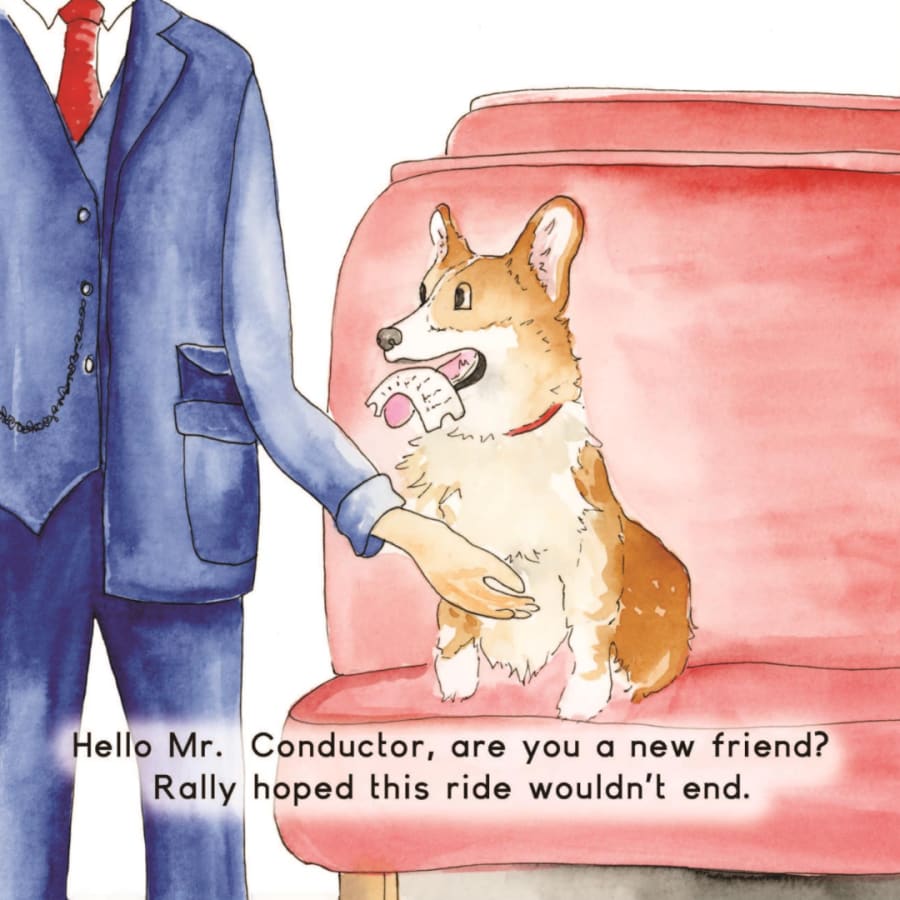
Day 8 of the 2nd Grade train unit
Builds on: Days 3-4 (2A), where children learned that a guide's at a glance fact box is where prices live.
Leads to: Day 9 (2D): another math lesson, this time measuring train cars in inches and feet.
Learning objective
Students count combinations of dollar bills, quarters, dimes, nickels and pennies, write amounts with $ and ¢ (dollars and cents written separately, as 2nd grade expects), and solve one- and two-step word problems about train museum tickets, including adding two ticket prices and showing an amount in more than one way.
I can count bills and coins, write money with $ and ¢, and solve ticket word problems.
Vocabulary to teach
Materials
- The Great Plains Transportation Museum guide at https://www.rallytakesthetrain.com/museums/great-plains-transportation-museum-wichita-kansas on a screen, scrolled to the at a glance box (or find a verified museum near your school in the field trip planner (rallytakesthetrain.com/lessons/train-museum-field-trips) and use its prices)
- Play money in a bag for each pair: dollar bills, quarters, dimes, nickels and pennies
- Ticket Booth Family Cards printable, one set per pair, cut apart
- Ticket Math printable, one per child
- Ticket Booth Record printable, one per pair
- Document camera or magnetic coins for the number talk and syntheses
Before you teach
- Count the bags once. A missing quarter turns a correct answer into an argument.
- Write the prices on the board the 2nd grade way before class: adults (13 and older) $9 and 75¢, ages 4 to 12 $6 and 25¢, 3 and under free. Children write dollars and cents separately; decimal notation comes in later grades.
- During Activity 2, watch for two pairs who solve card A differently (counting on with coins versus adding dollars, then cents). Ask them to share in that order.
- Prices change. If you plan a real visit, check the museum's current price first.
Lesson plan
Problem-based math lesson. Money problems are about reasoning with values, not following one procedure. Children work on each ticket problem with play money before you show anything, then you choose and order their strategies in the synthesis so the trade of 100¢ for $1 comes from them.
The book: Not used. The ticket prices in the museum guide give the lesson its numbers.
The admission prices listed in this guide's at a glance box are the data for every problem. Or find a verified museum near your school in the field trip planner.
- Show one coin set at a time under the document camera for about 10 seconds: 2 quarters, 1 dime, 1 nickel and 2 pennies (67¢); then 2 dimes and 3 pennies (23¢); then 3 quarters and 1 nickel (80¢).
- Children think silently and show a thumb at their chest when they have a total, adding a finger for each other way they find. No hands up.
- Record two or three strategies for each set with the child's name (Jaden: 25, 50, 60, 65, 66, 67). Ask who counted the biggest coins first and why that helps.
Look for: Children who count every coin as 1, or count a nickel as more than a dime because it is bigger. Note their names for the first activity.
- Launch (4 minutes): show the at a glance box from the guide and read the admission line: adults (13 and older) $9.75, ages 4 to 12 $6.25, 3 and under free, tax included. Explain that grown-ups write a dot between dollars and cents, and point to the 2nd grade way on the board: $9 and 75¢, $6 and 25¢.
- Work time (10 minutes): partners build $6 and 25¢ with play money two different ways and draw both on Ticket Math, problem 1. Pairs who finish do problem 2 with the adult price.
- Synthesis (4 minutes): ask two pairs to show their ways, the one with the most coins first, then one that uses a $5 bill. Ask what stayed the same (the amount) and what changed (the bills and coins).
- Launch (2 minutes): explain the roles with card F (one child, age 10). The family finds the total and counts out exact money; the ticket agent checks by counting from the biggest bill or coin to the smallest.
- Work time (11 minutes): partners draw cards, solve each one, record the tickets, total and money used on the Ticket Booth Record, and switch roles after each card. Answer key: A $16; B $12 and 50¢; C $9 and 75¢; D $16 (13 is an adult ticket); E $19 and 50¢; F $6 and 25¢; G $16 (age 3 is free); H $18 and 75¢.
- Synthesis (4 minutes): put card A on the board and have the two pairs you chose show their strategies. Make the key move visible: $9 and $6 make $15; 75¢ and 25¢ make 100¢; trade four quarters for one more dollar; $16.
Look for: Totals written as $15 and 100¢. Ask what 100¢ is worth and have the pair make the trade with real coins.
- Ask what happens when the cents in two prices add up to 100¢ or more, and why sorting coins before counting helps. Record one sentence from a child for each on the anchor chart.
- Each child solves problem 3 on Ticket Math alone: Ana is 9 and her brother is 14; what do their tickets cost in all? ($16.) Collect the sheets.
- Sort them into three piles after class (correct, cents right but no trade, still counting coins as 1) to plan tomorrow's warm-up and small groups.
Short on time? Use only the first two coin sets in the number talk, have pairs solve four family cards (F, A, C and G) instead of eight, and fold the lesson synthesis into the Activity 2 synthesis. Keep the cool-down, because it shows whether each child can trade 100¢ for $1.
Finished early? Children solve problems 4 and 5 on Ticket Math, including a change problem where Maya pays with 7 one-dollar bills.
What to listen for
| If children say or do this | Try this |
|---|---|
| Counts a nickel as more than a dime because it is bigger. | Put a dime and a nickel side by side and ask which buys more. Then show 2 nickels next to 1 dime: same value, different size. |
| Writes $15 and 100¢ as the total. | Ask how many cents make a dollar, then have the child trade 4 quarters for a $1 bill and rewrite the total. |
| Writes $6 and 25 or 625¢. | Point to each part: the $ goes before the dollars, the ¢ goes after the cents, and the word and keeps them apart. |
Safety: Play money and real coins are small. Collect them in bags at the end of the lesson, and remind children to keep coins out of their mouths and to wash hands after handling real coins.
Differentiation
Extra support
Start with cents only: coin amounts under $1 before ticket prices. Give the pair only cards F, C and A at first, and a place mat with columns for dollars, quarters, dimes, nickels and pennies.
Multilingual learners
Teach coin names with the coin, its value and a picture card on a word wall. Practice the frames The total is ___. and Here is ___ dollars and ___ cents. during the booth role play, which gives repeated natural practice. Key language use: Explain.
Extension
Children solve change problems: a family pays for card C with a $10 bill (25¢ change) or for card A with a $20 bill ($4 change), and the agent counts up to find the change. Or they find the cheapest and most expensive family cards and explain the difference.
Check for understanding
Success criterion: Counts mixed bills and coins accurately, writes amounts with $ and ¢ correctly (for example, $6 and 25¢), and solves a two-ticket problem in which the cents make a new dollar.
| Level | What you see |
|---|---|
| 3Meets (level 3) | Counts from largest to smallest, shows one price two ways, writes $ and ¢ correctly, and solves the cool-down with the trade of 100¢ for $1. |
| 2Approaching (level 2) | Counts coins and one-ticket prices correctly but leaves 100¢ untraded or mixes up the $ and ¢ signs. |
| 1Beginning (level 1) | Counts every coin as 1 or does not yet know coin values; needs coins sorted and labeled to count. |
Family connection
Send home the half-page note in the printables. The text is below so you can paste it into a newsletter or app.
English
Four quarters make a dollar, and your child can show you why. In math we used the ticket prices listed in a real train museum guide (adult tickets were $9 and 75¢) and ran a pretend ticket booth. Children counted from the biggest coin to the smallest, wrote money with the $ and ¢ signs, and added two ticket prices. At home, spend 5 minutes with a few coins: ask how much they make, then ask for the same amount another way. Many free museum guides at rallytakesthetrain.com/train-museums list ticket prices you can practice counting.
Español
Cuatro monedas de 25 centavos hacen un dólar, y su hijo o hija le puede mostrar por qué. En matemáticas usamos los precios de entrada que aparecen en la guía de un museo de trenes real (la entrada de adulto costaba $9 y 75¢) y jugamos a la taquilla. Contaron desde la moneda de mayor valor hasta la de menor valor, escribieron cantidades con los signos $ y ¢, y sumaron dos precios. En casa, dediquen 5 minutos a unas monedas: pregunte cuánto suman y pida la misma cantidad de otra manera. Muchas guías gratuitas de museos en rallytakesthetrain.com/train-museums muestran precios de entrada para practicar.
Teacher tips
- Keep a stack of real or magnetic quarters by the board. The moment four quarters turn into a dollar is the key idea of the two-ticket problems, and children need to see the trade happen.
- Insist on sorting before counting. Most counting errors come from switching between coin values in a messy pile.
Standards alignment
| Standard | Text |
|---|---|
| CCSS 2.MD.C.8 (opens in a new tab) | Solve word problems involving dollar bills, quarters, dimes, nickels, and pennies, using $ and ¢ symbols appropriately. Example: If you have 2 dimes and 3 pennies, how many cents do you have? |
Check codes against your state's version of these standards. How we build and review lessons.
Keep exploring
Find the ticket prices in a museum guide's at a glance box. How much would tickets cost for two grown-ups and three children? Show the total with bills and coins.
Teach it with the real book
4.9 stars on Amazon
Rally Takes the Train is a rhyming, hand-painted picture book about a corgi's first train ride, from the big station stairs to a dark tunnel to the people waiting at the end of the line. Children ask for it again and again, and every unit here opens with it.
Questions teachers ask
What happens in each part of the 55-minute block?
A 10-minute coin number talk, an 18-minute first activity where partners show one ticket price two ways, a 17-minute ticket booth activity where they add two prices, a 5-minute lesson synthesis and a 5-minute cool-down. Both activities have their own launch, work time and short synthesis. Children try every problem with play money before you show any method.
Why write $9 and 75¢ instead of $9.75?
2.MD.C.8 asks for the $ and ¢ symbols, and decimal notation for money comes in later grades. The launch shows the guide's $9.75 and explains that grown-ups put a dot between dollars and cents, then everyone uses the 2nd grade way. Writing dollars and cents apart also makes the key move visible: 75¢ and 25¢ are 100¢, which is one more dollar.
What should the number talk look like?
Show one coin set at a time under the document camera for about ten seconds: 67¢, then 23¢, then 80¢. Children think silently and show a thumb at their chest, adding fingers for other ways. No hands up. Record two or three strategies with names, such as Jaden counting 25, 50, 60, 65, 66, 67, and ask why starting with the biggest coins helps.
Which strategies should I share for card A?
Watch for one pair that counts on with coins and one that adds dollars, then cents. Share them in that order in the Activity 2 synthesis. The goal is the move $9 and $6 make $15, 75¢ and 25¢ make 100¢, trade four quarters for a dollar, $16. Do the trade with real or magnetic quarters so every child sees it happen.
What is the answer key for the family cards?
A $16; B $12 and 50¢; C $9 and 75¢ (age 2 is free); D $16 (age 13 pays the adult price); E $19 and 50¢; F $6 and 25¢; G $16 (age 3 is free); H $18 and 75¢. Cards C, D and G are the ones to watch, because the age rules trip children up more than the adding does.
A pair wrote $15 and 100¢. Is that wrong?
It is correct but unfinished, and it is the most common answer in this lesson. Ask how many cents make a dollar, then have the pair trade four quarters for a $1 bill and rewrite the total as $16. Sort the cool-downs the same way: correct, cents right but no trade, and still counting coins as 1.
How much play money does each pair need?
Each bag holds two $10 bills, two $5 bills, ten $1 bills, 8 quarters, 10 dimes, 4 nickels and 10 pennies. That covers every family card with exact money, including $19 and 50¢ for card E. Count the bags once before class; a missing quarter turns a right answer into an argument.
What can I trim if math is only 40 to 45 minutes today?
Shorten the number talk to the first two coin sets, and in the ticket booth have pairs solve four cards (F, A, C and G) instead of all eight. Fold the lesson synthesis into the Activity 2 synthesis. Keep the cool-down, because it is the one piece of evidence that each child can make the 100¢ trade alone.
Are the ticket prices current?
They are the admission prices listed in the Great Plains Transportation Museum guide: adults 13 and older $9.75, ages 4 to 12 $6.25, 3 and under free, tax included. Prices change, so treat them as data for math and check the museum's current price before a real visit.
What comes before and after this lesson in the unit?
It is Day 8. On Days 3 and 4 children learned that a guide's at a glance fact box is where hours and prices live, so finding the admission line here takes seconds. Day 9 is the second math lesson, measuring paper train cars in inches and feet, which uses the same warm-up, two activities and cool-down rhythm.
Related lessons
Passengers On, Passengers Off: Train Word Problems Within 20
A 55-minute problem-based math lesson.
How Long Is a Train? Measure and Compare Lengths in Inches and Feet
A 55-minute problem-based math lesson.
Big Numbers at the Museum: Multi-Step Word Problems
A 60-minute problem-based 4th grade math lesson.
Teaching with Rally Takes the Train
Every lesson is free for classroom and homeschool use. Add the paperback to your classroom library, or review a lesson to earn a free copy if you are a credentialed teacher. Keep the journey going in about 650 free train museum guides, plan a visit with the field trip planner, or browse all lessons for educators.