
Train Addition and Subtraction for 1st Grade: Passenger Word Problems Within 20
A 55-minute problem-based math lesson. After a number talk on a 20-seat train mat, children solve passengers on and off problems their own way with counters and equations, compare strategies such as making ten, then solve and write problems with real numbers from the Seashore Trolley Museum guide. A one-problem cool-down shows who is ready.
- Grade
- 1st Grade
- Subjects
- Mathematics, Operations and algebraic thinking
- Time
- 55 minutes (one math block)
- Structure
- Problem-based math lesson
- Prep
- 15 minutes: bag 20 two-color counters per pair and put them on the tables, set out 12 chairs in two rows of 6, copy the passenger mat and word problems back to back (one per pair) and the trolley museum page (one per pair), cut half sheets for the cool-down, and choose one photo from the Seashore Trolley Museum guide to project
- Grouping
- Whole class on the carpet for the warm-up and the first launch; partners at tables for work time, with the rest of the lesson staying at tables; independent cool-down
- Book
- Not used in this lesson
- CCSS 1.OA.A.1
- CCSS 1.OA.C.6
 Need the book? Get the paperback on Amazon (opens in a new tab) or earn a free classroom copy.
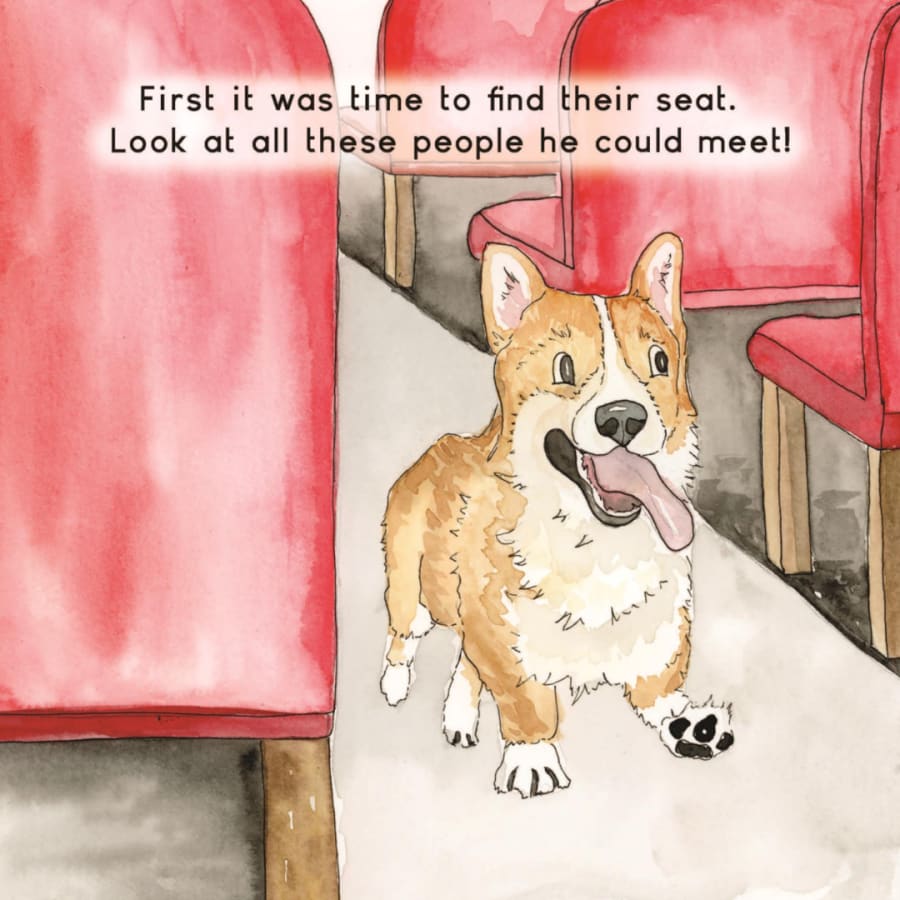
Day 4 of the 1st Grade train unit
Builds on: Children know Rally's train ride from the Day 1 read-aloud, so a train car full of passengers needs no introduction; the book itself stays on the shelf today.
Leads to: Day 5 (1D) stays in math and reads real train departure times on a clock.
Learning objective
Students solve addition and subtraction word problems within 20 (adding to, taking from, putting together, taking apart and comparing, with the unknown in any position) using counters on a seat mat and an equation with a ? for the unknown, and explain a strategy such as counting on, making ten or using a related fact.
I can solve train word problems to 20, write an equation with a ? for the mystery number, and tell how I solved it.
Vocabulary to teach
Materials
- Twelve chairs in two rows of 6 as a pretend train car
- Two-color counters, 20 per pair
- Document camera or projector
- Passenger mat printable, one per pair: the picture of the red seats (page 5), a train car of 20 seats in two rows of 10, and a table to record the start, the change and the equation
- Word problems printable, one per pair: six passengers on and off problems, one for each problem type, with space to draw and write an equation (problems 4 to 6 are for practice another day)
- Trolley museum math printable, one per pair: the facts from the Seashore Trolley Museum guide, three problems that use them, and a box to write your own train problem
- Half sheets or sticky notes for the cool-down
- The Seashore Trolley Museum guide at https://www.rallytakesthetrain.com/museums/seashore-trolley-museum-kennebunkport-maine, projected
Before you teach
- Decide partners ahead of time, pairing a child who counts by ones with one who is starting to count on, not with the fastest child in the room.
- Read the Seashore Trolley Museum guide's sections on trolley #31, the Maine Trolley Cars and the Restoration Shop so you can answer questions about the photo.
- Plan the strategies you hope to see (counting on, filling the ten, a related fact) and jot names on a clipboard during work time so the synthesis is quick.
- If time runs short, cut Activity 2 work time to the first two museum problems; keep the cool-down.
Lesson plan
Problem-based math lesson. 1.OA.A.1 is about making sense of story situations, so children solve each problem their own way before any method is shown, and the class compares strategies afterward. Making ten (1.OA.C.6) grows out of the strategies children share in the warm-up and the synthesis.
The book: The book is not read in this lesson. The passenger mat shows the book's page 5 seats as a picture only.
Activity 2 uses real numbers from this guide: 12 benches on trolley #31, the 10 Maine Trolley Cars and the 6 or 7 cars in the Restoration Shop. Or find a verified museum near your school in the field trip planner.
- Project a 20-seat mat (two rows of 10) with 8 counters in the top row and 5 in the bottom row. Ask how many passengers. Children show a thumb at their chest when they know, and add a finger for each other way they found.
- Record three or four strategies with children's names on chart paper beside the screen, where everyone can see it later from the tables: counted all; 8 and 2 more make 10, then 3 more; 5 and 5 make 10, then 3 more.
- Do not name a best way yet. Leave the recording up for the lesson synthesis.
Look for: Who moves 2 counters to fill the row (making ten) and who counts every counter from 1.
- Launch (4 minutes): use the 12 chairs as a train car and act out one story with children as passengers: 8 are on, some more get on, now there are 12. Do not solve it. Partners go figure out how many got on.
- Work time (11 minutes, including a minute to get to tables where the counters are waiting): each pair solves the acted-out story, then problems 1 to 3 on the word problems page, showing each one with counters or a drawing and an equation with ? for the mystery number.
- While pairs work, choose two or three to share in an order that builds: one who counted on with counters, one who filled the ten first, one who wrote 12 - 8.
- Synthesis (5 minutes): the chosen pairs show their work under the document camera. Ask how 8 + ? = 12 and 12 - 8 = ? tell the same story.
Look for: Children who write 8 + 12. Ask them to retell the story with the chairs before choosing plus or minus.
- Launch (4 minutes): show a photo from the Seashore Trolley Museum guide and read the short facts on the trolley museum math page: trolley #31, the car that started the museum, has 12 benches; 10 cars with Maine roots are listed together on the National Register of Historic Places, and 2 of them came from the Aroostook Valley Railroad; the Restoration Shop works on 6 or 7 cars at once. A trolley is a train car that runs on electricity from a wire above it.
- Work time (8 minutes): partners solve the three museum problems, then write their own train problem with an answer within 20 in the box.
- Synthesis (3 minutes): one pair reads its own problem aloud and everyone solves it, then whispers the answer to a partner. Remind children the numbers are real and the questions are ours.
- Return to the warm-up recording. Ask which strategy helped most on today's problems, and why.
- Name making ten and using a related fact as tools children chose, with their names, and add one line to the class strategy chart: when a number is close to 10, fill the ten first.
- Each child solves one problem on a half sheet or sticky note: 13 passengers are on. 4 get off. How many are on now? Show it and write an equation.
- After class, sort the cool-downs into three piles (used a strategy, counted by ones, not yet) to plan tomorrow's small groups.
Short on time? Cut Activity 2 work time to the first two museum problems with no write-your-own box and drop its synthesis, and shorten the lesson synthesis to adding the make-ten line to the strategy chart. Keep the number talk, all of Activity 1 and the cool-down, which sorts tomorrow's small groups.
Finished early? Pairs solve problems 4 to 6 on the word problems page, or trade their own museum problem with another pair.
What to listen for
| If children say or do this | Try this |
|---|---|
| Adds every number in the story: 8 + 12 = 20. | Have the child act it out with counters: start with 8, add counters until there are 12, then count the ones that were added. |
| Writes 8 + 4 = 12 for a change unknown problem but cannot say which number answers the question. | Ask the child to circle the number that tells how many got on, then write the story again as 8 + ? = 12. |
| Counts all 13 counters from 1 every time. | Cover the full row with your hand and say that this row is full, it has 10. Ask the child to count on from there. |
Safety: Counters are small. Supervise closely, and for any child who still puts objects in their mouth, use larger counters. Do not use food as counters, because of allergies.
Differentiation
Extra support
Use problems within 10 first, with only adding to and taking from, and let the child act out each problem with counters on the mat before writing. Read each problem aloud and have the child retell it in their own words.
Multilingual learners
Teach on, off, in all, left and how many more with gestures and the pretend train, and post a picture chart of each phrase. Give frames: "___ passengers got on. Now there are ___." "___ is ___ more than ___." Key language use: Explain.
Extension
Children solve the start unknown problems with two changes ("Some passengers were on. 5 got on and 3 got off. Now there are 14. How many were on at first?") and write equations two ways.
Check for understanding
Success criterion: Solves addition and subtraction word problems within 20 across problem types and unknown positions, represents each with objects or a drawing and an equation with a symbol for the unknown, and explains a strategy.
| Level | What you see |
|---|---|
| 3Meets (level 3) | Solves at least five of the six problem types correctly, writes a matching equation with ? for each, and explains a strategy such as making ten or a related fact. |
| 2Approaching (level 2) | Solves result unknown problems correctly but needs help with change unknown, start unknown or compare problems, or counts all instead of using a strategy. |
| 1Beginning (level 1) | Adds or subtracts every pair of numbers without deciding what the story asks, or miscounts when acting out problems within 20. |
Family connection
Send home the half-page note in the printables. The text is below so you can paste it into a newsletter or app.
English
Passengers on, passengers off: that was our math this week. We solved word problems about people getting on and off a train, with numbers up to 20. Children used counters, wrote equations like 8 + ? = 12, and shared tricks such as making ten (8 + 5 is 8 + 2 + 3, which makes 13). Some problems used real numbers from a trolley museum. At home, line up spoons or toys as passengers and tell a story, like "9 were on, 4 got off. How many now?" Then let your child make one up for you. Free museum guides: rallytakesthetrain.com/train-museums.
Español
Pasajeros que suben y pasajeros que bajan: así fueron nuestras matemáticas esta semana. Resolvimos problemas sobre personas que suben y bajan de un tren, con números hasta el 20. Usaron fichas, escribieron ecuaciones como 8 + ? = 12 y compartieron trucos como formar diez (8 + 5 es 8 + 2 + 3, que da 13). Algunos problemas usaron números reales de un museo de tranvías. En casa, pongan cucharas o juguetes en fila como pasajeros y cuente una historia, por ejemplo: "Había 9, bajaron 4. ¿Cuántos quedan?" Después, deje que su hijo o hija invente una para usted. Guías gratis: rallytakesthetrain.com/train-museums.
Teacher tips
- Change unknown and start unknown problems are the hardest for first graders. Acting them out with real children on chairs first makes the story visible before anyone writes an equation.
- A 20-seat mat in two rows of 10 does double duty: it shows passengers and it makes the ten visible, so making ten comes up naturally in children's own strategies.
Standards alignment
| Standard | Text |
|---|---|
| CCSS 1.OA.A.1 (opens in a new tab) | Use addition and subtraction within 20 to solve word problems involving situations of adding to, taking from, putting together, taking apart, and comparing, with unknowns in all positions, e.g., by using objects, drawings, and equations with a symbol for the unknown number to represent the problem. |
| CCSS 1.OA.C.6 (opens in a new tab) | Add and subtract within 20, demonstrating fluency for addition and subtraction within 10. Use strategies such as counting on; making ten (e.g., 8 + 6 = 8 + 2 + 4 = 10 + 4 = 14); decomposing a number leading to a ten (e.g., 13 - 4 = 13 - 3 - 1 = 10 - 1 = 9); using the relationship between addition and subtraction (e.g., knowing that 8 + 4 = 12, one knows 12 - 8 = 4); and creating equivalent but easier or known sums (e.g., adding 6 + 7 by creating the known equivalent 6 + 6 + 1 = 12 + 1 = 13). |
Check codes against your state's version of these standards. How we build and review lessons.
Keep exploring
Pick a museum guide and look for a number smaller than 20. Write an adding or subtracting train story that uses it. Can a partner solve it?
Teach it with the real book
4.9 stars on Amazon
Rally Takes the Train is a rhyming, hand-painted picture book about a corgi's first train ride, from the big station stairs to a dark tunnel to the people waiting at the end of the line. Children ask for it again and again, and every unit here opens with it.
Questions teachers ask
Why do partners solve the chair problem before any method is shown?
1.OA.A.1 is about making sense of a story. When pairs work out "8 are on, some more get on, now there are 12" their own way, you see who counts on, who fills the ten and who writes 12 - 8. Sharing those three in that order teaches the strategies. Showing a method first would send every pair down the same path and hide what they understand.
What is the 20-seat mat doing in the number talk?
Two rows of 10 make the ten visible. With 8 counters in the top row and 5 in the bottom, some children move 2 up to fill the row and see 10 and 3. Others count all 13 from 1. Record three or four ways with children's names, do not name a best way, and leave the recording up, because the lesson synthesis returns to it.
Which problem types are on the word problems page?
Six, one per type: adding to with the result unknown, taking from with the result unknown, adding to with the change unknown, taking from with the start unknown, putting together, and comparing. Pairs do problems 1 to 3 today along with the acted-out chair story. Problems 4 to 6 are for early finishers or another day, so start unknown and compare still get practice.
A child wrote 8 + 12 = 20. What happened?
The child added every number in the story without deciding what it asks. Have them act it out: start with 8 counters, add counters until there are 12, then count the ones that were added. Before the next problem, ask them to retell the story with the chairs and only then choose plus or minus. Adding every pair of numbers is the Beginning level on the check.
Where do the trolley numbers come from?
The Seashore Trolley Museum guide. Trolley #31, the car that started the museum in 1939, has 12 benches. Ten cars with Maine roots are listed together on the National Register of Historic Places, and 2 of them came from the Aroostook Valley Railroad. The Restoration Shop works on 6 or 7 cars at once. Tell children the numbers are real and the questions are ours.
What does sorting the cool-downs show?
Every child solves one problem: 13 passengers are on, 4 get off, how many are on now? After class, sort the half sheets into three piles: used a strategy, counted by ones, not yet. Those piles become the next day's small groups. Children who counted by ones practice filling the ten on the mat, and the not yet group acts problems out with counters first.
Who should be partners for this lesson?
Pair a child who counts by ones with one who is starting to count on, not with the fastest child in the room. The gap is small enough that both children talk about the strategy instead of one doing the work. During work time, jot names on a clipboard for counting on, filling the ten and using a related fact, so the synthesis moves quickly.
What makes 8 + ? = 12 and 12 - 8 = ? the same story?
Both describe 8 passengers, some more getting on and 12 at the end. In the Activity 1 synthesis, show a pair who wrote each one and ask how they match. Seeing the related fact gives children a tool for any change unknown problem: think 8 plus what makes 12, or take 8 away from 12. The lesson synthesis names it on the class strategy chart.
How does today connect to the telling time lesson tomorrow?
Day 4 sets the math routine for the week: a warm-up, two activities that each have a launch, work time and synthesis, a lesson synthesis and a cool-down. On Day 5 the same routine carries a new problem, a real train departure board, so transitions are faster. Children heard Rally's train ride on Day 1, so a car full of passengers needs no introduction today.
Can I use snacks as counters?
No. Food counters are a problem for children with allergies. Use two-color counters, 20 per pair, bagged and set on the tables before math so pairs can start the moment they sit down. Counters are small, so supervise closely, and give any child who still puts objects in their mouth larger counters. Set up the 12 chairs for the pretend train car before the lesson too.
Related lessons
Counting Train Cars: Count and Compare to 20
A free, 40-minute problem-based kindergarten math lesson.
Train Times: Tell Time to the Hour and Half Hour
A 50-minute problem-based math lesson on telling time.
Seats in Rows: Arrays, Multiplication and Area of a Train Car
A 60-minute problem-based 3rd grade lesson on arrays and area.
Teaching with Rally Takes the Train
Every lesson is free for classroom and homeschool use. Add the paperback to your classroom library, or review a lesson to earn a free copy if you are a credentialed teacher. Keep the journey going in about 650 free train museum guides, plan a visit with the field trip planner, or browse all lessons for educators.