
Word Families Lesson for 1st Grade: Rhyme vs Spelling Pattern with -ight, -eat and -ar
A 30-minute explicit phonics lesson. After hearing three rhyming lines from Rally Takes the Train, children learn that rhymes are not always spelled alike, build -ight, -eat and -ar words with onset cards and a partner word train, read six decodable sentences written for the pattern and write dictated words. A rhyme sort follows as a literacy center.
- Grade
- 1st Grade
- Subjects
- Reading foundational skills, Phonics and phonological awareness
- Time
- 30 minutes in your phonics block, plus an optional 10-minute rhyme sort center later in the week
- Structure
- Explicit phonics lesson, 30 minutes
- Prep
- 15 minutes: make onset cards (n, r, m, f, s, h, c, j, br, fl, st, tr) and rime cards (-ight, -eat, -ar) for the pocket chart, pull six review word cards, mark the lines on pages 5, 12 and 16, and print one word family trains page and one read and write page per child. For the center, copy and pre-cut the rhyme sort cards.
- Grouping
- Whole class at tables with whiteboards, with short partner practice
- Book
- Pages 5, 12, 16
- CCSS RF.1.3
- CCSS RF.1.3b
- CCSS RF.1.2
 Need the book? Get the paperback on Amazon (opens in a new tab) or earn a free classroom copy.
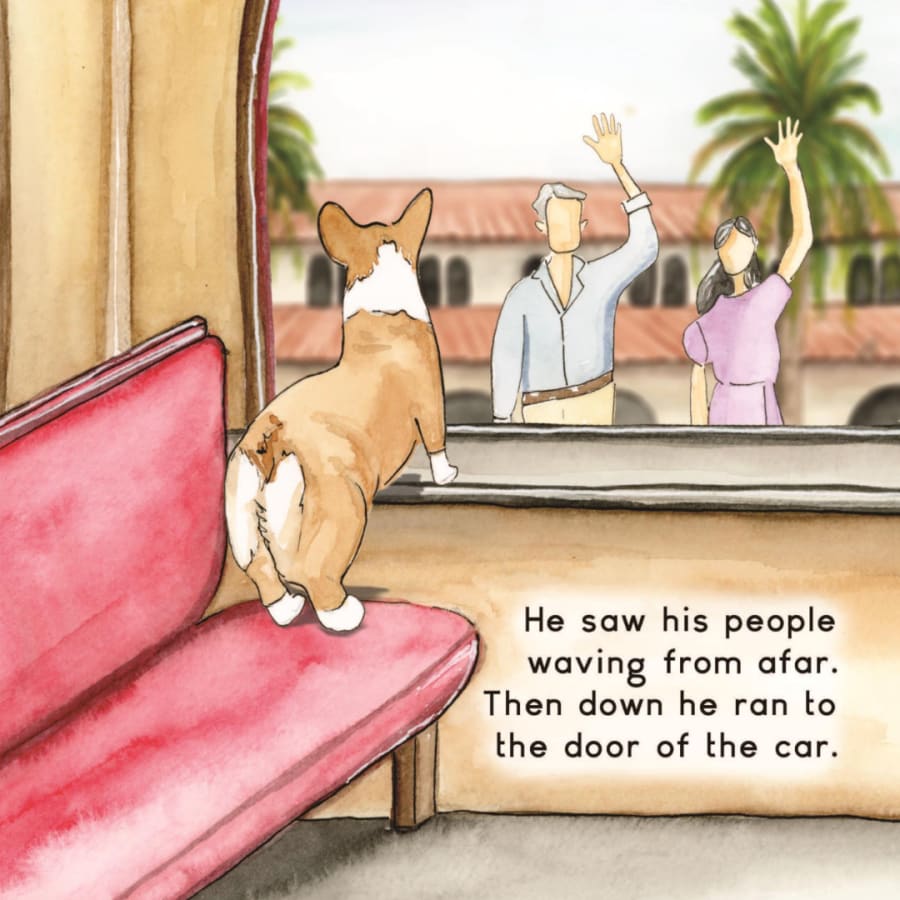
Day 3 of the 1st Grade train unit
Builds on: Children heard every rhyme in the book during the Day 1 read-aloud (1A), so the warm-up lines are already familiar.
Leads to: Day 4 (1C) moves to math with passengers getting on and off a train.
Learning objective
Students explain that rhyming words share an ending sound but not always an ending spelling, sort rhyme pairs from the book by spelling pattern, orally blend and segment the sounds in -ight, -eat and -ar words, and build and decode one-syllable words in those families.
I can tell if two rhyming words have the same spelling pattern, and I can build and read words in the -ight, -eat and -ar families.
Vocabulary to teach
Materials
- Rally Takes the Train by Kelsey Lizee Cecil: get the paperback on Amazon (opens in a new tab) or earn a free classroom copy
- Pocket chart with onset cards (n, r, m, f, s, h, c, j, br, fl, st, tr) and rime cards (-ight, -eat, -ar)
- Six review word cards from earlier lessons (cat, hat, sit, hop, bed, red)
- Whiteboards and markers
- Word family trains printable, one per child: a three-column table headed -ight, -eat and -ar with light, seat and car in the first row, an onset word bank, and two write-in lines for a sentence
- Read and write printable, one per child: six decodable sentences in large print, four boxes for dictated words, lines for a dictated sentence and a short self-check
- Rhyme sort printable for a later center, one per child: six cut-apart rhyme pair cards from the book and a T-chart (Rhymes and same spelling, Rhymes but different spelling); scissors and glue sticks
Before you teach
- Keep the pace brisk: this lesson should end inside 30 minutes, and at least half of that time children are reading or writing words.
- Check your phonics scope and sequence. If your class has not met vowel teams yet, teach -ar and -ight today and save -eat for tomorrow.
- Seat partners side by side. Each child fills in their own word family trains page, but partners take turns choosing the onset and agree on whether the word is real.
- Pre-cut the rhyme sort cards for the center, or have children cut them at the center with safety scissors.
Lesson plan
Explicit phonics lesson, 30 minutes. Word families are a decoding skill, so children need direct teaching of each chunk, fast word building and sentences they can truly decode. The book's rhymes are only the oral hook, because most of its words are beyond first grade decoding.
Using the book: Read the rhyming lines on pages 5, 12 and 16 aloud during the warm-up, under a minute in all. Children listen; they do not read from the book.
- Flash six word cards from earlier phonics lessons (cat, hat, sit, hop, bed, red). Children read each one together on your signal.
- Ask which cards rhyme. Hands stay down; children point to the cards on your signal (cat and hat, bed and red).
- Read the rhyming lines from pages 5, 12 and 16 aloud without showing the pages (under a minute). Children give a thumbs up at their chest when they hear two words that rhyme: seat and meet, sight and light, afar and car.
- Oral substitution: say light, take off /l/, put on /n/ (night). Then seat to heat and car to star.
- Segment with fingers: night, seat, meet. Each has three sounds. Ask which two of those children would expect to share a spelling.
- Write seat above meet. Think aloud: my ears say they rhyme, but my eyes see e-a-t and e-e-t, so they rhyme and are not one word family.
- Write light above sight and underline -ight in both. Teach the chunk: these four letters work together and say /īt/. A word family has the same sound and the same letters at the end.
- Name the two checks children will use all week: the ear test and the eye test.
- Put the -ight card in the pocket chart and slide onset cards in front (n, r, m, f, br, fl). Children blend each word chorally: n, ight, night. Ask if it is a real word; only real words stay up.
- Repeat quickly with -eat (s, h, n, tr) and -ar (c, f, j, st).
- On your own (5 minutes): partners sit side by side, each with a word family trains page. They take turns picking an onset from the word bank, both blend it with a chunk, and each child writes the real words on their own page. Aim for three words per train.
Look for: Children who say the onset and the chunk as two parts but cannot join them. Have them hold the first sound and slide into the chunk.
- Children whisper-read the six sentences on the read and write page to a partner, pointing under each word.
- Read them chorally once. Ask a child to find the two -ight words in sentence 3 (bright, night).
- Say each word, use it in a sentence, and have children repeat it and tap the sounds before writing: night, seat, star, bright.
- Dictate one sentence: The car is far. Children check for a capital, spaces and a period, then you write it on the board so they can fix their own.
Short on time? Skip the two-minute review, build only -ight and -ar (save -eat and its column of the trains page for tomorrow), have partners read three of the six sentences, and dictate two words plus the sentence. Keep the ear test and eye test model, since it carries the goal.
Finished early? Children write a two-line train rhyme using words from one family, then read it to a partner.
What to listen for
| If children say or do this | Try this |
|---|---|
| Reads night as n-i-g-h-t, sounding every letter. | Cover the gh with a finger, then show the whole chunk again: these four letters work together. Have the child read three -ight words quickly in a row. |
| Says seat and meet are in the same family because they rhyme. | Do the eye test together: underline the last three letters of each word and ask if they match. |
| Writes car as cr or kar in dictation. | Tap the three sounds again, then point to the -ar train: the /ar/ sound in this family is spelled a-r, and car starts with c. |
Safety: For the rhyme sort center, use child safety scissors and supervise cutting.
Differentiation
Extra support
Work with one family at a time, starting with -ar, and use magnetic letters so the child can slide the onset onto the chunk. Limit the word bank to single consonants (s, n, r, m, t, b, f, j) and have the child say each sound before blending. Read the sentences together first.
Multilingual learners
Teach the meaning of each new word with a quick gesture or sketch (night, heat, jar, star) so children decode words they understand. Give the frame "___ and ___ rhyme. They are / are not in the same word family because ___." Some home languages spell a sound the same way every time, so name the ear test and eye test explicitly. Key language use: Explain.
Extension
Children build a fourth family from the book's litter and glitter (-itter: sitter, bitter), write a two-line train rhyme using one family, and listen as you read the page 9 line to find a rhyme pair that fails the eye test (food and chewed).
Check for understanding
Success criterion: Explains the difference between a rhyme and a word family with an example, blends and segments sounds orally, builds and decodes real words in the -ight, -eat and -ar families, and spells them in dictation.
| Level | What you see |
|---|---|
| 3Meets (level 3) | Explains why seat and meet rhyme but are not one family, builds and reads at least three real words in each family, reads the six sentences with few errors and spells night, seat and star correctly. |
| 2Approaching (level 2) | Hears every rhyme but sorts by sound only, builds words in two families and needs help with the third, or spells the chunk correctly in two of the three dictated words. |
| 1Beginning (level 1) | Can say whether two words rhyme but does not yet use spelling to tell a word family, or reads words by guessing from the first letter instead of blending. |
Family connection
Send home the half-page note in the printables. The text is below so you can paste it into a newsletter or app.
English
Ask your child about the ear test and the eye test! This week we learned that rhyming words sound alike at the end but are not always spelled alike. Seat and meet rhyme, but light, sight and night are a word family: same sound and same letters. Your child built and read words in the -ight, -eat and -ar families. In the car or at dinner, play a quick word game: say car, then take turns making new words that end the same way (far, jar, star). Free train museum guides are at rallytakesthetrain.com/train-museums.
Español
¡Pregúntele a su hijo o hija por la prueba del oído y la prueba del ojo! Esta semana aprendimos que las palabras que riman en inglés suenan igual al final, pero no siempre se escriben igual. Seat y meet riman, pero light, sight y night forman una familia de palabras: mismo sonido y mismas letras. Formamos y leímos palabras con -ight, -eat y -ar. En el carro o durante la cena, jueguen unos minutos: diga car y túrnense para crear palabras en inglés que terminen igual (far, jar, star). También pueden jugar con rimas en español. Hay guías gratis de museos de trenes en rallytakesthetrain.com/train-museums.
Teacher tips
- Say "ear test" and "eye test" every time. First graders soon ask "does it pass both?" on their own, and that question carries into spelling.
- Keep the -ight chunk card visible for the week. It is a tricky spelling, and seeing it daily helps children read night, right and bright without stopping.
Standards alignment
| Standard | Text |
|---|---|
| CCSS RF.1.3 (opens in a new tab) | Know and apply grade-level phonics and word analysis skills in decoding words. |
| CCSS RF.1.3b (opens in a new tab) | Decode regularly spelled one-syllable words. |
| CCSS RF.1.2 (opens in a new tab) | Demonstrate understanding of spoken words, syllables, and sounds (phonemes). |
Check codes against your state's version of these standards. How we build and review lessons.
Teach it with the real book
4.9 stars on Amazon
Rally Takes the Train is a rhyming, hand-painted picture book about a corgi's first train ride, from the big station stairs to a dark tunnel to the people waiting at the end of the line. Children ask for it again and again, and every unit here opens with it.
Questions teachers ask
Why does the warm-up use three rhyming lines but no print?
The rhymes are only the oral hook. You read the lines from pages 5, 12 and 16 of the book aloud, under a minute in all, and children give a thumbs up at their chest for seat and meet, sight and light, afar and car. Most of the book's words are beyond first grade decoding, so children never read from it. Their reading happens in the six decodable sentences.
What are the ear test and the eye test?
The ear test asks: do the two words sound the same at the end? The eye test asks: are the ends spelled the same? Seat and meet pass the ear test and fail the eye test, so they rhyme but are not one word family. Light and sight pass both. Say both names every time, and children soon start asking "does it pass both?" on their own.
My class has not met vowel teams yet. Should -eat wait?
Check your phonics scope and sequence. If vowel teams are still ahead, teach -ar and -ight today and save -eat for tomorrow with the same pocket chart routine. The seat and meet example in the model still works, because children only need to see that e-a-t and e-e-t look different. They do not have to decode the vowel team yet to pass or fail the eye test.
Why does a child sound out every letter in night?
They are treating each letter as its own sound. Cover the g and h with a finger, then show the whole chunk again and say these four letters work together to say /īt/. Have the child read three -ight words quickly in a row, such as night, right and fight. Keep the -ight card on display for the week so children see the chunk every day.
How are partners set up for the word family trains page?
Side by side, each with their own page. They take turns picking an onset from the word bank, both blend it with a chunk out loud, and agree on whether it is a real word before each child writes it on the matching train. Only real words go on the page. Aim for three words per train in about five minutes, then move straight to the decodable sentences.
Which words and sentence are dictated at the end?
Four words: night, seat, star and bright. Say each one, use it in a sentence, and have children repeat it and tap the sounds before writing. Then dictate one sentence: The car is far. Children check for a capital, spaces and a period, and you write it on the board so they can fix their own. Spelling night, seat and star correctly is part of Meets on the check.
What helps a child who writes car as kar or cr?
Tap the three sounds again together, then point to the -ar train: in this family the /ar/ sound is spelled a-r, and car starts with c. Have the child build car with the onset card and the -ar chunk, read it, and write it again under the model. Kar shows the child hears every sound, so praise that before fixing the spelling.
When does the rhyme sort happen?
Later in the week, as a 10-minute literacy center, not inside the 30 minutes. Children cut apart six rhyme pair cards and glue each one under Rhymes and same spelling or Rhymes but different spelling. Doing it a day or two later shows whether the eye test stuck. Pre-cut the cards, or have children cut them at the center with safety scissors and supervision.
Where does this phonics lesson sit in the ten days?
It is Day 3. The Day 1 read-aloud means the rhymes are already familiar, so the warm-up takes under a minute. Day 4 switches to math with passengers getting on and off a train. Teach it in your usual phonics block, and keep the -ight card, the ear test and the eye test going in your other reading lessons for the rest of the week.
What can a child do who builds all three families easily?
Children build a fourth family from litter and glitter, -itter (sitter, bitter), write a two-line train rhyme with words from one family and read it to a partner. Then they listen as you read one more line aloud and find a pair that fails the eye test: food and chewed. They still take dictation with the class, because spelling the chunk is the goal.
Related lessons
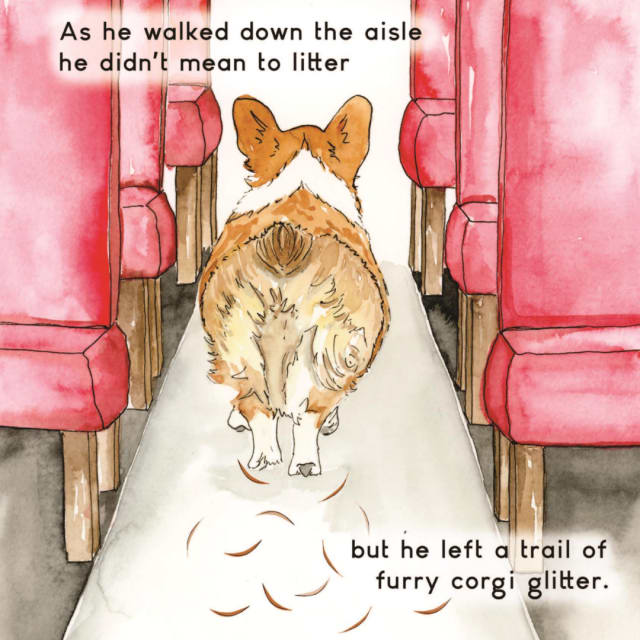
Rhyme Time with Rally
A free, 25-minute kindergarten phonological awareness lesson on rhyme.
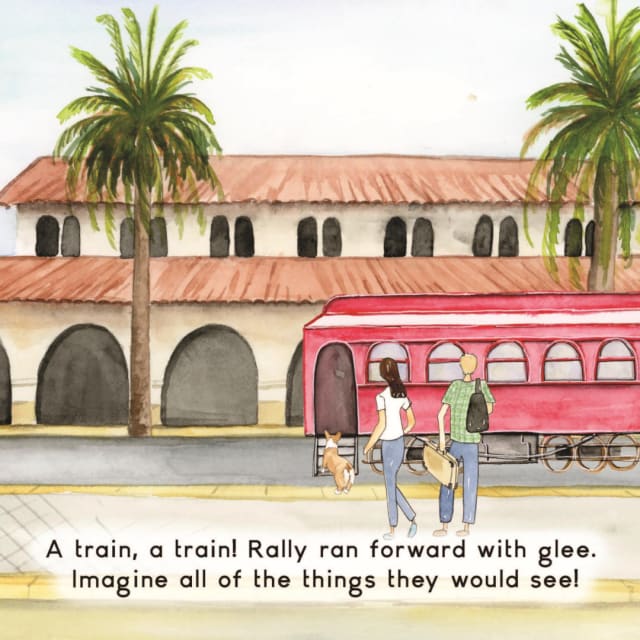
Story Map: Characters, Setting, Big Events and the Central Message
A two-session read-aloud lesson that opens the 1st grade train unit.
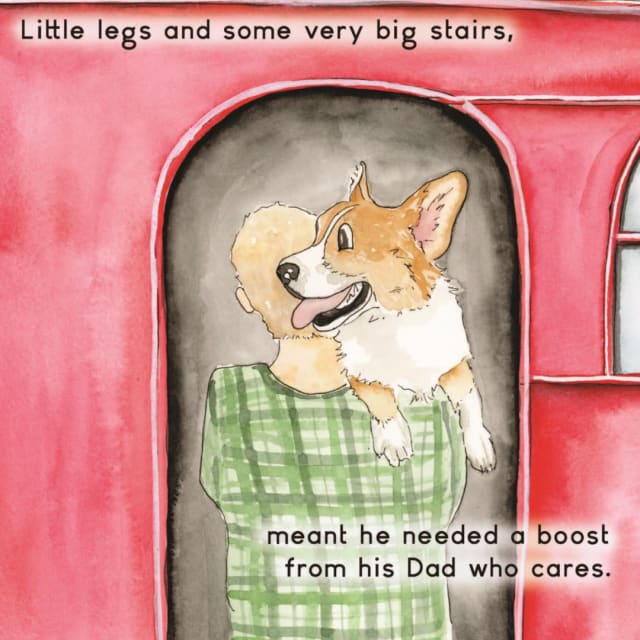
Rhyme, Rhythm and Meter: Write Train Couplets
A three-day 4th grade poetry sequence.
Teaching with Rally Takes the Train
Every lesson is free for classroom and homeschool use. Add the paperback to your classroom library, or review a lesson to earn a free copy if you are a credentialed teacher. Keep the journey going in about 650 free train museum guides, plan a visit with the field trip planner, or browse all lessons for educators.