
Willow Creek Railroad Museum in Brooks, Oregon
Outdoor rail parkTrain ridesRuns Memorial Day to Labor Day, mostly during Powerland Heritage Park events
The Willow Creek Railroad Museum is an all-volunteer 1:8 scale railroad at Powerland Heritage Park in Brooks, where live steam and diesel trains carry families over more than 5,000 feet of track to recreate the sights, sounds and smells of early railroading.
- Founded in 1975
- Over 5,000 feet of track
- 1:8 scale steam and diesel
- Block signals and signal bridges
- Roundhouse and carbarn
- All-volunteer nonprofit
Willow Creek Railroad Museum at a glance
- Hours
- Memorial Day to Labor Day, most times when Powerland Heritage Park has an event, weather permitting
- Admission
- Not posted; contact the museum. Powerland Heritage Park may charge entry
- Train rides
- 1:8 scale steam and diesel train rides on more than 5,000 feet of track
- Plan for
- About 1 hour, more with the rest of Powerland
- Best for
- Families and live steam hobbyists
- Best ages
- Ages 2 and up
Hours and prices as the museum posts them, checked October 19, 2026. Confirm before you go.
Contact and directions
- WhereBrooks, Oregon(opens in a new tab)
- Emaillowrnu@comcast.net
- Websitewillowcreekrr.org(opens in a new tab)
Follow Willow Creek Railroad Museum
Look inside the book
Taking the kids to Willow Creek Railroad Museum? Bring Rally along.
In Rally Takes the Train, a corgi's little legs can't manage the big train stairs, so Dad gives him a boost. It takes about five minutes to read, a good fit for the drive to Brooks.

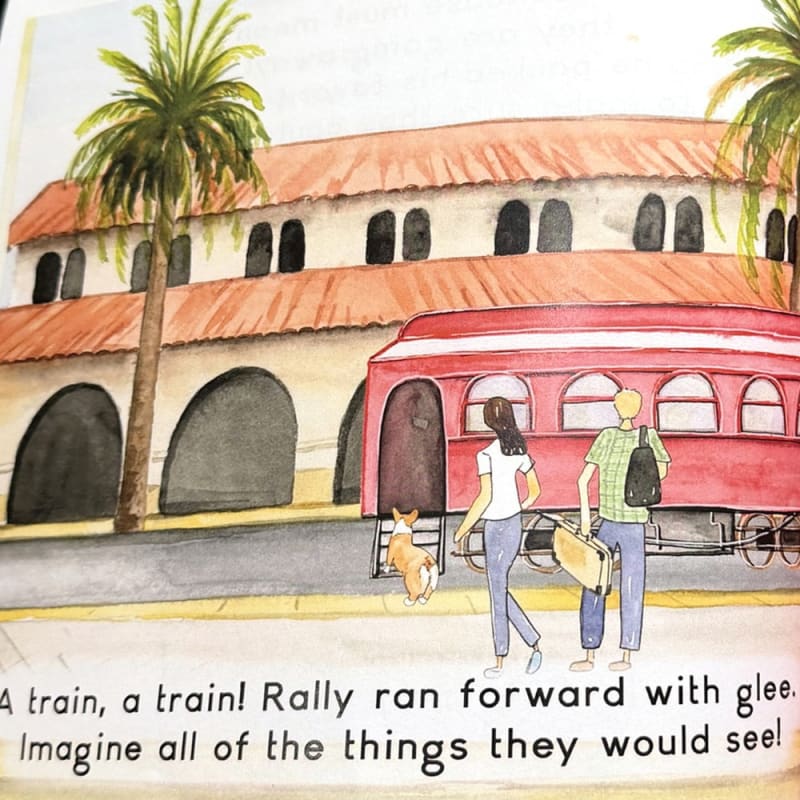


Rally Takes the Train
Eight pages from the book
Turn the page
That's 8 of 25 pages
See who’s waiting at the station
Grandmommy and Papa are at the last stop. Get the full hand-painted book, $13.99 on Amazon.
See the full bookPage 1 of 8

Like it so far? See the full book
25 hand-painted pages, paperback, $13.99 with fast shipping from Amazon.
Every page is real watercolor on paper, painted by hand by Leslie Dunn. Nothing in this book was made with AI.
From a 600-foot loop in a bare field
Willow Creek Railroad began in 1975 as an added attraction at what is now Powerland Heritage Park. Two people started it with a 600-foot loop of track in a farm field that had no trees, no lawn and no buildings. It was meant as a place where live steamers, the hobbyists who build and run small working locomotives, could gather and share their trains.
Interest grew, and so did the railroad. By the mid 1990s about 30 members were running on roughly 2,500 feet of track, with a small carbarn, a roundhouse, bridges, a creek and green landscaping. The club became an official organization in 1993, and in 1997 it earned nonprofit status and a long-term lease with Powerland.
In 1998 members began planning a completely new layout that would more than double the track. The track portion was finished in 2001, giving the railroad over 5,000 feet and room for larger live steam locomotives. That first phase took almost five years, and the work has never stopped: more sidings, a new carbarn and roundhouse, a period station cover, a block signal system with signal bridges, and a waterfall and creek.
Next up are more signal upgrades, an East Side Industrial Loop and a full-size project: the preservation, restoration and interpretation of Union Pacific caboose No. 25527. Every bit of it is built and run by volunteers.
A railroad in miniature, down to the signals
The trains are 1:8 scale replicas of steam and diesel locomotives, large enough for whole families to ride. The club's aim is to give a historical sense of early railroading, with the smell of coal smoke and oil, the sound of whistles and the sight of a real operating railroad, only smaller.
Riding the more than 5,000 feet of track, you pass the carbarn and roundhouse, cross bridges, roll under signal bridges controlled by a working block signal system, and pass a creek and waterfall. A period station cover gives the layout the feel of a full-size line. Because it sits on the Powerland campus, the Oregon Electric Railway Museum and Powerland's other collections are a short walk away.
Don’t miss
- The live steam locomotivesWorking 1:8 scale steam engines built and run by members, the heart of the hobby the club was founded for.
- The block signal systemSignals and signal bridges like a full-size railroad, installed by volunteers.
- The roundhouse and carbarnWhere the miniature fleet is stored, rebuilt as the layout expanded.
- Union Pacific caboose No. 25527A full-size caboose the club plans to preserve, restore and interpret.
- The creek and waterfallLandscaping that turned a bare farm field into a scenic railroad.
Riding behind a tiny steam engine
Kids sit right on the cars behind live steam and diesel locomotives that look like the real thing, with real smoke and whistles. The trains are designed to carry the whole family, so younger children can ride with a parent.
The catch is timing. The railroad runs from Memorial Day to Labor Day, mostly when Powerland Heritage Park has an event on its campus, and always weather permitting. Contact the club before you go so you do not arrive on a quiet day.
Plan your visit: tips for Willow Creek Railroad Museum
- Check Powerland Heritage Park's event calendar; the trains mostly run on event days.
- Rides depend on weather.
- Pair it with the Oregon Electric Railway Museum on the same campus.
- Brooks is about 10 minutes north of Salem and 45 minutes south of Portland.
Run start to finish by volunteers
Willow Creek Railroad Museum is an all-volunteer 501(c)(3). Members handle management, maintenance, hosting, restorations, construction and landscaping. You can help by donating, joining as a member, volunteering your time and talent, or linking your Fred Meyer Rewards card to the museum through Community Rewards.
Neighbors on the Powerland campus and beyond
The Oregon Electric Railway Museum and the Powerland Heritage Park railway collections are on the same grounds. Pacific Northwest Live Steamers, another 7.5-inch gauge park, is about 22 miles away in Molalla. See every train museum in Oregon.
- Oregon Electric Railway MuseumBrooks, OR · same town
- Powerland Heritage Park railway collectionsBrooks, OR · same town
- Pacific Northwest Live SteamersMolalla, OR · about 22 mi
- Albany Historic Carousel & Museum railroad-related collectionAlbany, OR · about 29 mi
- Willamette Shore TrolleyLake Oswego / Portland, OR · about 30 mi
- Oregon Pacific Railroad historic excursionsPortland area, OR · about 33 mi
Bring Rally along: a train book for the drive
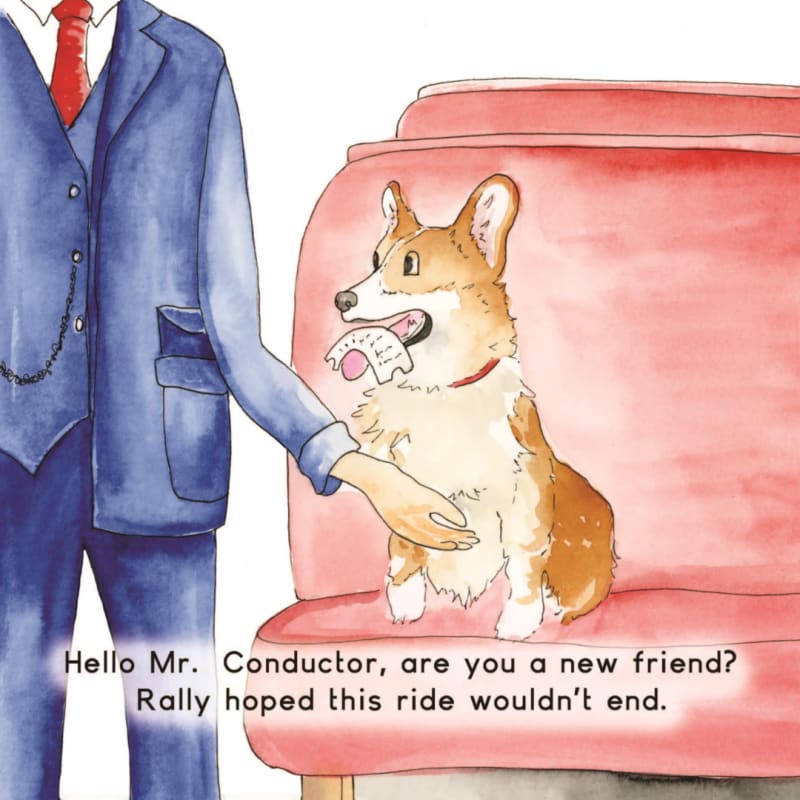
On a railroad this size, the engineer is sitting right there, close enough for a child to wave at. That reminds me of Mr. Conductor in our book, in his blue uniform, holding out his hand to welcome Rally aboard. The volunteers here have spent fifty years building a railroad just to share it. My mom would have loved how personal that is. If your kids want to color Mr. Conductor, he's on our coloring pages.
Free for train families
Print the Rally coloring pages before you go
Watercolor coloring pages from the book, free to print. Tuck a few in a folder with crayons for the drive or the wait for the next train.
Get the free coloring pages
A train story for the ride homeRally Takes the Train is a five-minute rhyming picture book about a corgi's first train trip to see his grand-paw-rents. Hand-painted in real watercolor. $13.99 on Amazon, for ages 0 to 8.
Buy on Amazon (opens in a new tab)More for train families
- Train museums in Oregon: every museum by town, with a map
- Train museums in every state: search by town or near you
- Christmas train rides in Oregon
- Halloween train rides in Oregon
- Every Amtrak route with kids
Work or volunteer at Willow Creek Railroad Museum?
We want this page to be the best introduction to your museum on the web. Send new hours, event dates, corrections or photos to kelsey@rallytakesthetrain.com and we will update it. You are welcome to share this page with your members.
Sources
- Willow Creek Railroad Museum official website(opens in a new tab)
- Willow Creek Railroad Museum on Facebook(opens in a new tab)
Everything on this page comes from the museum’s own website and social pages and, for history, Wikipedia, checked October 19, 2026.
Willow Creek Railroad Museum: 20 questions families ask
Where is the Willow Creek Railroad Museum?
The Willow Creek Railroad Museum is on the campus of Powerland Heritage Park in Brooks, Oregon, about 10 minutes north of Salem and 45 minutes south of Portland. Some online directories list it under Portland, but it is in Brooks. Enter through Powerland and ask for the Willow Creek Railroad.
What is the Willow Creek Railroad Museum?
It is an all-volunteer, nonprofit 1:8 scale railroad that runs steam and diesel trains big enough for families to ride. Founded in 1975, it aims to recreate the smells, sights and sounds of early railroading on a smaller scale, on more than 5,000 feet of 7.5-inch gauge track.
When is the Willow Creek Railroad open?
The railroad runs from Memorial Day to Labor Day, most times when there is an event on the Powerland Heritage Park campus, weather permitting, as of October 2026. It does not post a fixed weekly schedule, so contact the museum through willowcreekrr.org or its Facebook group before you go.
How much does it cost to ride at Willow Creek Railroad?
The museum does not post ride prices online. Since it runs mostly during Powerland events, Powerland Heritage Park's own entry fee may apply. Contact the museum through the form at willowcreekrr.org for current details, and bring something for the donation box.
Can kids ride the trains at Willow Creek Railroad Museum?
Yes. The steam and diesel trains are 1:8 scale replicas, large enough for the whole family to ride. Children can sit on the cars behind working miniature locomotives, which is the main draw for young visitors. Check event dates first so the railroad is running.
Are the Willow Creek trains real steam?
Many are. Willow Creek was founded as a place for live steamers, hobbyists who build and run small working steam locomotives, and its fleet includes both steam and diesel powered 1:8 scale trains. The 2001 track expansion was designed to handle larger live steam locomotives.
How long is the Willow Creek Railroad track?
The main track is over 5,000 feet long, finished in 2001 after a layout redesign that more than doubled the earlier 2,500 feet. Since then volunteers have added sidings, signal bridges, a block signal system and other upgrades, and an East Side Industrial Loop is planned.
When was the Willow Creek Railroad Museum founded?
It was founded in 1975 as an added attraction at what is now Powerland Heritage Park. Two people started it with a 600-foot loop of track in a bare farm field. The club became an official organization in 1993 and received nonprofit status and a long-term Powerland lease in 1997.
What is the Union Pacific caboose at Willow Creek Railroad?
Union Pacific Railroad caboose No. 25527 is a full-size car the museum plans to preserve, restore and interpret. It is described as a big upcoming change for the railroad, adding a real piece of railroad history to the miniature layout. Follow the Facebook group for progress.
What can you see at the Willow Creek Railroad Museum?
Along the track you will see a carbarn, a roundhouse, bridges, a period station cover, a block signal system with signal bridges, and a creek with a waterfall. The trains themselves, steam and diesel models at 1:8 scale, are the main exhibit. Photos are posted in the Facebook group.
Is the Willow Creek Railroad Museum related to Powerland?
Yes. It started as an added attraction at Antique Powerland, now Powerland Heritage Park, in 1975, became an official organization of the park in 1993 and holds a long-term lease there. It is a separate nonprofit, run by its own volunteer members.
Is the Willow Creek Railroad the same as the Oregon Electric Railway Museum?
No. Both sit on the Powerland Heritage Park campus in Brooks, but the Oregon Electric Railway Museum runs full-size historic trolleys, while Willow Creek runs 1:8 scale miniature steam and diesel trains. Visiting both on one Powerland event day is easy.
Is the Willow Creek Railroad Museum good for toddlers?
It can be a great first train ride, since the cars are low and families ride together. Because the railroad runs mainly on Powerland event days and depends on the weather, plan around those dates and bring sun protection for the outdoor setting.
Where do you park for the Willow Creek Railroad Museum?
The museum does not post parking details online. It is on the Powerland Heritage Park campus, so use Powerland's visitor parking on event days and walk over to the railroad. Contact the museum through willowcreekrr.org if you need specific directions.
Is the Willow Creek Railroad Museum wheelchair accessible?
The museum does not describe accessibility online. Since riders sit on small 1:8 scale cars, contact the volunteers ahead of time through the website or Facebook group to ask what assistance is possible on event days.
How can I volunteer at the Willow Creek Railroad Museum?
Everything at Willow Creek is done by volunteers, including management, maintenance, hosting, restorations, construction and landscaping. The museum welcomes help with time, talent and money. Use the contact form at willowcreekrr.org or the Facebook group to ask how to get involved.
How do I become a member of the Willow Creek Railroad?
The museum has a membership page on willowcreekrr.org for people who want to learn about membership options. Members can take part in running and building the railroad, and many are live steam hobbyists. Fill out the form on the site to start.
How can I donate to the Willow Creek Railroad Museum?
The museum is a 501(c)(3), so gifts may be tax deductible. Donate through the website, or link your Fred Meyer Rewards card to Willow Creek Railroad through Fred Meyer Community Rewards so your shopping earns the museum donations.
How do I contact the Willow Creek Railroad Museum?
Use the contact form at willowcreekrr.org, which promises a reply as soon as possible, or post in the Willow Creek Railroad Facebook group. The museum lists an email link on its contact page. It does not post a phone number online.
What other train attractions are near Willow Creek Railroad?
The Oregon Electric Railway Museum and the Powerland Heritage Park railway collections share the same grounds. Pacific Northwest Live Steamers in Molalla is about 22 miles away, the Albany Historic Carousel about 29 miles, and the Willamette Shore Trolley about 30 miles.
Keep exploring
More family train guides from Rally
- DirectoryRailway Museum Directory650 train museums in all 50 states, with hours, tickets and train rides.
- HolidayChristmas Train RidesSanta trains and holiday light rides, sorted by state and town.
- OctoberHalloween Train RidesPumpkin trains and not-too-spooky rides for little ones, by state.
- NovemberThanksgiving Train RidesHoliday weekend train trips the whole family can share.
- AmtrakAmtrak With KidsWhich Amtrak routes work best with babies, toddlers and big kids.
- Plan a tripTrain Trips With KidsEvery Amtrak route, stop by stop, planned for families.