
Shelburne Museum Railroad Station and Freight Shed, Vermont
Museum with a major rail exhibitOpen May 9 to October 25, 2026
Shelburne Museum preserves the town's original 1890 railroad station, moved to the museum grounds after passenger trains stopped calling, along with a freight shed that shows the hand tools, handcarts and signal lanterns of the people who kept the railroads running.
- Original Shelburne station, built 1890
- Served Central Vermont and Rutland trains
- Moved to the museum in 1959
- Freight shed of railroad tools
- Tickets valid two consecutive days
Shelburne Museum Railroad Station and Freight Shed at a glance
- Hours
- 10 am to 5:30 pm daily, May 9 to October 25, 2026
- Admission
- Adults $27.50 ($25 online), over 65 $25.50 at the door; tickets good for two consecutive days
- Seasonal events
- Winter Lights
- Plan for
- At least 3 hours for the whole museum
- Best for
- Families and history lovers spending a day at Shelburne Museum
- Best ages
- All ages, best for kids old enough to enjoy exhibits
- Parking
- Free parking on site
- Accessibility
- The museum has an accessibility page on its website; call ahead about the historic station building.
Hours and prices as the museum posts them, checked October 19, 2026. Confirm before you go.
Contact and directions
- Address6000 Shelburne Road, Shelburne, VT 05482(opens in a new tab)
- Phone(802) 985-3346
- Emailinfo@shelburnemuseum.org
- Alsoeducation@shelburnemuseum.org
- Websiteshelburnemuseum.org/collection/railroad-station-freight-shed(opens in a new tab)
Follow Shelburne Museum Railroad Station and Freight Shed
Look inside the book
Taking the kids to Shelburne Museum Railroad Station and Freight Shed? Bring Rally along.
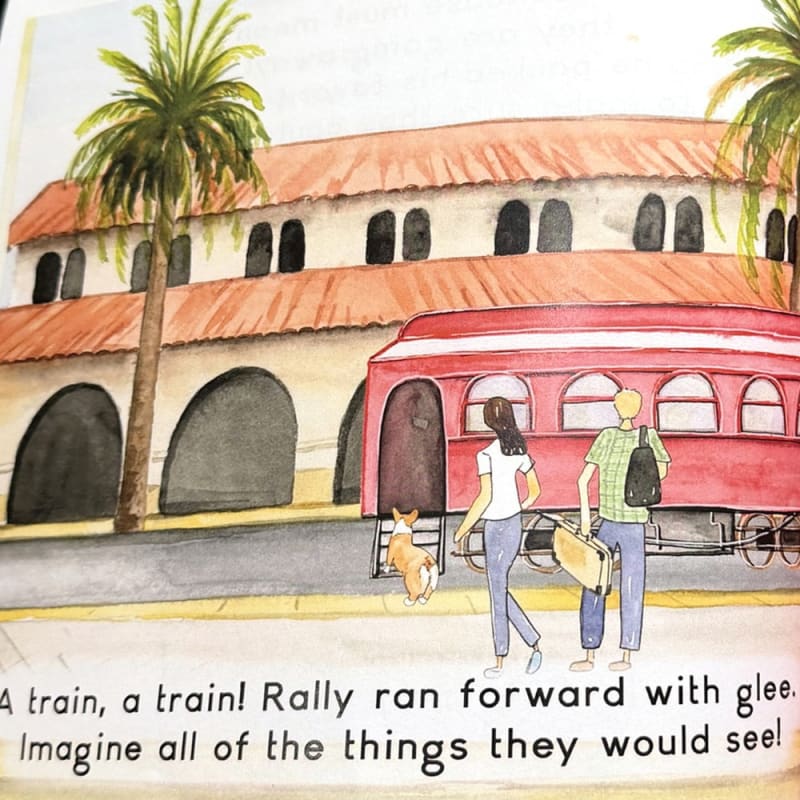
In Rally Takes the Train, a corgi's little legs can't manage the big train stairs, so Dad gives him a boost. It takes about five minutes to read, a good fit for the drive to Shelburne.



Rally Takes the Train
Eight pages from the book
Turn the page
That's 8 of 25 pages
See who’s waiting at the station
Grandmommy and Papa are at the last stop. Get the full hand-painted book, $13.99 on Amazon.
See the full bookPage 1 of 8

Like it so far? See the full book
25 hand-painted pages, paperback, $13.99 with fast shipping from Amazon.
Every page is real watercolor on paper, painted by hand by Leslie Dunn. Nothing in this book was made with AI.
The depot the Webb family used, saved by the woman who founded the museum
The station went up in 1890 near the center of Shelburne village. It was commissioned by Dr. William Seward Webb, then president of the Rutland Railroad, so that passengers on both the Central Vermont and the Rutland lines would have a convenient place to board. For more than sixty years it was the town's front door to the rail network.
The Webb family were regulars on its platform. Electra Havemeyer Webb, who went on to found Shelburne Museum, and her relatives used the station for their many trips between Shelburne and New York. When passenger service ended in 1953, the building's working life was over, but she did not let it disappear. Six years later, in 1959, she had the station moved onto the museum grounds, where it became one of the campus exhibit buildings.
The museum added to the railroad story in 1963 by building a reproduction freight shed beside the depot. Together the two buildings now show both halves of a small-town station: the passenger side, with its waiting rooms and telegraph office, and the freight side, where railroad workers handled the heavy, unglamorous jobs. Rail guides also count Central Vermont 4-6-0 No. 220 and the private car Grand Isle among the railroad pieces displayed with the station.
Waiting rooms, a telegraph desk and a shed full of tools
Inside the station you find a stationmaster's office, separate waiting rooms for men and women, telegraphy equipment, railroad maps and other memorabilia from the late 1800s and early 1900s. It is a compact building, so it works well as one stop within a longer day on the museum's 45-acre campus.
Next door, the 1963 freight shed is set up as a working-tools exhibit. Look for handcarts, picks and shovels, and signal lanterns gathered from railroad lines across the country, the kind of gear section crews and freight handlers relied on every day. The station is one of many buildings at Shelburne Museum, which also includes the steamboat Ticonderoga, the Round Barn and the Brick House, so plan your route around the whole campus.
Don’t miss
- The stationmaster's officeThe heart of a small depot, where tickets, train orders and messages were handled, set up with period furnishings and telegraph gear.
- The men's and women's waiting roomsSeparate waiting rooms were standard in stations of this era, and seeing them side by side shows how rail travel worked in 1890.
- The freight shed tool collectionHandcarts, picks, shovels and signal lanterns from lines across the country tell the story of the workers rather than the passengers.
- Central Vermont No. 220 and the private car Grand IsleRail guides list this 4-6-0 steam locomotive and private car with the station, so ask staff where to find them on the campus.
A small station kids can picture themselves waiting in
Kids who love trains can peek into the waiting rooms and the stationmaster's office and imagine buying a ticket in 1890, then head to the freight shed to see the lanterns, handcarts and shovels that real railroad workers used. Because the station is small, it holds attention without wearing out younger visitors, and the rest of the campus gives everyone room to run between buildings.
Shelburne Museum lists daily activities and tours, summer camps and school programs on its website, so check what is running on the day you plan to go. Families can bring a picnic or eat at the Weathervane Cafe.
Plan your visit: tips for Shelburne Museum Railroad Station and Freight Shed
- Buy tickets online to save a couple of dollars per adult.
- Your ticket is valid for two consecutive days, so you can split the campus into two visits.
- The museum suggests allowing at least three hours.
- Picnics are welcome, and the Weathervane Cafe is open 11 am to 3 pm in season.
- Groups of 15 or more can ask about reduced admission.
A museum that keeps a whole village of buildings
The station is cared for by Shelburne Museum, whose curators, conservation team, educators and volunteers look after a large campus of historic buildings and collections. You can support the work by buying a membership, giving to the museum, or volunteering (the museum lists a volunteer contact on its staff directory). If you have a railroad object you think belongs in the collection, the curators accept donation inquiries by email.
More rail stops around Lake Champlain
The Champlain Valley Dinner Train leaves from Burlington, about 7 miles north, for adults and older kids who want to ride the rails. The Rutland Railway Museum in Center Rutland, about 55 miles south, opens its depot and model layouts on Saturdays. Across the lake, the Adirondack Railroad is roughly 46 miles away. See every train museum in Vermont for more.
- Vermont Rail System historic operationsBurlington / Rutland area, VT · about 7 mi
- Champlain Valley Dinner TrainBurlington / Vergennes, VT · about 7 mi
- Montpelier & Wells River Railroad historic exhibitscentral Vermont, VT · about 35 mi
- Adirondack RailroadUtica / Thendara / Tupper Lake, NY · about 46 mi
- Rutland Railroad MuseumRutland, VT · about 55 mi
- North Creek Depot MuseumNorth Creek, NY · about 60 mi
Bring Rally along: a train book for the drive

The Webb family left from this little station on their trips to New York, and I love thinking about what they packed. In our book, Rally packs too: his turtle toy, his green bone and his yellow ball, because a corgi has priorities. A station like this one, with its two waiting rooms and a stationmaster's desk, is exactly where that kind of excitement used to start. Our coloring pages let kids pack Rally's bag themselves.
Free for train families
Print the Rally coloring pages before you go
Watercolor coloring pages from the book, free to print. Tuck a few in a folder with crayons for the drive or the wait for the next train.
Get the free coloring pages
A train story for the ride homeRally Takes the Train is a five-minute rhyming picture book about a corgi's first train trip to see his grand-paw-rents. Hand-painted in real watercolor. $13.99 on Amazon, for ages 0 to 8.
Buy on Amazon (opens in a new tab)More for train families
- Train museums in Vermont: every museum by town, with a map
- Train museums in every state: search by town or near you
- Christmas train rides in Vermont
- Halloween train rides in Vermont
- Every Amtrak route with kids
Work or volunteer at Shelburne Museum Railroad Station and Freight Shed?
We want this page to be the best introduction to your museum on the web. Send new hours, event dates, corrections or photos to kelsey@rallytakesthetrain.com and we will update it. You are welcome to share this page with your members.
Sources
- Shelburne Museum Railroad Station and Freight Shed official website(opens in a new tab)
- Shelburne Museum Railroad Station and Freight Shed on Facebook(opens in a new tab)
- Shelburne Museum Railroad Station and Freight Shed on Instagram(opens in a new tab)
- Shelburne Museum Railroad Station and Freight Shed on YouTube(opens in a new tab)
- Shelburne Museum Railroad Station and Freight Shed on X(opens in a new tab)
Everything on this page comes from the museum’s own website and social pages and, for history, Wikipedia, checked October 19, 2026.
Shelburne Museum's railroad station: 20 questions visitors ask
Does Shelburne Museum have a railroad exhibit?
Yes. Shelburne Museum keeps the original 1890 Shelburne railroad station and a freight shed as exhibit buildings on its campus. The station shows a stationmaster's office, men's and women's waiting rooms, telegraph equipment and maps, and the freight shed holds railroad hand tools, handcarts and signal lanterns from lines across the country.
Where is the Shelburne Museum railroad station?
The station stands on the Shelburne Museum campus at 6000 Shelburne Road, Shelburne, Vermont 05482, south of Burlington. It was originally built near the center of Shelburne village and moved to the museum in 1959. Once inside the grounds, ask at admissions or check the campus map for the station and freight shed.
When was the Shelburne railroad station built?
The station was built in 1890 near the center of Shelburne. Dr. William Seward Webb, president of the Rutland Railroad at the time, commissioned it to serve passengers riding the Central Vermont and Rutland Railroads. It remained the town's passenger station until passenger service ended in 1953.
Why was the Shelburne station moved to Shelburne Museum?
Museum founder Electra Havemeyer Webb and her family had used the station for many trips to and from New York. After passenger service was discontinued in 1953, she had the building moved to the museum six years later, in 1959, so the depot could be preserved and shown to the public rather than lost.
What are Shelburne Museum's hours?
As of October 2026, the museum lists admissions and the Museum Store as open 10 am to 5:30 pm from May 9 through October 25, 2026, while its site banner reads open daily 10 am to 5 pm. Because the season and times can shift, confirm on shelburnemuseum.org or call (802) 985-3346 before you go.
How much are tickets to Shelburne Museum?
As of October 2026, adult admission is $27.50 at the door or $25 when bought online, and visitors over 65 pay $25.50 at the door, with an online discount also offered. Prices for children and other categories are listed on the museum's ticket page, so check there before you buy.
Is a Shelburne Museum ticket good for more than one day?
Yes. Because the campus covers 45 acres and many buildings, Shelburne Museum tickets are valid for two consecutive days. That makes it easy to see the railroad station and freight shed on one day and save other exhibits for the next, which is helpful with young children who tire quickly.
How long should I spend at Shelburne Museum?
The museum recommends allowing at least three hours for a visit, and it is happy to help groups plan shorter ones. The railroad station and freight shed are two compact buildings, so most families pair them with other exhibits on the campus or use the second day on their ticket.
What is inside the Shelburne Museum freight shed?
The freight shed is a reproduction built for the museum in 1963. It displays hand tools and equipment used by railroad workers, including handcarts, picks and shovels, and signal lanterns collected from railroad lines across the country. It shows the working side of a station, where freight and track crews did the heavy jobs.
Is there a steam locomotive at Shelburne Museum?
Rail guides list Central Vermont 4-6-0 No. 220 and the private railroad car Grand Isle among the railroad pieces at Shelburne Museum alongside the 1890 station. Display arrangements can change, so ask at admissions where to find them, or call (802) 985-3346 before your visit if seeing the locomotive is the goal.
Can you ride a train at Shelburne Museum?
The museum does not list train rides among its activities; the railroad buildings are walk-through exhibits. For a ride in the area, Vermont Rail System runs passenger excursions from Burlington, about 7 miles north, including the Champlain Valley Dinner Train. Check those schedules separately, since they are run by a different organization.
Is Shelburne Museum good for young kids who like trains?
It works well as part of a family day. Kids can look into the old waiting rooms and stationmaster's office, then see lanterns, handcarts and shovels in the freight shed. The station is small, so it suits short attention spans, and the large campus offers plenty of other buildings, open lawns and the steamboat Ticonderoga to explore.
Is there parking at Shelburne Museum?
Yes. The museum describes its parking as free and ample, which makes it easy to arrive with a car seat, stroller or picnic. Use 6000 Shelburne Road as your destination. If you are coming with a bus or large group, mention it when you book so staff can advise on drop-off.
Is Shelburne Museum wheelchair accessible?
Shelburne Museum has a dedicated accessibility page on its website, and its Pizzagalli Center for Art and Education is fully barrier free with an elevator and accessible restrooms. Historic buildings such as the 1890 station may have steps or narrow doorways, so call (802) 985-3346 to ask about access to the railroad exhibits.
Can I bring food to Shelburne Museum?
Yes. Visitors can bring picnics, which is handy with kids. The Weathervane Cafe on site is open 11 am to 3 pm during the season as of October 2026. Groups can also ask the museum to arrange meal vouchers or bagged lunches when they book a visit.
Does Shelburne Museum offer group tours?
Yes. The museum offers group tours and reduced admission prices for groups of 15 or more; contact it for current rates. It also runs school, summer camp and educational group visits through its education department, which you can reach at education@shelburnemuseum.org or by calling (802) 985-3346.
Is Shelburne Museum open in winter?
The main museum season runs from May into late October; for 2026 it is listed as May 9 through October 25. The museum also promotes a Winter Lights event in its visitor menu. Check shelburnemuseum.org for Winter Lights dates and tickets, since winter access is different from the regular season.
Can I donate a railroad artifact to Shelburne Museum?
You can offer it. Shelburne Museum asks people who have an object they would like to donate to email its curators at curators@shelburnemuseum.org with details. Note that the curators do not provide appraisals of historical objects; the museum suggests finding a qualified appraiser through the American Society of Appraisers.
How can I support or volunteer at Shelburne Museum?
Shelburne Museum offers memberships with unlimited access and member events, accepts gifts through its Give and Support pages, and lists a volunteer contact in its staff directory. Members help pay for the care of buildings such as the 1890 station. Call (802) 985-3346 or email info@shelburnemuseum.org to get started.
What other train attractions are near Shelburne Museum?
The Champlain Valley Dinner Train departs from Burlington, about 7 miles away, and the Rutland Railway Museum in Center Rutland, open Saturdays with model layouts, is about 55 miles south. The Adirondack Railroad in New York is roughly 46 miles away. Vermont Rail System's passenger trains also run in the Burlington area.
Keep exploring
More family train guides from Rally
- DirectoryRailway Museum Directory650 train museums in all 50 states, with hours, tickets and train rides.
- HolidayChristmas Train RidesSanta trains and holiday light rides, sorted by state and town.
- OctoberHalloween Train RidesPumpkin trains and not-too-spooky rides for little ones, by state.
- NovemberThanksgiving Train RidesHoliday weekend train trips the whole family can share.
- AmtrakAmtrak With KidsWhich Amtrak routes work best with babies, toddlers and big kids.
- Plan a tripTrain Trips With KidsEvery Amtrak route, stop by stop, planned for families.