
San Francisco Cable Car Museum, California
Trolley and streetcar museumFreeFree; open Tuesday to Sunday, closed Mondays
The Cable Car Museum sits inside the working Washington/Mason carbarn and powerhouse on Nob Hill, where a viewing deck looks straight down on the engines and winding wheels that pull every San Francisco cable car. It is free, and it holds the only surviving car from the city's first cable car company.
- Free admission
- Inside the working cable car powerhouse
- Established in 1974
- Three cable cars from the 1870s
- Powell lines stop at the door
- Gift shop sells real cable car bells
San Francisco Cable Car Museum at a glance
- Hours
- Tuesday to Thursday 10 am to 4 pm, Friday to Sunday 10 am to 5 pm, closed Mondays
- Admission
- Free
- Train rides
- No rides at the museum; the Powell-Hyde and Powell-Mason cable car lines stop out front ($8 each way for adults and youth 5 to 17, per the museum)
- Plan for
- About 1 hour
- Best for
- Families riding the cable cars, and anyone curious how they work
- Best ages
- Ages 3 and up
- Parking
- Street parking is limited; the museum encourages public transit
- Accessibility
- Ramp on the Washington Street side; ask staff for more help
Hours and prices as the museum posts them, checked October 19, 2026. Confirm before you go.
Contact and directions
- Address1201 Mason Street, San Francisco, CA 94108(opens in a new tab)
- Phone(415) 474-1887
- Websitecablecarmuseum.org(opens in a new tab)
Follow San Francisco Cable Car Museum
Look inside the book
Taking the kids to San Francisco Cable Car Museum? Bring Rally along.
In Rally Takes the Train, a corgi's little legs can't manage the big train stairs, so Dad gives him a boost. It takes about five minutes to read, a good fit for the drive to San Francisco.

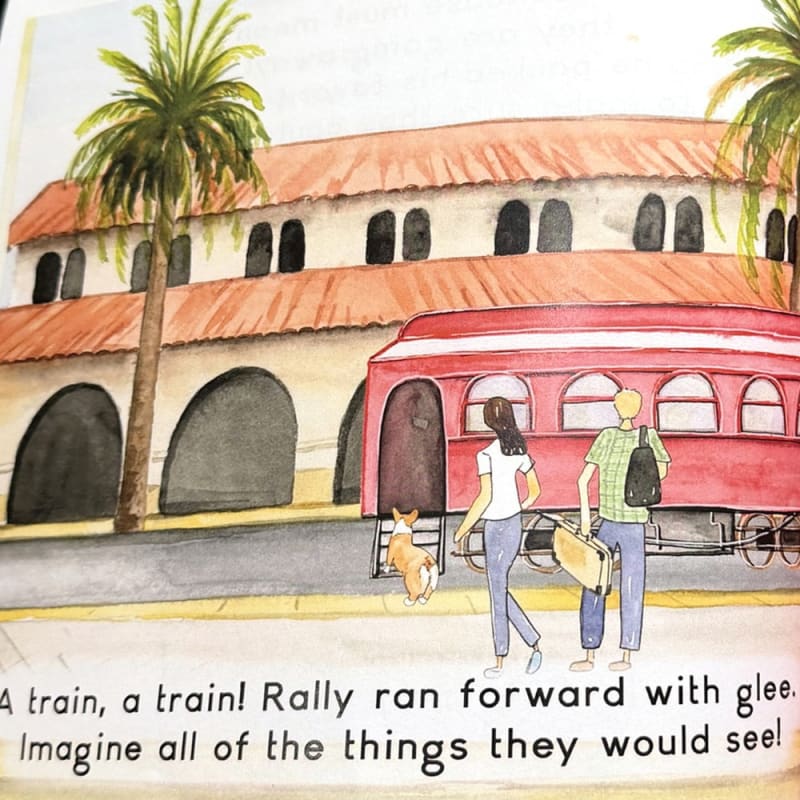


Rally Takes the Train
Eight pages from the book
Turn the page
That's 8 of 25 pages
See who’s waiting at the station
Grandmommy and Papa are at the last stop. Get the full hand-painted book, $13.99 on Amazon.
See the full bookPage 1 of 8

Like it so far? See the full book
25 hand-painted pages, paperback, $13.99 with fast shipping from Amazon.
Every page is real watercolor on paper, painted by hand by Leslie Dunn. Nothing in this book was made with AI.
A museum built into the engine room of the cable car system
San Francisco's cable cars began with Andrew Smith Hallidie, who in 1869 came up with the idea of hauling streetcars up the city's hills on a moving underground cable. His Clay Street Hill Railroad made its first run on August 2, 1873, and over the next seventeen years the city grew to twenty-three cable lines. One of the later companies, the Ferries & Cliff House Railway, opened its lines in 1888 and built the car barn and powerhouse at Washington and Mason. Its Powell-Mason route still follows the same path today.
The powerhouse began with coal-burning steam engines and a tall smokestack. The plant switched to oil in 1901, which let the stack be cut down to 60 feet, and that shortened smokestack still stands at the barn. Electric motors arrived in 1912, and steam was gone entirely by 1926. The 1906 earthquake and fire, the rise of electric streetcars and later buses whittled the system down, and in 1947 a citizens' committee led by Friedel Klussmann forced a public vote that kept the Powell Street lines running. The system was rebuilt between 1982 and 1984, when each of the four cables got its own electric motor.
The Cable Car Museum opened in this building in 1974. It is run by the Friends of the Cable Car Museum, a nonprofit dedicated to preserving cable car history, and it presents the story from the first run in 1873 through the near loss of the system and the long effort to save and rebuild it. Because the powerhouse is still at work, the museum doubles as a window into the system as it runs today.
Wheels, sheaves and cars from the 1870s
Walk in and you are on the museum deck, looking over the huge engines and winding wheels that keep the cables moving under the streets. Downstairs, a viewing area shows the large sheaves and the cable line itself as it enters the building through a channel beneath the street, a part of the visit that reviewers often single out.
Around the deck are the parts that make a cable car work: grips, track, cable, brake mechanisms and tools, along with detailed models and a large collection of historic photographs. The three antique cars date from the 1870s: Sutter Street Railway grip car No. 46 with its trailer No. 54, and Clay Street Hill Railroad grip car No. 8. The museum store carries cable car books, clothing, cards and memorabilia, and even genuine cable car bells.
Don’t miss
- Clay Street Hill Railroad No. 8The only car that survives from the first cable car company, the line that started it all in 1873.
- The winding wheels from the deckThe huge wheels below the deck pull the real cables for the cars running on the streets outside.
- The sheave viewing area downstairsHere you can see the cable slide in from under the street before it wraps around the big sheaves.
- Sutter Street Railway No. 46 and No. 54A grip car and trailer pair from the 1870s, from the line that introduced the side grip.
- Grips, brakes and modelsDisplays of the actual grip and brake mechanisms explain how a gripman catches and lets go of the moving cable.
- The museum storeProceeds support the Friends of the Cable Car Museum, and it is one of the few places that sells genuine cable car bells.
Spinning wheels and a ride to the door
Kids who like big machines tend to be glued to the railing over the winding wheels, and the downstairs window onto the moving cable makes the whole idea click. Visit California describes the museum as a thrill for kids and for grownups who have wondered how the system works.
The best part for many families is arriving by cable car, since the Powell-Hyde and Powell-Mason lines both stop at the museum. Admission is free, so a short visit costs nothing if attention spans run out. A ramp for visitors with disabilities is on the Washington Street side of the building.
Plan your visit: tips for San Francisco Cable Car Museum
- Ride the Powell-Hyde or Powell-Mason line; both stop at the museum.
- From the California line, get off at Mason Street by the Fairmont Hotel and walk 3 blocks north.
- Closed Mondays, and on New Year's Day, Thanksgiving and Christmas.
- Do not skip the downstairs viewing area where the cable enters from under the street.
- Muni Passports (1, 3 or 7 days) cover cable cars, historic streetcars and trolley buses.
The Friends who keep the story running
The museum is operated by the Friends of the Cable Car Museum, a nonprofit educational group dedicated to preserving cable car history. Since admission is free, the best ways to help are shopping in the museum store, in person or through its online store, and supporting the Friends directly. The museum also shares updates on X as @SFCCM.
More San Francisco rail history within a mile
Hop a streetcar to the San Francisco Railway Museum, about a mile away, then read up on the Market Street Railway historic streetcar collection that rolls along Market Street and the waterfront. Across the bay, the Redwood Valley Railway in Berkeley is roughly 15 miles off. See all of California's train museums for more ideas.
- San Francisco Railway MuseumSan Francisco, CA · about 1 mi
- Market Street Railway historic streetcar collectionSan Francisco, CA · about 1 mi
- Redwood Valley RailwayBerkeley, CA · about 15 mi
- Niles Canyon RailwaySunol, CA · about 30 mi
- Napa Valley Wine TrainNapa, CA · about 36 mi
- Santa Clara Depot / South Bay Historical Railroad SocietySanta Clara, CA · about 39 mi
Bring Rally along: a train book for the drive
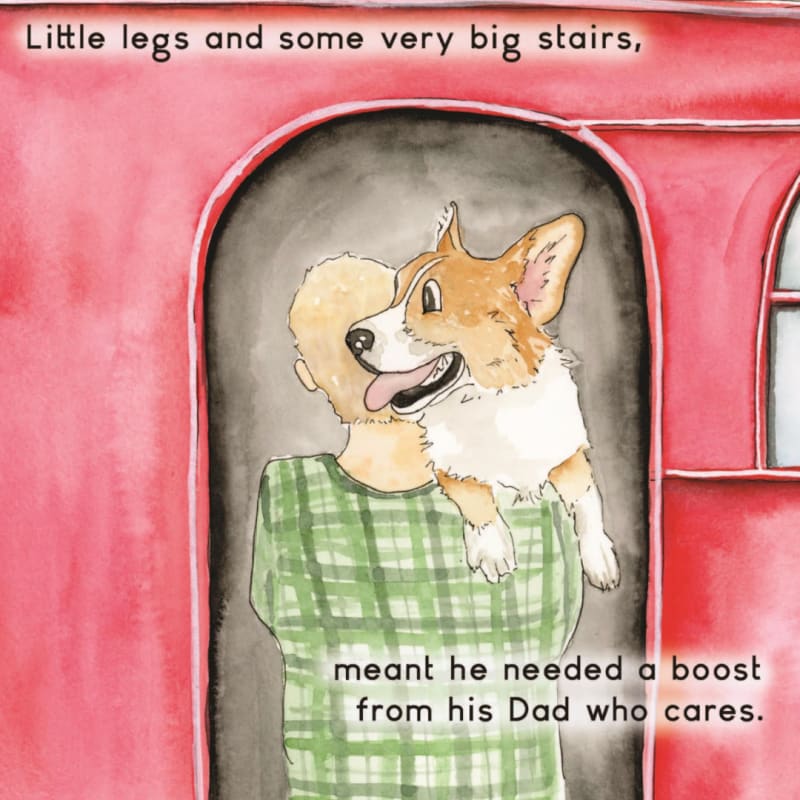
San Francisco cable cars have that open step you hop up onto, and the cars at this museum are old enough to have carried passengers in the 1870s. I can just see Rally sizing up a step like that. In our book his little legs cannot manage the big train stairs, so Dad gives him a boost. Our kids, who are just learning to read, can find that moment and color it on our coloring pages.
Free for train families
Print the Rally coloring pages before you go
Watercolor coloring pages from the book, free to print. Tuck a few in a folder with crayons for the drive or the wait for the next train.
Get the free coloring pages
A train story for the ride homeRally Takes the Train is a five-minute rhyming picture book about a corgi's first train trip to see his grand-paw-rents. Hand-painted in real watercolor. $13.99 on Amazon, for ages 0 to 8.
Buy on Amazon (opens in a new tab)More for train families
- Train museums in California: every museum by town, with a map
- Train museums in every state: search by town or near you
- Christmas train rides in California
- Halloween train rides in California
- Every Amtrak route with kids
Work or volunteer at San Francisco Cable Car Museum?
We want this page to be the best introduction to your museum on the web. Send new hours, event dates, corrections or photos to kelsey@rallytakesthetrain.com and we will update it. You are welcome to share this page with your members.
Sources
- San Francisco Cable Car Museum official website(opens in a new tab)
- San Francisco Cable Car Museum on X(opens in a new tab)
- San Francisco cable car system on Wikipedia(opens in a new tab)
Everything on this page comes from the museum’s own website and social pages and, for history, Wikipedia, checked October 19, 2026.
Cable Car Museum San Francisco: 20 questions before you go
Do you need tickets for the San Francisco Cable Car Museum?
No tickets are needed. As of October 2026 the museum's own information page says admission is free, so you simply walk in during open hours. Because entry costs nothing, there is no price to look up and nothing to book ahead. The only cost to think about is getting there, and a cable car ride to the door is part of the fun.
What are the San Francisco Cable Car Museum hours?
As of October 2026 the museum lists its hours as Tuesday to Thursday from 10 am to 4 pm and Friday to Sunday from 10 am to 5 pm, closed Mondays. It also closes on New Year's Day, Thanksgiving and Christmas. One page of its site still says open daily, so call (415) 474-1887 if you are planning around a Monday.
Does the Cable Car Museum offer guided tours?
The museum does not advertise guided tours on its website; it is set up as a self-guided visit. You walk the deck above the winding machinery, read the displays on grips, brakes and track, and go downstairs to the sheave viewing area at your own pace. For a school or group visit, call the museum at (415) 474-1887 to ask what it can arrange.
What does the Cable Car Museum gift shop sell?
The museum store sells cable car memorabilia, books, clothing and cards, and it is known for offering genuine cable car bells. Some items are also sold through the museum's online store. The shop is run by the Friends of the Cable Car Museum, the nonprofit that operates the museum, so purchases help support it.
Is the San Francisco Cable Car Museum worth visiting?
For most families it is an easy yes: it is free, it takes about an hour, and it is inside the real powerhouse that runs the cable cars. Reviewers often mention the underground area where you can watch the moving cable enter the building. Travel writers describe it as a hit with kids and with adults curious about how the system works.
Can you take photos inside the Cable Car Museum?
The museum's website does not post a photo policy, and it keeps its own photo gallery of cable car history online. The view from the deck over the winding wheels and the 1870s cars are the shots most people want. If you plan professional photography or filming, call the museum at (415) 474-1887 first to ask.
Who owns and runs the San Francisco Cable Car Museum?
The museum is operated by the Friends of the Cable Car Museum, a nonprofit organization dedicated to preserving cable car history, and it runs as a nonprofit educational facility. It sits inside the Washington/Mason carbarn and powerhouse, which still powers the city's cable cars. The cable cars themselves are run by San Francisco's Municipal Railway.
Where do you park for the Cable Car Museum?
The museum says street parking around its Nob Hill location is limited and encourages visitors to come by public transit. The easiest way is the cable car itself: the Powell-Hyde and Powell-Mason lines stop at the museum. If you do drive, allow extra time to hunt for a spot on the surrounding hilly streets.
Is there free parking near the Cable Car Museum?
The museum does not list any free or dedicated parking, and it describes street parking nearby as limited. It recommends public transit instead. Arriving by cable car avoids the parking problem entirely, and the Powell-Hyde and Powell-Mason lines both stop right at 1201 Mason Street.
Where is the San Francisco Cable Car Museum?
The museum is at 1201 Mason Street, San Francisco, CA 94108, on Nob Hill, inside the historic Washington/Mason cable car barn and powerhouse. The Powell-Hyde and Powell-Mason lines stop at the museum. On the California line, get off at Mason Street by the Fairmont Hotel and walk three blocks north.
How much does a San Francisco cable car ride cost?
As of October 2026 the museum's ride page lists the cable car fare as $8 each way for adults and youth ages 5 to 17. Muni Passports are also accepted: $21 for one day, $32 for three days and $42 for seven days. Fares can change, so check the city's Muni fares page before you ride.
Where do you buy cable car tickets in San Francisco?
The museum points riders to two ticket booths: one at Powell and Market Streets downtown and one at Beach and Hyde, a block east of Ghirardelli Square. Both sell Muni Passports, and limited edition souvenir cable car tickets are sold there too. The museum itself does not sell ride tickets.
Are cable cars and streetcars free in San Francisco?
No. The cable cars charge a fare, listed by the museum as $8 each way for adults and youth 5 to 17 as of October 2026. Muni Passports for one, three or seven days cover cable cars, historic streetcars and trolley buses, which can be the better deal if you plan several rides in a day.
Which San Francisco museums are free?
The Cable Car Museum is one that is free every day it is open, not just on special free days. Its information page lists admission as free, with hours Tuesday to Sunday. Admission policies at other city museums vary, so check each one directly, but this is an easy free stop to pair with a cable car ride.
What is the famous cable car ride in San Francisco?
San Francisco has three cable car routes: the Powell-Hyde line, the Powell-Mason line and the California line. The Powell-Mason route still runs on the path first opened in 1888 by the Ferries & Cliff House Railway, the same company that built the barn and powerhouse that now holds the museum. Both Powell lines stop at the museum.
What hours do the San Francisco cable cars run?
The museum's website does not post cable car operating hours; it sends riders to 511.org for route and schedule details. The museum's own hours are separate, Tuesday to Sunday from 10 am, closing at 4 pm or 5 pm depending on the day, as of October 2026. Check the transit schedule before planning an early or late ride.
How do I catch a cable car to the museum?
Take the Powell-Hyde or Powell-Mason line; both stop at the museum on Mason Street. You can board downtown near the Powell and Market ticket booth or near Fisherman's Wharf at Beach and Hyde. If you are on the California line instead, get off at Mason Street by the Fairmont Hotel and walk three blocks north.
Is the Cable Car Museum good for toddlers and strollers?
Toddlers usually enjoy watching the huge wheels spin and hearing the machinery, and with free admission you can leave whenever little ones are done. The museum has a ramp on the Washington Street side for visitors with disabilities, which can also help with strollers. Call (415) 474-1887 about getting a stroller to the downstairs viewing area.
What old cable cars are at the Cable Car Museum?
The museum houses three antique cars from the 1870s. Two are from the Sutter Street Railway, grip car No. 46 and trailer No. 54. The third is Clay Street Hill Railroad grip car No. 8, the only surviving car from the first cable car company, which made its first run in 1873.
When did the San Francisco Cable Car Museum open?
The Cable Car Museum was established in 1974 in the Washington/Mason carbarn and powerhouse. The building's site dates to the Ferries & Cliff House Railway in 1888, and the powerhouse still drives the cables today. The museum's exhibits trace the system from 1873 through its near loss and the 1982 to 1984 rebuilding.
Keep exploring
More family train guides from Rally
- DirectoryRailway Museum Directory650 train museums in all 50 states, with hours, tickets and train rides.
- HolidayChristmas Train RidesSanta trains and holiday light rides, sorted by state and town.
- OctoberHalloween Train RidesPumpkin trains and not-too-spooky rides for little ones, by state.
- NovemberThanksgiving Train RidesHoliday weekend train trips the whole family can share.
- AmtrakAmtrak With KidsWhich Amtrak routes work best with babies, toddlers and big kids.
- Plan a tripTrain Trips With KidsEvery Amtrak route, stop by stop, planned for families.