
Reading Railroad Heritage Museum in Hamburg, Pennsylvania
Railroad museumWeekends; closed for winter January 15 to March 1
The Reading Railroad Heritage Museum in Hamburg is the education center of the Reading Company Technical & Historical Society, home to the largest collection of rolling stock from a single railroad in the United States: more than 70 Reading locomotives and cars.
- Over 70 Reading Railroad cars and engines
- First production GP30, No. 5513
- Docent-led outdoor yard tours
- 1930s Station Agent's Office
- Run by a 501(c)(3) society
- Holiday model trains in winter
Reading Railroad Heritage Museum at a glance
- Hours
- Saturdays 10 am to 4 pm, Sundays noon to 4 pm; closed January 15 to March 1
- Admission
- Adults $9, seniors 65+ $8, ages 5 to 12 $3, 4 and under free, members free
- Seasonal events
- Holiday model trains (late November to early January), Annual main hall exhibit (March to November)
- Plan for
- About 2 hours
- Best for
- Rail fans and families with school-age kids
- Best ages
- Ages 4 to 12, plus rail fans of any age
Hours and prices as the museum posts them, checked October 19, 2026. Confirm before you go.
Contact and directions
- Address500 S. Third Street, Hamburg, PA 19526(opens in a new tab)
- Phone(610) 562-5513
- Emailinfo@readingrailroad.org
- Alsotours@readingrailroad.org
- Websitereadingrailroad.org/reading-railroad-museum(opens in a new tab)
Follow Reading Railroad Heritage Museum
Look inside the book
Taking the kids to Reading Railroad Heritage Museum? Bring Rally along.
In Rally Takes the Train, a corgi's little legs can't manage the big train stairs, so Dad gives him a boost. It takes about five minutes to read, a good fit for the drive to Hamburg.

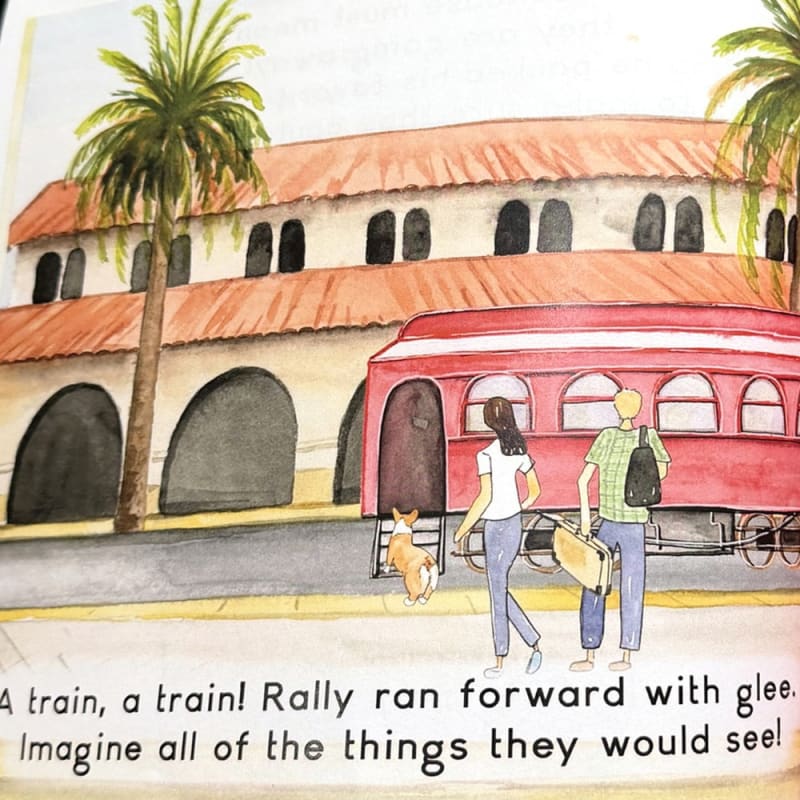


Rally Takes the Train
Eight pages from the book
Turn the page
That's 8 of 25 pages
See who’s waiting at the station
Grandmommy and Papa are at the last stop. Get the full hand-painted book, $13.99 on Amazon.
See the full bookPage 1 of 8

Like it so far? See the full book
25 hand-painted pages, paperback, $13.99 with fast shipping from Amazon.
Every page is real watercolor on paper, painted by hand by Leslie Dunn. Nothing in this book was made with AI.
From anthracite coal to a Hamburg rail yard full of Reading equipment
The Philadelphia and Reading Rail Road was founded in 1833, one of the first railroads in the United States, and it was built to carry anthracite coal from the coal regions of northeastern Pennsylvania down to Philadelphia. Its original double track main line ran from Pottsville through Reading and along the Schuylkill River. Over the following decades the Reading leased and bought lines up and down the valley, built the coal piers at Port Richmond, and opened Reading Terminal in Philadelphia in 1893. In 1976 its railroad assets went to the newly formed Conrail. The Reading is also the railroad that the game of Monopoly made famous.
That same year, 1976, a group of enthusiasts formed the Reading Company Technical & Historical Society. Its members, now more than 800 around the world, spent the next five decades gathering what became a remarkable collection: diesel locomotives, freight and passenger cars, cabooses, a training car for engineers, an entire wreck train and a 100-foot turntable, along with archives of more than 20,000 photographs and tens of thousands of blueprints and letters.
Since 2008 the Society has owned and operated the Reading Railroad Heritage Museum on a nearly seven-acre former Pennsylvania Steel Company property on South Third Street in Hamburg. Volunteers keep adding to it. They built track to bring in a wood caboose from Hersheypark, put up a Railcar Protection Building in 2022, and have since re-sided and repainted that caboose by hand with donated wood.
Blueliners, Budd cars and a station agent's desk
A visit starts with a 15-minute orientation film, "The Reading Shaped Communities," that explains how the railroad shaped the businesses and towns it served. The main Exhibit Hall holds a changing annual exhibit from March to November, plus tools, signs, lanterns, signals and even the bass drum from the Reading Shop Band. The centerpiece is a re-created 1930s Station Agent's Office, complete with gate-arm telephone and stacks of freight paperwork, and there is an interactive switch tower replica.
Outside, a museum docent leads a walking tour of the display yard. The roster includes Alco, Baldwin, EMD and GE diesels, Budd RDC-1 cars including the last RDC Budd built, and a line of Blueliner electric cars, one of them the last car on the final train to leave Reading Terminal. Expect a mix of restored pieces and equipment still under restoration.
Don’t miss
- GP30 No. 5513The first production model of the General Motors GP30 diesel-electric locomotive, and a point of pride for the Society.
- Blueliner No. 9110This electric car was the last car on the final train to depart Reading Terminal in Philadelphia.
- Budd RDC-1 No. 9152The last Rail Diesel Car the Budd Company built.
- GP35 No. 3640The last locomotive the Reading itself overhauled and painted.
- The Hershey Caboose, No. 92938A rare 1942 wood-bodied caboose that served as the Lost Children's Caboose at Hersheypark before volunteers restored it.
- EPB No. 863The only surviving EPB electric car that still has its original seats.
- The 1930s Station Agent's OfficeA realistic re-creation of a typical Reading station office, showing the paperwork side of railroading.
What kids can try in Hamburg
Children usually head straight for the interactive switch tower replica and the outdoor yard, where they can see big diesels and Blueliner commuter cars up close on a docent-led walk. The Hershey Caboose has a fun backstory to share: for years it was where parents at Hersheypark found their lost kids. In winter, operating vintage and modern model trains in a holiday setting are a natural draw for little ones.
Kids 4 and under get in free and ages 5 to 12 pay a reduced rate. The yard tour is outdoors, so dress for the weather.
Plan your visit: tips for Reading Railroad Heritage Museum
- Time your arrival for a yard tour: Saturdays at 10:30, 11:30, 12:30, 1:30 and 2:30, Sundays at 12:30, 1:30 and 2:30.
- The museum reopens for the season starting March 7 after its winter break.
- Groups of 10 or more can book weekday tours outside regular hours at $7 per person, at least two weeks ahead.
- Researchers can use the archives by appointment.
Each winter the museum fills with vintage and modern model trains running in a holiday setting. For 2026 to 2027 the display runs Saturdays 10 am to 4 pm from November 28 to January 9 and Sundays noon to 4 pm from November 29 to January 10. For a ride on a real holiday train nearby, see our guide to Christmas train rides in Pennsylvania.
A society of 800 members and a lot of volunteer hours
The Reading Company Technical & Historical Society, a 501(c)(3) nonprofit with more than 800 members, owns and runs the museum, and its volunteers do the track work, restoration and docent tours. Members get in free. Visitors can help by joining, donating, or buying from the Society's special run items, such as an HO scale Reading caboose made with Rapido Trains whose proceeds go to the freight car restoration fund.
More Reading country railroading
The Wanamaker, Kempton and Southern Railroad is about 9 miles away for a short train ride, and the Reading and Northern Railroad runs excursions about 11 miles up the line at Port Clinton. The Colebrookdale Railroad in Boyertown is about 24 miles off. See the full list of Pennsylvania train museums to plan more.
- Wanamaker, Kempton & Southern RailroadKempton, PA · about 9 mi
- Reading & Northern RailroadPort Clinton / Jim Thorpe, PA · about 11 mi
- Lehigh Valley Railroad Historical SocietyPennsylvania collections, PA · about 22 mi
- Colebrookdale RailroadBoyertown, PA · about 24 mi
- Lehigh Gorge Scenic RailwayJim Thorpe, PA · about 25 mi
- Pennsylvania Live SteamersCollegeville, PA · about 36 mi
Bring Rally along: a train book for the drive
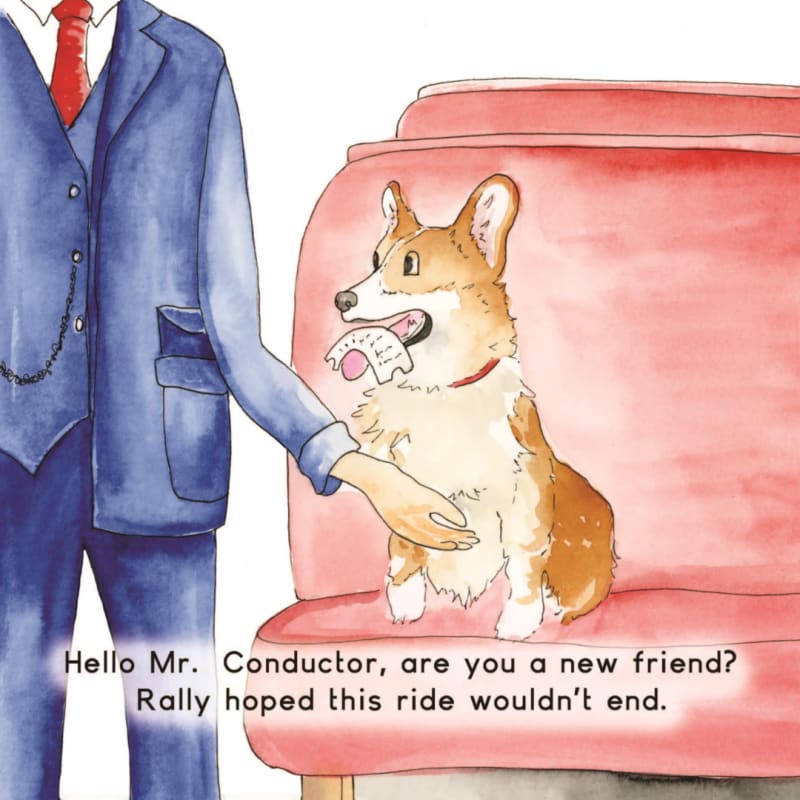
I love that this museum keeps a 1930s station agent's office, the little room where someone kept every freight order straight. Railroads have always run on people who look after the details. In our book, that person is Mr. Conductor in his blue uniform, holding out a hand to welcome Rally aboard. My mom pictured that kindness when she dreamed up the story, and you can read about her on our story page.
Free for train families
Print the Rally coloring pages before you go
Watercolor coloring pages from the book, free to print. Tuck a few in a folder with crayons for the drive or the wait for the next train.
Get the free coloring pages
A train story for the ride homeRally Takes the Train is a five-minute rhyming picture book about a corgi's first train trip to see his grand-paw-rents. Hand-painted in real watercolor. $13.99 on Amazon, for ages 0 to 8.
Buy on Amazon (opens in a new tab)More for train families
- Train museums in Pennsylvania: every museum by town, with a map
- Train museums in every state: search by town or near you
- Christmas train rides in Pennsylvania
- Halloween train rides in Pennsylvania
- Every Amtrak route with kids
Work or volunteer at Reading Railroad Heritage Museum?
We want this page to be the best introduction to your museum on the web. Send new hours, event dates, corrections or photos to kelsey@rallytakesthetrain.com and we will update it. You are welcome to share this page with your members.
Sources
- Reading Railroad Heritage Museum official website(opens in a new tab)
- Reading Railroad Heritage Museum on Instagram(opens in a new tab)
- Reading Railroad Heritage Museum on Wikipedia(opens in a new tab)
Everything on this page comes from the museum’s own website and social pages and, for history, Wikipedia, checked October 19, 2026.
Reading Railroad Heritage Museum: 20 questions visitors ask
How much are tickets at the Reading Railroad Heritage Museum?
As of October 2026, admission is $9 for adults, $8 for seniors 65 and up, $3 for children 5 to 12, and free for children 4 and under and for members of the Reading Company Technical & Historical Society. Group tours for 10 or more are $7 per person. Check readingrailroad.org for current prices before you go.
Where is the Reading Railroad Heritage Museum in Hamburg, PA?
The museum is at 500 S. Third Street, Hamburg, Pennsylvania 19526, on a nearly seven-acre former Pennsylvania Steel Company property. The Society's mailing address is a PO box in Reading, so use the Third Street address for your GPS. Call (610) 562-5513 if you need directions.
What are the Reading Railroad Heritage Museum hours?
As of October 2026, the museum is open Saturdays from 10 am to 4 pm and Sundays from noon to 4 pm. It closes for winter from January 15 to March 1 and reopens in early March. Holiday hours for the model train display follow the same weekend pattern.
When are yard tours at the Reading Railroad Heritage Museum?
As of October 2026, docent-led yard tours start Saturdays at 10:30, 11:30, 12:30, 1:30 and 2:30, and Sundays at 12:30, 1:30 and 2:30. The tour is a walk through the outdoor display yard, where the docent explains the Reading's role in railroad technology and the work of its employees.
What locomotives are on the Reading Railroad Heritage Museum roster?
The roster includes Alco C424 No. 5204 and C630 No. 5308, Baldwin No. 702, EMD FP7 No. 900, GP7 No. 621, GP30 No. 5513, GP35 No. 3640, GP39-2 No. 3412, NW2 No. 103, SW1200 No. 2719 and GE U30C No. 6300, plus Budd RDC cars and Blueliner electric cars. Some pieces are under restoration.
What is the most famous piece at the Reading Railroad Heritage Museum?
Many fans point to GP30 No. 5513, the first production model of the General Motors GP30 diesel-electric locomotive. Others look for Blueliner No. 9110, the last car on the final train to leave Reading Terminal, and Budd RDC-1 No. 9152, the last Rail Diesel Car Budd ever built.
Is the Reading Railroad real?
Yes. The Philadelphia and Reading Rail Road was founded in 1833 and was one of the first railroads in the United States. It hauled anthracite coal from northeastern Pennsylvania to Philadelphia and grew into a major regional railroad. The game of Monopoly made the name famous, and the railroad's assets passed to Conrail in 1976.
Where did the Reading Railroad run?
The Reading's original double track main line ran from the mining town of Pottsville south through Reading to Philadelphia, following the Schuylkill River. The railroad later bought or leased lines throughout the Schuylkill Valley and extended west and north along the Susquehanna River, with coal piers at Port Richmond and Reading Terminal in Philadelphia.
What is the history of the Reading Railroad?
Founded in 1833 to carry anthracite coal, the Reading grew by leasing and buying lines, formed the Philadelphia and Reading Coal and Iron Company in 1871 to buy mines, and opened Reading Terminal in Philadelphia in 1893. It kept adding bridges, bypasses and passenger service until 1976, when its railroad assets were sold to Conrail.
Who runs the Reading Railroad Heritage Museum?
The Reading Company Technical & Historical Society, a 501(c)(3) nonprofit founded in 1976 with more than 800 members, has owned and operated the museum as its educational center since 2008. Volunteers handle restoration, track work and docent tours. Joining the Society gets you free admission.
What will I see inside the Reading Railroad Heritage Museum?
Inside, you start with a 15-minute film called "The Reading Shaped Communities," then explore the Exhibit Hall's railroad tools, signs, lanterns and signals, an interactive switch tower replica, and a re-created 1930s Station Agent's Office. The main hall also hosts a new exhibit each year from March to November.
Is the Reading Railroad Heritage Museum good for kids?
Yes, especially for school-age kids. The interactive switch tower replica, the outdoor yard full of big diesels and commuter cars, and the holiday model trains in winter all hold children's attention. Kids 4 and under are free and ages 5 to 12 pay $3 as of October 2026. Dress for the weather on the outdoor yard tour.
Does the Reading Railroad Heritage Museum have Christmas trains?
Yes, in the form of operating model trains. For the 2026 to 2027 season, vintage and modern model trains run in a holiday setting on Saturdays from 10 am to 4 pm, November 28 to January 9, and Sundays from noon to 4 pm, November 29 to January 10. The museum does not list a real train ride.
Can you ride a train at the Reading Railroad Heritage Museum?
The museum does not list train rides; visits center on the exhibit hall and docent-led walking tours of the display yard. For a ride the same day, the Wanamaker, Kempton and Southern Railroad is about 9 miles away and the Reading and Northern Railroad runs excursions from Port Clinton, about 11 miles away.
Does the Reading Railroad Heritage Museum offer group tours?
Yes. Groups of 10 or more can book tours on weekdays outside normal museum hours at $7 per person as of October 2026. Tours must be arranged at least two weeks in advance. Call (610) 562-5513 or email tours@readingrailroad.org to schedule.
What is the Hershey Caboose at the Reading Railroad Heritage Museum?
It is Reading wood caboose No. 92938, built in 1942 when steel was going to the war effort. After retirement in 1969 it went to Hersheypark, first as a walk-through exhibit and later as the Lost Children's Caboose. Donated in 2014, it has been re-sided and repainted by Society volunteers.
Can I research Reading Railroad history at the museum archives?
Yes, by appointment. The Society's archives at the museum hold more than 20,000 photographs and tens of thousands of blueprints and pages of correspondence about the Reading's people, facilities and operations. Contact info@readingrailroad.org or call (610) 562-5513 to arrange a research visit.
How long should I spend at the Reading Railroad Heritage Museum?
Plan on about two hours. That allows time for the 15-minute orientation film, the Exhibit Hall and the switch tower replica, and a docent-led walk around the outdoor yard. Rail fans who want to study every locomotive and car on the roster may want longer.
How can I support the Reading Railroad Heritage Museum?
You can join the Reading Company Technical & Historical Society, donate, or volunteer on restoration and tours. The Society also sells special items, such as a limited run of 50 HO scale models of Reading caboose No. 92832 made with Rapido Trains, with proceeds going to the freight car restoration fund.
What train attractions are near the Reading Railroad Heritage Museum?
The Wanamaker, Kempton and Southern Railroad is about 9 miles away, the Reading and Northern Railroad at Port Clinton about 11 miles, the Colebrookdale Railroad in Boyertown about 24 miles, and the Lehigh Gorge Scenic Railway in Jim Thorpe about 25 miles. The National Toy Train Museum in Strasburg is about 40 miles away.
Keep exploring
More family train guides from Rally
- DirectoryRailway Museum Directory650 train museums in all 50 states, with hours, tickets and train rides.
- HolidayChristmas Train RidesSanta trains and holiday light rides, sorted by state and town.
- OctoberHalloween Train RidesPumpkin trains and not-too-spooky rides for little ones, by state.
- NovemberThanksgiving Train RidesHoliday weekend train trips the whole family can share.
- AmtrakAmtrak With KidsWhich Amtrak routes work best with babies, toddlers and big kids.
- Plan a tripTrain Trips With KidsEvery Amtrak route, stop by stop, planned for families.