
Alexander & Baldwin Sugar Museum in Puunene, Maui, Hawaii
Museum with a major rail exhibitOpen Monday to Thursday
The Alexander & Baldwin Sugar Museum, in the former Puunene Mill manager's house beside the old Hawaiian Commercial & Sugar factory site, preserves the history of Maui's sugar industry and the multiethnic plantation life it created.
- 168 years of Maui sugar
- Former mill manager's house
- Working cane-crushing model
- 1915 locomotive bell
- 1898 Nordberg steam engine outdoors
- Kamaaina admission free
Alexander & Baldwin Sugar Museum at a glance
- Hours
- Monday to Thursday, 10 am to 2 pm; last admission 1 pm
- Admission
- Adult $12, senior and military $9, child $5, age 5 and under free, kamaaina free
- Plan for
- About 1 hour
- Best for
- Families and history lovers on Maui
- Best ages
- Ages 5 and up
Hours and prices as the museum posts them, checked October 19, 2026. Confirm before you go.
Contact and directions
- Address3957 Hansen Rd, Puunene, HI 96784(opens in a new tab)
- Phone(808) 871-8058
- Emailoperations@sugarmuseum.com
- Websitesugarmuseum.com(opens in a new tab)
Follow Alexander & Baldwin Sugar Museum
Look inside the book
Taking the kids to Alexander & Baldwin Sugar Museum? Bring Rally along.
In Rally Takes the Train, a corgi's little legs can't manage the big train stairs, so Dad gives him a boost. It takes about five minutes to read, a good fit for the drive to Puunene, Maui.

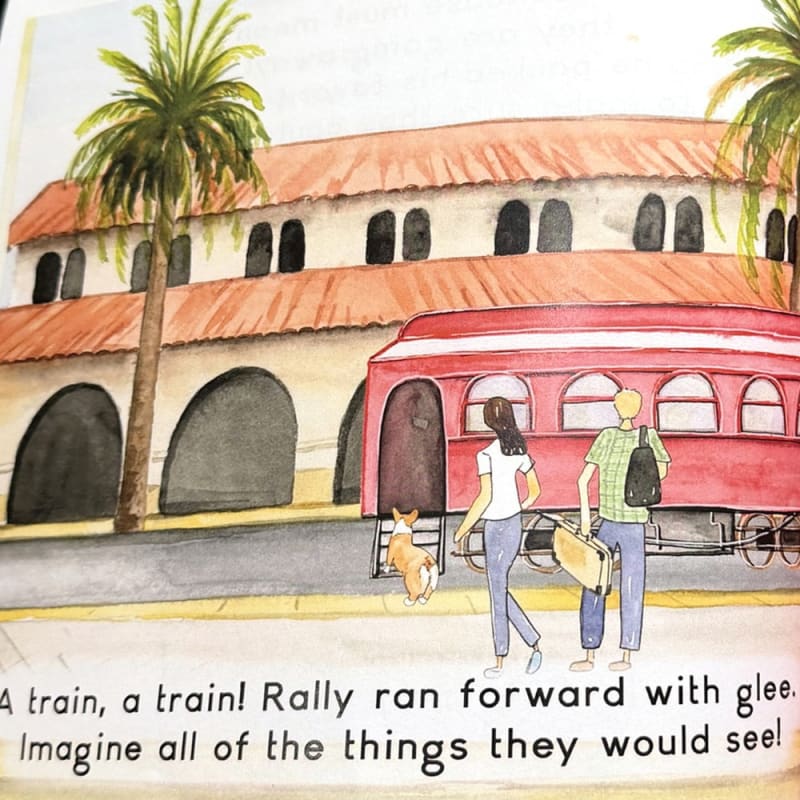


Rally Takes the Train
Eight pages from the book
Turn the page
That's 8 of 25 pages
See who’s waiting at the station
Grandmommy and Papa are at the last stop. Get the full hand-painted book, $13.99 on Amazon.
See the full bookPage 1 of 8

Like it so far? See the full book
25 hand-painted pages, paperback, $13.99 with fast shipping from Amazon.
Every page is real watercolor on paper, painted by hand by Leslie Dunn. Nothing in this book was made with AI.
King Sugar's story, told beside the old Puunene mill
For 168 years sugar shaped Maui: its landscape, its water and its people. The story starts with two partners, Samuel T. Alexander and Henry P. Baldwin, whose work built Maui's sugar industry and the company that still carries their names. To water dry fields, the plantations built an extensive system of irrigation ditches, tunnels and wells, an engineering feat carried out by men whose bravery the museum makes a point of honoring.
Sugar also needed workers, and that need brought people from many lands to Hawaii. Labor contracts written in Hawaiian, Japanese and Chinese, household goods, religious items and camp house models show how those families built multiethnic plantation communities, a big part of why Hawaii is so often called a melting pot.
The museum sits in the small sugarcane growing and milling community of Puunene, in the former Puunene Mill manager's house, next to the old Hawaiian Commercial & Sugar factory site. Its 1,800 square feet hold artifacts, documents and photographs from the sugar era. A nonprofit with a director, a small staff and a volunteer board, it aims to be both a visitor destination and a community gathering place for festivals and reunions.
Six rooms and a yard of plantation machinery
The visit moves through six rooms: Geography and Water, the Founder's Room, Immigration, Plantation Life, Field Work and the Mill Room. In the Field Work Room look for a cane knife, surveying tools, a kau kau tin lunch pail and a complete Japanese woman's field outfit.
The Mill Room is the most hands-on. It has interactive displays, a model of a Cuban sugar mill, a 1915 locomotive bell from the plantation rail era, and a working scale model of cane-crushing machinery driven by a Corliss steam engine, run with narration, lighting and sound effects. Outside are an 1898 Nordberg steam engine, an 11-foot bull gear, a Cleveland trench digger, a 1920s Portuguese oven, a cane hauler and vintage Caterpillar tractors.
Don’t miss
- Working cane-crushing modelA scale model driven by a Corliss steam engine, run with narration, light and sound to show how a mill crushed cane.
- 1915 locomotive bellA link to the plantation railroads that once moved cane across Maui, on display in the Mill Room.
- 1898 Nordberg steam engineThe heavyweight of the outdoor exhibits, alongside an 11-foot bull gear.
- Immigration Room labor contractsContracts in Hawaiian, Japanese and Chinese tell how plantation workers came to Maui.
- Caterpillar 660 cane hauler cabA close look at the big machines that replaced much of the hand work in the fields.
Big machines and a mill that moves
Kids tend to head straight for the Mill Room, where the working cane-crushing model runs with sound and light, and for the outdoor yard of tractors, gears and engines. The camp house model and the lunch pail help younger visitors picture daily plantation life.
Children 5 and under get in free. The museum is compact, so it fits well into a morning with little ones, and the gift shop carries kids' activity journals and card games.
Plan your visit: tips for Alexander & Baldwin Sugar Museum
- Arrive by 1 pm; that is the last admission.
- Closed Friday to Sunday, and on Independence Day, Thanksgiving, Christmas and New Year's Day.
- Bring ID if you are a Hawaii resident; kamaaina admission is free.
- The shop carries locally made Maui gifts.
A small nonprofit with a big story
The Sugar Museum is a nonprofit led by director Jill Pridemore, a small staff including an education coordinator, and a volunteer board. Visitors help by buying admission, shopping in the museum store, signing up for its e-news and bringing school groups to its education programs.
More rail history across the islands
The Sugar Cane Train on West Maui, about 10 miles away, no longer runs, but its story is worth reading. On the Big Island, the Laupahoehoe Train Museum is about 100 miles away, and on Oahu the Hawaiian Railway Society still runs trains. See Hawaii's train museums.
Bring Rally along: a train book for the drive
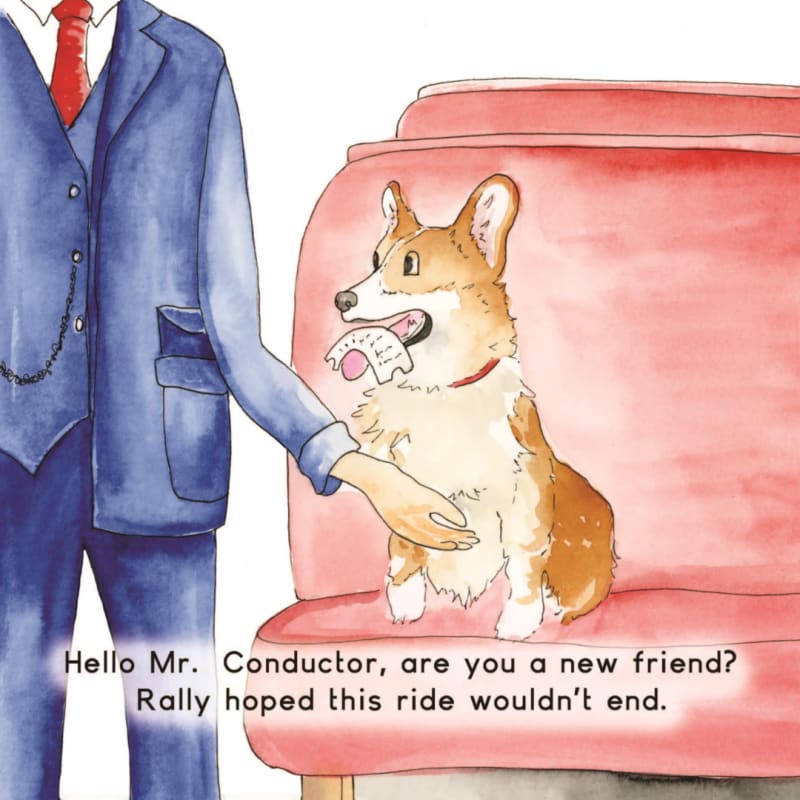
That 1915 locomotive bell got me thinking about conductors. In our book, Mr. Conductor in his blue uniform holds out a hand to help Rally on board, and every kid who reads it wants to meet him. A real bell from a plantation engine is the kind of thing that makes that story feel true. My kids, who are learning to read, would want to ring it. Our train books for toddlers list has more.
Free for train families
Print the Rally coloring pages before you go
Watercolor coloring pages from the book, free to print. Tuck a few in a folder with crayons for the drive or the wait for the next train.
Get the free coloring pages
A train story for the ride homeRally Takes the Train is a five-minute rhyming picture book about a corgi's first train trip to see his grand-paw-rents. Hand-painted in real watercolor. $13.99 on Amazon, for ages 0 to 8.
Buy on Amazon (opens in a new tab)More for train families
- Train museums in Hawaii: every museum by town, with a map
- Train museums in every state: search by town or near you
- Christmas train rides in Hawaii
- Halloween train rides in Hawaii
- Every Amtrak route with kids
Work or volunteer at Alexander & Baldwin Sugar Museum?
We want this page to be the best introduction to your museum on the web. Send new hours, event dates, corrections or photos to kelsey@rallytakesthetrain.com and we will update it. You are welcome to share this page with your members.
Sources
- Alexander & Baldwin Sugar Museum official website(opens in a new tab)
- Alexander & Baldwin Sugar Museum on Facebook(opens in a new tab)
- Alexander & Baldwin Sugar Museum on Instagram(opens in a new tab)
- Alexander & Baldwin Sugar Museum on Tripadvisor(opens in a new tab)
Everything on this page comes from the museum’s own website and social pages and, for history, Wikipedia, checked October 19, 2026.
Alexander & Baldwin Sugar Museum: 20 visitor questions
How much are Alexander & Baldwin Sugar Museum tickets?
As of October 2026, admission is $12 for adults, $9 for seniors and military, and $5 for children. Children 5 and under and kamaaina (Hawaii residents) get in free. Tickets are sold at the front desk, and you can call (808) 871-8058 with questions.
What are the Alexander & Baldwin Sugar Museum hours?
As of October 2026, the museum is open Monday through Thursday from 10 am to 2 pm, with last admission at 1 pm. It is closed Friday through Sunday and on Independence Day, Thanksgiving, Christmas and New Year's Day. Check sugarmuseum.com before you go for any changes.
Where is the Alexander & Baldwin Sugar Museum on Maui?
The museum is at 3957 Hansen Rd, Puunene, Hawaii 96784, in central Maui near Kahului. It is in the former Puunene Mill manager's house, beside the old Hawaiian Commercial & Sugar factory site. The mailing address is PO Box 125, Puunene, HI 96784.
What is the Alexander & Baldwin Sugar Museum?
It is a nonprofit museum that preserves and presents the history of Maui's sugar industry and the multiethnic plantation life it created. Exhibits cover 168 years of King Sugar, from irrigation and immigration to field work and milling, in about 1,800 square feet plus outdoor displays.
What exhibits are at the Sugar Museum in Puunene?
There are six rooms: Geography and Water, the Founder's Room, Immigration, Plantation Life, Field Work and the Mill Room, plus outdoor exhibits. Highlights include labor contracts in three languages, a worker's camp house model, a working cane-crushing model and an 1898 Nordberg steam engine.
Is there anything about trains at the Alexander & Baldwin Sugar Museum?
Yes, a few rail touches. The Mill Room displays a 1915 locomotive bell, a reminder of the plantation railroads that once moved cane, and the outdoor yard includes a cane hauler and heavy plantation machinery. The museum's focus is sugar history overall rather than a rail collection.
What is the working mill model at the Sugar Museum?
In the Mill Room, a working scale model of cane-crushing machinery is driven by a Corliss steam engine. When it runs, a narrative with special lighting and sound effects explains each step, which makes it one of the most popular displays for kids and adults alike.
What outdoor equipment is at the Alexander & Baldwin Sugar Museum?
The outdoor exhibits include an 1898 Nordberg steam engine, a Cleveland Model J36 trench digger, a 1920s outdoor Portuguese oven, an 11-foot diameter bull gear, a cane hauler, vintage Caterpillar tractors and a Caterpillar 660 cane hauler cab, among other items.
Who were Alexander and Baldwin?
Samuel T. Alexander and Henry P. Baldwin were partners who played a central role in developing Maui's sugar industry. The museum's Founder's Room explains their partnership, the company they built and the legacy they left on Maui.
Is the Alexander & Baldwin Sugar Museum related to Alexander & Baldwin stock?
The museum shares the name of Alexander & Baldwin, the company founded by Samuel T. Alexander and Henry P. Baldwin, which continues in business. The museum itself is a nonprofit focused on sugar history and does not publish company or stock information, so check a financial site for share prices.
How long does it take to visit the Sugar Museum on Maui?
Most visitors spend about an hour going through the six rooms and the outdoor equipment. Because last admission is at 1 pm and the museum closes at 2 pm, arrive by late morning if you want time to watch the mill model and browse the shop.
Is the Alexander & Baldwin Sugar Museum good for kids?
Yes, especially kids who like machines. The working mill model and the outdoor tractors, gears and steam engine are favorites, and the camp house model helps younger visitors picture plantation life. Children 5 and under are free, and the shop sells kids' activity journals and card games.
Is the Sugar Museum free for kamaaina?
Yes. As of October 2026, kamaaina, meaning Hawaii residents, get free admission. Bring a Hawaii ID to show at the front desk. Children 5 and under are also free, which makes it an easy local outing for families.
What do Alexander & Baldwin Sugar Museum reviews say?
Visitors often say the museum explains clearly how sugar was made and how the industry shaped Maui, and many praise the immigration and plantation life exhibits. The museum has a TripAdvisor page, and its Facebook and Instagram accounts share current news.
Where can I see Alexander & Baldwin Sugar Museum photos?
The museum posts photos on its Instagram account, @thesugarmuseum, and on Facebook, and visitors share many more on its TripAdvisor page. During your visit, the outdoor machinery, the 11-foot bull gear and the view toward the old Hawaiian Commercial & Sugar mill site are all good photo spots.
Does the Sugar Museum have a gift shop?
Yes. The shop carries Made on Maui items such as ornaments, candles, soaps, bath salts, cookies and caramels, plus children's activity journals and card games and art prints. Some items are also sold through the museum's website.
Does the Alexander & Baldwin Sugar Museum offer school programs?
Yes. The museum has an education coordinator and an education program for students, covering sugar, immigration and plantation life. Call (808) 871-8058 or email operations@sugarmuseum.com to ask about field trips, group rates and scheduling, and reach out well ahead of your preferred date.
Can I hold an event at the Sugar Museum?
The museum's vision includes offering outdoor space for community cultural festivals, reunions and social gatherings, which suits family and club events. Rental details and fees are not posted online, so email operations@sugarmuseum.com or call (808) 871-8058 to ask about availability and what the grounds can hold.
How can I support the Alexander & Baldwin Sugar Museum?
The museum is a nonprofit, so admission, gift shop purchases and donations all help. You can also sign up for its e-news on sugarmuseum.com to hear about events and programs, and bring school or family groups to visit.
What other train history is in Hawaii?
On Maui, the Sugar Cane Train (Lahaina, Kaanapali & Pacific Railroad), about 10 miles away, no longer operates. The Laupahoehoe Train Museum on the Big Island is about 100 miles away, and the Hawaiian Railway Society on Oahu, about 110 miles away, still runs historic train rides.
Keep exploring
More family train guides from Rally
- DirectoryRailway Museum Directory650 train museums in all 50 states, with hours, tickets and train rides.
- HolidayChristmas Train RidesSanta trains and holiday light rides, sorted by state and town.
- OctoberHalloween Train RidesPumpkin trains and not-too-spooky rides for little ones, by state.
- NovemberThanksgiving Train RidesHoliday weekend train trips the whole family can share.
- AmtrakAmtrak With KidsWhich Amtrak routes work best with babies, toddlers and big kids.
- Plan a tripTrain Trips With KidsEvery Amtrak route, stop by stop, planned for families.