Ask a two year old what they are thankful for and you might hear “my socks.” That is exactly the right kind of answer, because gratitude at this age is concrete: a thing, a person, a kind act they can point to. Here are 12 low-prep Thanksgiving gratitude activities for toddlers and preschoolers, a ready thank-you train lesson plan, and five gratitude books for circle time.
The short version
- Keep gratitude concrete: ask “Who helped you today?” instead of “What are you thankful for?”
- Easy wins under 20 minutes: a thankful tree, handprint turkeys, a gratitude circle and helper stickers.
- At 2, expect one word; at 3, one person or thing; at 4 and 5, what someone did and why it mattered.
- The thank-you train lesson takes about 25 minutes: read, find the helpers, then each child draws a paper train car.
- Good gratitude books: Bear Says Thanks, The Thankful Book, Thankful, and Gracias / Thanks.

What does gratitude look like at 2, 3 and 4?
Gratitude is a big, abstract idea, and toddlers live in the concrete. A two year old can say thank you long before they feel thankful in the grown-up sense. That is fine.
| Age | What to expect | Try saying |
|---|---|---|
| 2 | Says thank you when prompted. Answers with one word or a picture. | “Can you say thank you to Ava for the block?” |
| 3 | Names one thing they like or one person who helped. | “Who helped you today?” |
| 4 and 5 | Notices what someone did and why it mattered. | “How did it feel when Leo zipped your coat?” |
The most useful move at any age: thank children specifically, out loud, all day. “Thank you for holding the door, that helped me carry the snack.”
Children learn the shape of gratitude by hearing it.
12 Thanksgiving gratitude activities for toddlers and preschoolers
Every activity uses basic classroom supplies and takes under 20 minutes. Pick two or three for the week before break.
A thankful tree
Ages 2 to 5Tape a bare paper tree trunk to the wall. Each day, children tell you one thing they are thankful for and you write it on a paper leaf. By Thanksgiving the tree is full, and families read the leaves at pickup.
A gratitude circle
Ages 3 to 5Pass a small object around the circle. Whoever holds it finishes the sentence “I'm thankful for…” Model a concrete answer first, like “my warm socks,” and let two year olds say one word or pass.
Handprint turkey with thankful feathers
Ages 2 to 5Trace each child's hand for the turkey. Each finger feather gets one thankful word or a tiny drawing. Families hang it on the fridge for years.
Helper stickers
Ages 2 to 4Give each child three stickers for the day. When a friend helps them, they give that friend a sticker and say thank you. It turns gratitude into something they can see on a shirt.
Thank-you pictures for school helpers
Ages 3 to 5Children draw pictures for the custodian, the cook, the bus driver or the front office, then deliver them together. Our train conductor community helpers unit pairs well.
Thank-you mail to grandparents
Ages 2 to 5Each child decorates a card for a grandparent or special grown-up, and families mail it home. For grandparents who live far away, a card in a small hand is a gift in itself.
A gratitude jar
Ages 3 to 5Keep a jar and paper slips by the door. When someone notices a kind act, write it down and drop it in. Read them all on the last day before break.
A thankful scavenger walk
Ages 2 to 5Walk outside and play “I spy something I'm thankful for.” Leaves, the sun, a puddle, a friend's hand. It gets the wiggles out and keeps gratitude concrete.
A sharing snack
Ages 2 to 5Each child passes a snack to a friend, and the friend says thank you. Check allergies and choking guidance for the age group first.
A thankful song
Ages 2 to 4Sing to the tune of Frère Jacques: “I am thankful, I am thankful, for my friends, for my friends.” Swap in the children's ideas for each verse.
Gratitude placemats
Ages 3 to 5Children draw what they are thankful for on a large sheet, and you cover it in clear contact paper. It goes home for the Thanksgiving table.
A thankful photo board
Ages 2 to 5Families send in a photo of someone the child is thankful for. Children share their photo at circle time, and you post them together on one board.

Planning the week before break?Rally Takes the Train is a five-minute rhyming picture book full of kind people to count and thank: Dad, Mom, Mr. Conductor and the grandparents waiting at the station. Ages 0 to 8.
Buy on AmazonLesson plan: the thank-you train
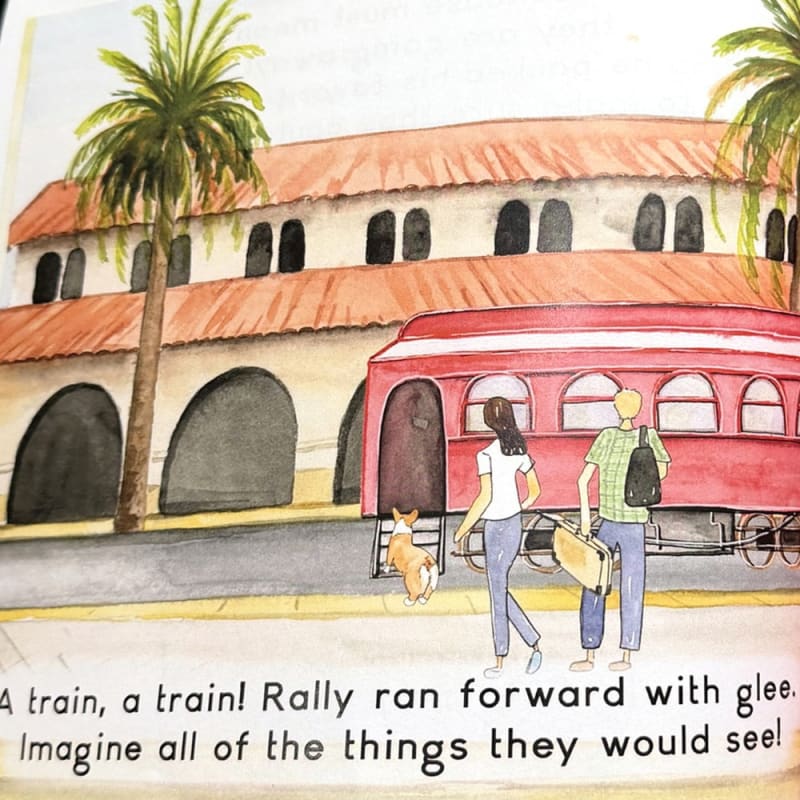
This lesson makes gratitude visible. Rally is a corgi riding the train to see his grandparents, and on nearly every page someone helps him or is kind to him. Preschoolers find them, name them and thank them, then build a train of their own helpers.
At a glance
- Ages: 2 to 5 (preschool and pre-K)
- Time: about 25 minutes
- You need: the book, paper train cars cut from construction paper, one engine, crayons, tape
- Goal: each child names a helper and what that person did
- Sentence strip (ages 4 and 5): “Thank you, ______, for ______.”
- Before reading. Show the cover and ask who might help us on a train ride. Explain that a helper is someone who does something kind for us.
- Read the story. Read Rally Takes the Train all the way through, about five minutes, with a good train voice.
- Go back and find the kind people. Return to each page: Dad boosting Rally up the stairs, the kids who pet him, Mom with the pretzel, Mr. Conductor, and Grandmommy and Papa at the station. Ask what each one did.
- Say thank you for Rally. After each page, the class says thank you together, out loud, in Rally's place.
- Make the thank-you train. Each child gets a paper train car and draws someone who helps them, while you write the name and the helpful act.
- Build and share. Line the cars up along the wall behind an engine. At pickup, children show their families their car on the thank-you train.

Start the count on the station page. Rally's short legs can't manage the big train stairs, so Dad gives him a boost. Ask: “Has anyone ever helped you reach something too high?”
Every answer is a thank-you car waiting to be drawn. For two year olds, keep it short: read, find Dad and Mom, say thank you, and let them scribble on a car.
For a reusable framework, our picture book lesson plan for preschool covers before, during and after reading. Our story time questions help with the pauses.
Thanksgiving books about gratitude for preschool
One gratitude book read slowly is worth more than a stack read fast. These are all easy to find at a library.
| Book | Author | Why it works |
|---|---|---|
| Bear Says Thanks | Karma Wilson | Bear has nothing to share and learns friends are enough; great rhythm |
| The Thankful Book | Todd Parr | Bright, simple pages with one thankful idea each; made for two year olds |
| Thankful | Eileen Spinelli | Everyday people are thankful for everyday things |
| Gracias / Thanks | Pat Mora | A bilingual book about the small things a child is thankful for |
| Rally Takes the Train | Kelsey Lizee Cecil | Not a Thanksgiving book, but full of kind people to count and thank |
Gratitude can open bigger feelings, like missing someone at the holiday table. Our list of picture books about feelings for preschool helps you follow where the children lead.
Gratitude ideas to send home for Thanksgiving
Copy these into your newsletter. Gratitude sticks best when it happens at school and at home.
- Ask “Who helped you today?” It is easier for little kids than “What are you thankful for?”
- Use the placemat your child made at school, and let them explain the drawings.
- Name the people who aren’t at the table. “We’re thankful for Grandpa, and we miss him.” It gently includes them.
- Reread the class book. Ask your teacher which book the class read, and find the helpers again at home.
For families with a grandparent far away, a thank-you card mailed before the holiday goes a long way. Our page on gifts from grandparents has ideas for staying close all year.
A free copy of Rally for your classroom
US teachers can request a free classroom copy of Rally Takes the Train. Our classroom page and free coloring pages and activity pack make it easy to build a week around it.
Kelsey Lizee Cecil wrote the book to finish one her mom dreamed up and never got to write, and it is dedicated to her parents. The story behind the book is a gratitude lesson of its own.
Bring the thank-you train to your roomOne five-minute read, one paper train, and a wall full of helpers by Friday. A hand-painted, rhyming picture book, ages 0 to 8, $13.99.
Get the bookQuestions teachers ask
How do you teach gratitude to toddlers?
Model it constantly and keep it concrete. Thank toddlers for exactly what they did, like “thank you for handing me the cup.” Ask simple questions such as “Who helped you today?” and read books where characters help each other. Short, repeated activities like a thankful tree or a thank-you song build the habit more than one big lesson.
What is a thankful tree for preschool?
A thankful tree is a paper tree trunk on the classroom wall. Each day, children say one thing they are thankful for, and the teacher writes it on a paper leaf for the child to add to the branches. By Thanksgiving the tree is full of the children's own words, and families enjoy reading the leaves at pickup.
How do you run a gratitude circle with toddlers?
Keep it short and concrete. Pass a small object around the circle, and whoever holds it finishes the sentence “I'm thankful for…” Model a simple answer first, like “my blanket,” and let two year olds answer with a single word or pass. Five minutes is plenty, and doing it daily matters more than length.
What can toddlers make for Thanksgiving?
Easy toddler crafts include a handprint turkey with a thankful word on each finger feather, a gratitude placemat covered in clear contact paper, and a thank-you card for a grandparent. Each takes under 20 minutes and uses basic supplies. Keep the grown-up prep simple and let the child's scribbles stand; the point is the talk about who they are thankful for.
How do you explain Thanksgiving to a 2 year old?
Keep it simple and about what they can see: “Thanksgiving is a day when we eat a big meal with people we love and say thank you.” Two year olds connect best to the food, the family and the word thank you. Read a short picture book about gratitude and let them help with one small job for the meal.
Should you make toddlers say thank you?
Gentle prompting is fine, but forcing it rarely builds real gratitude. Model thank you often, prompt kindly (“What do we say?”), and if they freeze, say it for them: “We say thank you, Grandma.” Toddlers are often shy with words, so a wave, a smile or a drawing can count too. Over time, hearing it is how they learn it.
How do you teach toddlers to sign thank you?
In American Sign Language, thank you is signed by touching the fingertips of a flat hand to the chin, then moving the hand forward and down toward the person you are thanking. Say the words as you sign, every time. Some toddlers sign it before they can say it clearly, which makes it a good bridge for children who are still learning to talk.
How do you teach Thanksgiving in a classroom where not every family celebrates it?
Keep the focus on gratitude, helpers and sharing food, which every child can join, rather than on one family's holiday traditions. Invite families to share a dish, a photo or the word for thank you in their home language. Let each child choose who their card is for, and avoid assuming every child has a big holiday meal or a family gathering.
How do you support a child who is missing someone at Thanksgiving?
Name the person simply and warmly: “It sounds like you miss Grandpa. We can be thankful for him.” Let the child draw that person for a thankful activity if they want to, and do not push if they do not. Tell the family what you noticed. If a child seems sad for a long time, a pediatrician or grief counselor can help.
What Thanksgiving activities work for an 18 month old?
Keep it sensory and short, under ten minutes. Try a leaf walk to collect and crunch fall leaves, a handprint turkey with a grown-up doing the tracing, tearing paper feathers to stick on a turkey, or one short book about thank you. At this age the gratitude is in your words, so narrate: “Thank you for the leaf.” A free coloring page and chunky crayons work too.