
Butte, Anaconda & Pacific Railway in Butte and Anaconda, Montana
Historic rail siteA historic railway district, not a museum with posted hours
Built by the Anaconda Mining Company in the 1890s to carry ore from the mines on Butte Hill to the smelter in Anaconda, the Butte, Anaconda & Pacific Railway ran some of the West's busiest electric freight trains for more than half a century.
- Built in the early 1890s
- Electrified in 1913
- 2,400-volt direct current system
- Electric operations ended in 1967
- 750-acre historic district, listed 1988
Butte, Anaconda & Pacific Railway at a glance
- Hours
- No posted hours; it is a historic district rather than a museum
- Admission
- No ticketed site
- Best for
- Rail and mining history fans touring Butte and Anaconda
- Best ages
- Ages 8 and up
Hours and prices as the museum posts them, checked October 19, 2026. Confirm before you go.
Contact and directions
Look inside the book
Taking the kids to Butte, Anaconda & Pacific Railway? Bring Rally along.
In Rally Takes the Train, a corgi's little legs can't manage the big train stairs, so Dad gives him a boost. It takes about five minutes to read, a good fit for the drive to Butte and Anaconda.

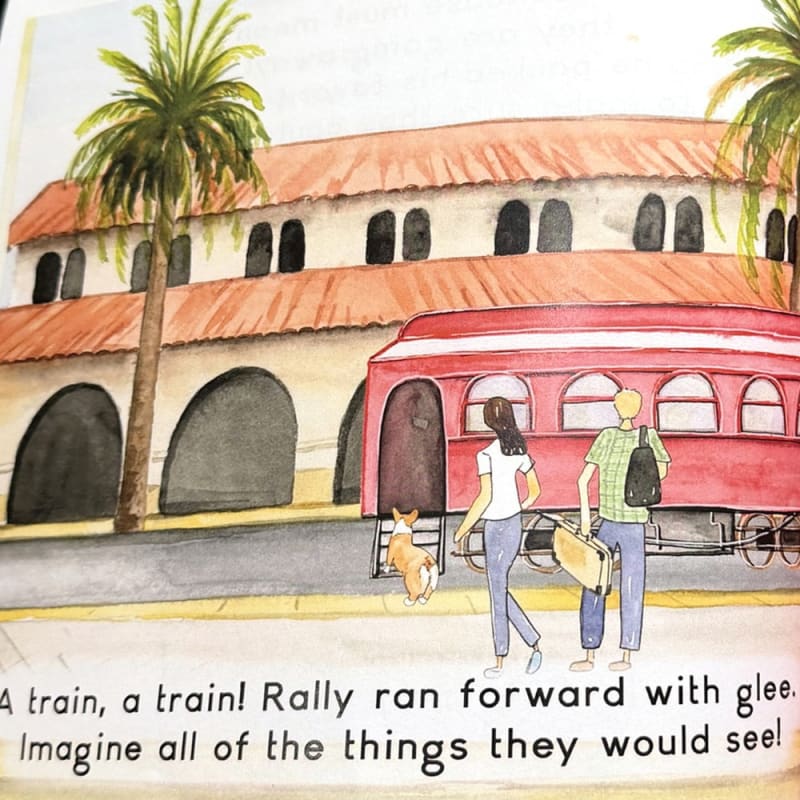


Rally Takes the Train
Eight pages from the book
Turn the page
That's 8 of 25 pages
See who’s waiting at the station
Grandmommy and Papa are at the last stop. Get the full hand-painted book, $13.99 on Amazon.
See the full bookPage 1 of 8

Like it so far? See the full book
25 hand-painted pages, paperback, $13.99 with fast shipping from Amazon.
Every page is real watercolor on paper, painted by hand by Leslie Dunn. Nothing in this book was made with AI.
The copper line from Butte Hill to the smelter
Tired of high freight rates and poor service on the Montana Union Railroad, which the Union Pacific and Northern Pacific owned together, copper king Marcus Daly decided to build his own line between his Butte mines and his Anaconda smelter. The Anaconda Mining Company built the Butte, Anaconda & Pacific with help from the Great Northern Railway, and its main job from the start was hauling ore and mill concentrates from Butte Hill to Anaconda, where the Washoe Reduction Works stood after 1902.
Twenty years in, the railway switched from steam to electricity for economy, hiring General Electric in 1913 to design a 2,400-volt direct current system. Electric trains ran until 1967, when the Weed concentrator at the Berkeley Pit cut traffic to Anaconda. In 1988 the right-of-way along Silver Bow Creek was listed on the National Register of Historic Places as a 750-acre historic district.
Following the old ore route
There is no single museum building for the railway. Its route runs from Butte Hill past the School of Mines, through the old railroad community of Rocker and Silver Bow Canyon, to East Anaconda and up the smelter hill. A historical marker in Anaconda tells the Marcus Daly story, and the Story of Butte website and free app include GPS walking tours of Butte's historic sites.
Don’t miss
- The Anaconda historical markerA roadside marker for the railway's historic district explains why Marcus Daly built his own railroad.
- Silver Bow CanyonThe 20-mile main line ran through the canyon between Rocker and East Anaconda, where 60-car ore trains once rolled west.
Best for older kids who like big machines
This is a history route rather than a hands-on museum, so it suits school-age kids who already love trains and mining. Tracing the ore's trip from mine to smelter on a map, then finding the marker in Anaconda, is a good way to make the story real. Bring snacks and plan short stops.
Plan your visit: tips for Butte, Anaconda & Pacific Railway
- Download the free Story of Butte app for GPS walking tours of Butte's historic sites.
- Look for the historic district marker in Anaconda.
- Pair the route with other Butte-Anaconda Historic District sites.
Who keeps the story alive
The railway's history is gathered and shared by local preservation work, including the Story of Butte project of the Butte-Silver Bow Public Archives and Butte Citizens for Preservation and Revitalization, which accepts tax-deductible donations to fund more research. Historic photographs of the line are held in the public archives.
Montana rail stops near Butte
The Alder Gulch Short Line Railroad and the Montana Heritage Commission railroad exhibits in Virginia City are about 57 miles away. The Historical Museum at Fort Missoula is about 92 miles northwest. Browse Montana's train museums for more.
- Alder Gulch Short Line RailroadVirginia City / Nevada City, MT · about 57 mi
- Montana Heritage Commission railroad exhibitsVirginia City, MT · about 57 mi
- Historical Museum at Fort Missoula railroad exhibitsMissoula, MT · about 92 mi
- Livingston Depot CenterLivingston, MT · about 98 mi
- Montana Museum of Railroad HistoryGreat Falls, MT · about 119 mi
- Central Montana Rail / Judith Basin railroad heritage exhibitscentral Montana, MT · about 136 mi
Bring Rally along: a train book for the drive
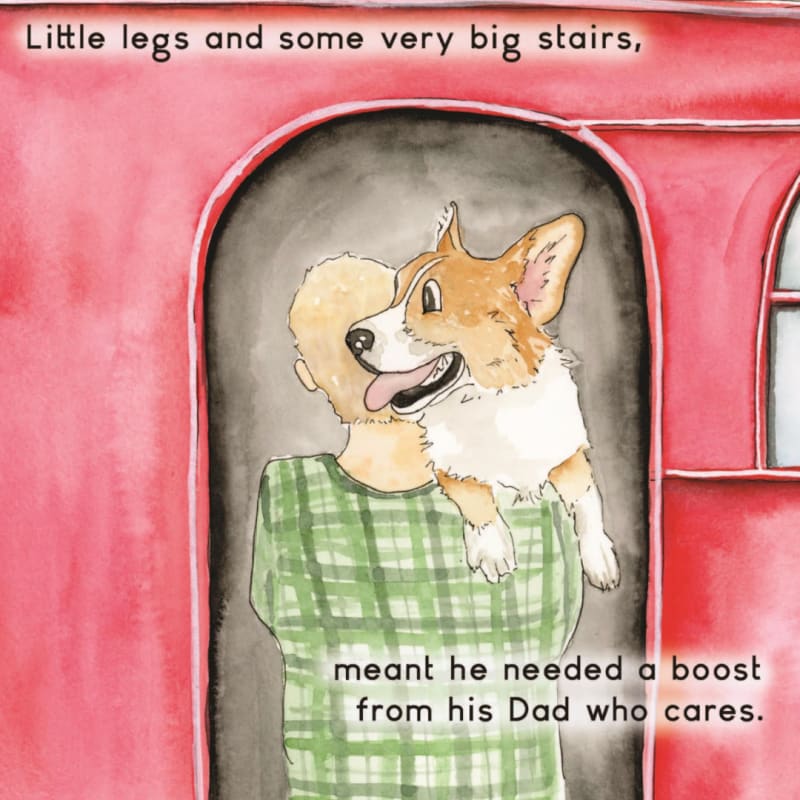
The ore trains here had to break into short 20-car trains for the steep, twisting climb up to the concentrator, because the hill was too much for the long ones. That made me laugh, because it is Rally on the big train steps in our book. His little corgi legs can't manage them, so Dad gives him a boost. Sometimes everyone needs a little help with the climb.
Free for train families
Print the Rally coloring pages before you go
Watercolor coloring pages from the book, free to print. Tuck a few in a folder with crayons for the drive or the wait for the next train.
Get the free coloring pages
A train story for the ride homeRally Takes the Train is a five-minute rhyming picture book about a corgi's first train trip to see his grand-paw-rents. Hand-painted in real watercolor. $13.99 on Amazon, for ages 0 to 8.
Buy on Amazon (opens in a new tab)More for train families
- Train museums in Montana: every museum by town, with a map
- Train museums in every state: search by town or near you
- Christmas train rides in Montana
- Halloween train rides in Montana
- Every Amtrak route with kids
Work or volunteer at Butte, Anaconda & Pacific Railway?
We want this page to be the best introduction to your museum on the web. Send new hours, event dates, corrections or photos to kelsey@rallytakesthetrain.com and we will update it. You are welcome to share this page with your members.
Butte, Anaconda & Pacific Railway: 20 questions
What is the Butte, Anaconda & Pacific Railway?
The Butte, Anaconda & Pacific Railway is the railroad the Anaconda Mining Company built in the 1890s to haul copper ore and mill concentrates from the mines on Butte Hill to the smelter in Anaconda, Montana. It also carried supplies, smelter products, general freight and, for years, passengers. It became famous for its electric trains.
Is there a Butte, Anaconda & Pacific Railway museum I can visit?
There is no museum building with posted hours for the railway. Its route is protected as a historic district, and its history is shared through local historical markers and the Story of Butte website and app, which offers GPS walking tours. Check with Butte and Anaconda visitor centers for current ways to see railway sites.
When was the Butte, Anaconda & Pacific Railway built?
Dates vary a little by source. The railway is often described as founded in 1891, a marker in Anaconda says Marcus Daly decided to build it in 1892, and the Story of Butte history says the Anaconda Mining Company built it in 1893. Either way, it was running in the early 1890s.
Who built the Butte, Anaconda & Pacific Railway?
The Anaconda Mining Company built the railway with help from the Great Northern Railway. Copper king Marcus Daly wanted his own line because he was tired of the high freight rates and poor service of the Montana Union Railroad, which the Union Pacific and Northern Pacific owned jointly.
Why did the Butte, Anaconda & Pacific go electric?
About 20 years after it was built, the railway decided that electric power would be cheaper to operate than steam. In 1913 it hired the General Electric Company to design and oversee a 2,400-volt direct current system. The heavy, frequent ore traffic between Butte and Anaconda made electrification pay off.
When did the Butte, Anaconda & Pacific stop running electric trains?
Electric operations ended in 1967. That year the Weed concentrator at Butte's Berkeley Pit greatly reduced the freight traffic heading to Anaconda, which ended the high number of daily trains that had made electric power economical in the first place.
What did the Butte, Anaconda & Pacific Railway carry?
Its main cargo was ore and mill concentrates from Butte Hill to the Anaconda smelter. It also brought in coal, coke, lumber, mine timbers and chemicals, and carried smelter products east toward the company refinery in Great Falls, plus fertilizer, sulfuric acid and general freight for the people of Anaconda.
Did the Butte, Anaconda & Pacific carry passengers?
Yes. Into the early 1920s, four passenger trains a day ran each way, carrying people, express packages, mail and newspapers. For its first three decades the railway was also the main way to reach Gregson Hot Springs. Anaconda had 11,668 residents in the 1920 census, and the line was a common carrier serving them.
How did ore trains move on the Butte, Anaconda & Pacific?
Locomotives on Butte Hill gathered loaded hopper cars from each mine into 30-car trains, which ran 4.5 miles downhill to Rocker. There crews built 60-car trains for the 20-mile main line through Silver Bow Canyon to East Anaconda, then split them into 20-car trains for the steep seven-mile climb to the concentrator.
What is the Butte, Anaconda and Pacific Railway Historic District?
It is a 750-acre historic district listed on the National Register of Historic Places in 1988. It covers the railway's right-of-way from Butte to Anaconda, running mostly along Silver Bow Creek. It sits within the larger Butte-Anaconda Historic District, which the National Park Service describes as one of the most productive mining regions in the country.
Where is the Butte, Anaconda & Pacific historical marker?
A historical marker for the Butte, Anaconda and Pacific Railway Historic District stands in Anaconda, in Deer Lodge County. It tells how Marcus Daly decided to build his own railroad to haul ore from the Butte mines to his Anaconda smelter. It is a good starting point for a self-guided look at the route.
Can you ride the Butte, Anaconda & Pacific Railway?
No public train rides are posted for the Butte, Anaconda & Pacific. Its passenger service ended long ago, and the line is now known mainly as a historic district. For a ride in the region, the Alder Gulch Short Line Railroad in Virginia City is about 57 miles away; check its season before you go.
How much does it cost to see the Butte, Anaconda & Pacific Railway?
There is no ticketed site for the railway, so there is no admission price to pay. The historic district, markers and the Story of Butte app are ways to learn its history at no cost. Any tours of related sites in Butte or Anaconda would set their own prices, so check with them directly.
Is the Butte, Anaconda & Pacific Railway good to visit with kids?
It works best for school-age kids who already love trains or mining, since there is no hands-on museum or play area. Following the ore's route on a map, finding the marker in Anaconda and talking about the 20-car trains climbing smelter hill can turn it into a short, memorable stop.
What was the BA&P station in Butte like?
Historic photographs in the Butte-Silver Bow Public Archives show the BA&P station with a bay window for the telegraph operator at its east end, where groups gathered for pictures. The archives' Liva Collection includes one of these images, which appears in the Story of Butte history of the railway.
What was the Washoe Reduction Works?
The Washoe Reduction Works was the smelter on the hill east of Anaconda that became the railway's main destination after 1902. Ore from Butte Hill traveled the Butte, Anaconda & Pacific to the concentrator on the upper part of smelter hill, and the empty cars then returned to the mines.
Did the Butte, Anaconda & Pacific own all the tracks on Butte Hill?
Yes, by 1930. The Northern Pacific and Great Northern either took up their own tracks on Butte Hill or sold sections of line to the Butte, Anaconda & Pacific, leaving it as the owner of all the rails there. That made it the single link between the mines and the smelter.
How can I learn more about the Butte, Anaconda & Pacific Railway?
The Story of Butte project, run by the Butte-Silver Bow Public Archives and Butte Citizens for Preservation and Revitalization, publishes a detailed history of the railway with historic photographs. Its free mobile app adds GPS walking tours. The public archives also hold photograph collections related to the line.
How can I support Butte, Anaconda & Pacific Railway history?
Butte Citizens for Preservation and Revitalization accepts tax-deductible donations to fund research for the Story of Butte project, which documents the railway and Butte's mining history. Visiting the historic district respectfully and sharing its story also helps keep interest in the line alive.
What train museums are near Butte and Anaconda?
The Alder Gulch Short Line Railroad and the Montana Heritage Commission railroad exhibits in Virginia City are about 57 miles away. The Historical Museum at Fort Missoula is about 92 miles away, the Livingston Depot Center about 98 miles, and the Montana Museum of Railroad History in Great Falls about 119 miles.
Keep exploring
More family train guides from Rally
- DirectoryRailway Museum Directory650 train museums in all 50 states, with hours, tickets and train rides.
- HolidayChristmas Train RidesSanta trains and holiday light rides, sorted by state and town.
- OctoberHalloween Train RidesPumpkin trains and not-too-spooky rides for little ones, by state.
- NovemberThanksgiving Train RidesHoliday weekend train trips the whole family can share.
- AmtrakAmtrak With KidsWhich Amtrak routes work best with babies, toddlers and big kids.
- Plan a tripTrain Trips With KidsEvery Amtrak route, stop by stop, planned for families.