Merry Christmas in Hebrew
חג מולד שמח
Chag molad sameach
Say it like this: khag moh-LAHD sah-MEH-akh
Big letters show the part to say louder.
Quick answer
- In Hebrew, Merry Christmas is חג מולד שמח (Chag molad sameach), said like khag moh-LAHD sah-MEH-akh.
- People say it in Israel.
What Chag molad sameach means
'Chag' means holiday, 'molad' means birth and 'sameach' means happy. So it is 'Happy Birth Holiday', the Hebrew way to say Merry Christmas.
Hebrew is written from right to left, and short vowels are usually left out of everyday writing.
Other ways to say it in Hebrew
חג מולד שמח is the greeting most people use, so it is the one to learn first.
Where people speak Hebrew
Israel
Hebrew (עברית) belongs to the Afroasiatic (Semitic) language family.
Hear it from Rally on Christmas Eve
On Christmas Eve, Rally the corgi rides the Christmas Train around the world. He reaches Jerusalem at about 12:00 AM local time, and kids learn to say חג מולד שמח as he lands.
Watch Rally arrive in Jerusalem →Christmas traditions where people speak Hebrew
- Christmas in Nazareth: Nazareth, where Jesus grew up, has the largest Christian community in Israel. The city is lit with Christmas lights and holds markets and a Christmas Eve parade that ends at the Church of the Annunciation, followed by fireworks.[3][4]
- The Holiday of the Holidays in Haifa: Haifa runs a series of outdoor winter events called the Holiday of the Holidays. They celebrate the festivals of the winter season in the region together, including Christian, Jewish and Muslim holidays, with markets, music and street events open to all families.[4]
- Hanukkah, the festival of lights: The Jewish festival of Hanukkah usually falls near Christmas. Families light the menorah, spin dreidels and eat latkes (potato pancakes) and sufganiyot (jelly doughnuts). Hanukkah is far more widely celebrated in Israel than Christmas.[3]
🎄 Quick game: Merry Christmas in Hebrew
Three quick questions for kids. Tap an answer to play.
Say Merry Christmas in more languages
- Arabicعيد ميلاد مجيد
- Persian (Farsi)کریسمس مبارک
- TurkishMutlu Noeller
- RussianС Рождеством!
- Punjabiਕ੍ਰਿਸਮਸ ਦੀਆਂ ਸ਼ੁਭਕਾਮਨਾਵਾਂ
- AzerbaijaniMilad bayramınız mübarək
- Tamilகிறிஸ்துமஸ் வாழ்த்துக்கள்
- Marathiनाताळच्या शुभेच्छा
Questions parents ask
How do you say Merry Christmas in Hebrew?
The usual way is חג מולד שמח, said "Chag molad sameach" (khag moh-LAHD sah-MEH-akh). It is the greeting used by Christians in Israel. Hebrew speakers also call Christmas חג המולד (Chag ha-molad), the birth holiday. Most Israelis are Jewish, so Christmas is not widely celebrated.[1][3]
How do you pronounce Chag molad sameach?
Say "khag moh-LAHD sah-MEH-akh". The ch in chag and sameach is a rough sound from the back of the throat, like the ch in the Scottish word loch. Stress the second syllable of molad, LAHD, and the second syllable of sameach, MEH-akh.[1]
What does Chag molad sameach mean?
Chag means holiday, molad means birth, and sameach means happy. Together the phrase means Happy Birth Holiday, which is the Hebrew way to say Merry Christmas. It refers to the birth of Jesus, a day celebrated by Christians. Chag sameach is also used for many Jewish holidays.[1][3]
How do you write Merry Christmas in Hebrew?
Write it from right to left as חג מולד שמח. Everyday Hebrew leaves out most vowels, so only the main consonants are written. There are no capital letters. The romanized form, Chag molad sameach, is only a guide, and you may see it spelled with kh or h at the start.[1]
How do you say Happy New Year in Hebrew?
There is no special Hebrew greeting for the January 1 New Year to teach here. The phrase שנה טובה (Shana tova), meaning good year, is a wish for Rosh Hashanah, the Jewish New Year in autumn, so it would sound odd in January. January 1 is often called Sylvester in Israel, and many people simply say Happy New Year in English.[2][5]
Is there a formal way to say Merry Christmas in Hebrew?
חג מולד שמח is polite for everyone. In Israel, Christians use it in church settings and mix it with Arabic or English. Hebrew has no separate formal Christmas greeting in everyday use, so the same phrase works for friends, teachers and neighbors. A Jewish Israeli friend may answer with thanks or with a Hanukkah greeting.[1][3]
When do people say Chag molad sameach?
Christians in Israel say it on Christmas, December 25, and in the days before. Nazareth, Haifa and Jerusalem have Christmas events in December. Some Jewish Israelis, especially from families that came from the former Soviet Union, also celebrate the season and may use the greeting.[3][4]
Is Christmas Eve or Christmas Day the main celebration in Israel?
Christmas Eve is a highlight in Nazareth, with a parade, lights and Midnight Mass. In most of Israel, December 25 is an ordinary working day, unless it falls on a weekend, and Christmas is not an official national holiday. Christian communities in places such as Nazareth and Jerusalem mark the day with services.[3]
What is a popular Christmas tradition in Israel?
In Nazareth, people enjoy Christmas lights, markets and a Christmas Eve parade that ends at the Church of the Annunciation. Many visitors travel to Israel and Bethlehem to see the places from the Christmas story, and churches in Jerusalem, Nazareth and Bethlehem hold services that draw pilgrims from around the world.[3]
How can I teach kids to say Chag molad sameach?
Teach it in three short chunks: chag, molad, sameach. Practice the throaty ch sound, which kids find funny. Explain that Hanukkah is the big December festival for many Israeli families, and make two cards, one with חג מולד שמח and one for Hanukkah.[3]

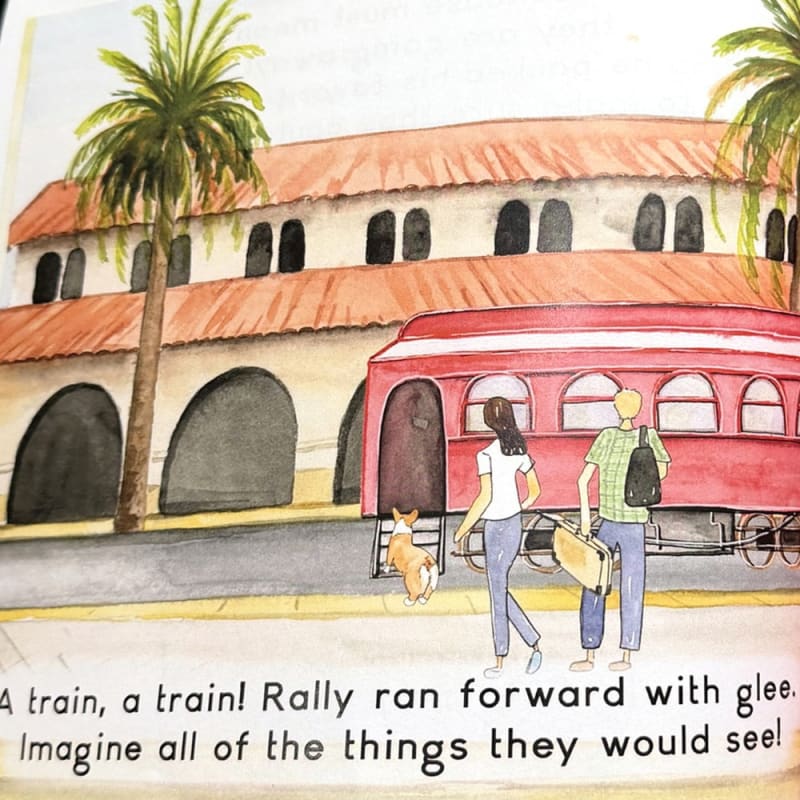
A bedtime story after seeing SantaRally Takes the Train is a five-minute rhyming picture book about a corgi’s first train ride, hand-painted in real watercolor by Leslie Dunn. $16.99 on Amazon, ages 0 to 8.
Buy on AmazonSources
We check every greeting against dictionaries, language institutes and cultural sources.
- merry Christmas (translations), Wiktionary
- happy New Year (translations), Wiktionary
- Christmas in Israel, WhyChristmas.com
- Christmas in Israel, Wikipedia
- sylvester, Balashon, Hebrew Language Detective