Merry Christmas in Bulgarian
Весела Коледа
Vesela Koleda
Say it like this: veh-SEH-lah KOH-leh-dah
Big letters show the part to say louder.
Quick answer
- In Bulgarian, Merry Christmas is Весела Коледа (Vesela Koleda), said like veh-SEH-lah KOH-leh-dah.
- Happy New Year is Честита Нова година (Chestita Nova godina).
- People say it in Bulgaria, North Macedonia, Serbia, Romania and more.
What Vesela Koleda means
Word for word it is 'весела' (vesela, merry) plus 'Коледа' (Koleda, Christmas). Koleda is also the name of the carolling tradition at Christmas time.
Bulgarian is written in the Cyrillic alphabet, which was developed in medieval Bulgaria and is now used in many countries.
Other ways to say it in Bulgarian
Честита Коледа
Chestita Koleda
Say it like this: cheh-STEE-tah KOH-leh-dah
Means 'congratulations on Christmas'. Also very common.
Happy New Year
Честита Нова година
Chestita Nova godina
Say it like this: cheh-STEE-tah NOH-vah goh-DEE-nah
congratulations on the new year, a happy new year
To write in a Christmas card
Весела Коледа и честита Нова година
Vesela Koleda i chestita Nova godina
Say it like this: veh-SEH-lah KOH-leh-dah ee cheh-STEE-tah NOH-vah goh-DEE-nah
Where people speak Bulgarian
BulgariaNorth MacedoniaSerbiaRomaniaUkraineGreece
Bulgarian (български (bălgarski)) belongs to the Indo-European, South Slavic language family.
Say it with Rally on Christmas Eve
On Christmas Eve, Rally the corgi rides the Christmas Train to more than 100 places and teaches kids how to say Merry Christmas at every stop. Practice Bulgarian today, then follow his trip.
Follow Rally on Christmas Eve →Christmas traditions where people speak Bulgarian
- Budni Vecher, the Christmas Eve meal: On Christmas Eve Bulgarian families share a meal with an odd number of dishes, often seven, nine or eleven, and no meat. A round bread called pita has a coin baked inside, and the oldest person cuts it.[1]
- Koledari, the carol singers: Groups of young men called koledari go singing from house to house in traditional clothing. They sing a song wishing the house well, and the family thanks them with round buns and banitsa, a cheese pastry.[1]
- Straw under the tablecloth: Some families put a little straw under the tablecloth on Christmas Eve. The straw recalls the manger in the Christmas story, and it goes with wishes for health and a good harvest in the coming year.[1]
🎄 Quick game: Merry Christmas in Bulgarian
Three quick questions for kids. Tap an answer to play.
Say Merry Christmas in more languages
- BosnianSretan Božić
- CroatianSretan Božić
- MacedonianСреќен Божиќ
- SerbianСрећан Божић
- SlovenianVesel božič
- Scottish GaelicNollaig Chridheil
- IrishNollaig Shona
- CatalanBon Nadal
Questions parents ask
How do you say Merry Christmas in Bulgarian?
The most common way to say Merry Christmas in Bulgarian is Весела Коледа (Vesela Koleda). It is pronounced "veh-SEH-lah KOH-leh-dah". Bulgarians say Весела Коледа and also Честита Коледа, which means congratulations on Christmas. Both are friendly and common, so a child can use either one on a card.[2][1]
How do you pronounce Merry Christmas in Bulgarian?
Say it like this: veh-SEH-lah KOH-leh-dah. The capital letters show the stressed syllable, so say that part a little louder and longer. Each Cyrillic letter has one sound, and the stress is on the syllable in capitals: veh-SEH-lah for Весела and KOH-leh-dah for Коледа. The letter ч is like ch in church.
What does Merry Christmas mean word for word in Bulgarian?
Word for word it is 'весела' (vesela, merry) plus 'Коледа' (Koleda, Christmas). Koleda is also the name of the carolling tradition at Christmas time. Koleda is also used for the carol-singing custom and for Santa, who is called Дядо Коледа, Grandfather Koleda.[1]
How do you write Merry Christmas in Bulgarian?
Write it in Cyrillic as Весела Коледа. In the Latin alphabet it is Vesela Koleda. Bulgarian has 30 Cyrillic letters, and the capital К at the start of Коледа shows that it is the name of the holiday.
How do you say Happy New Year in Bulgarian?
Happy New Year in Bulgarian is Честита Нова година (Chestita Nova godina), pronounced "cheh-STEE-tah NOH-vah goh-DEE-nah". It means congratulations on the new year. The word честита is also used for birthdays and name days, so children will hear it often. Bulgarians say it on New Year's Eve and January 1.[3]
Is there a formal and a casual way to say Merry Christmas in Bulgarian?
Весела Коледа and Честита Коледа are both polite and friendly, so there is no strict formal or casual split. People often choose Честита Коледа on written cards or for teachers and older relatives, but children can use either greeting with anyone.[2]
When do people say Merry Christmas in Bulgarian?
Bulgarians say it in the days before Christmas and most often on December 24 and 25. Koledari, the carol singers, begin their singing after midnight on Christmas Eve and wish the house well. Cards and messages carry the greeting too.[1]
Which day is the main Christmas celebration for Bulgarian speakers: Christmas Eve or Christmas Day?
Both days matter, but Christmas Eve, December 24, is the main family meal. Bulgaria celebrates Christmas on December 25, because the Bulgarian Orthodox Church uses the same calendar as most of the world. On Christmas Day many families have a second big meal.[1]
What is Budni Vecher in Bulgaria?
On Christmas Eve Bulgarian families share a meal with an odd number of dishes, often seven, nine or eleven, and no meat. A round bread called pita has a coin baked inside, and the oldest person cuts it. The koledari begin their singing after midnight, going from house to house.[1]
How can I teach Merry Christmas in Bulgarian to kids?
Teach both greetings as a pair, Весела Коледа and Честита Коледа. Clap the beats: veh-SEH-lah, cheh-STEE-tah, then KOH-leh-dah. Show the Cyrillic letters on a card and match each sound to one letter. Reading the card aloud together makes a short, friendly lesson.

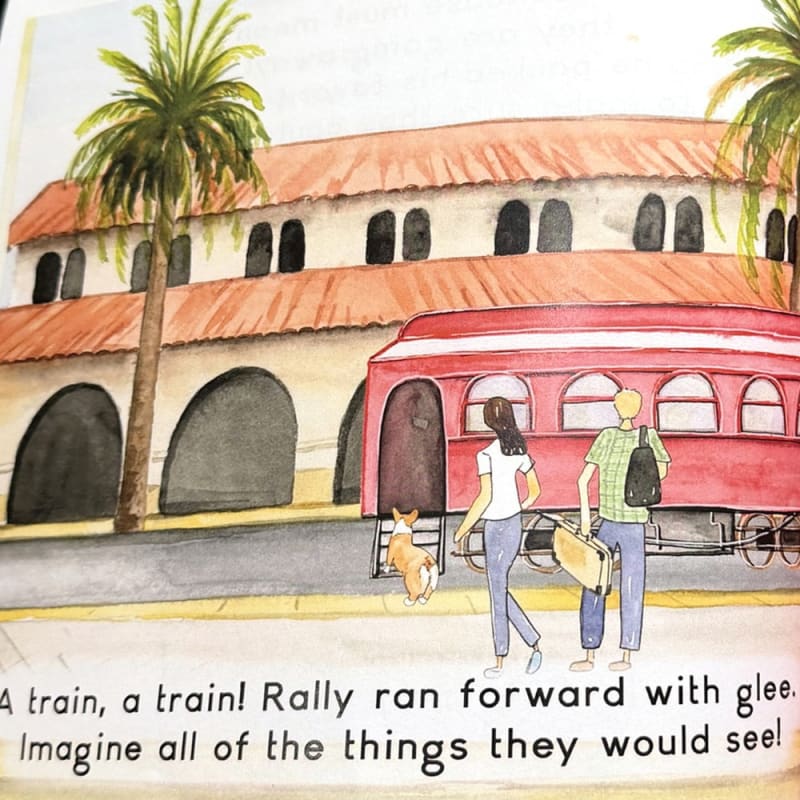
A bedtime story after seeing SantaRally Takes the Train is a five-minute rhyming picture book about a corgi’s first train ride, hand-painted in real watercolor by Leslie Dunn. $16.99 on Amazon, ages 0 to 8.
Buy on AmazonSources
We check every greeting against dictionaries, language institutes and cultural sources.
- Christmas in Bulgaria, WhyChristmas.com
- Merry Christmas (translations), Wiktionary
- Happy New Year (translations), Wiktionary