
How to Talk to a Toddler About a Grandparent Who Passed Away
My mom died in 2021, before the book she dreamed up ever existed and before her grandkids were old enough to remember her. I have had the "where is Grandma" conversation more times than I can count. Here is what I have learned about having it with a very small person, and why a picture book about a train ride turned out to help.
The short version
- Use the real words. "Died" is kinder than "went away," because a toddler takes "went away" literally and waits.
- Keep answers short and true. One sentence, then let them lead.
- Expect the same question fifty times. Repetition is how a two-year-old processes, not a sign you said it wrong.
- Feelings first, facts second. Name yours out loud so they learn it is allowed.
- Keep the person present: photos, stories, a food they loved, a book you read "for Grandma."
Start with the words you are afraid to say
The instinct is to soften it. "Grandma went to sleep." "We lost Grandpa." "She's gone away." Every one of those makes sense to an adult and none of them make sense to a toddler, who will now be afraid of sleep, wonder why you didn't look harder, or ask when she's coming back. Child-development experts are nearly unanimous on this one: use the word died, and explain it in body terms a small child can picture.
Something like: "Grandma died. That means her body stopped working and she can't come back. It's very sad, and it's okay to be sad." That's the whole thing. You don't need to explain why, or what happens next, unless they ask.
Keep it to one sentence, then let them lead
Toddlers absorb hard things in tiny bites. Say one true thing, stop, and watch what they do. They might ask a question, go back to their blocks, or ask the same question again tomorrow. All three are normal. Going back to playing isn't indifference; it's a two-year-old's way of putting something heavy down for a minute. Your job is to be the person they can pick it back up with.
"Where's Grandma?" is not a question you answer once. It's a question you answer every time, the same way, for a long time.
Answer the question they asked, not the one you're dreading
"Where is Grandma?" usually means exactly that. "She died, remember? She can't come back. I miss her too." If your family has a faith tradition, this is where it comes in, in the simplest form you believe. If it doesn't, "she's not anywhere now, but we remember her" is an honest answer a toddler can hold.
The ones that catch parents off guard:
- "Will you die?" "Everyone dies someday, but I plan to be here for a very, very long time." True, and reassuring.
- "Did I make her die?" Toddlers believe their thoughts cause things. "No. Nothing you did or said made Grandma die. Nothing anyone did." Say it even if they don't ask.
- "Is she cold?" / "Is she hungry?" "No. When someone dies their body doesn't feel anything anymore." Gentle, concrete, done.
Show them your feelings have a shape
You don't have to hide it when you cry. "I'm crying because I miss Grandma. I'll feel better in a little while. Do you want a hug?" teaches three things at once: big feelings are allowed, they pass, and we take care of each other through them. Toddlers who see grief handled out loud are less frightened by it than toddlers who sense something is wrong and can't see what.
Keep the person in the house
The goal isn't to get past it. The goal is to keep Grandma part of the family in a way a small child can understand. A photo at their eye level. "Grandma loved blueberries" at breakfast. A story about something silly she did. Her name said out loud, often. Kids who grow up with a dead grandparent as a real, mentioned person tend to feel they know them, and that is a gift you can give even to a child who was too young to remember.
Why a book about a train ride, of all things
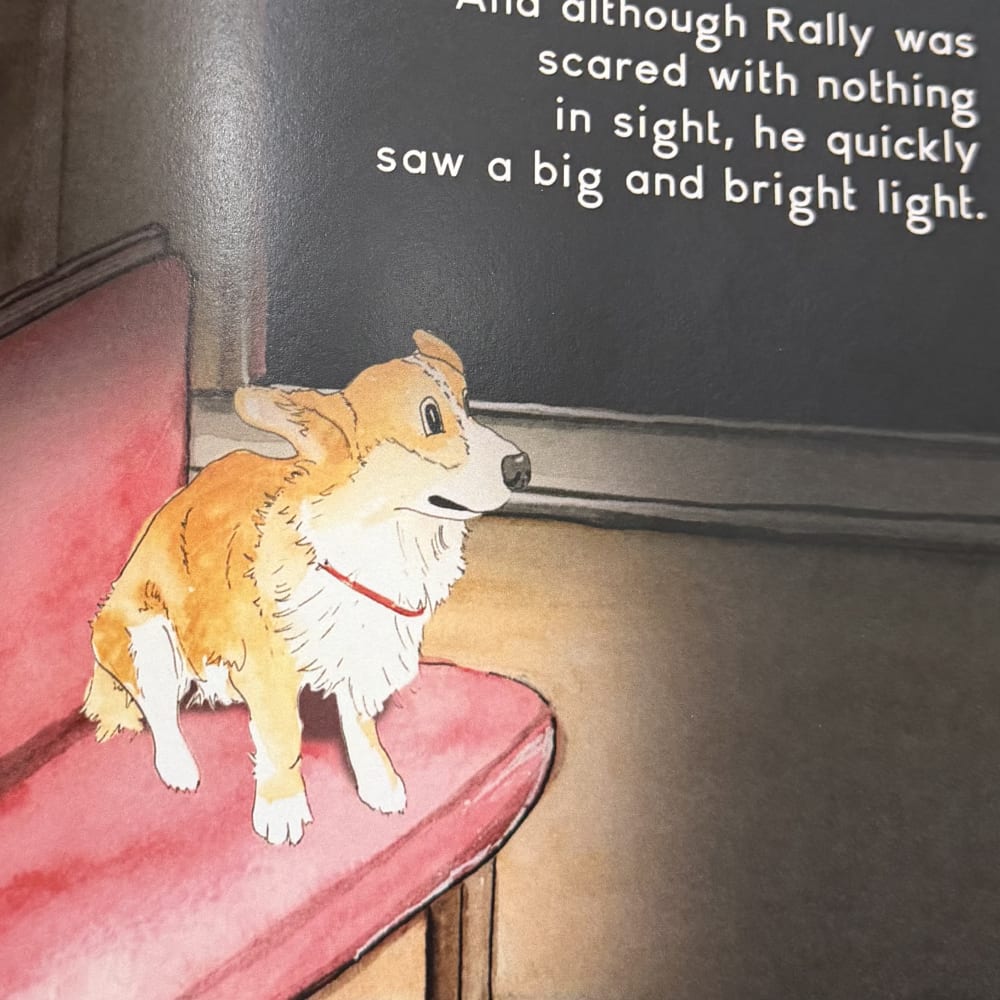
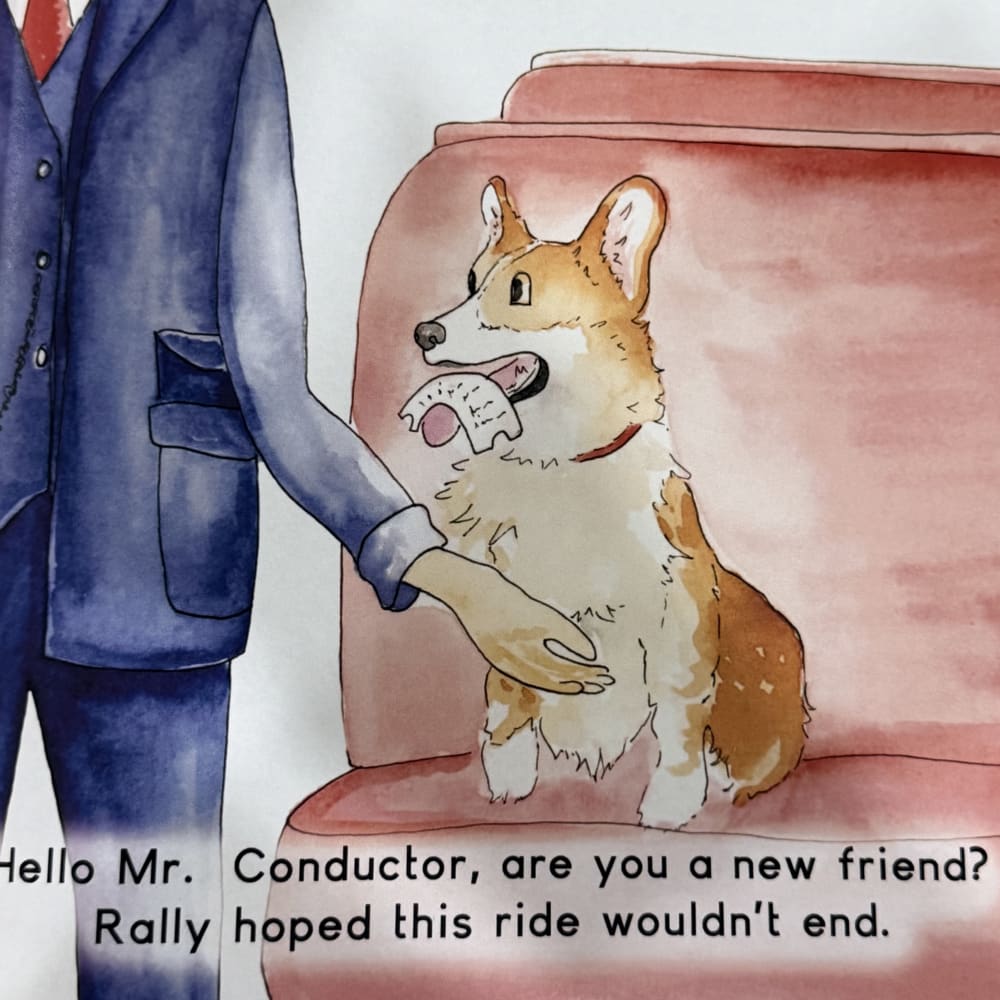
Rally Takes the Train isn't a book about death. It's a book my mom dreamed up and never got to write, about a little corgi who takes a long ride by himself, is scared in the tunnel, and finds his grandparents waiting at the end of the line. I finished it for her. (That story is here.) What I didn't expect is how many families would use it as the book they read when they're missing someone.
I think it's because the book gives you a way in without forcing one. You can read it as a happy story about trains, full stop. Or you can get to the last page and say, "That's like when we visit Grandpa." Or, "Grandma would have loved this page. She loved corgis." It opens the door and lets you decide how far to walk through it.

Rally Takes the TrainA hand-painted picture book about a brave little corgi, a long ride, and the people waiting at the end of the line. Written in memory of my mom.
Buy on AmazonWhen to get more help
Most toddlers move through grief in short bursts and come out okay. If sleep, eating, or play change for more than a few weeks, or if your own grief makes it hard to be present, that's the time to loop in your pediatrician or a counselor who works with young children. Two free resources I'd point any parent to:
- The Dougy Center, which has age-by-age guidance on how children grieve and a directory of local grief programs.
- Sesame Street in Communities: Grief, videos and printables made for the youngest kids.
A note
I'm a mom who has done this, not a therapist. If anything here doesn't fit your family, trust yourself over me. You know your kid.
Questions parents ask
Should I take my toddler to the funeral?
Many families do, and it often helps, as long as a trusted adult can step out with them when they've had enough. Tell them what they'll see in simple terms beforehand: people will be sad, some will cry, and there will be a box with Grandma's body in it. Give them the choice if they're old enough to have one.
My toddler doesn't seem sad at all. Is that normal?
Completely. Toddlers grieve in short bursts between long stretches of ordinary play, and they may not show much until weeks later. Keep the person's name in daily life and keep answering questions the same way; the feelings come when they're ready.
What if they ask whether I'm going to die?
Answer honestly and reassuringly: everyone dies someday, but you plan to be here for a very, very long time, and there are lots of people who love and take care of them. Avoid promising you'll never die; they may remember it.
Is there a picture book about losing a grandparent for a 2 year old?
For very young children, books that are about visiting or loving a grandparent often work better than books about death itself, because they let you bring the person up gently. Rally Takes the Train is one families use this way; Nana Upstairs and Nana Downstairs by Tomie dePaola is a classic that addresses the loss directly for slightly older kids.