
Pittsburgh & West Virginia Railway historical collection in Pittsburgh area, Pennsylvania
Rail preservation groupNo visitor site; the history survives in archives and online records
The Pittsburgh & West Virginia Railway started life as the Wabash Pittsburgh Terminal Railway, George J. Gould's bid to reach Pittsburgh, and its records, maps and signal drawings keep that ambitious story alive today.
- Reporting mark PWV
- Began as Wabash Pittsburgh Terminal
- Receivership in 1908
- 81 signal drawings at the Smithsonian
- No public visitor site
Pittsburgh & West Virginia Railway historical collection at a glance
- Hours
- No public visitor site; archive access varies
- Admission
- Not applicable
- Best for
- Researchers and rail history readers
Hours and prices as the museum posts them, checked October 19, 2026. Confirm before you go.
Contact and directions
Look inside the book
Taking the kids to Pittsburgh & West Virginia Railway historical collection? Bring Rally along.
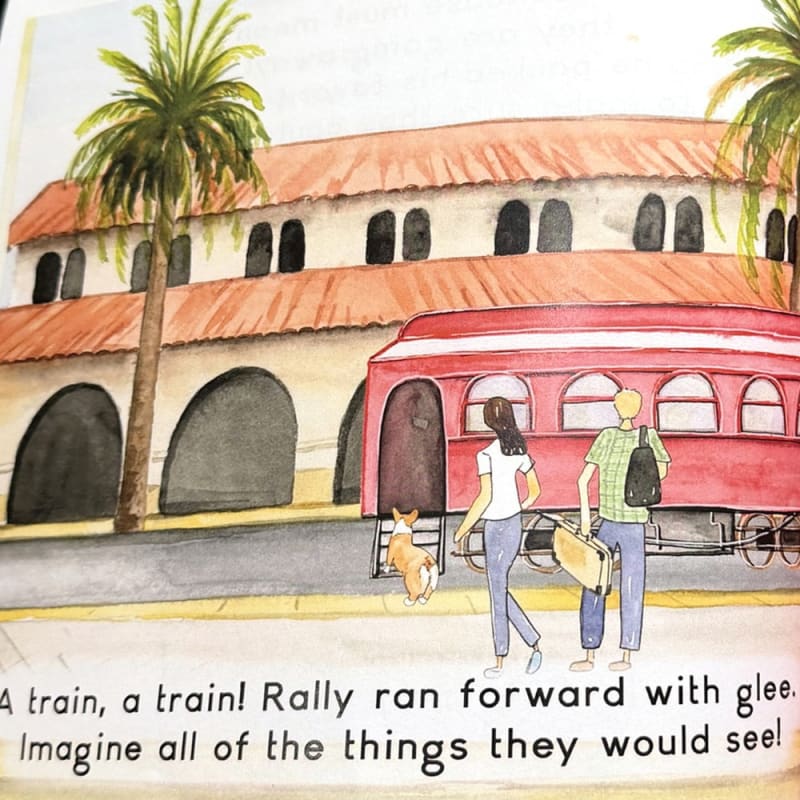
In Rally Takes the Train, a corgi's little legs can't manage the big train stairs, so Dad gives him a boost. It takes about five minutes to read, a good fit for the drive to Pittsburgh area.



Rally Takes the Train
Eight pages from the book
Turn the page
That's 8 of 25 pages
See who’s waiting at the station
Grandmommy and Papa are at the last stop. Get the full hand-painted book, $13.99 on Amazon.
See the full bookPage 1 of 8

Like it so far? See the full book
25 hand-painted pages, paperback, $13.99 with fast shipping from Amazon.
Every page is real watercolor on paper, painted by hand by Leslie Dunn. Nothing in this book was made with AI.
Gould's road to Pittsburgh and what it left behind
The Pittsburgh and West Virginia Railway, reporting mark PWV, served the Pittsburgh and Wheeling areas. It was first built as the Wabash Pittsburgh Terminal Railway, an extension that would carry George J. Gould's Wabash Railroad into Pittsburgh. Early on, the terminal company bought all the stock of the Pittsburgh Terminal Railroad & Coal Company, and at Pittsburgh Junction the line met the Wheeling & Lake Erie, which ran west to Toledo. The venture went into receivership in 1908 and the line was cut loose to make its own way.
In the 1920s Frank Taplin pictured the P&WV as part of a much larger trunk line merged with the Wheeling & Lake Erie, the Western Maryland, the Wabash and the Lehigh Valley, but the Interstate Commerce Commission would not authorize it. The railroad later became part of the Norfolk and Western. Today the story is kept by archivists and railroad historians rather than a museum building.
Where the P&WV record lives
The best documented piece of this collection is a set of 81 engineering drawings for the railroad's Centralized Traffic Control machine, held in the Smithsonian's National Museum of American History archives. Drawn between 1948 and 1950, they cover signal circuits, mechanical controls and telephone lines from Connellsville, Pennsylvania to Pittsburgh Junction, Ohio. Railroad history websites also share P&WV system maps, including an official 1940 map, along with rosters and a detailed company history.
Don’t miss
- The CTC drawings at the SmithsonianEighty-one drawings from 1948 to 1950 show how dispatchers controlled signals along the line, a rare look at mid-century railroad technology.
- The 1940 system mapAn official P&WV map from 1940 shows how the railroad reached from Pittsburgh toward its connections in Ohio and West Virginia.
For curious young rail fans
There are no exhibits or rides here for children. Older kids who like maps and history can trace the 1940 system map online, and families who want trains to look at should plan a stop at one of the Pittsburgh area museums below.
Plan your visit: tips for Pittsburgh & West Virginia Railway historical collection
- To see the CTC drawings, contact the Smithsonian's National Museum of American History archives and ask about collection NMAH.AC.0279.
- For a train outing with kids, pair your interest in the P&WV with a nearby museum visit.
Archivists and historians keep the story
No single museum or volunteer group presents itself publicly as the keeper of a P&WV collection. Instead, archivists at the Smithsonian care for the signal drawings, and railroad historians publish the maps, rosters and company history online. Researchers can help by citing and sharing that work.
Pittsburgh area train stops to visit
The Western Pennsylvania Model Railroad Museum is about 12 miles away, and the Pennsylvania Trolley Museum in Washington is about 21 miles off. The Beaver-Lawrence Railway Historical Society is around 28 miles away. Browse the full list of Pennsylvania train museums to plan more.
- Western Pennsylvania Model Railroad MuseumGibsonia, PA · about 12 mi
- Pennsylvania Trolley MuseumWashington, PA · about 21 mi
- Kiski Junction RailroadSchenley, PA · about 24 mi
- Beaver-Lawrence Railway Historical Societywestern Pennsylvania, PA · about 28 mi
- Derry Station Railroad Heritage MuseumDerry, PA · about 39 mi
- Dennison Railroad Depot MuseumDennison, OH · about 69 mi
Bring Rally along: a train book for the drive

Reading about a railroad whose story now lives in drawings and old maps made me think about what we choose to keep. Before his trip, Rally packs only three things: his turtle toy, his green bone and his yellow ball. My mom kept the idea for our story tucked away for years. You can read about that on our story page.
Free for train families
Print the Rally coloring pages before you go
Watercolor coloring pages from the book, free to print. Tuck a few in a folder with crayons for the drive or the wait for the next train.
Get the free coloring pages
A train story for the ride homeRally Takes the Train is a five-minute rhyming picture book about a corgi's first train trip to see his grand-paw-rents. Hand-painted in real watercolor. $13.99 on Amazon, for ages 0 to 8.
Buy on Amazon (opens in a new tab)More for train families
- Train museums in Pennsylvania: every museum by town, with a map
- Train museums in every state: search by town or near you
- Christmas train rides in Pennsylvania
- Halloween train rides in Pennsylvania
- Every Amtrak route with kids
Work or volunteer at Pittsburgh & West Virginia Railway historical collection?
We want this page to be the best introduction to your museum on the web. Send new hours, event dates, corrections or photos to kelsey@rallytakesthetrain.com and we will update it. You are welcome to share this page with your members.
Pittsburgh & West Virginia Railway: 20 history questions
What was the Pittsburgh and West Virginia Railway?
The Pittsburgh and West Virginia Railway, reporting mark PWV, was a railroad serving the Pittsburgh, Pennsylvania and Wheeling, West Virginia areas. It began as the Wabash Pittsburgh Terminal Railway, built to extend George J. Gould's Wabash Railroad into Pittsburgh, and later became part of the Norfolk and Western.
Is there a Pittsburgh and West Virginia Railway museum I can visit?
Not as a standalone museum. There is no visitor building, posted hours or admission for a P&WV museum. The railroad's history survives in archive collections, such as engineering drawings at the Smithsonian, and on railroad history websites that share maps, rosters and the company story.
Where are the Pittsburgh and West Virginia Railway drawings kept?
A set of 81 engineering drawings of the railroad's Centralized Traffic Control machine circuits is held in the archives of the Smithsonian's National Museum of American History, listed as collection NMAH.AC.0279. Contact that archive directly to ask how researchers can view the drawings.
What do the P&WV Smithsonian drawings show?
The drawings show the electrical circuits of the railroad's Centralized Traffic Control machine, including mechanical controls, electrical signals and telephone communications. The circuits run from Connellsville, Pennsylvania to Pittsburgh Junction, Ohio. They were made between 1948 and 1950, when the railroad was modernizing how it dispatched trains.
Who built the Pittsburgh and West Virginia Railway?
The line was originally built as the Wabash Pittsburgh Terminal Railway, a Pittsburgh extension of George J. Gould's Wabash Railroad. Gould wanted his railroad system to reach the city, and the terminal company also bought control of the Pittsburgh Terminal Railroad & Coal Company soon after it was incorporated.
Why did the Wabash Pittsburgh Terminal Railway fail?
The venture entered receivership in 1908, and the line was cut loose from the Wabash. The details of the failure are best found in a full company history, but the result was that the Pittsburgh line had to carry on as its own railroad, eventually as the Pittsburgh and West Virginia Railway.
What was Pittsburgh Junction on the P&WV?
Pittsburgh Junction, in Ohio, was where the P&WV connected with the Wheeling & Lake Erie, which ran west as far as Toledo. That connection gave the railroad a route for traffic heading west, and the 1948 to 1950 signal drawings cover the line from Connellsville to Pittsburgh Junction.
Who was Frank Taplin and what did he want for the P&WV?
In the 1920s Frank Taplin wanted the Pittsburgh and West Virginia to be more than a connecting line. He mapped a merger with the Wheeling & Lake Erie, the Western Maryland, the Wabash and the Lehigh Valley to form a new trunk line, but the Interstate Commerce Commission would not authorize it.
What happened to the Pittsburgh and West Virginia Railway?
The Smithsonian's archive describes the company as the Pittsburgh and West Virginia Railway, later the Norfolk and Western Railway Company. A full railroad history reference is the best place to read about the dates and details of the railroad's later years.
What does PWV mean on railroad cars?
PWV is the reporting mark of the Pittsburgh and West Virginia Railway. Reporting marks are the short letter codes painted on freight cars and locomotives so that railroads can tell who owns each piece of equipment as it moves across connecting lines.
Where can I see a Pittsburgh and West Virginia Railway map?
Railroad history websites have published an official P&WV system map from 1940, along with rosters and history. One site shares the 1940 map from its author's own collection. These maps show how the line ran from the Pittsburgh area toward its western connections.
Is there a P&WV historical society?
No historical society devoted only to the Pittsburgh and West Virginia Railway runs a public museum. A dedicated history website does publish a detailed account of the company. If you are looking for a group to join, a Pittsburgh area railway historical society may be able to point you in the right direction.
Can kids enjoy the Pittsburgh and West Virginia Railway history?
Older kids who like maps and old machines may enjoy looking at the 1940 system map and photos online, but there are no exhibits, rides or hands-on displays to visit. For a train day out, families can head to the Western Pennsylvania Model Railroad Museum or the Pennsylvania Trolley Museum.
Are there hours or tickets for the P&WV collection?
No. There is no posted visitor schedule or ticket price, because the P&WV material is held in archives and on websites rather than in a public museum. If you want to research the Smithsonian drawings, contact the National Museum of American History archives about access.
Which cities did the Pittsburgh and West Virginia Railway serve?
The railroad served the Pittsburgh, Pennsylvania and Wheeling, West Virginia areas, and its signal circuits ran from Connellsville, Pennsylvania west to Pittsburgh Junction, Ohio, where it met the Wheeling & Lake Erie. A detailed company history or system map is the best way to trace every station along the route.
What was Centralized Traffic Control on the P&WV?
Centralized Traffic Control, or CTC, let a dispatcher set signals and switches along a stretch of railroad from one control machine. The P&WV's CTC machine drawings, made from 1948 to 1950, show its electrical circuits, mechanical controls, signals and telephone links between Connellsville and Pittsburgh Junction.
Did the Pennsylvania Railroad have a role in the P&WV?
Railroad historians note that Pennroad, the Pennsylvania Railroad's investment company, figures in the P&WV story after Frank Taplin's merger plan was turned down in the 1920s. A full P&WV history explains the details of that relationship.
Can I donate P&WV memorabilia or photos?
No museum publicly advertises itself as collecting Pittsburgh and West Virginia Railway items. A local railroad historical society or the archive that holds the P&WV drawings may be able to advise you on where historic photos, documents or artifacts would be best preserved.
Is the P&WV the same as the Wheeling & Lake Erie?
No. They were separate railroads that connected at Pittsburgh Junction, Ohio, where the Wheeling & Lake Erie continued west to Toledo. In the 1920s Frank Taplin proposed merging them, along with other lines, into a larger system, but the plan was not authorized.
What train museums can I visit near Pittsburgh?
The Western Pennsylvania Model Railroad Museum in Gibsonia is about 12 miles away, and the Pennsylvania Trolley Museum in Washington is about 21 miles away. The Beaver-Lawrence Railway Historical Society is about 28 miles away, and the Dennison Railroad Depot Museum in Ohio is about 69 miles out.
Keep exploring
More family train guides from Rally
- DirectoryRailway Museum Directory650 train museums in all 50 states, with hours, tickets and train rides.
- HolidayChristmas Train RidesSanta trains and holiday light rides, sorted by state and town.
- OctoberHalloween Train RidesPumpkin trains and not-too-spooky rides for little ones, by state.
- NovemberThanksgiving Train RidesHoliday weekend train trips the whole family can share.
- AmtrakAmtrak With KidsWhich Amtrak routes work best with babies, toddlers and big kids.
- Plan a tripTrain Trips With KidsEvery Amtrak route, stop by stop, planned for families.