
L&N Depot & Museum in Etowah, Tennessee
Depot museumOpen Tuesday to Saturday
The L&N Depot was the first permanent building in Etowah, a town the Louisville & Nashville Railroad laid out in the early 1900s, and the city has restored the yellow pine Victorian station twice so its railroad town story can be told inside.
- First building in Etowah, finished 1906
- On the National Register since 1977
- Restored in 1981 and 2012
- CSX main line beside the depot
- Open Tuesday to Saturday
L&N Depot & Museum at a glance
- Hours
- Tuesday to Friday 8 am to 4:30 pm, Saturday 9 am to 5 pm, closed Sunday and Monday
- Admission
- Not posted; call (423) 263-7840
- Best for
- History lovers, rail fans and families who like watching trains
- Best ages
- Ages 6 and up
Hours and prices as the museum posts them, checked October 19, 2026. Confirm before you go.
Look inside the book
Taking the kids to L&N Depot & Museum? Bring Rally along.
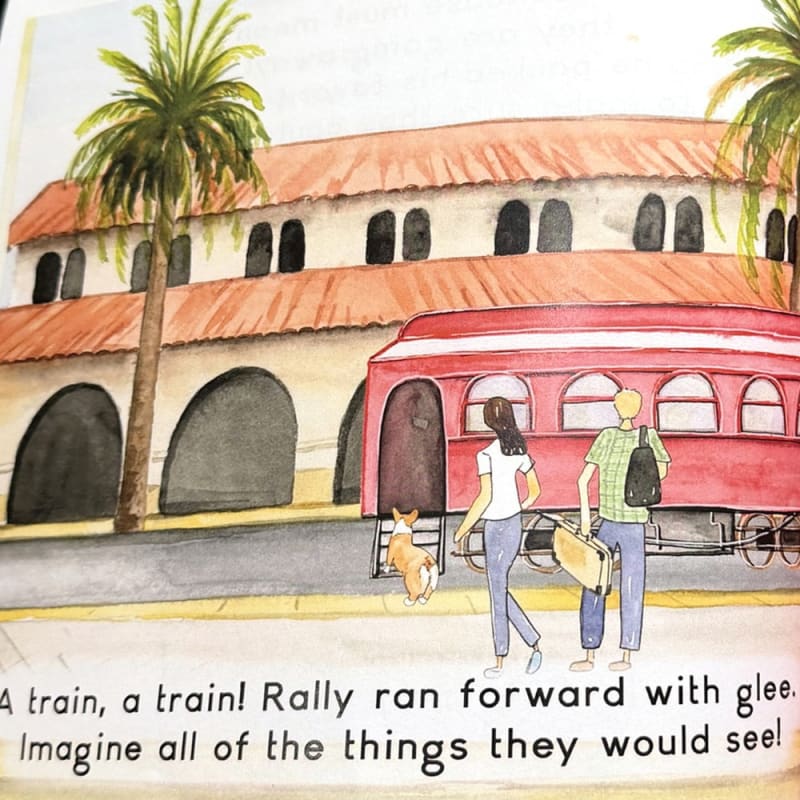
In Rally Takes the Train, a corgi's little legs can't manage the big train stairs, so Dad gives him a boost. It takes about five minutes to read, a good fit for the drive to Etowah.



Rally Takes the Train
Eight pages from the book
Turn the page
That's 8 of 25 pages
See who’s waiting at the station
Grandmommy and Papa are at the last stop. Get the full hand-painted book, $13.99 on Amazon.
See the full bookPage 1 of 8

Like it so far? See the full book
25 hand-painted pages, paperback, $13.99 with fast shipping from Amazon.
Every page is real watercolor on paper, painted by hand by Leslie Dunn. Nothing in this book was made with AI.
The depot that came before the town
Etowah exists because of a shortcut. In 1902 the Louisville & Nashville Railroad planned a more direct line between Cincinnati and Atlanta that would bypass the Hiwassee River Gorge and the Great Hiwassee Loop. The new route needed a terminal for crew changes, a place to service steam engines and a headquarters for the Atlanta Division, so the L&N set aside 1,454 acres for a depot, shops and a planned town for its workers, buying the land for $10 to $20 an acre.
Crews drained the 25 acres chosen for the terminal and yard and raised the ground more than three feet. The first building to go up was the depot itself, a 15-room Victorian station of yellow pine that cost $13,000. By the end of 1906 the L&N had spent $200,000 on the fully electrified complex of shops, tracks and grounds. A front Portico room was added in 1916 to give the engineering department more office space, and by 1927 more than 2,000 men worked in the shops while 250 more worked the 14 passenger trains that passed through Etowah every day.
The boom did not last. In 1928 the L&N began switching from wooden cars to steel, laying off 200 shopmen, and moved the division offices to Knoxville; by 1931 the shop force had fallen from 2,100 to 80. Passenger service ended in 1968, and in 1974 the depot closed after 68 years. It joined the National Register of Historic Places in 1977, and the City of Etowah, with the Tennessee Historic Commission, raised the money to buy the property. After years of work it reopened in 1981 following a $200,000 restoration, and in 2012 the city funded another $250,000 renovation from foundation to roof.
Inside the depot and along the main line
The heart of the visit is the museum exhibit Growing Up With The L&N: Life and Times in a Railroad Town, which tells the story of the families who lived and worked in a community built around the railroad. A travel listing describes the depot as a two-story station holding a history museum, an art gallery, a train excursion ticket office, a visitor information area and a gift shop, and the Etowah Chamber of Commerce and the Tennessee Overhill Heritage Tourism Association both have offices inside.
Step outside and the railroad is still at work. The track beside the depot is CSX's main line from Cincinnati to Atlanta, and the CSX yard office where crews change sits just north of the building, so Etowah remains an active rail center. The depot building and grounds are also used for community celebrations, fairs, art and history exhibitions, weddings and family gatherings.
Don’t miss
- Growing Up With The L&NThe depot's museum exhibit about daily life in a town the railroad created, from the shop men to the families who depended on them.
- The yellow pine Victorian depotBuilt for $13,000 as Etowah's first permanent building and restored twice by the city, it is the exhibit as much as the home of one.
- The 1916 Portico roomAdded to the front of the depot to give the L&N's engineering department more office space as the terminal grew.
- The CSX main lineTrains on the Cincinnati to Atlanta main line still pass right beside the depot, and crews change at the yard office just north.
Watching the trains roll through a railroad town
For kids, the biggest draw may be outside: freight trains on the CSX main line pass right beside the depot, and the yard office where crews change is just up the track. Inside, the museum tells the railroad town story through exhibits better suited to school-age children who can read along, so younger kids may enjoy a shorter look indoors and more time watching for trains. The city does not post stroller or accessibility details, so call ahead if you need them.
Plan your visit: tips for L&N Depot & Museum
- The depot is closed Sunday and Monday.
- Stay a while outside: CSX trains run on the main line beside the building.
- To rent a depot event room or the grounds, call Etowah Parks and Recreation at (423) 263-6575.
- Ask inside about the excursion ticket office and current train trips.
A city that keeps restoring its depot
The City of Etowah owns the depot and has twice paid to restore it, first with the Tennessee Historic Commission in 1981 and again with a $250,000 renovation in 2012. The Etowah Chamber of Commerce and the Tennessee Overhill Heritage Tourism Association work from the building. Visitors can support it by touring the museum, shopping in the gift shop and renting the depot for events.
Train trips within an hour of Etowah
The Blue Ridge Scenic Railway in north Georgia is about 34 miles away. Chattanooga's Tennessee Valley Railroad Museum is about 42 miles southwest, and the Chattanooga Choo Choo Historic Terminal Station is about 48 miles. Our page on train museums in Tennessee has the rest.
- Blue Ridge Scenic RailwayBlue Ridge, GA · about 34 mi
- Tennessee Valley Railroad MuseumChattanooga, TN · about 42 mi
- Southern Appalachia Railway MuseumOak Ridge, TN · about 42 mi
- Chattanooga Choo Choo Historic Terminal StationChattanooga, TN · about 48 mi
- Secret City Scenic Excursion TrainOak Ridge, TN · about 50 mi
- Lookout Mountain Incline RailwayChattanooga, TN · about 50 mi
Bring Rally along: a train book for the drive
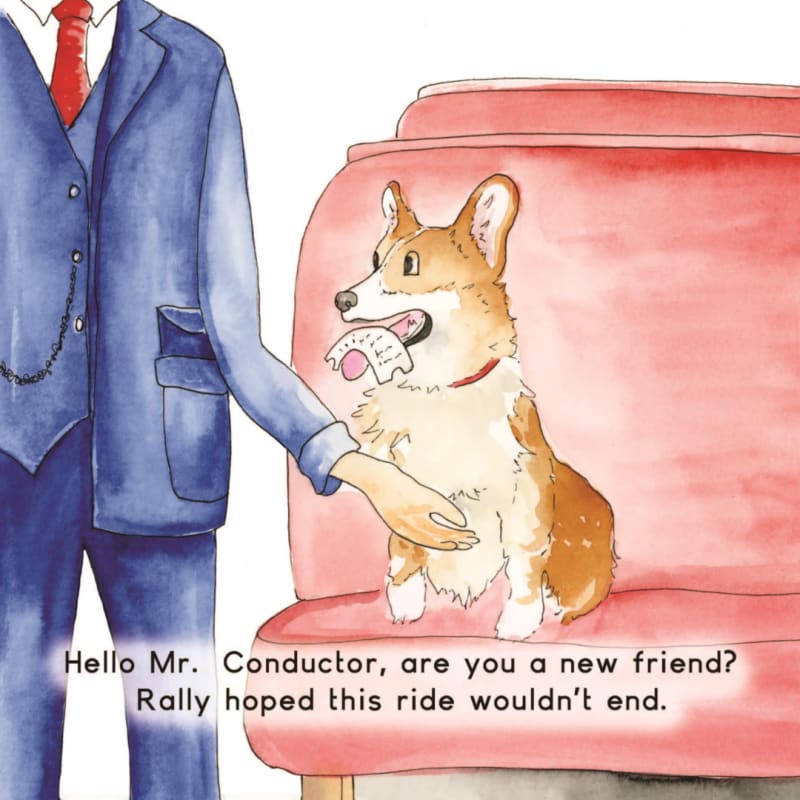
In 1927, 250 people worked the 14 passenger trains that came through Etowah every day. I love picturing them on that depot platform. In our book, Mr. Conductor wears a blue uniform and reaches out a hand to help Rally climb aboard, with Mom and Dad right behind him. Every one of those Etowah railroaders had a part in getting families where they needed to go.
Free for train families
Print the Rally coloring pages before you go
Watercolor coloring pages from the book, free to print. Tuck a few in a folder with crayons for the drive or the wait for the next train.
Get the free coloring pages
A train story for the ride homeRally Takes the Train is a five-minute rhyming picture book about a corgi's first train trip to see his grand-paw-rents. Hand-painted in real watercolor. $13.99 on Amazon, for ages 0 to 8.
Buy on Amazon (opens in a new tab)More for train families
- Train museums in Tennessee: every museum by town, with a map
- Train museums in every state: search by town or near you
- Christmas train rides in Tennessee
- Halloween train rides in Tennessee
- Every Amtrak route with kids
Work or volunteer at L&N Depot & Museum?
We want this page to be the best introduction to your museum on the web. Send new hours, event dates, corrections or photos to kelsey@rallytakesthetrain.com and we will update it. You are welcome to share this page with your members.
Sources
Everything on this page comes from the museum’s own website and social pages and, for history, Wikipedia, checked October 19, 2026.
Etowah L&N Depot: 20 questions visitors ask
What are the Etowah L&N Depot hours?
As of October 2026, the City of Etowah lists the depot's hours as Tuesday through Friday from 8:00 am to 4:30 pm and Saturday from 9:00 am to 5:00 pm. It is closed on Sunday and Monday. Call the L&N Depot & Museum at (423) 263-7840 to confirm before a special trip.
How much does it cost to visit the Etowah L&N Depot museum?
The city's depot page does not list an admission price. Call the L&N Depot & Museum at (423) 263-7840 to ask about admission and any fees for groups before you go, especially if you are bringing a class or tour.
What is in the Etowah L&N Depot museum?
The depot houses a museum titled Growing Up With The L&N: Life and Times in a Railroad Town, about the people who lived and worked in Etowah when the railroad shaped every part of life. A travel listing also mentions an art gallery, visitor information and a gift shop inside.
When was the Etowah L&N Depot built?
The depot was the first permanent building in Etowah, put up after the L&N planned its new Cincinnati to Atlanta route in 1902. It cost $13,000, and the full terminal complex was finished at a cost of $200,000 by the close of 1906. Encyclopedia listings say construction began in 1905.
Why did the L&N Railroad build Etowah?
The L&N wanted a more direct line between Cincinnati and Atlanta that bypassed the Hiwassee River Gorge and the Great Hiwassee Loop. The new route needed a terminal for crew changes, steam engine servicing and an Atlanta Division headquarters, so the railroad set aside 1,454 acres for a depot, shops and a planned town for its workers.
How many people worked for the railroad in Etowah?
By 1927 more than 2,000 men worked in the Etowah shops, and 250 more worked the 14 passenger trains that came through every day. After the L&N switched to steel cars and moved the division offices to Knoxville in 1928, the shop force shrank to just 80 workers by 1931.
When did passenger trains stop at the Etowah depot?
Passenger service through Etowah ended in 1968, and by 1974 the depot had outlived its purpose and closed after 68 years in operation. The building was placed on the National Register of Historic Places in 1977, and the city restored and reopened it in 1981.
Is the Etowah L&N Depot on the National Register of Historic Places?
Yes. The depot was placed on the National Register of Historic Places in 1977, three years after it closed. The City of Etowah and the Tennessee Historic Commission then raised money to acquire it, and a $200,000 restoration reopened the building in 1981.
Has the Etowah depot been restored?
Yes, twice. A full restoration completed in 1981 cost $200,000, the same as the original construction cost of the complex. In 2012 the City of Etowah funded a $250,000 project in which the entire structure, from foundation to roof, was professionally renovated.
Do trains still run past the Etowah L&N Depot?
Yes. The track beside the depot is CSX's main line from Cincinnati to Atlanta, and the CSX yard office where train crews change is just north of the depot and museum. Etowah is still an active rail center, so there is a good chance of seeing freight trains during a visit.
Is the Etowah L&N Depot good for kids?
It can be, especially for kids who love watching real trains, since CSX freight passes right beside the building. The museum exhibits suit school-age children best. Plan a short indoor visit with little ones and leave time to watch the main line from a safe spot.
Can you take a train ride from the Etowah depot?
The city's depot page does not list a train ride. A travel listing mentions a train excursion ticket office inside the depot, so call (423) 263-7840 to ask whether any excursions are currently departing from Etowah and how to book them.
Can I rent the Etowah L&N Depot for a wedding or event?
Yes. The depot's event rooms and grounds are used for weddings, club meetings, family gatherings, fairs and exhibitions. To reserve a room or the grounds, contact Etowah Parks and Recreation at the Community Center at (423) 263-6575 for rental information and availability.
Where is the Etowah L&N Depot?
The depot is in Etowah, Tennessee, right beside the CSX main line, with the CSX yard office just to the north. The city does not list a street address on its depot page, so call the L&N Depot & Museum at (423) 263-7840 for directions and parking information.
Who owns the Etowah L&N Depot?
The City of Etowah owns the depot. After the building closed in 1974, the L&N agreed to part with the property for $35,000 and the city and the Tennessee Historic Commission raised the money. The city has since paid for two major restorations, in 1981 and 2012.
What organizations are based in the Etowah depot?
Besides the museum, the depot is home to the Etowah Chamber of Commerce and the Tennessee Overhill Heritage Tourism Association. A travel listing also notes a visitor information area, which makes the depot a good first stop for planning time in the area.
What is the Portico room at the Etowah depot?
The Portico room is the space on the front of the depot that the L&N added in 1916 to give its engineering department more office room. It reflects how busy the Etowah terminal was in its early years, when the town served as Atlanta Division headquarters.
How big is the Etowah L&N Depot?
The city describes the depot as a 15-room yellow pine Victorian building, while a travel listing calls it a sixteen-room, two-story station. Either way it is a large depot for a small town, built to hold offices as well as passengers.
Does the Etowah L&N Depot have a gift shop?
A travel listing for the depot mentions a gift shop along with the history museum, art gallery and visitor information area. Call the L&N Depot & Museum at (423) 263-7840 to ask what is stocked, such as local history books or railroad souvenirs, and whether the shop keeps the same hours as the museum.
What train attractions are near Etowah, Tennessee?
The Blue Ridge Scenic Railway in Georgia is about 34 miles away, and the Tennessee Valley Railroad Museum and Southern Appalachia Railway Museum are each about 42 miles. The Chattanooga Choo Choo Historic Terminal Station is about 48 miles away, so Etowah pairs well with a Chattanooga trip.
Keep exploring
More family train guides from Rally
- DirectoryRailway Museum Directory650 train museums in all 50 states, with hours, tickets and train rides.
- HolidayChristmas Train RidesSanta trains and holiday light rides, sorted by state and town.
- OctoberHalloween Train RidesPumpkin trains and not-too-spooky rides for little ones, by state.
- NovemberThanksgiving Train RidesHoliday weekend train trips the whole family can share.
- AmtrakAmtrak With KidsWhich Amtrak routes work best with babies, toddlers and big kids.
- Plan a tripTrain Trips With KidsEvery Amtrak route, stop by stop, planned for families.