
Historic Bristol Train Station, Tennessee
Historic rail siteEvent venue; no regular museum hours posted
The Historic Bristol Train Station is the fourth depot to stand on the spot where Bristol began, a 1902 station that once handled more than 20 passenger trains a day and now hosts weddings, meetings and community gatherings under the care of the Bristol Train Station Foundation.
- Current depot built in 1902
- Fourth station on this site
- Last passenger train in May 1971
- Listed on the National Register
- 7,500 square feet of event space
Historic Bristol Train Station at a glance
- Hours
- No public museum hours posted; open for booked events
- Admission
- No admission; venue rentals by arrangement
- Best for
- Rail history fans, wedding and event planners
Hours and prices as the museum posts them, checked October 19, 2026. Confirm before you go.
Look inside the book
Taking the kids to Historic Bristol Train Station? Bring Rally along.
In Rally Takes the Train, a corgi's little legs can't manage the big train stairs, so Dad gives him a boost. It takes about five minutes to read, a good fit for the drive to Bristol.

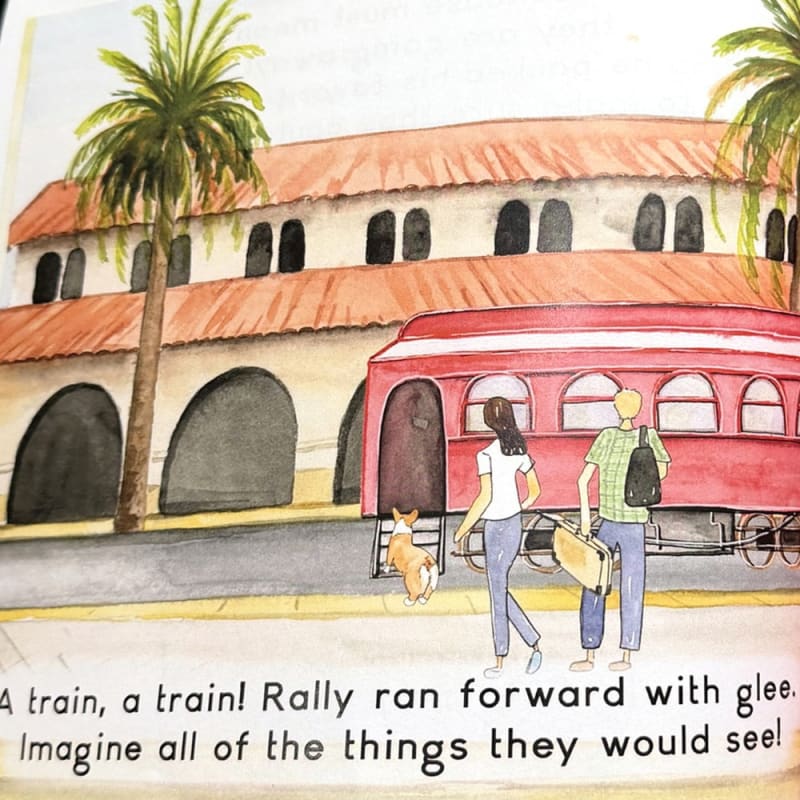


Rally Takes the Train
Eight pages from the book
Turn the page
That's 8 of 25 pages
See who’s waiting at the station
Grandmommy and Papa are at the last stop. Get the full hand-painted book, $13.99 on Amazon.
See the full bookPage 1 of 8

Like it so far? See the full book
25 hand-painted pages, paperback, $13.99 with fast shipping from Amazon.
Every page is real watercolor on paper, painted by hand by Leslie Dunn. Nothing in this book was made with AI.
Four depots in the city the railroad made
Bristol was founded because of the railroad. When surveyors chose this spot for the line, Joseph R. Anderson began developing the town around it, and the first train station here opened in 1856. Regional histories describe the meeting of two early railroads at Bristol that year, the Virginia & Tennessee and the East Tennessee & Virginia, and the day the first train arrived from Lynchburg after a 204-mile run, greeted with speeches, music, cannon fire and a barbecue.
The first depot did not survive the Civil War. The station's own timeline says Union forces burned the passenger terminal during the Stoneman Raid of 1864. A replacement went up quickly after the war, a third, small station followed in the early 1880s as the town grew, and the current building, the fourth depot on the site, was built in 1902.
In its busiest years more than 20 passenger trains pulled in and out each day. Because the railroads on either side of the state line used different track gauges, passengers, livestock and freight once had to get off one train and board another on the far side of the line. The last passenger train left in May 1971. The station was purchased in 1999 and lovingly restored, and the foundation dates the reopening of the renovated station to 2008. Like the nearby Bristol Sign, it is now listed on the National Register of Historic Places.
A working landmark on State Street
Today the station is a venue rather than a museum. Inside are more than 7,500 square feet of event space, with indoor and outdoor settings and modern audio and visual equipment, used for weddings, celebrations of life, business meetings and community gatherings. There is no posted schedule of public museum hours, so plan to admire the building from outside unless you are attending an event or have arranged a visit with the foundation.
Trains still run past the station, so watching the active line is part of the appeal for rail fans. The depot stands just off State Street, near the Bristol Sign, and appears in Bristol's Bank Street mural, which shows the station with an early Norfolk & Western diesel roaring down the track. The foundation says it looks forward to the day passenger trains return to Bristol.
Don’t miss
- The 1902 depotThe fourth station on this site and the one that served Bristol's busiest passenger years, now restored and on the National Register.
- The active rail lineFreight trains still roll past the station, a reminder that Bristol's railroad never left.
- The Bank Street muralA Bristol mural scene features the train station with an early Norfolk & Western diesel on the track.
- The Bristol SignThe nearby landmark, also on the National Register, has stood beside the depot in photos for decades.
Trainspotting at a grand old depot
There are no exhibits or play areas to explore, but kids who love trains can watch for freight on the active line beside the station and look for the depot in the Bank Street mural. It makes a short stop on a downtown Bristol walk rather than a full outing, and the foundation's community events are the best chance to step inside.
Plan your visit: tips for Historic Bristol Train Station
- Contact the foundation before visiting if you want to see the interior.
- Event and rental questions go to events@bristoltrainstation.org.
- Look for the station in the Bank Street mural downtown.
- Combine a look at the depot with the nearby Bristol Sign.
The foundation that keeps the station in use
The Bristol Train Station Foundation Board preserves the station and keeps it at the center of community life through fundraising, event and office rentals and local support. The board is candid that maintaining a historic building is demanding, and it invites people to help by attending events, renting space or contributing to preservation.
More rail stops near the state line
The Johnson City Railroad Experience is about 21 miles away and makes a good indoor pairing for families. The Watauga Valley Railroad Historical Society & Museum in Jonesborough is about 26 miles, and Tweetsie Railroad is about 42 miles. For more, see our Tennessee train museum guide.
- Johnson City Railroad ExperienceJohnson City, TN · about 21 mi
- Watauga Valley Railroad Historical Society & MuseumJohnson City area, TN · about 26 mi
- Tweetsie RailroadBlowing Rock, NC · about 42 mi
- Old Fort Railroad MuseumOld Fort, NC · about 67 mi
- Craggy Mountain LineAsheville / Woodfin, NC · about 70 mi
- Princeton Railroad MuseumPrinceton, WV · about 81 mi
Bring Rally along: a train book for the drive

Travelers through Bristol once had to climb off one train and onto another at the state line, bags and all, because the tracks were different sizes. I think about Rally packing his suitcase with his turtle toy, his green bone and his yellow ball. He would have held on tight to that bag on the platform while Mom and Dad found the next train, and Dad would have carried it the rest of the way.
Free for train families
Print the Rally coloring pages before you go
Watercolor coloring pages from the book, free to print. Tuck a few in a folder with crayons for the drive or the wait for the next train.
Get the free coloring pages
A train story for the ride homeRally Takes the Train is a five-minute rhyming picture book about a corgi's first train trip to see his grand-paw-rents. Hand-painted in real watercolor. $13.99 on Amazon, for ages 0 to 8.
Buy on Amazon (opens in a new tab)More for train families
- Train museums in Tennessee: every museum by town, with a map
- Train museums in every state: search by town or near you
- Christmas train rides in Tennessee
- Halloween train rides in Tennessee
- Every Amtrak route with kids
Work or volunteer at Historic Bristol Train Station?
We want this page to be the best introduction to your museum on the web. Send new hours, event dates, corrections or photos to kelsey@rallytakesthetrain.com and we will update it. You are welcome to share this page with your members.
Sources
Everything on this page comes from the museum’s own website and social pages and, for history, Wikipedia, checked October 19, 2026.
Historic Bristol Train Station: 20 common questions
What is the Historic Bristol Train Station?
It is Bristol's restored 1902 railroad depot, the fourth station built on the site where the town began. Passenger trains stopped running in May 1971, and today the building is an event and wedding venue cared for by the Bristol Train Station Foundation. It is listed on the National Register of Historic Places.
Can you tour the Historic Bristol Train Station?
The station does not post public museum hours or a tour schedule. It operates as an event venue, so the best ways inside are attending a community event or contacting the foundation at info@bristoltrainstation.org or (276) 644-1573 to ask about a visit.
When was the Bristol train station built?
The current station was built in 1902. It is the fourth depot on the site: the first opened in 1856, was burned during the Civil War, was replaced soon after the war, and was followed by a small third station in the early 1880s before the present building went up.
Who burned the first Bristol train station?
The station's history says Union forces burned the first depot during the Civil War, and its timeline dates the fire to 1864 during the Stoneman Raid. The station was rebuilt quickly after the war, and two more depots followed before the current one in 1902.
When did the last passenger train leave Bristol?
The last passenger train departed the Bristol station in May 1971. At the station's peak, more than 20 passenger trains pulled in and out every day. The foundation says it looks forward to the day passenger rail returns to Bristol.
Why did passengers change trains in Bristol?
In the early years the tracks on either side of the state line were built to different gauges, so trains could not run straight through. Passengers, livestock and freight had to get off one train and board another on the adjacent track on the far side of the line.
Who founded Bristol?
The station's history credits Joseph R. Anderson, who began developing the area after surveyors chose the spot for the railway. The town grew because of the railroad, and the first train station opened here in 1856, the same year two early railroads connected at Bristol.
When did the first train arrive in Bristol?
Regional histories say the Virginia and Tennessee Railroad finished its track to Bristol in September 1856, and the first train arrived from Lynchburg on October 1 after a 204-mile run. Residents celebrated with speeches, music, cannon fire and a barbecue.
Is the Bristol train station on the National Register of Historic Places?
Yes. Like the nearby Bristol Sign, the train station is listed on the National Register of Historic Places. It was restored in the 2000s and reopened as a renovated station, and the foundation continues to raise money to keep the landmark in good repair.
When was the Bristol train station restored?
The station's timeline says it was purchased in 1999 and that the renovated station opened in 2008. Its history page also describes the restoration as timed to the town's sesquicentennial. Either way, the building was carefully restored and is now in active use as an event venue.
Can I rent the Historic Bristol Train Station for a wedding?
Yes. The station hosts weddings, celebrations of life, business meetings and community gatherings, with more than 7,500 square feet of event space, indoor and outdoor settings and audio and visual equipment. One bride praised the team's professionalism in a review on the station's website. Contact events@bristoltrainstation.org or call (276) 644-1573 for availability.
How big is the Historic Bristol Train Station event space?
The foundation lists more than 7,500 square feet of versatile event space, with both indoor and outdoor settings and state-of-the-art audio and visual capabilities. Rental details and pricing are not posted online, so email events@bristoltrainstation.org for a quote.
Do trains still run past the Bristol train station?
Yes. The foundation notes that trains continue to roll by the station, even though passenger service ended in 1971. Rail fans who stop by may get to see a passing freight train, but keep well back from the tracks and respect any posted private property or event areas around the building.
Is the Historic Bristol Train Station good for kids?
It is a short stop rather than a full family outing, since there are no exhibits or play areas posted. Kids who love trains may enjoy watching for freight on the active line and spotting the station in Bristol's Bank Street mural. Community events are the best time to look inside.
Where is the Historic Bristol Train Station?
The station stands just off State Street in downtown Bristol, near the famous Bristol Sign. The foundation does not post a street address online, so call (276) 644-1573 or email info@bristoltrainstation.org for directions and parking details.
Who owns and runs the Historic Bristol Train Station?
The Bristol Train Station Foundation Board preserves the landmark and keeps it at the heart of the community. It funds the station through fundraising, event and office rentals and community support. The board says sustaining a historic property brings unique challenges.
How can I support the Historic Bristol Train Station?
The foundation suggests three ways: attend events at the station, rent its event or office spaces, or contribute to its preservation work. Every bit helps keep the landmark in good shape, the board says. Reach the foundation at info@bristoltrainstation.org or (276) 644-1573 to ask about donations or upcoming community events.
Is the Bristol train station in the Bank Street mural?
Yes. One scene in Bristol's Bank Street mural features the historic train station, with an early Norfolk & Western diesel engine roaring down the track. It is a fun thing to find on a downtown walk before or after seeing the real depot.
Will passenger trains return to Bristol?
No date has been announced, but the foundation says it looks forward to the day passenger rail returns and brings new journeys and connections to Bristol. Follow the station's website for news on any future rail service.
What train museums are near Bristol, Tennessee?
The Johnson City Railroad Experience is about 21 miles away, the Watauga Valley Railroad Historical Society's Chuckey Depot Museum in Jonesborough is about 26 miles, and Tweetsie Railroad in Blowing Rock, North Carolina, is about 42 miles. The Princeton Railroad Museum in West Virginia is about 81 miles.
Keep exploring
More family train guides from Rally
- DirectoryRailway Museum Directory650 train museums in all 50 states, with hours, tickets and train rides.
- HolidayChristmas Train RidesSanta trains and holiday light rides, sorted by state and town.
- OctoberHalloween Train RidesPumpkin trains and not-too-spooky rides for little ones, by state.
- NovemberThanksgiving Train RidesHoliday weekend train trips the whole family can share.
- AmtrakAmtrak With KidsWhich Amtrak routes work best with babies, toddlers and big kids.
- Plan a tripTrain Trips With KidsEvery Amtrak route, stop by stop, planned for families.