
Cedar Rapids & Iowa City Railway (CRANDIC) in Cedar Rapids area, Iowa
Rail preservation groupInterurban passenger service ended in the 1950s; the CRANDIC still runs freight, and no public exhibit site is posted
The Cedar Rapids & Iowa City Railway, known as the CRANDIC, began as an electric interurban linking two east central Iowa cities and is one of only a few original interurbans still operating today.
- Electric interurban from 1904
- Passenger service for nearly 50 years
- Still operating as a freight railroad
- Known as the Crandic Route
Cedar Rapids & Iowa City Railway (CRANDIC) at a glance
- Hours
- No public exhibit hours are posted
- Admission
- Not applicable
- Best for
- Interurban and Iowa history fans
Hours and prices as the museum posts them, checked October 19, 2026. Confirm before you go.
Contact and directions
Look inside the book
Taking the kids to Cedar Rapids & Iowa City Railway (CRANDIC)? Bring Rally along.
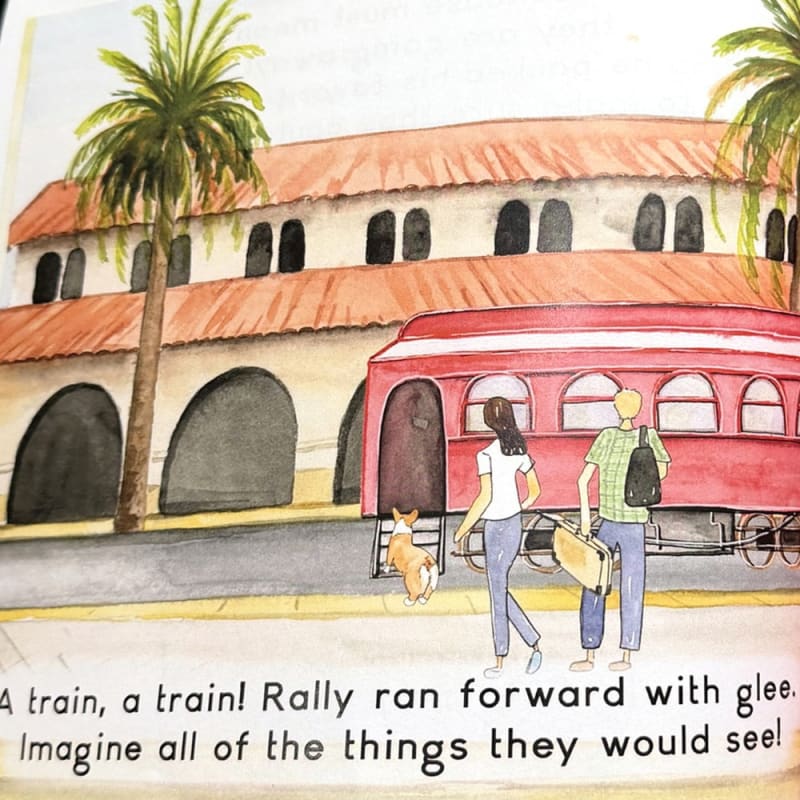
In Rally Takes the Train, a corgi's little legs can't manage the big train stairs, so Dad gives him a boost. It takes about five minutes to read, a good fit for the drive to Cedar Rapids area.



Rally Takes the Train
Eight pages from the book
Turn the page
That's 8 of 25 pages
See who’s waiting at the station
Grandmommy and Papa are at the last stop. Get the full hand-painted book, $13.99 on Amazon.
See the full bookPage 1 of 8

Like it so far? See the full book
25 hand-painted pages, paperback, $13.99 with fast shipping from Amazon.
Every page is real watercolor on paper, painted by hand by Leslie Dunn. Nothing in this book was made with AI.
Two Iowa cities, one electric line
At the start of the 20th century, people in Cedar Rapids and Iowa City were eager for a fast electric connection. Construction of what began as the Dows & Smith Electrified Interurban Railway started in 1903, and by June of that year local newspapers were already reporting on the trips it would soon offer between the two cities. The line became the Cedar Rapids & Iowa City Railway, nicknamed the CRANDIC, and its electric trolley cars began carrying passengers in 1904.
For nearly fifty years, into the 1950s, CRANDIC interurbans ran between Iowa City and Cedar Rapids. When passenger service ended, the railroad did not disappear. Its motto lives on as the Crandic Route, and rail historians count it among only a few original interurbans still operating today.
Today the CRANDIC is a Class III freight railroad, operating about 60 miles of main line and more than 40 miles of yard track across four east central Iowa counties. There is no dedicated public museum for the interurban, so the best ways to learn its story are local history collections and the photo archives kept by Iowa heritage writers.
Where to find the CRANDIC story now
No regular public exhibit site for CRANDIC history is posted online. Iowa heritage websites have published overviews and picture pages of the interurban years, and the Western Railway Museum in California, which focuses on electric railways, lists Cedar Rapids and Iowa City material in its collection pages. Check with local historical societies in Cedar Rapids and Iowa City for any current displays.
Sharing the trolley story with kids
There is no museum to tour, but the CRANDIC story is easy to share with children: picture an electric trolley car humming between Cedar Rapids and Iowa City, carrying people to work, school and shopping a century ago. Old photos of the interurban can make a fun look-and-find activity before a visit to one of Iowa's operating rail museums.
Plan your visit: tips for Cedar Rapids & Iowa City Railway (CRANDIC)
- For interurban rides and displays in Iowa, look at the state's operating rail museums instead.
- Ask local historical societies in Cedar Rapids and Iowa City about CRANDIC photographs and artifacts.
- The CRANDIC is an active freight railroad; watch trains only from public places and never walk on the tracks.
Who keeps the memory alive
The CRANDIC's interurban history is kept alive by local historians and heritage writers who have collected newspaper stories and photographs from the line's passenger years, and by railroad museums that preserve electric railway equipment. Supporting your local historical society is a good way to help that work continue.
Where to ride and see trains in Iowa
To see railroad history in person, browse train museums across Iowa, including depots, a narrow gauge steam line and heritage railroads with trolley rides.
Bring Rally along: a train book for the drive

A trolley between two cities makes me think about what riders saw through those windows: farms, river bends, neighbors waving. In our book, Rally's favorite spot is the arched window where he spots the ocean and a white bird. My mom always said the best part of a train is the view. She dreamed up Rally's trip before she died in 2021, and you can read how it became a book on our story page.
Free for train families
Print the Rally coloring pages before you go
Watercolor coloring pages from the book, free to print. Tuck a few in a folder with crayons for the drive or the wait for the next train.
Get the free coloring pages
A train story for the ride homeRally Takes the Train is a five-minute rhyming picture book about a corgi's first train trip to see his grand-paw-rents. Hand-painted in real watercolor. $13.99 on Amazon, for ages 0 to 8.
Buy on Amazon (opens in a new tab)More for train families
- Train museums in Iowa: every museum by town, with a map
- Train museums in every state: search by town or near you
- Christmas train rides in Iowa
- Halloween train rides in Iowa
- Every Amtrak route with kids
Work or volunteer at Cedar Rapids & Iowa City Railway (CRANDIC)?
We want this page to be the best introduction to your museum on the web. Send new hours, event dates, corrections or photos to kelsey@rallytakesthetrain.com and we will update it. You are welcome to share this page with your members.
The CRANDIC interurban: 20 common questions
What is the Cedar Rapids and Iowa City Railway?
The Cedar Rapids and Iowa City Railway, known as the CRANDIC, began as an electric interurban carrying passengers between Cedar Rapids and Iowa City. Today it is a Class III freight railroad operating about 60 miles of main line and more than 40 miles of yard track in four east central Iowa counties.
Is there a CRANDIC museum I can visit?
No regular public museum or exhibit site for CRANDIC history is posted online. To learn more, check with local historical societies in Cedar Rapids and Iowa City, and look at Iowa heritage websites that have published histories and photo pages of the interurban.
When did the CRANDIC interurban start?
Construction began in 1903 on what was first called the Dows & Smith Electrified Interurban Railway, later the Cedar Rapids and Iowa City Railway. By June 1903 local newspapers were reporting on the coming service, and electric passenger cars began running between the two cities in 1904.
When did CRANDIC passenger service end?
The CRANDIC's electric passenger trains ran between Iowa City and Cedar Rapids for nearly fifty years, from 1904 into the 1950s. After passenger service ended, the company kept operating as a freight railroad, which it still does today.
Is the CRANDIC still operating?
Yes. The CRANDIC is a Class III railroad still operating in Iowa, and rail historians describe it as one of only a few original interurbans still running today. It now carries freight rather than passengers, over about 60 miles of main line.
Why is it called the CRANDIC?
CRANDIC is a nickname built from the railroad's name, the Cedar Rapids AND Iowa City. The railroad's motto, the Crandic Route, made the name part of everyday Iowa speech. Its official reporting mark is CIC.
How far apart are Cedar Rapids and Iowa City on the CRANDIC?
The interurban linked the two cities over a route of roughly 27 miles, with many stops along the way. Today's freight railroad has about 60 miles of main line in total, plus more than 40 miles of yard track, spread across four counties.
Can I ride the CRANDIC today?
Regular passenger rides are not offered, since the CRANDIC is now a freight railroad. If your family wants an interurban or trolley ride in Iowa, look at the state's heritage railroads and trolley museums, several of which run electric cars on operating days.
Are there photos of the CRANDIC interurban?
Yes. Iowa heritage websites have published picture pages of the CRANDIC's electrified trolley system from its passenger years, often with old newspaper clippings. Local historical societies and libraries in Cedar Rapids and Iowa City may hold more photographs.
Is CRANDIC equipment preserved anywhere?
The Western Railway Museum in Suisun City, California, which focuses on electric railways, lists Cedar Rapids and Iowa City material in its collection pages. Contact that museum to ask what is on display, since some of its cars are only viewable during guided tours.
What kind of railroad was the CRANDIC?
The CRANDIC was an interurban, an electric railway built to carry passengers, and some freight, between nearby cities faster than horse or road travel of the day. Interurbans were common in the early 1900s, and very few of the original companies still exist.
Who built the CRANDIC?
The line began as the Dows & Smith Electrified Interurban Railway, with construction starting in 1903, and it took the name Cedar Rapids and Iowa City Railway. Local newspapers followed the building of the line closely as residents of both cities looked forward to service.
Can I watch CRANDIC trains?
The CRANDIC is an active freight railroad, so trains do run in the Cedar Rapids and Iowa City area. Watch only from public places such as sidewalks and parks, never on railroad property, and keep children well back from the tracks.
Is the CRANDIC history good to share with kids?
Yes. The idea of an electric trolley car running between two cities a century ago is easy for kids to picture. Old photos make a nice activity at home, and a visit to an operating Iowa rail museum can let them see similar equipment up close.
Are there Christmas or Halloween trains on the CRANDIC?
No public holiday excursions on the CRANDIC are listed online, since it operates as a freight railroad. For holiday trains, look at Iowa's heritage railroads, several of which run North Pole or Halloween themed trips each year.
Where can I research CRANDIC history?
Start with local historical societies and public libraries in Cedar Rapids and Iowa City, which may hold newspaper archives from 1903 onward. Iowa heritage websites have also written detailed overviews of the interurban years that are a good starting point.
How many counties does the CRANDIC serve?
The CRANDIC operates in four east central Iowa counties, with about 60 miles of main line and more than 40 miles of yard trackage. Its original interurban purpose was to connect Cedar Rapids and Iowa City, and freight service grew from there.
Was the CRANDIC a streetcar line?
Not exactly. The CRANDIC was an interurban, a type of electric railway that ran between cities rather than only on city streets. Its electrified trolley cars ran on their own line between Cedar Rapids and Iowa City for nearly fifty years.
How can I help preserve CRANDIC history?
Support local historical societies in Cedar Rapids and Iowa City, share any family photos or memories of riding the interurban with them, and support railroad museums that preserve electric railway equipment. Memberships and donations help keep these collections cared for.
What train museums can I visit in Iowa?
Iowa has railroad museums in Council Bluffs, Boone, Mount Pleasant, Fort Madison, Red Oak, Iowa Falls and Sioux City, plus a trolley park in Clear Lake. Several offer rides on operating days, including the Boone & Scenic Valley Railroad, which runs an electric trolley.
Keep exploring
More family train guides from Rally
- DirectoryRailway Museum Directory650 train museums in all 50 states, with hours, tickets and train rides.
- HolidayChristmas Train RidesSanta trains and holiday light rides, sorted by state and town.
- OctoberHalloween Train RidesPumpkin trains and not-too-spooky rides for little ones, by state.
- NovemberThanksgiving Train RidesHoliday weekend train trips the whole family can share.
- AmtrakAmtrak With KidsWhich Amtrak routes work best with babies, toddlers and big kids.
- Plan a tripTrain Trips With KidsEvery Amtrak route, stop by stop, planned for families.