
Allegheny Portage Railroad National Historic Site in Gallitzin, Pennsylvania
Historic rail siteEngine House No. 6 open Friday to Tuesday, 9 am to 5 pm
Allegheny Portage Railroad National Historic Site preserves the first railroad to cross the Allegheny Mountains, a 36-mile system of inclined planes that from 1834 to 1854 lifted canal boats over the ridge and linked Philadelphia to Pittsburgh by one direct route.
- First railroad over the Alleghenies
- Operated 1834 to 1854
- Engine House No. 6 exhibit shelter
- Historic Lemon House tavern
- Junior Ranger program
- Established as a park in 1964
Allegheny Portage Railroad National Historic Site at a glance
- Hours
- Engine House No. 6: Friday to Tuesday, 9 am to 5 pm (closed Wednesday and Thursday)
- Admission
- Not posted with the park hours; check nps.gov/alpo
- Seasonal events
- Summer programs and hands-on demonstrations
- Plan for
- About 2 to 3 hours
- Best for
- History-minded families, hikers and engineering fans
- Best ages
- Ages 5 and up
- Parking
- Visitor Center lot reached from the Gallitzin Exit on US Route 22; no parking at the Engine House or Lemon House
- Accessibility
- The park posts accessibility information on its website; ask the Visitor Center about the boardwalk route
Hours and prices as the museum posts them, checked October 19, 2026. Confirm before you go.
Look inside the book
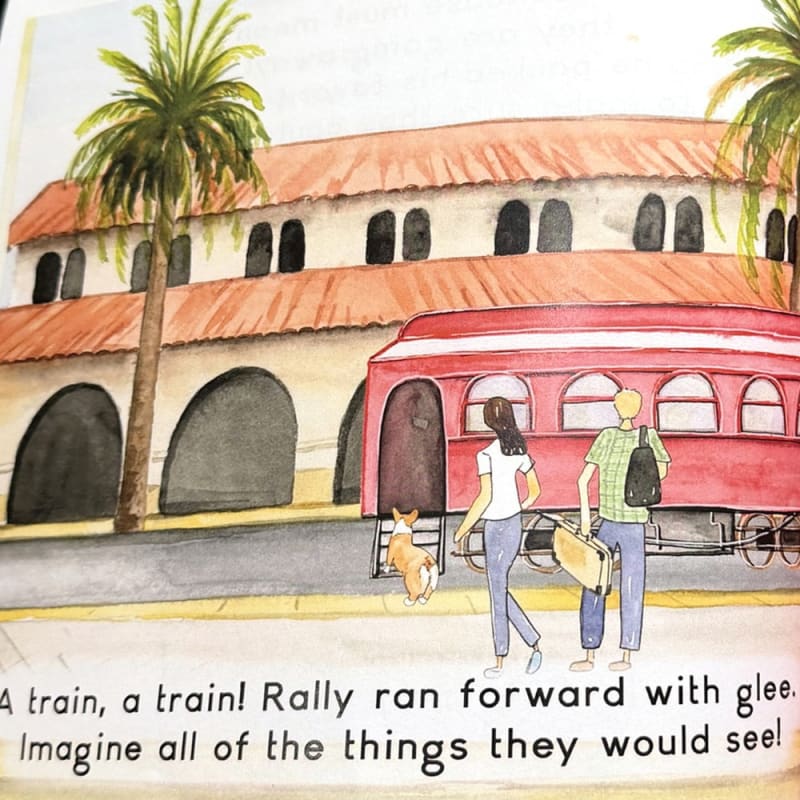
Taking the kids to Allegheny Portage Railroad National Historic Site? Bring Rally along.
In Rally Takes the Train, a corgi's little legs can't manage the big train stairs, so Dad gives him a boost. It takes about five minutes to read, a good fit for the drive to Gallitzin.



Rally Takes the Train
Eight pages from the book
Turn the page
That's 8 of 25 pages
See who’s waiting at the station
Grandmommy and Papa are at the last stop. Get the full hand-painted book, $13.99 on Amazon.
See the full bookPage 1 of 8

Like it so far? See the full book
25 hand-painted pages, paperback, $13.99 with fast shipping from Amazon.
Every page is real watercolor on paper, painted by hand by Leslie Dunn. Nothing in this book was made with AI.
Canal boats over a mountain: the wonder of America
In the 1820s Pennsylvania was losing trade to New York's Erie Canal and to the routes being built in Maryland. Its answer was the Main Line of Public Works, authorized in 1824: canals and railroads stitched together from Philadelphia to Pittsburgh. The hardest gap was the Allegheny Front. Between Hollidaysburg and Johnstown, the state built the Allegheny Portage Railroad, about 36 miles long, starting in 1831 and finishing in 1834.
The design was bold. Mules pulled short trains along eleven gently sloped grade lines, and on ten steep inclined planes, five on each side of the summit, stationary steam engines in engine houses hauled cars up and lowered them down by rope, hemp at first and wire from 1842. Loaded canal boats rode over the mountain on flatbed cars. The line also included the 900-foot Staple Bend Tunnel, the first railroad tunnel in the United States. A trip from Philadelphia to the Ohio River dropped from weeks to a few days, and Charles Dickens wrote about riding it in 1842.
The Pennsylvania Railroad made it obsolete. Through trains began running between Philadelphia and Pittsburgh in December 1852, and in 1857 the PRR bought the Portage and most of the Main Line from the state, abandoning much of it. Part of the old roadbed came back as a freight bypass in 1904, until Conrail pulled up those rails in 1981.
The American Society of Civil Engineers named the railroad a National Historic Civil Engineering Landmark in 1987. The National Historic Site was set up in 1964, and today National Park Service rangers and staff care for the visitor center, the engine house, the Lemon House, trails and the separate Staple Bend Tunnel unit.
From the Summit Level to Engine House No. 6
Start at the Summit Level Visitor Center, where you can get oriented, look through exhibits and watch the park's introductory film. From there a boardwalk, or the old Gallitzin Road, leads about a third of a mile to the Engine House No. 6 Exhibit Shelter at the top of Incline 6. More than half the shelter holds a reproduction of the machinery that once worked there: a stationary engine (not a locomotive), plus the gears, brakes and levers that kept the tow rope moving. The shelter was built a little larger than the original so it could protect the old foundations, which you can see through the metal grate floor. Self guided panels, interactive pieces and tactile exhibits let you go at your own pace.
Nearby, the Samuel Lemon House was a tavern beside the railroad where passengers stopped, and visitors can explore its first floor. Look also for the skew arch bridge, a cut stone bridge over Incline 6 that was the only bridge on the line built to carry a road, plus a stretch of reconstructed track, a picnic area and trails for hiking and biking. The Staple Bend Tunnel sits in a separate unit of the park about 5 miles east of Johnstown.
Don’t miss
- Engine House No. 6 Exhibit ShelterA full scale reproduction of the stationary engine machinery, built over the original foundations, explains exactly how boats were winched up the mountain.
- The Lemon HouseThis historic tavern served travelers on the Portage, and its first floor is open to explore.
- The skew arch bridgeA masterwork of cut stone, about 22 feet high, and the only bridge on the line that carried a road over the railroad.
- Staple Bend TunnelThe first railroad tunnel in America, 900 feet long, preserved in its own park unit east of Johnstown.
- The introductory filmShown at the Summit Level Visitor Center, it is the quickest way to understand the canal and incline system before you walk out to the engine house.
Junior Rangers, demonstrations and tactile exhibits
Kids can pick up a Junior Ranger book at the information desk in the Summit Level Visitor Center. The answers are found around the park, in the engine house, the Lemon House, along the trails and even by helping with a historic demonstration, so it is a fun way to keep children moving and curious. The book has to be completed in person; the park does not mail out workbooks or badges.
In summer the park offers hands-on demonstrations for children, and the Engine House No. 6 shelter has interactive and tactile exhibits that let kids see how the gears and ropes worked. The walk to the engine house is about a third of a mile each way, so bring a stroller or carrier for little ones.
Plan your visit: tips for Allegheny Portage Railroad National Historic Site
- Use the Gallitzin Exit on US Route 22; mapping apps may show other entrances that do not reach the Visitor Center lot.
- There is no vehicle parking at the Engine House or Lemon House, so plan on the one-third mile walk from the Visitor Center.
- Parking at the picnic area means a half-mile woodland hike to the historic area.
- The Engine House is closed Wednesdays and Thursdays.
- The Staple Bend Tunnel is a separate drive, about 5 miles east of Johnstown.
Rangers keep the Portage story going
The National Park Service runs the site, with rangers leading programs, staffing the Summit Level Visitor Center and maintaining the trails, engine house and Lemon House. Visitors help by joining the Junior Ranger program, coming out for summer programs listed on the park calendar and following the park's guidance on safety and photography permits.
A rail history weekend around the Allegheny Front
Gallitzin Tunnels Park and Museum is only about 2 miles away, and the Horseshoe Curve National Historic Landmark and the Railroaders Memorial Museum in Altoona are each about 9 miles off. Together they show how the Pennsylvania Railroad replaced the inclined planes. For more ideas, see train museums across Pennsylvania.
- Gallitzin Tunnels Park & MuseumGallitzin, PA · about 2 mi
- Portage Station MuseumPortage, PA · about 8 mi
- Everett RailroadHollidaysburg, PA · about 9 mi
- Railroaders Memorial MuseumAltoona, PA · about 9 mi
- Horseshoe Curve National Historic LandmarkAltoona, PA · about 9 mi
- Altoona Works historic railroad exhibitsAltoona, PA · about 9 mi
Bring Rally along: a train book for the drive
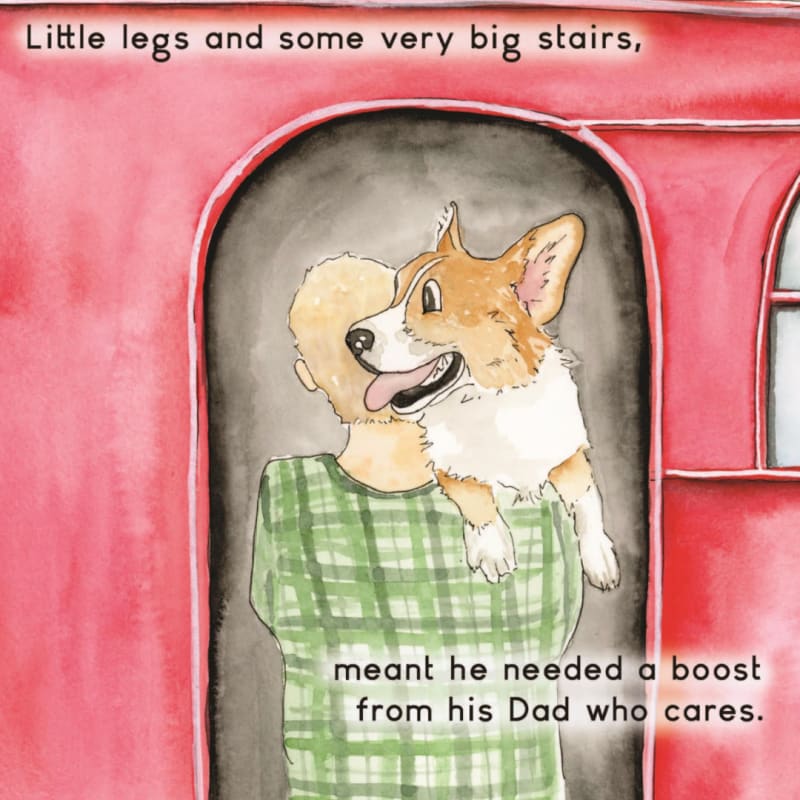
Here, steam engines pulled whole canal boats up the side of a mountain. That made me smile, because in our book the climb is much smaller: Rally's short corgi legs cannot manage the big train stairs, so Dad gives him a boost. Every traveler needs a little help over the hard part, whether it is a canal boat or a corgi.
Free for train families
Print the Rally coloring pages before you go
Watercolor coloring pages from the book, free to print. Tuck a few in a folder with crayons for the drive or the wait for the next train.
Get the free coloring pages
A train story for the ride homeRally Takes the Train is a five-minute rhyming picture book about a corgi's first train trip to see his grand-paw-rents. Hand-painted in real watercolor. $13.99 on Amazon, for ages 0 to 8.
Buy on Amazon (opens in a new tab)More for train families
- Train museums in Pennsylvania: every museum by town, with a map
- Train museums in every state: search by town or near you
- Christmas train rides in Pennsylvania
- Halloween train rides in Pennsylvania
- Every Amtrak route with kids
Work or volunteer at Allegheny Portage Railroad National Historic Site?
We want this page to be the best introduction to your museum on the web. Send new hours, event dates, corrections or photos to kelsey@rallytakesthetrain.com and we will update it. You are welcome to share this page with your members.
Sources
- Allegheny Portage Railroad National Historic Site official website(opens in a new tab)
- Allegheny Portage Railroad on Wikipedia(opens in a new tab)
Everything on this page comes from the museum’s own website and social pages and, for history, Wikipedia, checked October 19, 2026.
Allegheny Portage Railroad: 20 questions families ask
Where is the Allegheny Portage Railroad National Historic Site?
The park's mailing address is 110 Federal Park Road, Gallitzin, PA 16641, in Blair and Cambria Counties near Cresson, about 12 miles west of Altoona. The Visitor Center parking lot is reached from the Gallitzin Exit on US Route 22. Call (814) 886-6150 if you need directions.
How do I get to the Allegheny Portage Railroad Visitor Center on Federal Park Road?
Take the Gallitzin Exit on US Route 22 and follow signs to the Summit Level Visitor Center. The park warns that mapping programs may show other entrances, but the Visitor Center parking lot and access to the historic area are from the Gallitzin Exit. Parking at the picnic area means a half-mile hike.
What is at the Allegheny Portage Railroad Visitor Center?
The Summit Level Visitor Center is where the park suggests you start. You can get oriented, see exhibits on how the railroad was built and run, watch the introductory film, and pick up a Junior Ranger book at the information desk. From there, a boardwalk leads to Engine House No. 6.
Do you need tickets for Allegheny Portage Railroad National Historic Site?
The park's visitor pages do not mention tickets or an entrance fee for a regular visit. Engine House No. 6 tours are self guided, so you can linger as long as you like. Check nps.gov/alpo or call (814) 886-6150 to confirm any fees or special program reservations before your trip.
What are the Allegheny Portage Railroad hours?
As of October 2026, the Engine House No. 6 Exhibit Shelter is open Fridays through Tuesdays from 9 am to 5 pm and closed Wednesdays and Thursdays. The park also posts operating hours and holiday closures for its other buildings and grounds on its Operating Hours and Seasons page, so check there before you go.
Is there a map of the Allegheny Portage Railroad National Historic Site?
Yes. The National Park Service posts park maps and directions on the Maps page of nps.gov/alpo. The main unit has the Visitor Center, Engine House No. 6, the Lemon House, the skew arch bridge and trails, while the Staple Bend Tunnel is a separate unit about 5 miles east of Johnstown.
What is Engine House No. 6 at the Allegheny Portage Railroad?
It is an exhibit shelter at the top of Incline 6, about a third of a mile from the Visitor Center. More than half of it holds a reproduction of the stationary engine, gears, brakes and levers that pulled the tow rope. The shelter covers the original foundations, which you can see through the metal grate floor.
What is the Lemon House at the Allegheny Portage Railroad?
The Samuel Lemon House was a tavern beside the railroad near Cresson and a popular stop for passengers in the mid 1800s. The National Park Service has turned it into a historical museum, and visitors can explore its first floor. There is no vehicle parking at the house, so walk from the Visitor Center.
What was the Allegheny Portage Railroad?
It was the first railroad through the Allegheny Mountains, about 36 miles long between Hollidaysburg and Johnstown. From 1834 to 1854 it carried canal boats and passengers over the ridge on ten inclined planes worked by stationary steam engines, linking the two halves of the Pennsylvania Main Line Canal.
How did the inclined planes work on the Allegheny Portage Railroad?
The route alternated eleven gently sloped grade lines, where mules pulled short trains, with ten steep inclined planes, five on each side of the summit. At the top of each plane an engine house held a stationary steam engine that hauled cars up or lowered them down by rope, hemp at first and wire rope from 1842.
What is the Staple Bend Tunnel?
The Staple Bend Tunnel was the first railroad tunnel in America. It is 900 feet long and, by cutting through the hill, saved five extra miles of railroad. It is preserved in a separate unit of the National Historic Site about 5 miles east of Johnstown, reached by a different route than the main park.
Is the Allegheny Portage Railroad good for kids?
Yes, especially for kids who like machines and exploring outdoors. Children can earn a Junior Ranger badge by completing the park's book in person, and in summer the park offers hands-on demonstrations. Engine House No. 6 has interactive and tactile exhibits, and there are trails to hike between the buildings.
How does the Junior Ranger program work at Allegheny Portage Railroad?
Ask at the information desk in the Summit Level Visitor Center for the park's Junior Ranger book. Answers are found in the Visitor Center, Engine House No. 6, the Lemon House, along the trails or by helping with a historic demonstration. It must be done on site; the park does not mail books or badges.
How long should I spend at Allegheny Portage Railroad National Historic Site?
Plan about two to three hours to watch the film, see the Visitor Center exhibits, walk the third of a mile to Engine House No. 6 and visit the Lemon House and skew arch bridge. Add more time if you want to hike or bike the trails or drive to the Staple Bend Tunnel unit.
Where do I park for Engine House No. 6 and the Lemon House?
Park at the Visitor Center. For safety reasons there is no vehicle parking at the Engine House or the Lemon House. From the Visitor Center you walk about a third of a mile by boardwalk or the old Gallitzin Road. Extra parking at the picnic area involves a half-mile trail hike through the woods.
Are there reviews of the Allegheny Portage Railroad National Historic Site?
Travel and tourism sites describe the park as an engineering marvel that preserves traces of the first railroad crossing of the Allegheny Mountains. Visitors generally come for the engine house exhibits, the Lemon House and the trails. Read recent reviews alongside the park's own alerts for current conditions.
Can I take photos at the Allegheny Portage Railroad?
Yes, personal photography is a common part of a visit, and the park keeps photo galleries on its website. If you are planning commercial filming or a professional shoot, the park has a Permits and Photography page explaining when a permit is needed, so check that and call (814) 886-6150 first.
Can you hike or bike at the Allegheny Portage Railroad?
Yes. The park has trails for hiking and biking that mix nature and history, and a picnic area. One trail links the picnic area to the historic area with about a half-mile walk through the woods. Check the park website for current trail conditions and any closures before heading out.
When did the Allegheny Portage Railroad close and become a park?
The railroad ran from 1834 to 1854, after which the Pennsylvania Railroad's new line over the mountains made it obsolete. The PRR bought it from the state in 1857 and abandoned most of it. The National Historic Site was established in 1964 to preserve what remains.
What train sites are near the Allegheny Portage Railroad?
Gallitzin Tunnels Park and Museum is about 2 miles away. The Portage Station Museum is about 8 miles off, and Horseshoe Curve, the Railroaders Memorial Museum and the Everett Railroad are each about 9 miles away, so you can see the inclined plane era and the Pennsylvania Railroad era in one weekend.
Keep exploring
More family train guides from Rally
- DirectoryRailway Museum Directory650 train museums in all 50 states, with hours, tickets and train rides.
- HolidayChristmas Train RidesSanta trains and holiday light rides, sorted by state and town.
- OctoberHalloween Train RidesPumpkin trains and not-too-spooky rides for little ones, by state.
- NovemberThanksgiving Train RidesHoliday weekend train trips the whole family can share.
- AmtrakAmtrak With KidsWhich Amtrak routes work best with babies, toddlers and big kids.
- Plan a tripTrain Trips With KidsEvery Amtrak route, stop by stop, planned for families.