Merry Christmas in Tagalog (Filipino)
Maligayang Pasko
Say it like this: mah-lee-GAH-yahng PAHS-koh
Big letters show the part to say louder.
Quick answer
- In Tagalog (Filipino), Merry Christmas is Maligayang Pasko, said like mah-lee-GAH-yahng PAHS-koh.
- Happy New Year is Manigong Bagong Taon.
- People say it in Philippines.
What Maligayang Pasko means
'Maligaya' means happy or joyful, and the '-ng' joins it to 'Pasko', the Filipino word for Christmas.
Other ways to say it in Tagalog (Filipino)
Happy New Year
Manigong Bagong Taon
Say it like this: mah-nee-GOHNG bah-GOHNG tah-ON
Happy (and prosperous) New Year: 'bagong taon' means new year.
To write in a Christmas card
Maligayang Pasko at Manigong Bagong Taon
Say it like this: mah-lee-GAH-yahng PAHS-koh aht mah-nee-GOHNG bah-GOHNG tah-ON
Where people speak Tagalog (Filipino)
Philippines
Tagalog (Filipino) (Tagalog) belongs to the Austronesian language family.
Hear it from Rally on Christmas Eve
On Christmas Eve, Rally the corgi rides the Christmas Train around the world. He reaches Manila at about 12:29 AM local time, and kids learn to say Maligayang Pasko as he lands.
Watch Rally arrive in Manila →Christmas traditions where people speak Tagalog (Filipino)
- Simbang Gabi: Simbang Gabi is a series of nine early-morning Masses, usually from December 16 to 24. Families often share warm ginger tea (salabat) and rice cakes such as bibingka afterward.[2]
- The parol lantern: A parol is a star-shaped lantern made from a bamboo frame covered in paper or cellophane. It stands for the Star of Bethlehem and is the most popular Christmas decoration, hung in windows and doorways.[2][3]
- Noche Buena: After midnight Mass on Christmas Eve, families hold Noche Buena, a big late-night feast. Dishes often include roast pig (lechon), ham, bibingka, noodles (pancit) and fruit salad.[2][3]
🎄 Quick game: Merry Christmas in Tagalog (Filipino)
Three quick questions for kids. Tap an answer to play.
Say Merry Christmas in more languages
- CebuanoMalipayong Pasko
- IndonesianSelamat Natal
- JavaneseSugeng Natal
- MalaySelamat Hari Krismas
- Malayalamക്രിസ്തുമസ് ആശംസകൾ
- Bengaliশুভ বড়দিন
- MongolianЗул сарын мэнд хүргэе
- Korean메리 크리스마스
Questions parents ask
How do you say Merry Christmas in Tagalog?
In Tagalog, also called Filipino, you say 'Maligayang Pasko'. It is the standard greeting for cards, messages and conversation. Say it as 'mah-lee-GAH-yahng PAHS-koh'. Filipinos use it from the start of the Christmas season right through to early January.[1]
How do you pronounce Maligayang Pasko?
Say 'mah-lee-GAH-yahng PAHS-koh'. Every vowel is clear and short: a as in father, e as in met, i as in machine, o as in or. Stress the third syllable of the first word and the first syllable of Pasko. The 'ng' at the end of Maligayang is a soft sound, like the end of 'sing'.[1]
What does Maligayang Pasko mean?
It means 'Merry Christmas' or 'Joyful Christmas'. 'Maligaya' is the adjective for happy or joyful, the '-ng' links it to the noun, and 'Pasko' is Christmas. So the phrase works like 'Joyful Christmas', just as 'Merry Christmas' does in English.[1]
How do you write and spell Maligayang Pasko?
Tagalog uses the Latin alphabet, so it is written just as it sounds: M-a-l-i-g-a-y-a-n-g P-a-s-k-o. Capitalize both words on a card. There are no accent marks in everyday writing. The full card line is 'Maligayang Pasko at Manigong Bagong Taon'.[1]
How do you say Happy New Year in Tagalog?
Say 'Manigong Bagong Taon', pronounced 'mah-nee-GOHNG bah-GOHNG tah-ON'. 'Bagong Taon' means new year, and 'manigong' wishes a prosperous one. Filipinos often join it to the Christmas greeting on cards and messages: 'Maligayang Pasko at Manigong Bagong Taon'. New Year's Eve is a big family night too.[1]
Is there a formal or polite way to say it?
The greeting itself stays the same for everyone. To show respect to an elder, teacher or stranger, Filipinos add the polite word 'po', as in 'Maligayang Pasko po'. Children also greet older relatives by taking their hand to the forehead, a gesture called mano.[2]
When do Filipinos start saying Maligayang Pasko?
Earlier than almost anywhere. Carols and decorations can appear as early as September, since the 'ber' months count as Christmas months. Formal celebrations begin on December 16 with the first dawn Mass and run to about January 6, the Epiphany, when the season ends.[2]
Is the main celebration on Christmas Eve or Christmas Day?
Christmas Eve is the high point. Families attend midnight Mass, then share Noche Buena, a late feast. Christmas Day is usually spent visiting relatives. Children greet elders with mano and receive small gifts of money, called aginaldo, from godparents and older family members.[2]
What is a parol?
A parol is a star-shaped Christmas lantern, usually made from a bamboo frame covered in paper or cellophane. It represents the Star of Bethlehem and hangs in windows and doorways. In San Fernando, Pampanga, the Giant Lantern Festival is held just before Christmas, and huge, glittering parols compete for a prize.[2]

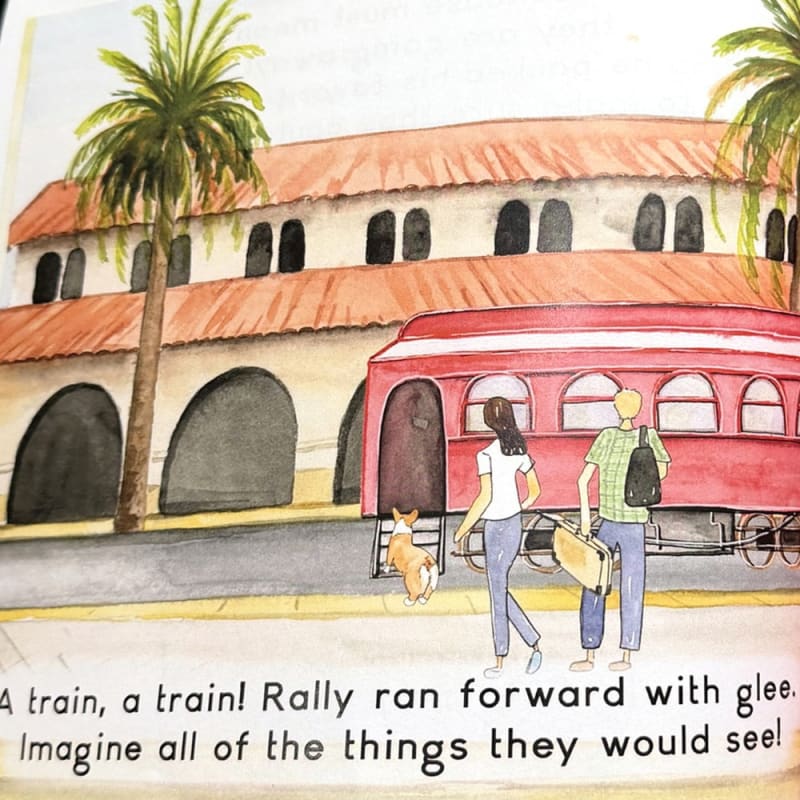
A bedtime story after seeing SantaRally Takes the Train is a five-minute rhyming picture book about a corgi’s first train ride, hand-painted in real watercolor by Leslie Dunn. $16.99 on Amazon, ages 0 to 8.
Buy on AmazonSources
We check every greeting against dictionaries, language institutes and cultural sources.
- How to Say Merry Christmas in Filipino, FilipinoPod101
- Christmas Season in the Philippines: Pre-Dawn Masses, Parols, Events, Facts and Details
- How Southeast Asian Countries Throw Christmas Feasts, Seasia.co