Merry Christmas in German
Frohe Weihnachten
Say it like this: FROH-uh VY-nakh-ten
Big letters show the part to say louder.
Quick answer
- In German, Merry Christmas is Frohe Weihnachten, said like FROH-uh VY-nakh-ten.
- Happy New Year is Frohes neues Jahr.
- People say it in Germany, Austria, Switzerland, Liechtenstein and more.
What Frohe Weihnachten means
'Frohe' means joyful and 'Weihnachten' means Christmas. The word Weihnachten comes from old German words meaning 'holy nights'.
Other ways to say it in German
Fröhliche Weihnachten
Say it like this: FRUH-lih-kheh VY-nakh-ten
A slightly more traditional wording, also heard in the carol "O du fröhliche".
Happy New Year
Frohes neues Jahr
Say it like this: FROH-ess NOY-ess YAHR
Happy New Year
To write in a Christmas card
Frohe Weihnachten und ein gutes neues Jahr
Say it like this: FROH-uh VY-nakh-ten oont eyn GOO-tess NOY-ess YAHR
Where people speak German
GermanyAustriaSwitzerlandLiechtensteinLuxembourgBelgiumItaly (South Tyrol)
German (Deutsch) belongs to the Germanic (Indo-European) language family.
Hear it from Rally on Christmas Eve
On Christmas Eve, Rally the corgi rides the Christmas Train around the world. He reaches Berlin at about 12:10 AM local time, then visits Vienna, and kids learn to say Frohe Weihnachten as he lands.
Watch Rally arrive in Berlin →Christmas traditions where people speak German
- Advent wreath and Advent calendar: Four Sundays before Christmas, German families set up an Advent wreath with four candles and light one more each Sunday. Children open one door a day on an Advent calendar, often finding a chocolate.[3]
- Christmas markets: Almost every German city, town or village has a Weihnachtsmarkt, or Christmas market, with stalls, games and treats such as gingerbread called Lebkuchen, fruit cake called Stollen, and hot spiced drinks for grown-ups.[3]
- Heiligabend and the gift bringer: Gifts are opened on the evening of December 24, called Heiligabend. Children wait until a bell rings. In southern Germany, Austria and Switzerland, the Christkind brings the gifts. In northern Germany, it is often the Weihnachtsmann.[3]
🎄 Quick game: Merry Christmas in German
Three quick questions for kids. Tap an answer to play.
Celebrate with kids
- Christmas events for kids in Germany
- Christmas events for kids in Austria
- Christmas events for kids in Switzerland
Say Merry Christmas in more languages
- DanishGlædelig jul
- DutchVrolijk kerstfeest
- IcelandicGleðileg jól
- NorwegianGod jul
- SwedishGod jul
- EstonianHäid jõule
- LatvianPriecīgus Ziemassvētkus
- BasqueEguberri on
Questions parents ask
How do you say Merry Christmas in German?
The most common way is "Frohe Weihnachten" (FROH-uh VY-nakh-ten). You can also say "Fröhliche Weihnachten", which sounds a little more traditional. Both are used in Germany, Austria and Switzerland, and both mean Merry Christmas. Short and cheerful, it is easy for children to learn.[1]
How do you pronounce Frohe Weihnachten?
Say "FROH-uh VY-nakh-ten". The w in German sounds like an English v, and the combination ei sounds like the word eye. The ch in nachten is a soft sound from the back of the throat, like the end of the Scottish word loch.[1]
What does Frohe Weihnachten mean?
Frohe means joyful and Weihnachten means Christmas, so it wishes someone a joyful Christmas. The word Weihnachten comes from old German words meaning holy nights, which is a nice way to explain it to kids: the special nights around the birth of Jesus.[1]
How do you write Frohe Weihnachten?
Write it as Frohe Weihnachten. German nouns always start with a capital letter, so Weihnachten is capitalized wherever it appears in a sentence. The adjective frohe is capitalized only at the start of the greeting. The version Fröhliche Weihnachten adds two dots over the o.[1]
How do you say Happy New Year in German?
Say "Frohes neues Jahr" (FROH-ess NOY-ess YAHR), or simply "Frohes Neues". Before the new year begins, Germans often say "Guten Rutsch", which means good slide into the new year. Cards often read: Frohe Weihnachten und ein gutes neues Jahr.[2]
Is there a formal way to say Merry Christmas in German?
Frohe Weihnachten works for everyone, from friends to teachers. For more formal cards, add a wish such as "Ich wünsche Ihnen frohe Weihnachten", meaning I wish you a Merry Christmas. Use Ihnen with adults you do not know well, and dir with friends and children.[1]
When do people say Frohe Weihnachten?
People say it during Advent, the four weeks before Christmas, and especially on Heiligabend, December 24. It is also said on December 25 and 26, which are both public holidays in Germany. After that, people switch to wishing each other a happy new year.[3][4]
Is Christmas Eve or Christmas Day the main celebration in Germany?
Christmas Eve, called Heiligabend, is the main celebration. Families go to church, then children enter the room with the decorated tree and open gifts that evening. December 25 and 26 are public holidays for visiting relatives and enjoying a big meal.[3][4]
What is a popular Christmas tradition in Germany?
Advent calendars and Advent wreaths are loved by children. Each day in December a little door opens on the calendar, and on each Sunday of Advent another candle is lit on the wreath. Christmas markets are also a big part of the season.[3]
How can I teach kids to say Frohe Weihnachten?
Split it into FROH-uh and VY-nakh-ten and clap along. Kids enjoy the ch sound, a soft hiss made at the back of the throat. Make an Advent calendar where each door shows a new German word. Singing a short carol like "Stille Nacht" helps with rhythm.[3]

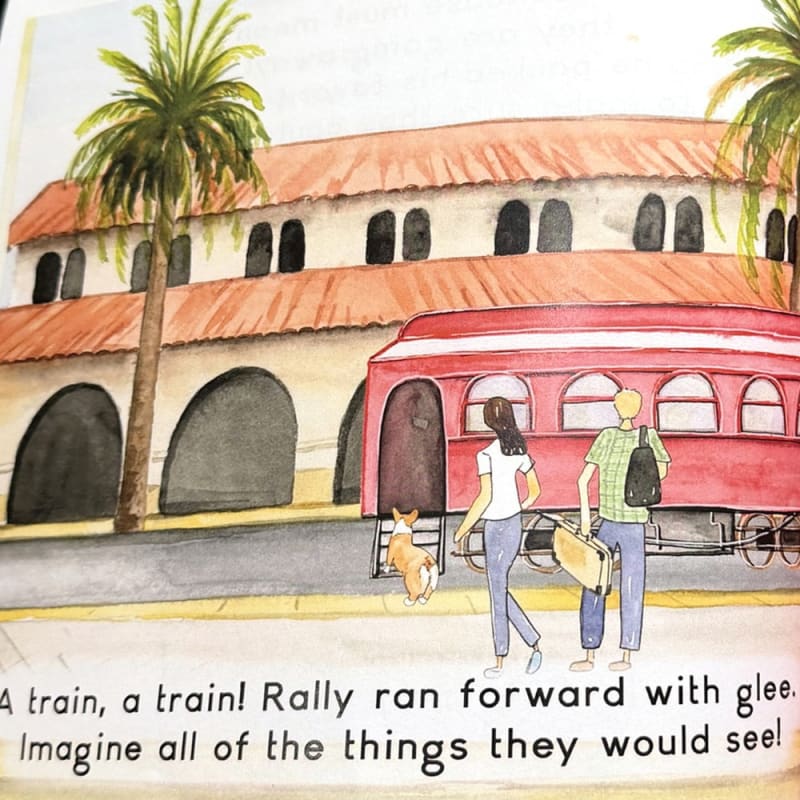
A bedtime story after seeing SantaRally Takes the Train is a five-minute rhyming picture book about a corgi’s first train ride, hand-painted in real watercolor by Leslie Dunn. $16.99 on Amazon, ages 0 to 8.
Buy on AmazonSources
We check every greeting against dictionaries, language institutes and cultural sources.
- merry Christmas (translations), Wiktionary
- happy New Year (translations), Wiktionary
- Christmas in Germany, Wikipedia
- Christmas in Germany, WhyChristmas.com